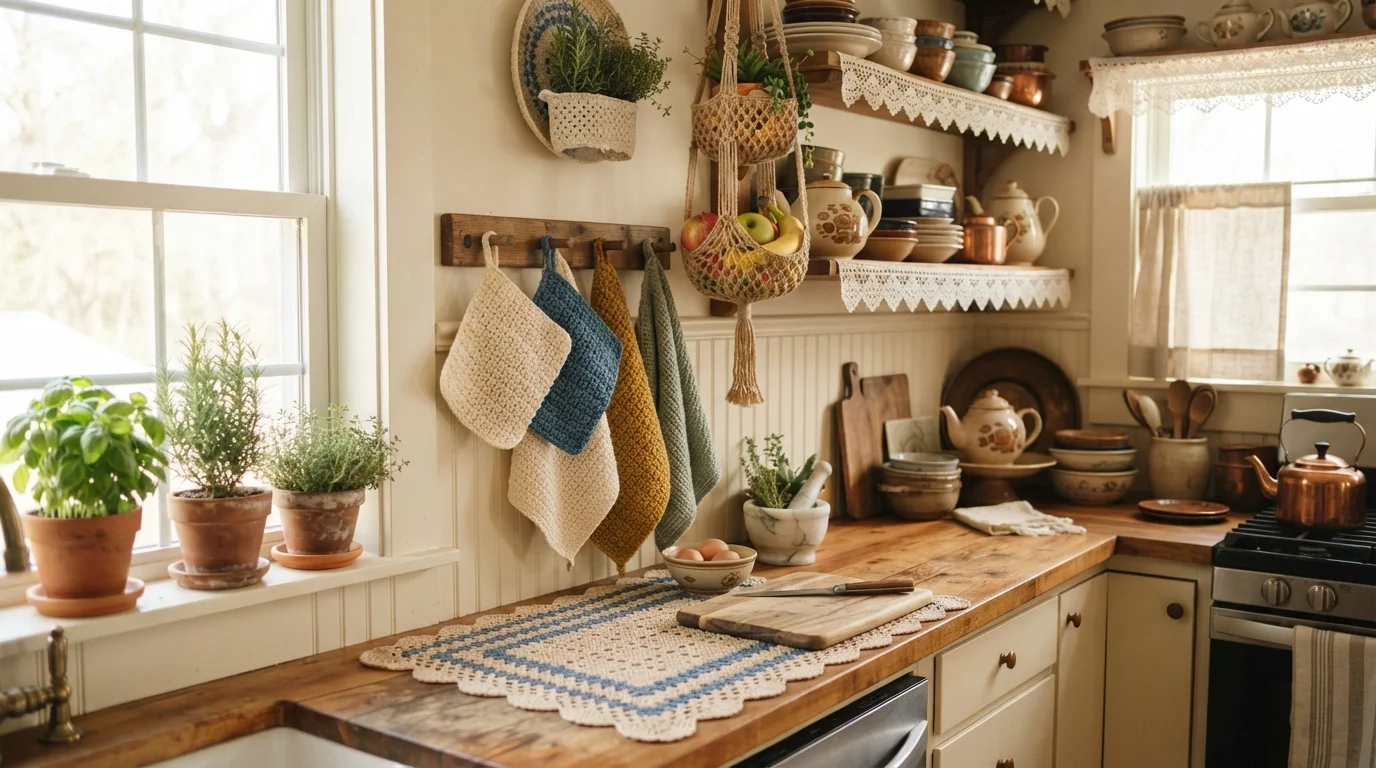
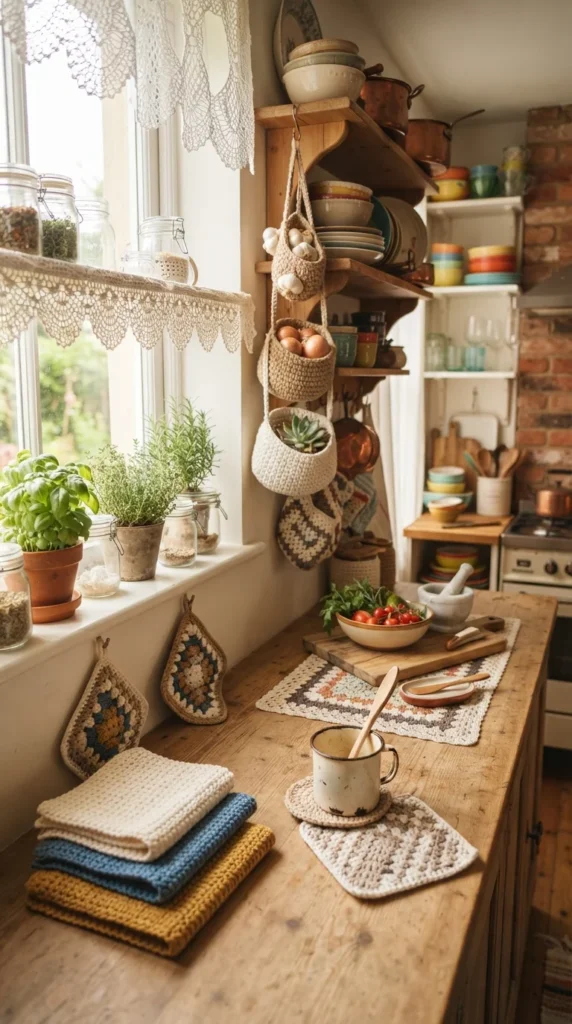
Crochet kitchen decor brings softness and personality into one of the most practical rooms in the home. Instead of filling counters with objects that serve no purpose, you can crochet pieces that organize utensils, protect surfaces, dress up shelves, or make everyday tasks more pleasant. Cotton yarn works particularly well for many kitchen projects because it handles regular washing and creates sturdy fabric. From simple dishcloths and hanging baskets to lace curtains and fruit-shaped decorations, there are ideas for beginners as well as experienced crocheters. You can work with cottage-inspired neutrals, colorful granny squares, vintage-style lace, or modern geometric stitches depending on your kitchen. The 20 ideas below focus on handmade character without turning the room into a craft display. Each project has a clear place and purpose, making it easier to create a kitchen that feels warm, personal, organized, and genuinely lived in.
1. Crochet Thick Potholders That Double as Wall Decor
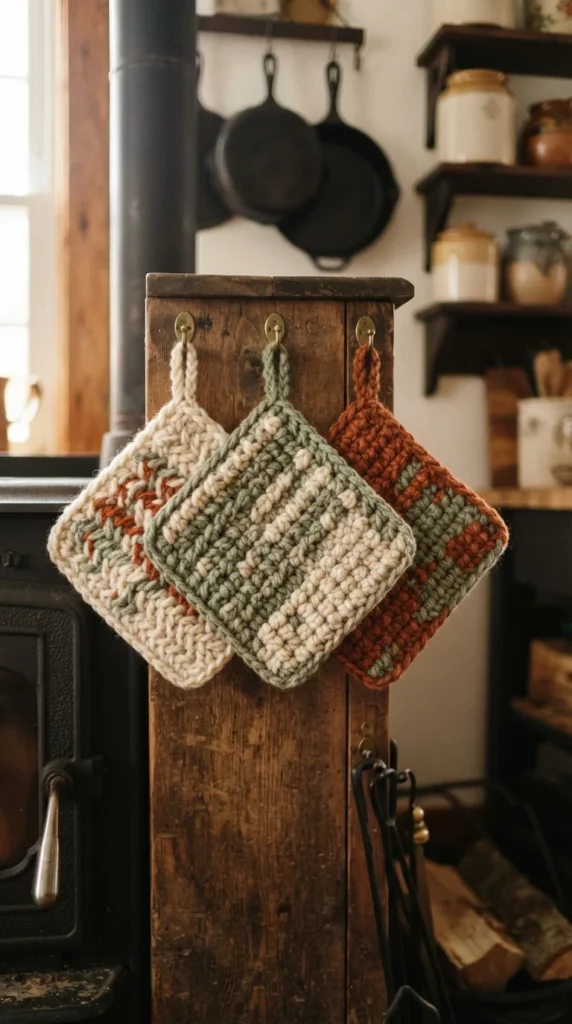
A good potholder can stay useful every day while adding texture to an empty wall beside the stove.
Choose 100% cotton yarn and work a dense stitch pattern rather than an open decorative stitch. Thermal stitch, tightly worked single crochet, or two-layer construction creates a substantial piece that feels appropriate around cookware.
Instead of making several identical potholders, treat them like a small coordinated collection. Try one round design, one square piece, and one softly scalloped version. Use colors pulled from objects already in the kitchen, such as sage from your cabinets, cream from stoneware, or rust from terracotta pots.
Add sturdy hanging loops so the pieces can live on wall hooks rather than inside a drawer. A row of three handmade potholders beside a range or preparation area adds visual interest without taking away counter space.
For a quieter kitchen, stick with related shades. For a playful room, use contrasting borders.
Washable pieces are especially practical because cooking areas collect splashes and grease. Make a spare potholder or two while you have the yarn out so you can rotate them during laundry days.
This idea works because the decoration earns its place. It is attractive when hanging and useful when dinner begins.
2. Build a Textured Dishcloth Collection for the Sink
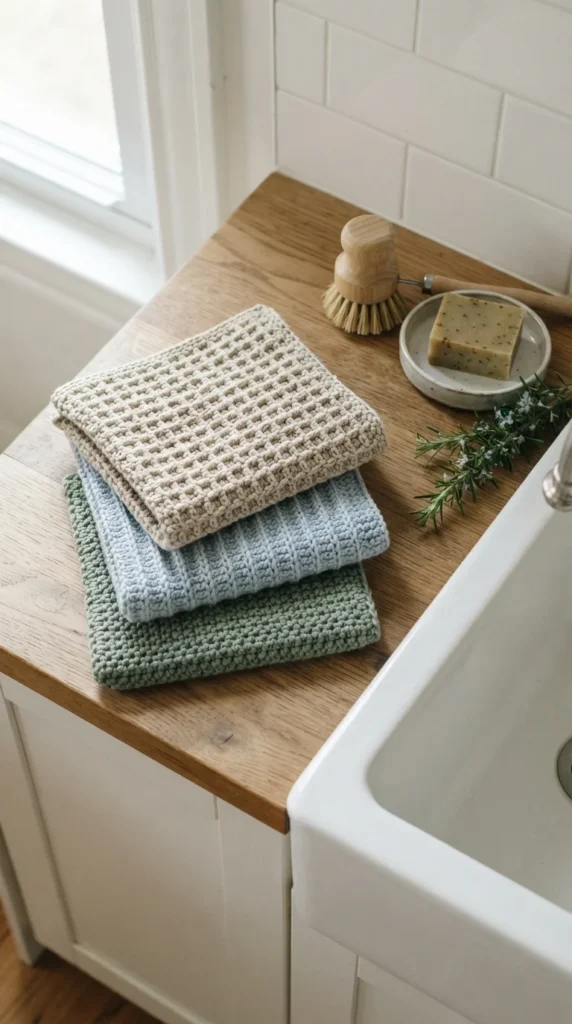
Dishcloths are one of the easiest ways to introduce crochet kitchen decor without committing to a large project.
Make several cloths in the same color family but give each one a different surface. A waffle-style texture feels substantial, ribbing adds clean lines, and alternating simple stitches can produce an attractive nubby finish.
A practical size is roughly the width of your handspan or slightly larger. Smaller cloths dry faster and are easier to wring out than oversized versions.
Use absorbent cotton yarn in light or medium shades so you can see your stitches clearly while working. Light colors also make it easier to notice when a cloth is ready for washing.
Create a rotation of four to six. Keep two near the sink and store the rest in a shallow basket or open drawer.
You can also crochet a small hanging loop into one corner. This lets the cloth dry from a hook instead of remaining damp beside the faucet.
For a coordinated look, repeat one accent color along each border. The cloths do not have to match perfectly.
This project is a good place to practice steady tension because uneven edges are easier to notice on simple rectangles. Stitch markers at the first and final stitch can help maintain straight sides while you work.
3. Add a Narrow Crochet Runner Instead of a Full Tablecloth
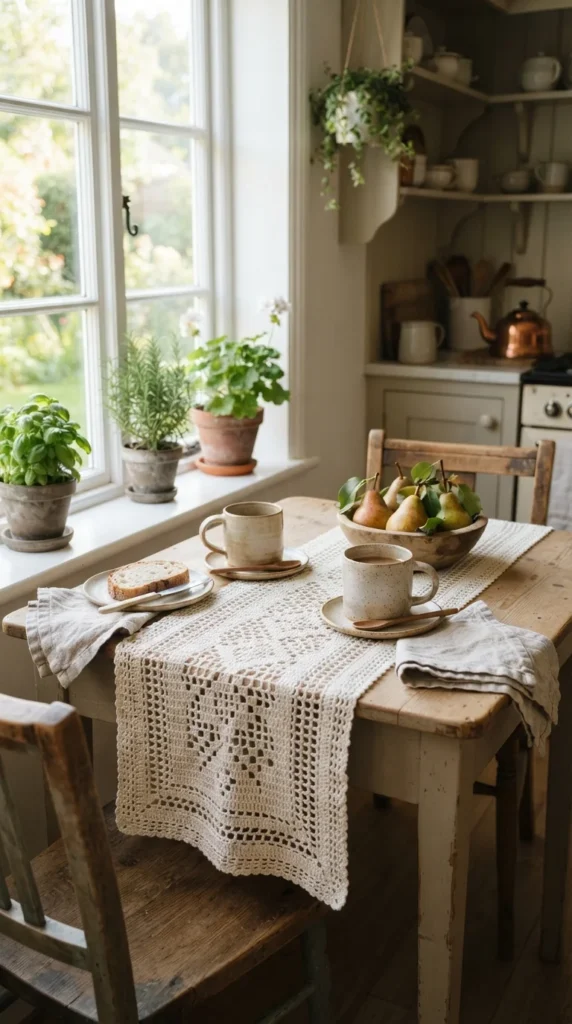
A full crochet tablecloth can feel heavy in a working kitchen. A narrow runner gives you handmade texture while leaving most of the tabletop easy to wipe and use.
Measure the table before starting. A runner around one-third of the table’s width usually gives enough visual presence without covering the entire surface.
Choose a stitch pattern based on how you use the table. If meals happen there every day, use a flatter construction that will not interfere with plates or glasses. For a table used mainly as a breakfast nook or display surface, a more open lace pattern can work beautifully.
Try ivory, oatmeal, muted green, dusty blue, or another shade already present in the room.
Keep the styling simple once the runner is finished. A bowl of fruit, small vase, or ceramic pitcher is often enough. Too many accessories can hide the crochet work.
You can also make seasonal runners without changing the entire room. Soft botanical colors suit spring, warm clay shades feel comfortable in autumn, and deep green works well during winter.
A runner also makes an approachable long-form project because the width stays manageable. Once the stitch repeat becomes familiar, the work can move quickly without demanding constant pattern checking.
4. Give Open Shelves a Crochet Lace Edge
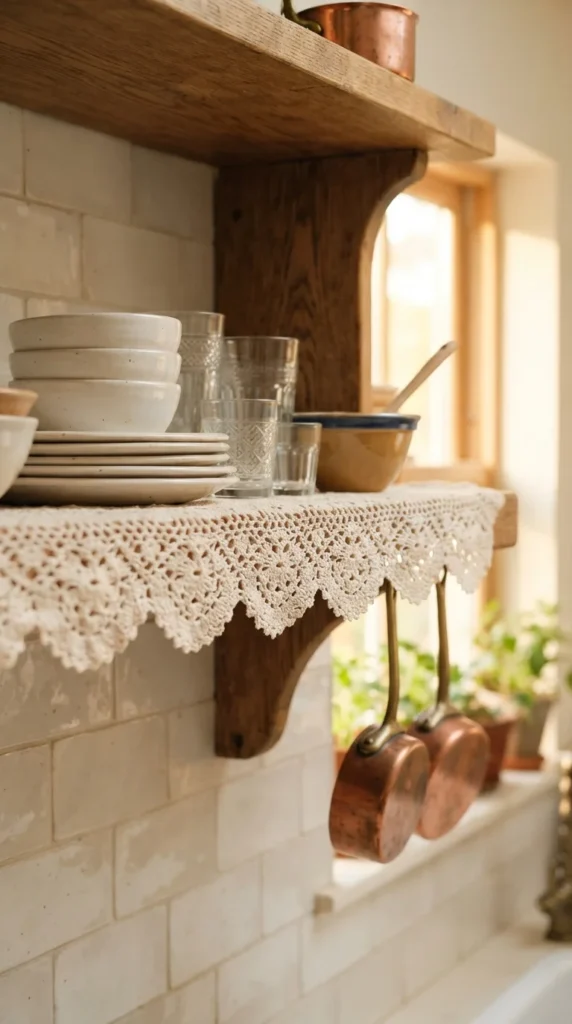
Open shelves already put everyday objects on display, so a narrow crochet trim can make the arrangement feel intentional without using extra counter space.
Rather than covering the shelf with a full liner, crochet a slim strip that hangs just beyond the front edge. A simple scallop, shell pattern, or filet-style border works well.
Cotton thread produces a fine vintage appearance, while lightweight cotton yarn creates a more casual cottage look.
Measure the shelf carefully and work the trim slightly shorter than the final width if your chosen stitch tends to stretch. Block the piece before attaching it so you can check its finished size.
You do not have to fasten the trim permanently. Small hidden clips, removable adhesive tabs, or a washable fabric shelf liner underneath can hold it in place while allowing easy cleaning.
Use the edging on only one or two shelves rather than every open surface. This keeps the texture from overwhelming dishes, glassware, and cookware.
For a collected kitchen, pair cream crochet with mismatched ceramics or older wooden pieces. In a simpler room, try a straight-edged geometric pattern.
The result is subtle. People notice warmth and detail before they necessarily notice the crochet itself, which is exactly why this idea works so well.
5. Make an Airy Crochet Café Curtain for a Small Window
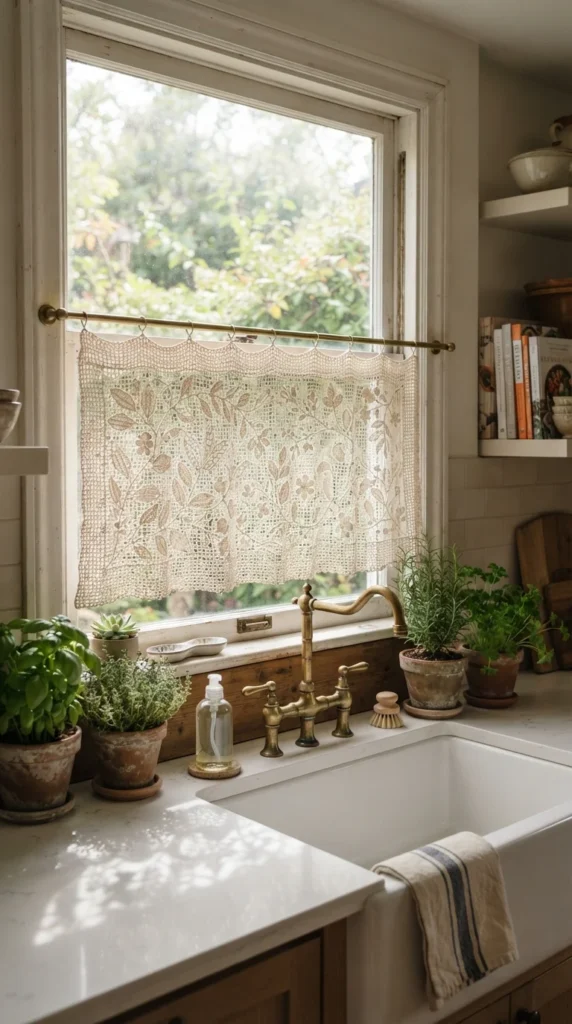
A crochet café curtain can soften a kitchen window while still allowing daylight into the room.
This style works especially well above a sink, breakfast bench, or side window where you want some privacy without covering the full glass.
Use lightweight cotton yarn or crochet thread and choose an open pattern with enough negative space for light to pass through. Small floral shapes, repeating diamonds, or simple filet motifs are easier to live with than very dense fabric.
Measure the window from the curtain rod down to the point where you want the panel to stop. Many café curtains cover roughly the lower half of the window, though the correct length depends on your space.
Work the upper edge so a slim rod can pass directly through the stitches, or add simple tabs.
Blocking matters here. A lace panel often looks uneven straight from the hook. Gently shaping it after washing helps the motifs sit flatter and gives the lower edge a cleaner line.
Keep surrounding window decorations restrained. Herbs, a ceramic soap dish, or one small vase is enough.
For renters, a tension rod can make this project especially convenient because it requires no permanent mounting.
The curtain adds softness without using any valuable work surface.
6. Crochet Hanging Produce Baskets to Clear the Counter
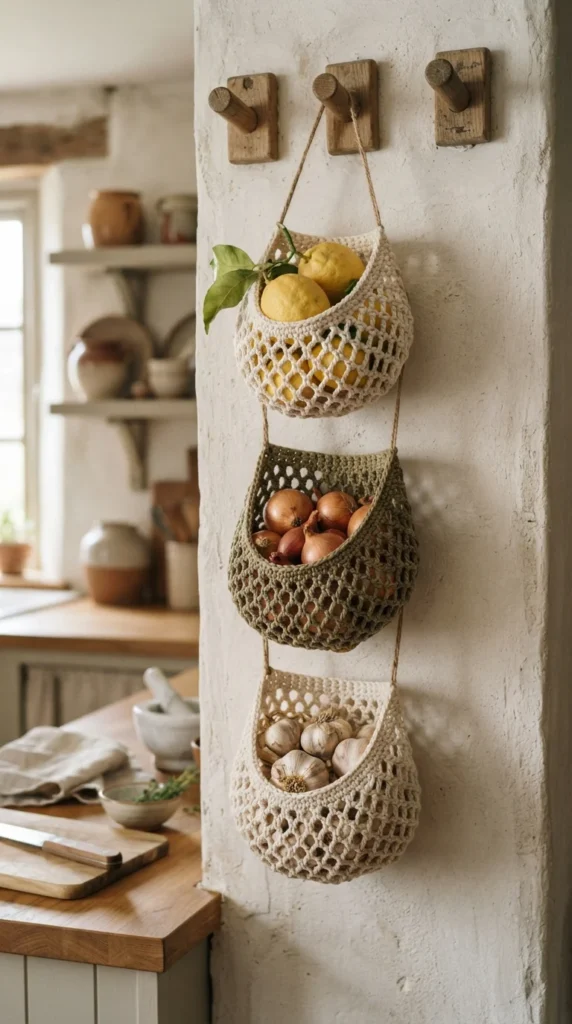
Counter space disappears quickly when fruit, onions, garlic, and other produce all live in bowls. Crochet hanging baskets move suitable items upward while adding handmade texture to the wall.
Use sturdy cotton cord or firmly worked cotton yarn. The basket should have enough structure to hold its shape but enough openness for air circulation.
Mesh stitches are useful because they reduce yarn use and let you see what is inside. Make the base tighter than the sides so smaller items do not slip through.
Create baskets in two or three sizes. A small version can hold garlic, a medium basket can handle lemons or limes, and a deeper one can carry onions.
Attach each basket to a strong wall hook, rail, or wooden peg that can support the expected weight.
Avoid overloading them. Crochet stretches, particularly when filled with heavy produce.
For a coordinated wall, use the same yarn color but vary the basket shapes. Another option is to add a single contrasting stripe near the top.
Position the baskets away from direct stove heat and splashing water.
This idea works particularly well in compact kitchens because it combines organization and decoration in the same vertical area. The produce itself becomes part of the styling, adding natural color against the crochet texture.
7. Turn Small Granny Motifs Into Everyday Coasters
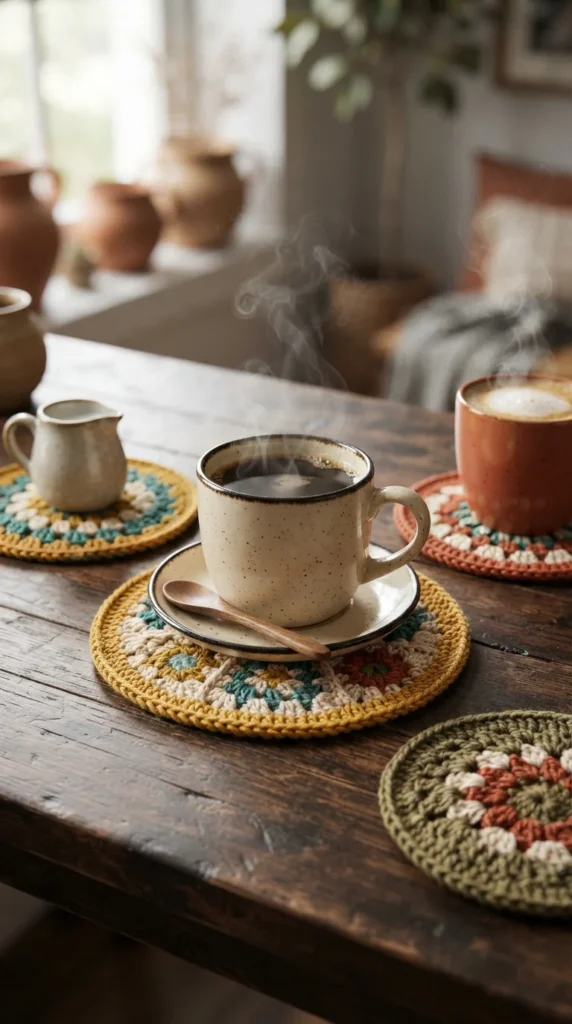
You do not have to commit to a large granny-square blanket to enjoy the pattern in your kitchen.
Small motifs can become colorful coasters that bring crochet into breakfast bars, coffee stations, and dining nooks.
Choose three or four shades that appear elsewhere in the room. For example, use terracotta from plant pots, cream from dishes, green from cabinetry, and mustard from a tea towel.
Work the motifs tightly enough that cups sit securely. Very raised borders or bulky joins can make mugs wobble, so flatter stitches are better for everyday use.
A compact motif may already be the correct coaster size. If it feels too small, add one plain border round.
Make a set of four, six, or eight depending on how many people regularly use the kitchen.
This project is also useful for leftover yarn. Small quantities that are not enough for dishcloths or baskets can still become one or two coaster centers.
Keep a few near the kettle or coffee machine rather than hiding them in a drawer. A shallow ceramic dish can hold the stack neatly.
Because each piece is small, you can experiment with colors you might hesitate to use on a larger item. The result adds personality without dominating the kitchen.
8. Dress a Plain Utensil Crock With a Removable Crochet Sleeve
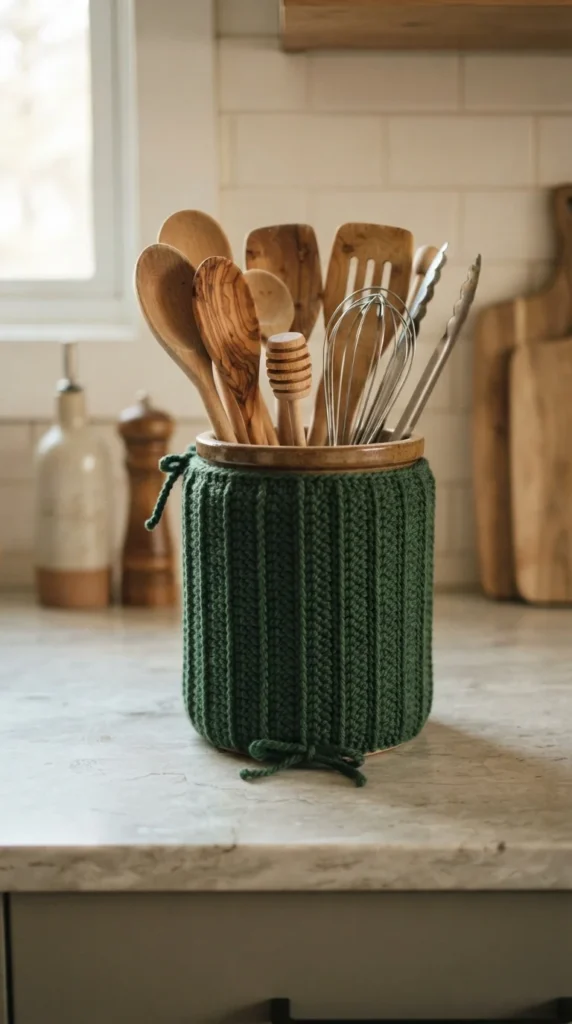
A plain jar, ceramic pot, or metal utensil container can become a much warmer kitchen feature with a removable crochet sleeve.
Measure around the container and crochet a rectangle that fits snugly when wrapped around it. Join the short ends, then test the fit before finishing.
Ribbed stitches work especially well because they stretch slightly and create clean vertical lines. A simple moss-style stitch can give a softer handmade appearance.
Keep the sleeve below the container’s rim. This reduces contact with utensils and makes the cover easier to remove for washing.
Dark green, clay, cream, denim blue, or charcoal can make the idea feel less sugary if your kitchen has a modern style.
You can also add a narrow contrasting border at the base instead of using multiple colors across the whole piece.
The cover should remain decorative rather than structural. Keep the original crock underneath so the container stays stable.
This is also a useful thrift project. An inexpensive jar with the right shape can become a custom utensil holder once covered.
Because the sleeve is removable, you can change it seasonally or wash it separately if the countertop gets messy.
The idea works because it gives an ordinary object handmade character without changing how the object functions.
9. Make a Crochet Towel Holder That Keeps Towels in Place
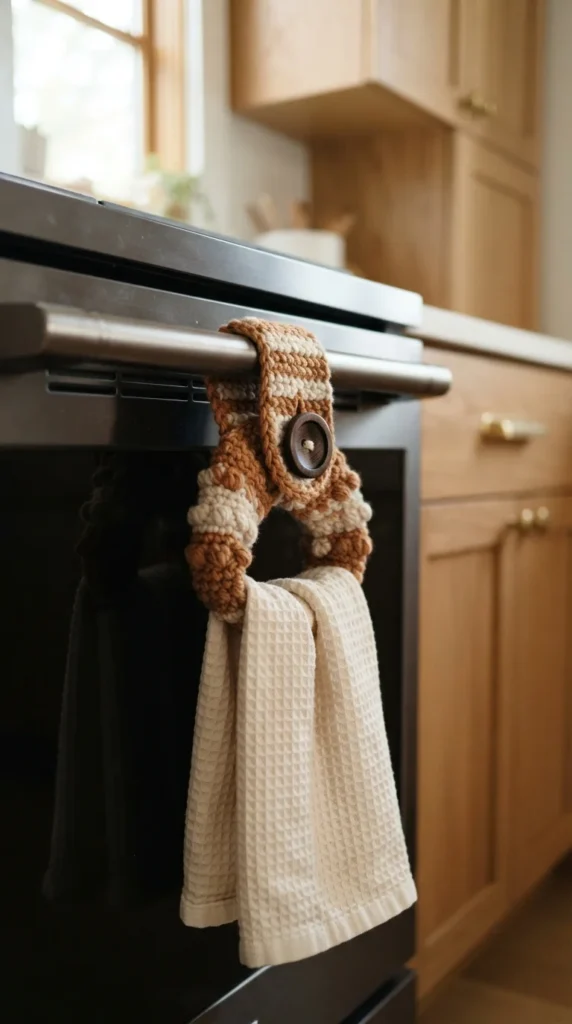
Kitchen towels have a habit of sliding off oven handles or being carried across the room and forgotten. A crochet towel holder gives them a consistent home.
One simple version uses a crocheted ring or short strap attached to a buttoned tab. The towel passes through the lower opening while the upper section fastens around an oven handle, drawer pull, or rail.
Use firm cotton yarn and keep the construction compact. A very loose stitch can stretch quickly when the towel is pulled repeatedly.
Choose a large button that is easy to operate with damp hands, or make a loop-and-toggle closure from crochet itself.
You can coordinate the holder with your potholders without making the pieces identical. Repeating one color or stitch texture is enough to make them feel related.
Position the holder where it will not hang close to a burner or open flame.
If you use decorative tea towels during holidays, make two or three holders in neutral yarn so they work with different fabrics throughout the year.
This project uses little yarn and can often be finished from leftover cotton.
It also makes a useful handmade gift when paired with a good kitchen towel. The finished piece looks decorative, but its real advantage is making everyday kitchen organization slightly easier.
10. Fill a Bowl With Crochet Fruit for Playful Counter Decor
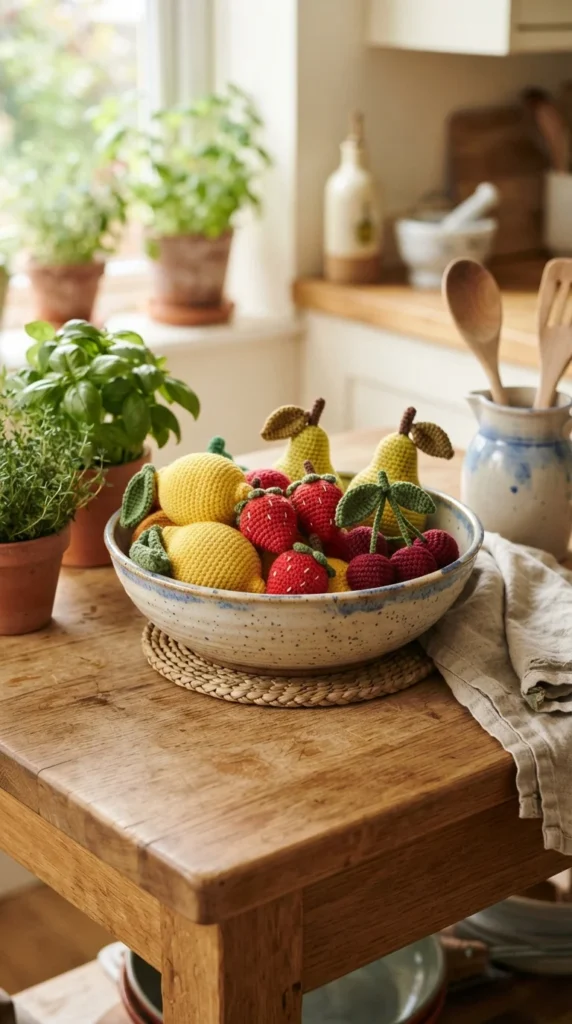
Crochet fruit brings color to a counter without relying on flowers, signs, or decorative objects that have little connection to the kitchen.
Start with fruits made from simple shapes. Lemons, oranges, cherries, strawberries, and pears can often be built from basic rounds, increases, and decreases.
Use tightly worked stitches so the stuffing does not show. Smooth cotton yarn gives the pieces a clean surface and makes small details easier to shape.
You do not have to recreate fruit with perfect realism. A slightly oversized lemon or rounded strawberry can give the display more personality.
Place the finished pieces in a shallow ceramic or wooden bowl. Three to seven pieces usually create enough color without turning the counter into a toy display.
You can also use the idea seasonally. Crochet lemons for summer, apples or tiny pumpkins for autumn, and pears or citrus during winter.
If you have children, keep small detachable parts such as stems or leaves firmly secured and use the display appropriately for your household.
The project is particularly good for yarn scraps because each fruit uses a limited amount.
Place the bowl on an island, breakfast table, or open shelf where it can be seen without interfering with food preparation.
It is cheerful crochet kitchen decor that feels directly connected to the room.
11. Add a Low-Profile Crochet Rug at the Sink
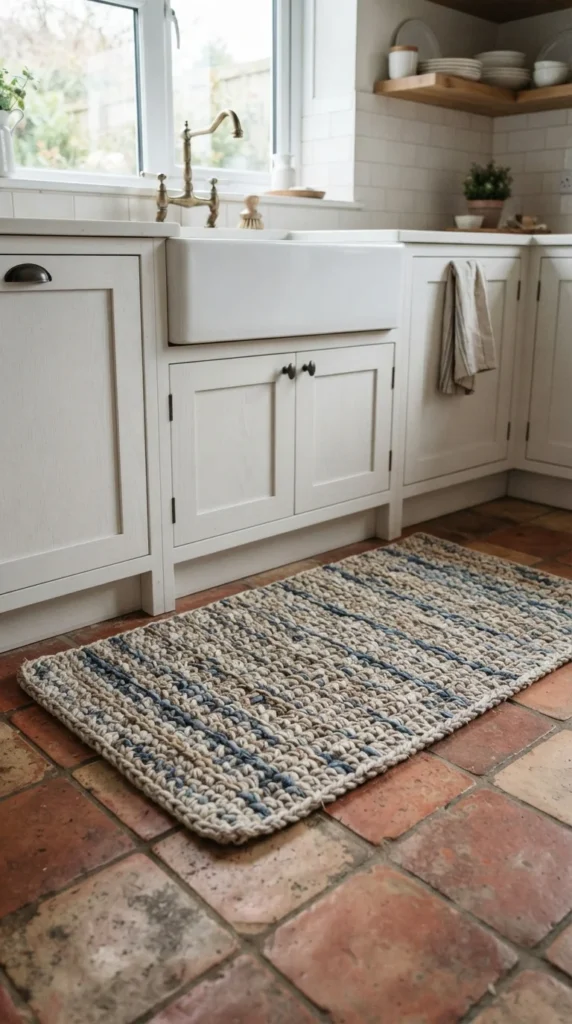
A crochet rug can make the sink area feel warmer, but kitchen floor pieces should remain practical and easy to manage.
Choose a low-profile stitch rather than thick loops that may catch feet or trap crumbs. Firm single crochet, linked stitches, or tightly worked fabric strips can create a flatter surface.
Rectangular shapes usually fit well in front of sinks and counters. Measure the available floor area so cabinet doors, dishwashers, and walkways remain clear.
Machine-washable cotton can make upkeep simpler, though the exact yarn care instructions still matter. A removable non-slip rug pad underneath can help keep the piece from shifting on smooth flooring.
Avoid long fringe in busy kitchen walkways. A plain edge or short textured border is easier to clean.
Color also matters. Mid-tone yarns hide everyday marks better than bright white. Oatmeal, denim, clay, muted green, or small multi-color stripes work well.
If you crochet with fabric yarn made from clean recycled cotton textiles, keep the strips similar in width so the rug remains even.
This is a larger project than a dishcloth, but the repeated rows are usually straightforward.
The rug works best as a single floor accent rather than one of many crocheted pieces competing in the same small zone.
12. Crochet Modular Baskets for Messy Kitchen Drawers
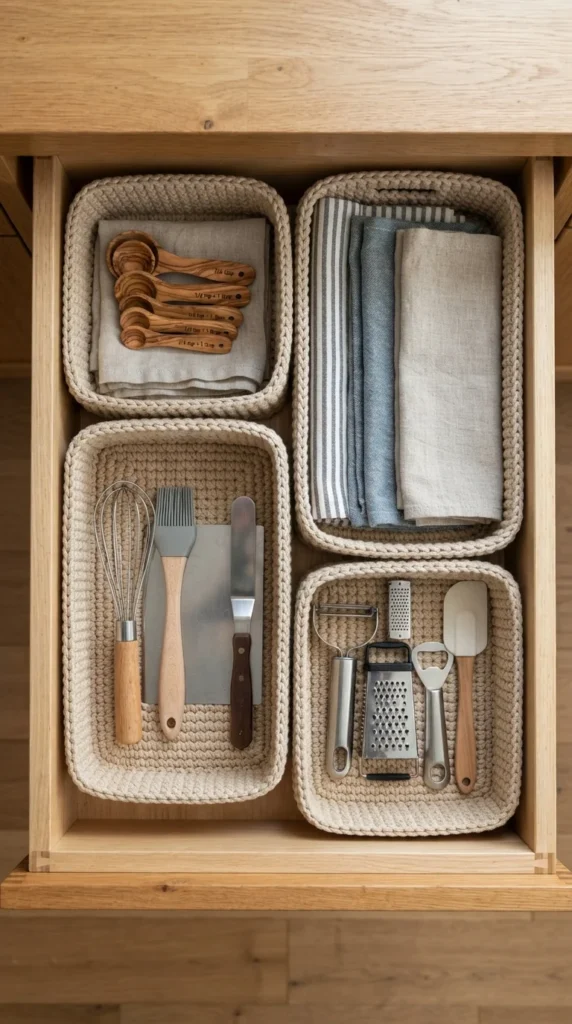
Crochet does not have to stay visible to count as useful kitchen decor. Small structured baskets can turn chaotic drawers into organized storage.
Instead of crocheting one large organizer, make several compact rectangular containers that can be moved around as the drawer contents change.
Use firm cotton cord or several strands of cotton yarn held together. Tight stitches help the walls stand upright.
Measure groups of objects rather than the whole drawer. One basket might hold measuring spoons, another reusable clips, and another folded cloth napkins.
Keep the sides fairly low so you can see everything when the drawer opens.
Square corners can be formed by placing increases consistently around a rectangular base. If your baskets remain soft, they can still work because the drawer itself provides outside support.
Choose one neutral color for a calm appearance, particularly if the drawer is frequently left open while cooking.
This project also gives leftover sturdy yarn a practical destination.
Before making many organizers, crochet one and test it for several days. Check whether the size works with the objects you actually reach for. Adjust future baskets from there.
The modular approach makes the idea much more useful than a fixed divider system because you can reorganize the drawer whenever your kitchen habits change.
13. Give Thrifted Jars a Crochet Makeover
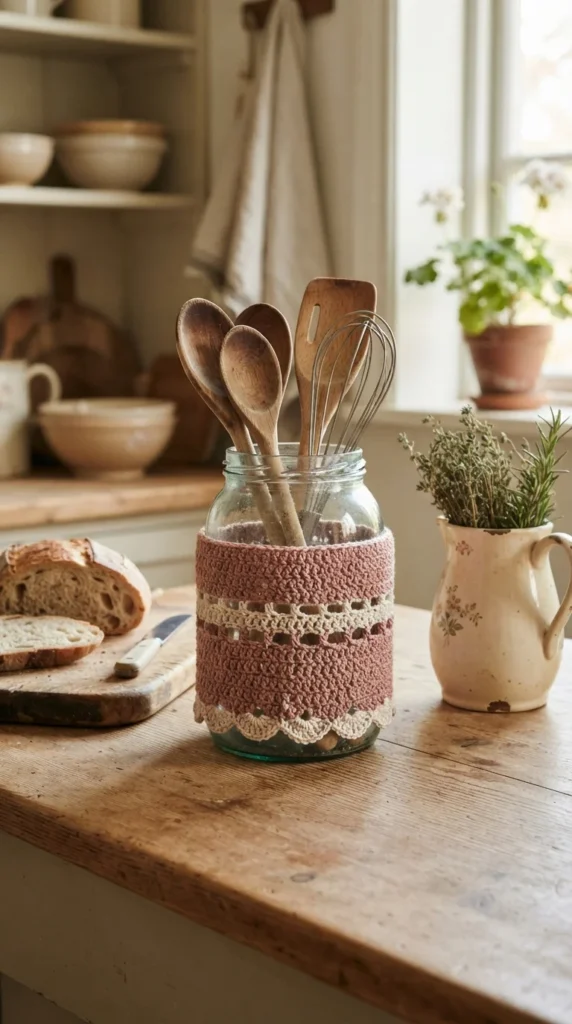
Secondhand jars, crocks, and small containers often have useful shapes even when their surfaces feel plain or mismatched.
A fitted crochet cover can turn them into coordinated storage without hiding their character completely.
Look for containers that are stable and easy to clean. Wide glass jars work well for wooden spoons, reusable straws, or wrapped utensils.
Crochet the cover from the bottom upward, checking the fit regularly. Leave portions of clear glass visible if you want a lighter look.
Small openwork sections can add interest, but keep the fabric away from anything that regularly becomes wet or greasy.
This is a good place for crochet and thrift styling. Pair an older glass jar with modern solid-color yarn, or put a simple cream sleeve around a colorful vintage ceramic container.
Avoid wrapping every jar on the counter. One or two altered pieces will stand out more than a whole row.
You can also make sleeves removable by adding small buttons or ties at the back.
When the kitchen decor changes, simply crochet another cover rather than replacing the container.
This approach keeps useful items in circulation and makes custom styling inexpensive. It also gives you freedom to experiment with stitch patterns on a small scale before using them on larger projects.
14. Crochet a Flat Mat for Displayed Cutting Boards
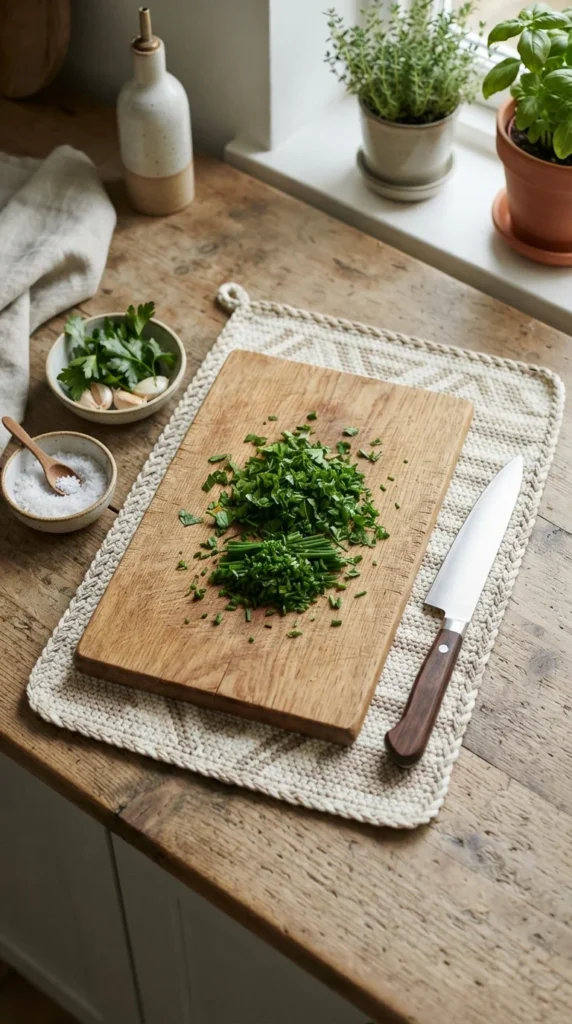
Wooden cutting boards often lean against backsplashes or sit in groups on counters. A small crochet mat can define that area and keep the display visually connected.
The goal is not to crochet something thick. Work a flat rectangle using dense cotton stitches so the mat sits neatly beneath a board stand, serving board, or other dry display item.
Measure the area you want to cover and leave only a small visible border around the objects placed on top.
Choose yarn that contrasts gently with the countertop. Cream cotton stands out against dark stone, while muted charcoal or olive can work against pale surfaces.
Simple stripes or a narrow geometric border give enough detail without distracting from the wood grain.
Keep this type of crochet mat in a dry styling zone, away from active chopping, raw food preparation, and heavy splashing. It works best beneath boards that are being displayed between uses rather than during food preparation.
Because the mat is rectangular, the project is suitable for practicing tidy edges and consistent rows.
You can also make a matching smaller version for a ceramic salt cellar or oil bottle tray.
The result gives a grouped collection of kitchen tools a clear visual boundary, making the counter feel arranged rather than crowded.
15. Create a Crochet Mat for Your Coffee or Tea Corner
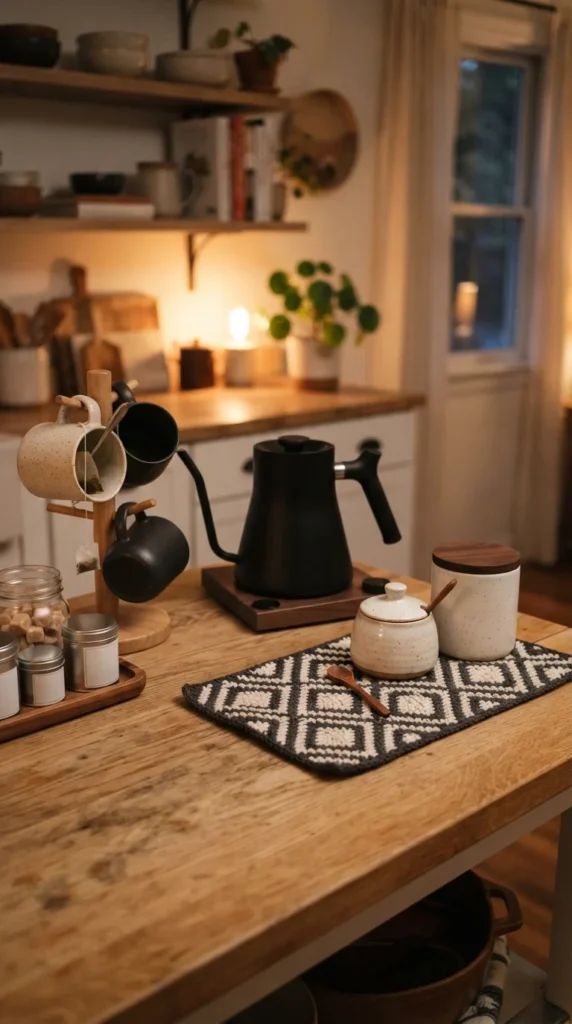
A dedicated beverage corner is an easy place to use crochet because the area already contains small objects that benefit from being visually grouped.
Crochet a compact rectangular or oval mat for items such as a sugar bowl, spoon dish, tea jar, or mug stand.
Keep electrical appliances directly on a suitable stable surface rather than placing thick crochet underneath them. Use the handmade mat beside the appliance where it can frame smaller dry accessories.
Choose a stitch that lies flat. Moss stitch, tight half-double crochet, or a simple geometric pattern can work well.
For a modern kitchen, try charcoal with cream, navy with oatmeal, or one saturated accent shade against a neutral base. Cottage-style rooms can carry softer greens, faded blues, and warm beige.
Make the mat only large enough for the objects you use every day. Oversizing it can make the beverage station feel crowded.
A narrow border helps the shape look finished and reduces curling.
If coffee grounds or tea leaves regularly spill in the area, choose a washable yarn and make a second mat for rotation.
You can also use the same colors in two matching mug coasters without duplicating the exact stitch pattern.
This small project gives a commonly used corner its own identity while keeping the overall kitchen styling calm.
16. Use Crochet Around a Dining-Nook Light for Soft Texture
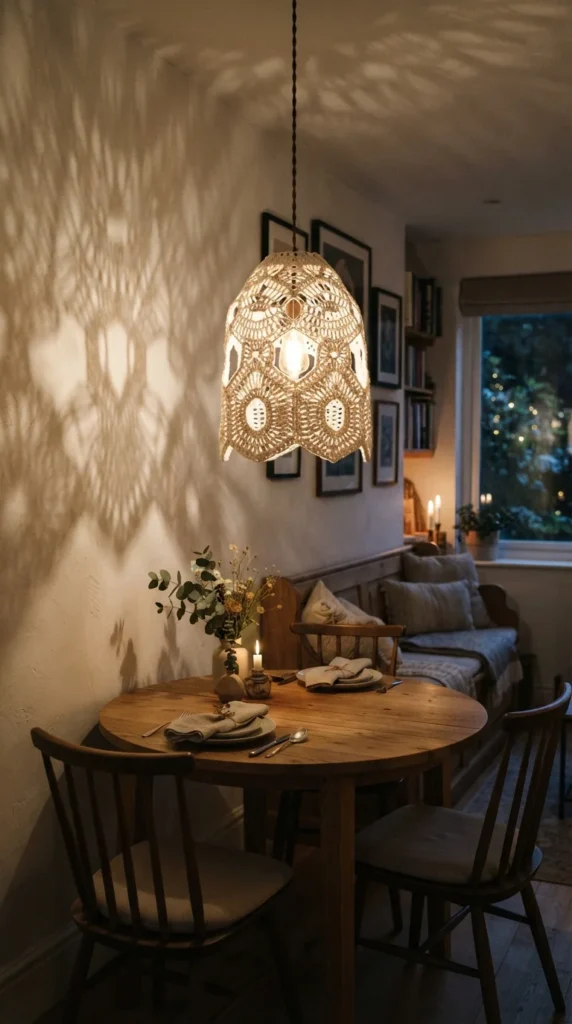
Crochet can move beyond counters and shelves when you carry the texture into an adjoining breakfast or dining nook.
An open crochet shade can create beautiful shadow patterns while connecting the eating area visually with handmade pieces in the kitchen.
For this idea, treat crochet as a decorative outer layer around a properly rated existing light fixture rather than improvising electrical components. Keep yarn well away from bulbs and heat-producing parts, and follow the fixture maker’s clearance guidance.
Open geometric stitches are better suited to this look than dense fabric because they allow light through.
Natural cotton cord gives a structured appearance. Cream feels classic, while muted terracotta, olive, or navy can make the shade more graphic.
Keep the shape simple. A straight cylinder or gently tapered cover often looks cleaner than complicated fringe and tassels.
If permanent lighting changes are not appropriate for your home, apply the same idea to a battery-powered decorative lantern placed safely in a dining nook.
Repeat the shade color in one other small crochet item nearby, perhaps coasters or a table runner.
This keeps the room visually connected without using the same crochet pattern everywhere.
The idea adds handmade character above eye level, leaving counters free for cooking.
17. Frame Granny Squares as Kitchen Wall Art
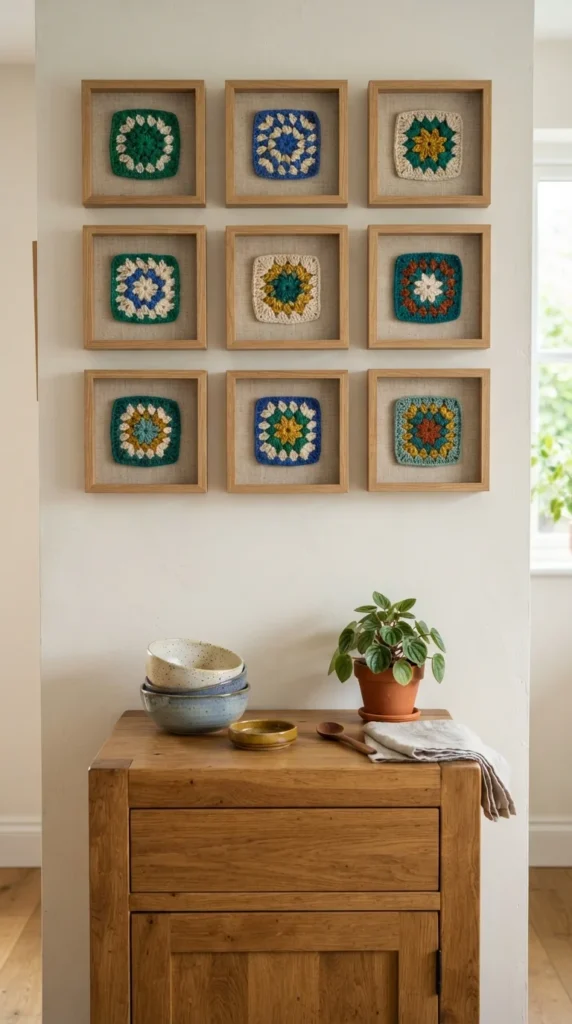
Not every granny square has to become a blanket.
A small collection of motifs can make distinctive kitchen wall art, particularly if you enjoy color but want to keep work surfaces clear.
Crochet three to six squares using the same pattern with different color arrangements. Another approach is to keep the colors consistent while changing the motif inside each square.
Block every piece carefully before framing. Straight edges make the display look much cleaner.
Mount the motifs over plain linen, cotton fabric, or acid-free backing in simple frames. Leave some space around each piece so the stitches remain the focus.
For a traditional kitchen, wooden frames pair naturally with cream, rust, green, and faded blue. A more modern room can handle bolder colors such as emerald, cobalt, mustard, or lime used in small amounts.
Hang the group above a sideboard, breakfast bench, pantry console, or other wall away from heavy cooking grease and steam.
You can also frame a meaningful old crochet motif from a damaged household textile rather than throwing the whole piece away.
Keep the arrangement limited to one wall area. Handmade wall pieces have more impact when they are surrounded by some empty space.
This project turns crochet into art without asking it to perform another household job.
18. Make a Washable Splash Cloth for the Sink Zone
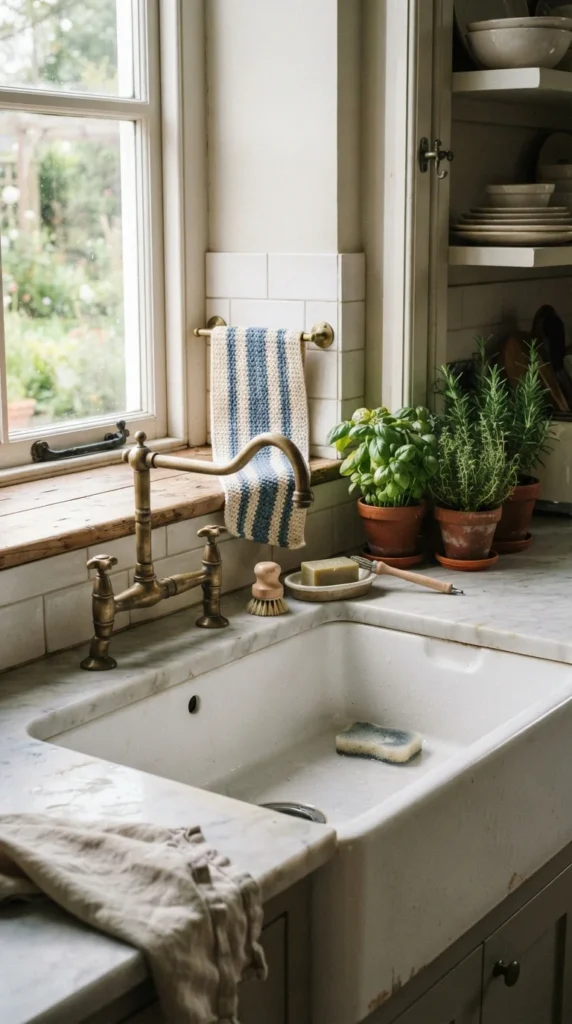
The narrow area behind a kitchen faucet often collects water droplets, especially around deep sinks.
A small crochet splash cloth can add texture while giving you something washable to place in that zone when appropriate.
Think of it as a narrow absorbent cloth rather than a fitted faucet cover. Crochet a rectangle that fits the dry ledge or hangs from a small rail nearby.
Use cotton yarn and a textured stitch that increases surface area. A compact waffle pattern or alternating raised stitches can work well.
Make at least two so one can be washed while the other is in use.
Choose colors that do not show every small mark. Soft blue, oatmeal, olive, clay, or a striped combination can be practical.
The cloth should be removed and dried regularly rather than left wet for long periods. Hanging it from a loop between uses can help.
Keep it away from places where standing water tends to collect heavily. The idea works best as an occasional wipe-and-dry accessory rather than a permanently damp barrier.
You can coordinate the splash cloth with dishcloths by repeating one color while using a different stitch.
This small project fills an overlooked space and keeps the handmade details connected to everyday kitchen routines.
19. Crochet Decorative Liners for Bread and Serving Baskets
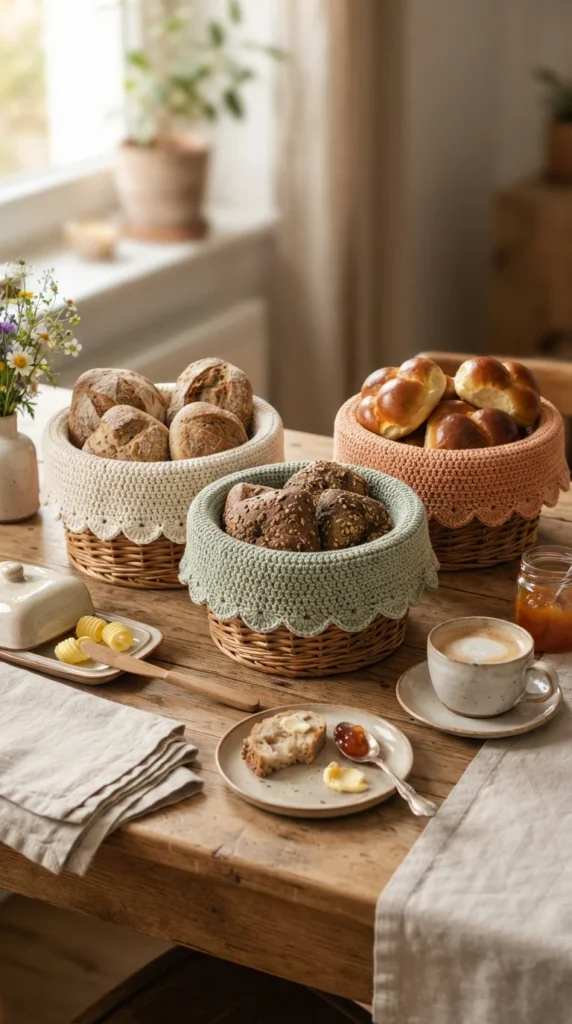
A simple woven basket can become much more inviting with a removable crochet liner or decorative edge.
Instead of crocheting a complete basket from yarn, make a flat cloth sized to sit inside an existing washable serving basket. Let a scalloped or patterned edge fold gently over the rim.
Use cotton yarn and select a fairly flat stitch for the center. Save decorative work for the visible border.
The liner can be used beneath wrapped baked goods, napkins, or other dry serving items. If food will touch any handmade textile directly, choose materials and care practices suitable for your household and wash the piece regularly.
Cream is a classic option, but soft apricot, sage, dusty blue, or warm yellow can make breakfast tables feel more cheerful.
Make one liner that suits your everyday dishes rather than creating several highly seasonal versions.
A rectangular liner fits many bread baskets, while a round motif can work inside shallow bowls.
Because the piece is removable, the basket itself remains easy to clean.
This project is especially useful when you already own plain woven baskets that feel unfinished.
The crochet edge creates visible handmade detail at the table while the sturdy basket underneath handles the structural work.
It is an easy way to introduce crochet during meals without covering the entire table.
20. Build a Small Crochet Color Story Across the Kitchen
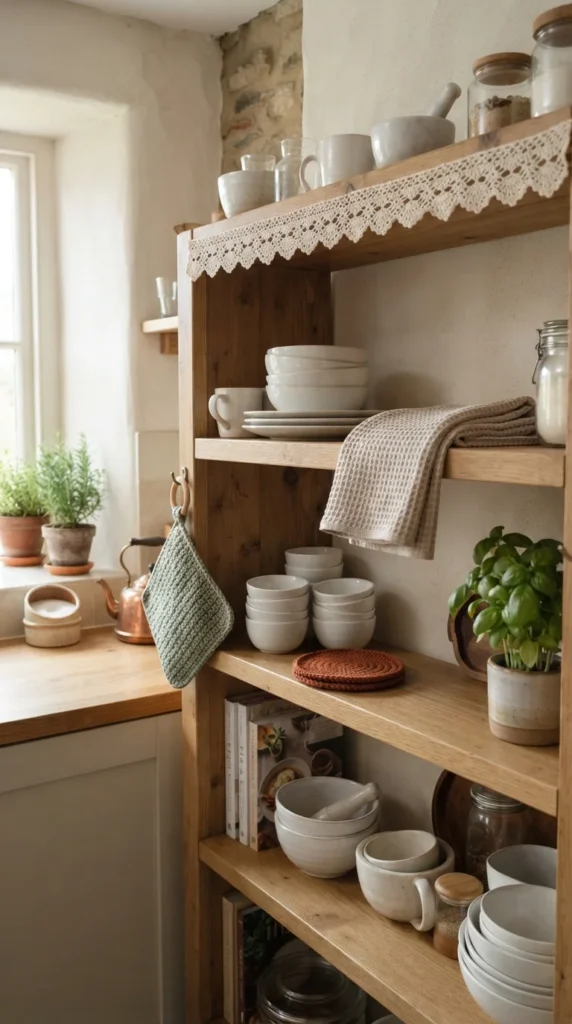
The most polished crochet kitchen decor does not come from placing handmade pieces on every available surface. It comes from repeating a few related colors and textures in carefully chosen spots.
Start by selecting three main yarn colors from the kitchen itself. You might pull cream from dishes, green from cabinets, and rust from pottery.
Then assign each color to different projects.
For example:
- Cream crochet shelf edging
- Sage potholders beside the stove
- Oatmeal or cream dishcloths at the sink
- Rust coasters near the breakfast area
The pieces should feel connected without becoming a matching set.
Change the stitch texture from zone to zone. Dense fabric works around active cooking areas, while lace can appear on shelves or windows. Small motifs suit tables and coffee corners.
Limit each area to one obvious crochet element whenever possible. This leaves breathing room around handmade work and prevents a small kitchen from feeling overloaded.
You can also rotate one accent shade through the year while keeping the neutral pieces in place.
Before starting another project, stand in the doorway and look at the whole room. Ask whether the next piece fills an empty visual area or merely repeats something already present.
Crochet has the most charm when each handmade detail feels chosen rather than accumulated.
Conclusion
Crochet kitchen decor can be decorative, useful, or both at once. Start with the area you interact with most. A few cotton dishcloths can improve the sink zone, a hanging basket can free counter space, and a runner or café curtain can add softness to a plain room. Larger projects such as rugs and lighting accents can come later.
You do not have to crochet everything in matching yarn. Repeating a small palette while changing stitch textures usually creates a more relaxed, collected appearance.
Choose one project that fits your current skill level and the way your kitchen is actually used. Finish it, live with it for a while, then decide where another handmade detail would make sense. Over time, those individual pieces can give your kitchen a warm character that mass-produced accessories rarely create.