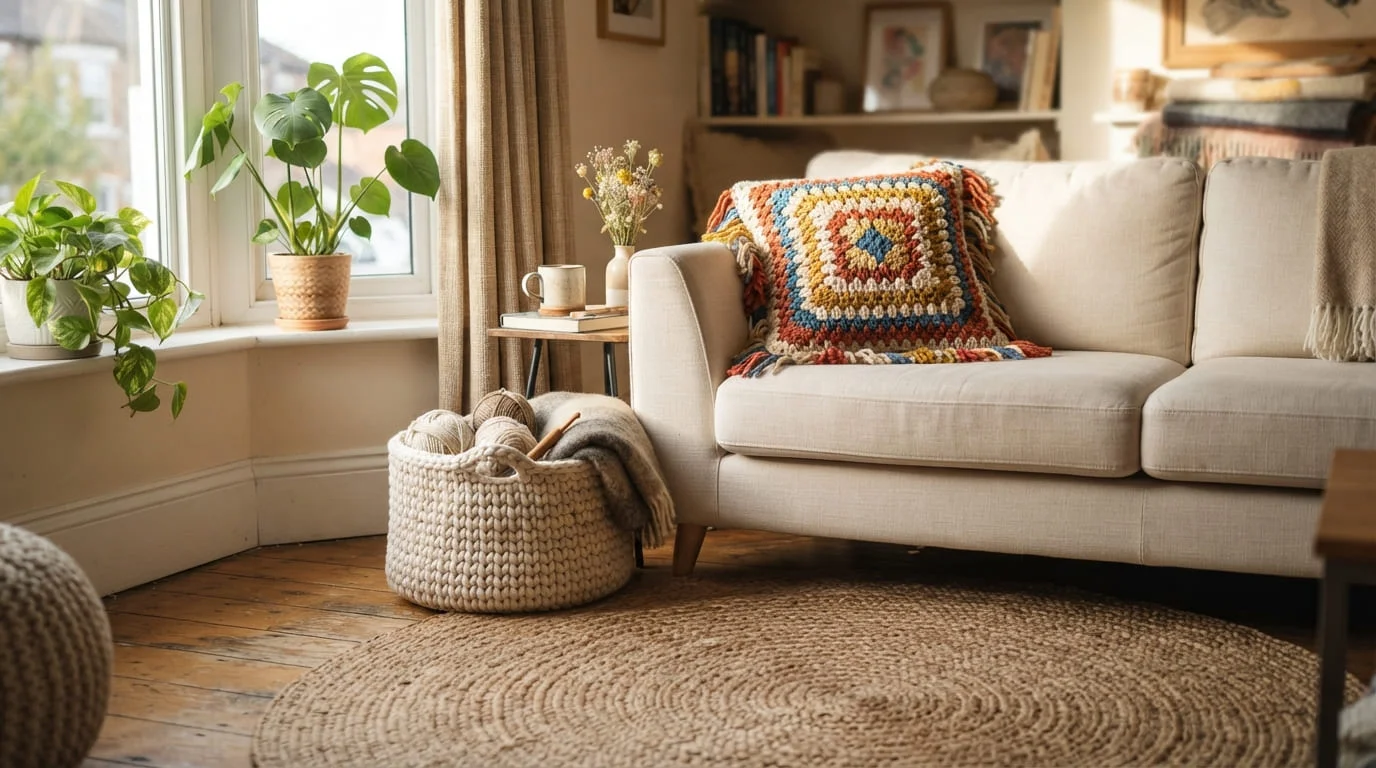
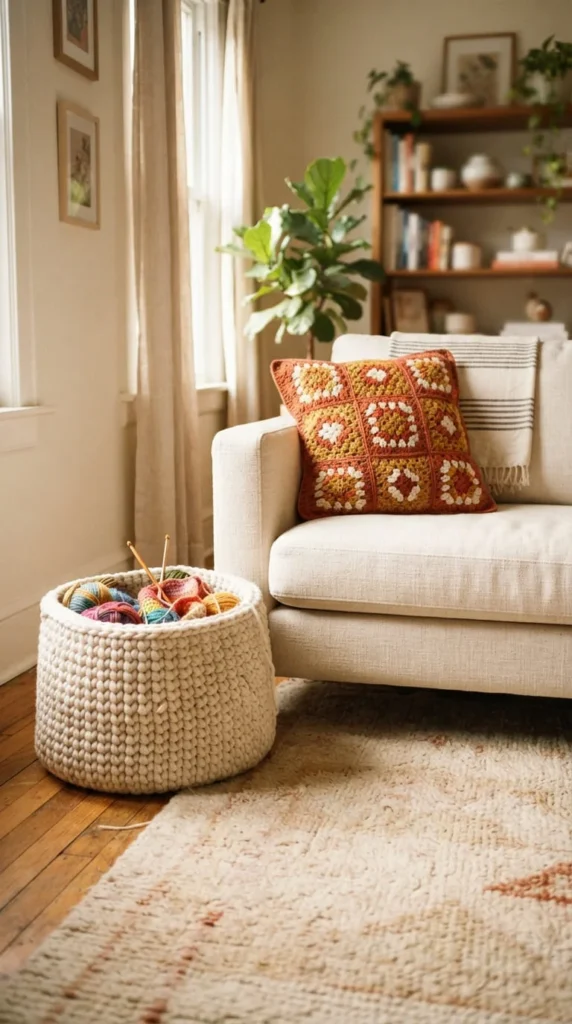
Crochet has moved off the coffee table and straight into the living room. Home decor patterns are everywhere right now — baskets, pillows, rugs, wall hangings, plant hangers — and most of them are free, beginner-friendly, and finishable in a weekend. This list pulls together 22 patterns that cover every room in your house, from a cozy reading nook to a kitchen counter that needs a little texture. Each one comes with real yarn and hook suggestions, budget tips, and simple ways to make it your own. No fluff, no complicated techniques — just handmade pieces that actually look good in a modern home.
1. Chunky Granny Square Pillow Cover
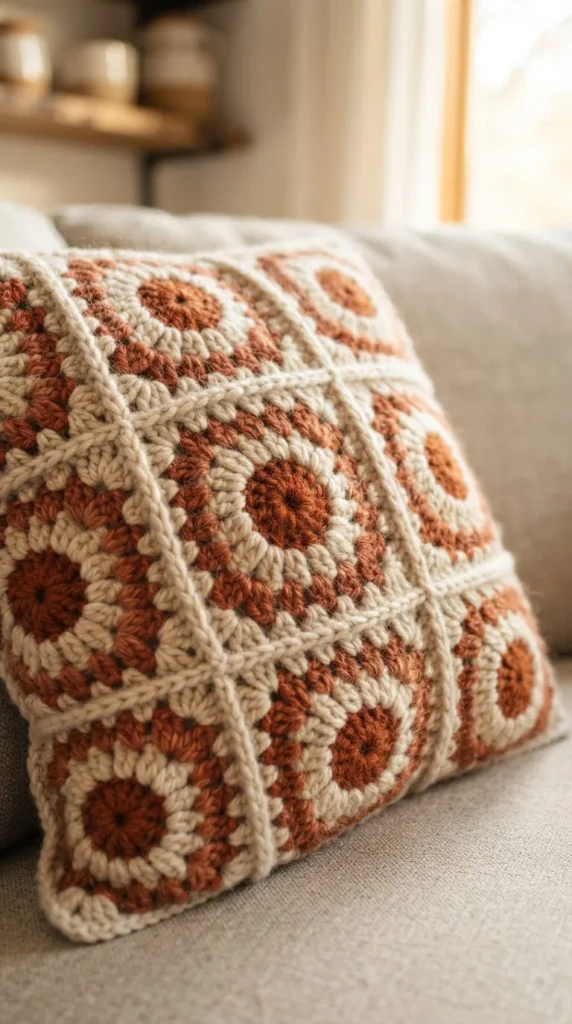
Granny squares never really left, and this version proves why. Use a super bulky yarn like Bernat Softee Chunky with a large hook for a pillow that stitches up in one sitting. Four squares, one seam, done. Swap colors to match your existing throws instead of buying new decor. A budget tip: use leftover scrap yarn from other projects for the squares, then back it with a plain cotton fabric you already have. Insert a standard 18×18 pillow form — no need for a custom size. This works in a farmhouse living room or a boho bedroom equally well. Keep the color palette neutral with one accent stripe if you want it to blend into more spaces. It’s a great starter project if you’ve never made anything decor-related before. The squares are forgiving, the seaming is simple, and the payoff is big for the time spent.
2. Sturdy Storage Basket with Two Strands
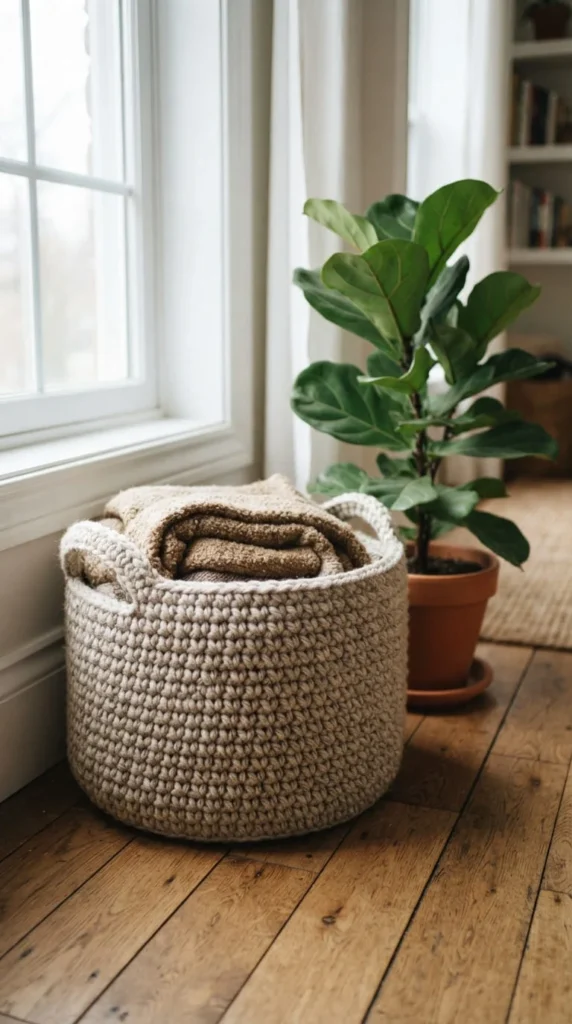
Floppy baskets are the number one complaint with this project, and the fix is simple. Hold two strands together while you crochet, using a smaller hook than the yarn calls for. This tightens the stitches and gives the basket real structure. Start with a flat base, increase evenly, then work straight up the sides. Lion Brand Hometown or Bernat Blanket yarn both work well here. A budget-friendly move: use two strands of a cheaper worsted-weight yarn instead of buying pricier super bulky skeins. This basket is perfect for toy storage, blanket storage, or corralling remotes on a shelf. Keep the base wide and the sides short for a sturdier stand-up shape. If it still feels soft when finished, a plastic basket liner inside solves that instantly. This is one of those projects that looks store-bought once it’s done, but costs a fraction of what a boutique basket runs.
3. Round Rag Rug from Old T-Shirts
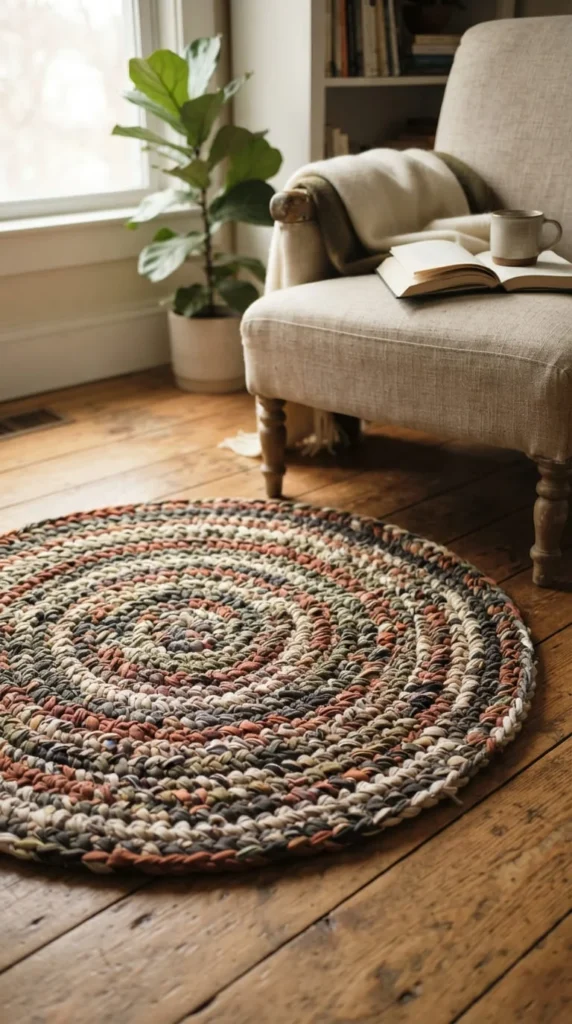
This one costs almost nothing. Cut old t-shirts into strips to make your own “yarn,” then crochet a simple round rug using a large hook. No pattern math needed — just single crochet in a spiral, increasing every few stitches to keep it flat. Mixing colors from different shirts gives it a naturally varied, rag-rug look. This is the ultimate stash-buster project and a smart way to use fabric that would otherwise get thrown out. Keep the increases even so the rug doesn’t ruffle or cup in the middle. A flat lay on the floor as you work helps you check your progress. This rug works well in an entryway, bathroom, or beside a bed. Washing is easy too — most cotton t-shirt yarn holds up fine in a gentle machine cycle. If you want more structure, hold two strips together as you work. It’s a weekend project with zero yarn budget required.
4. Boho Macrame-Style Wall Hanging
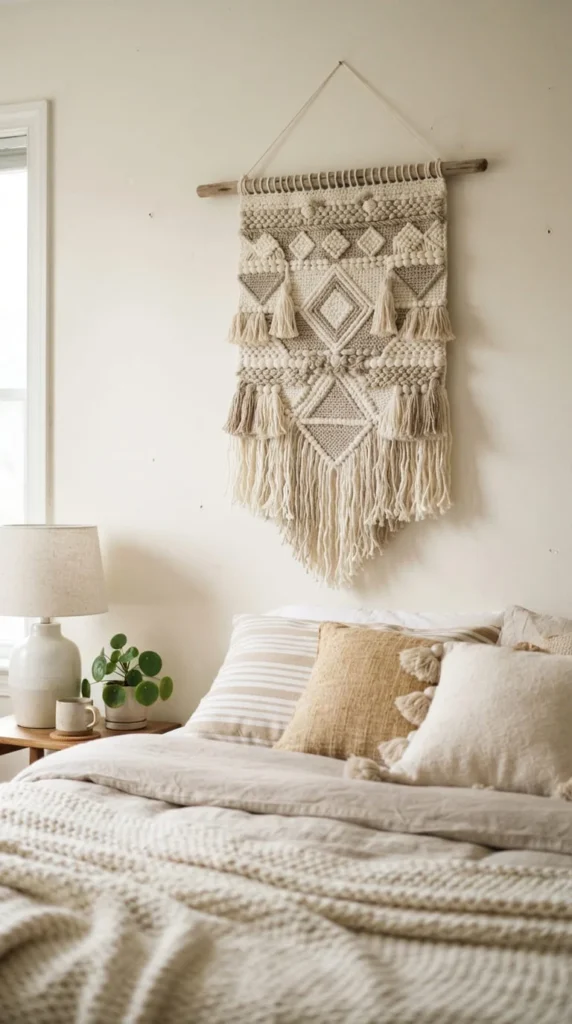
Crochet wall hangings give you the boho macrame look without learning knots. Work a simple triangle or diamond shape in cotton yarn, then add fringe along the bottom edge for movement. A wooden dowel or driftwood branch makes a natural-looking hanger — no hardware store trip required. Budget tip: raid the clearance bin for cotton yarn in neutral shades; this project barely uses one skein. Hang it with a tension rod or removable adhesive hook if you’re renting and can’t drill. This piece works above a bed, a console table, or in an empty stairwell corner. Keep the shape simple for your first try — a basic triangle with a few rows of shells looks intentional, not amateur. Vary the fringe length for texture. This is a small project with a big visual payoff, and it’s one of the easiest ways to fill blank wall space without buying framed art.
5. Moss Stitch Table Runner
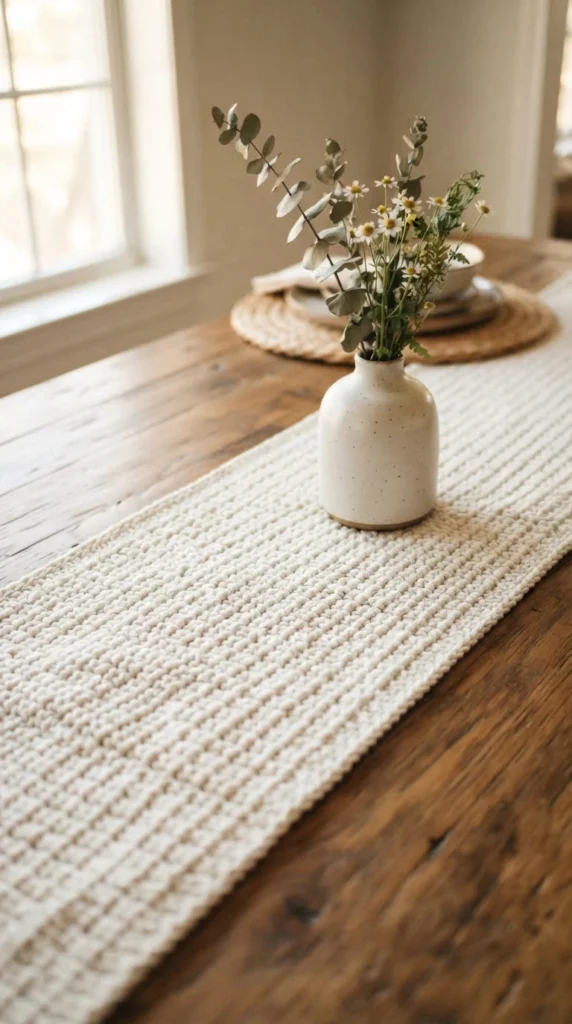
Moss stitch (sometimes called linen stitch) creates a dense, woven-looking fabric that’s perfect for a table runner. It lays flat, doesn’t curl, and looks far more polished than a basic single crochet strip. Use a cotton yarn for durability and easy washing — cotton dishcloth yarn from the craft store works great and costs very little. Measure your table first, then work the runner a few inches longer on each end for drape. This stitch is slow but simple: it’s just single crochet and chain-one repeated. A budget tip: buy one or two balls of cotton yarn in a neutral tone rather than a patterned option, so it matches more table settings. This runner works for everyday use or holiday styling. Add a few coasters in the same stitch for a matching set. It’s an easy afternoon project that instantly makes a plain table feel styled and finished.
6. Clothesline-Core Oval Rug
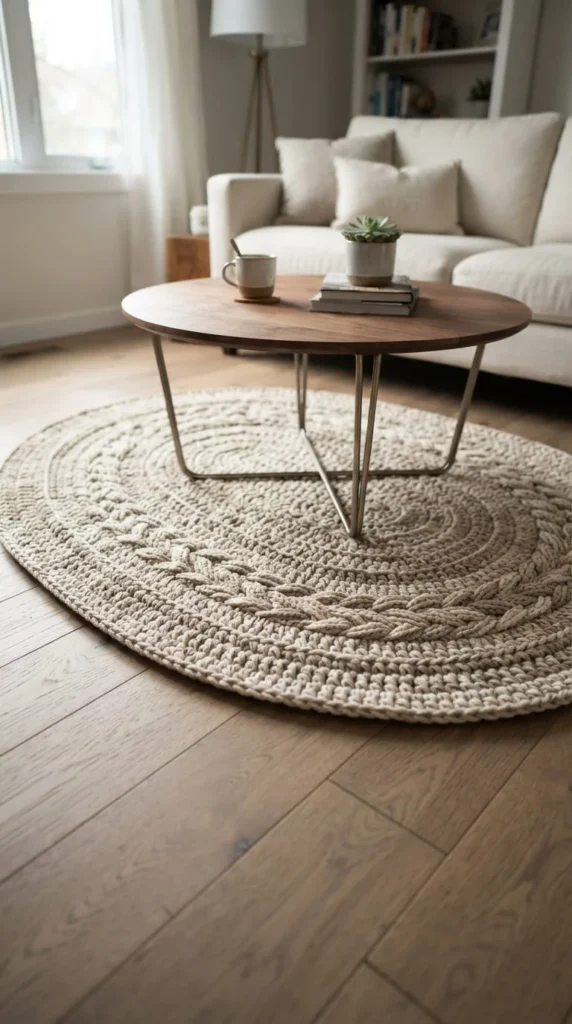
For a rug that holds its shape and never curls, work your stitches around a clothesline cord instead of just yarn alone. This technique wraps yarn around the cord as you crochet, giving the rug real weight and structure. It takes more yarn and more time than a flat rug, but the payoff is a rug that lies flat immediately, no blocking required. Budget tip: buy clothesline cord by the foot at a hardware store instead of specialty crochet cord — it’s much cheaper and works just as well. Use a sturdy cotton or acrylic yarn in a neutral shade so it fits a variety of rooms. Work in a spiral, increasing at the ends to keep the oval shape even. This rug is ideal for a living room or bedroom floor where you want texture underfoot. It takes a few evenings to finish, but it’s a project you’ll actually use for years.
7. Extended Single Crochet Pillow
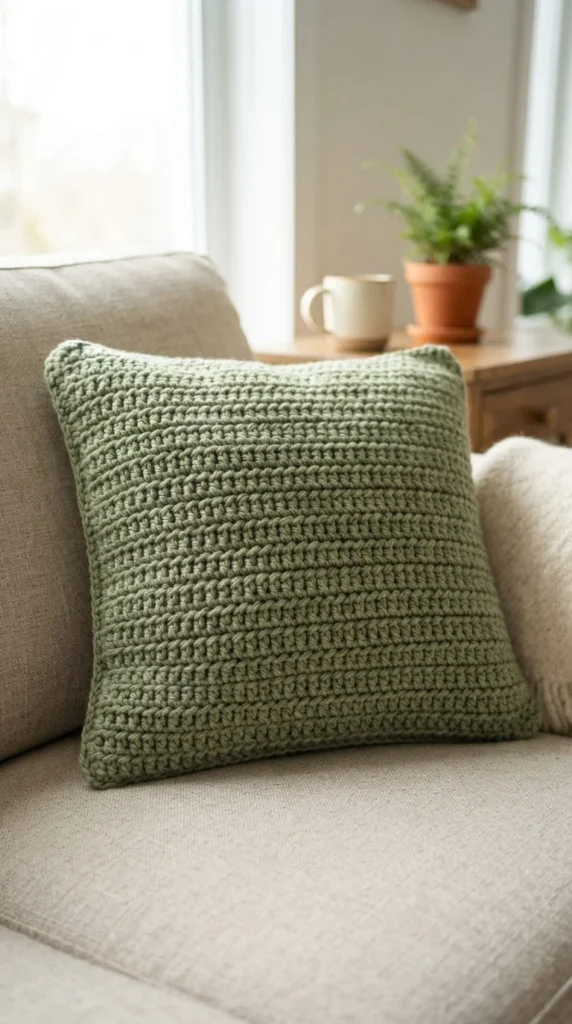
Extended single crochet (esc) creates a fabric that’s thicker and more textured than regular single crochet, which makes it a favorite for modern pillow covers. It’s just one extra step per stitch, so it’s beginner-friendly once you get the rhythm down. Work two matching panels, seam three sides, insert a pillow form, then seam the last side closed. Choose a worsted-weight yarn in sage, rust, or oatmeal for a current, modern-farmhouse look. A budget tip: buy a plain pillow form from a discount store rather than paying extra for a “decorative” one — the crochet cover does all the visual work. This stitch also hides small tension mistakes better than basic single crochet, which makes it forgiving for newer crocheters. Try color-blocking two shades for a more modern effect. This pillow pairs well with the granny square version from earlier for a mixed-texture couch setup that doesn’t feel matchy.
8. Hanging Plant Pot Cozy
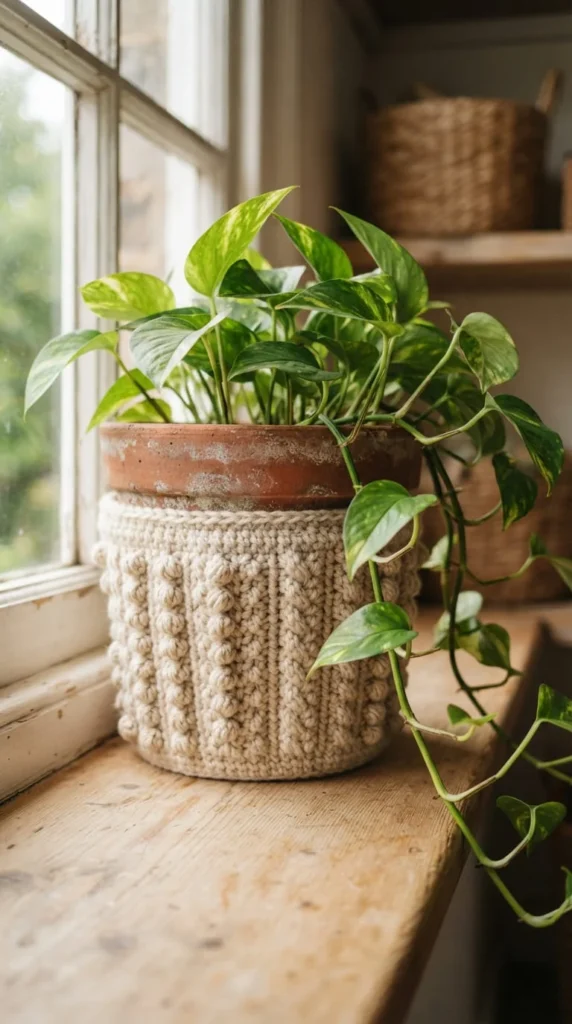
A plant pot cozy is one of the fastest decor projects on this list. Crochet a simple tube in the round to fit around a plastic nursery pot, then slip it over. No sewing, no shaping — just single crochet in a circle. Use cotton yarn since it holds up better near soil and occasional water spills. Budget tip: this project uses less than half a skein, so it’s a great way to use up yarn scraps from bigger projects. Make several in different heights to fit a whole shelf of plants for a coordinated look. This works for real plants or faux ones if you don’t have a green thumb. Add a drawstring at the top with leftover yarn for a cinched, gathered look. This is a great project to hand to a beginner — it’s quick, low-stakes, and the result looks intentional even with minor mistakes hidden in the texture.
9. Bobble Stitch Throw Pillow
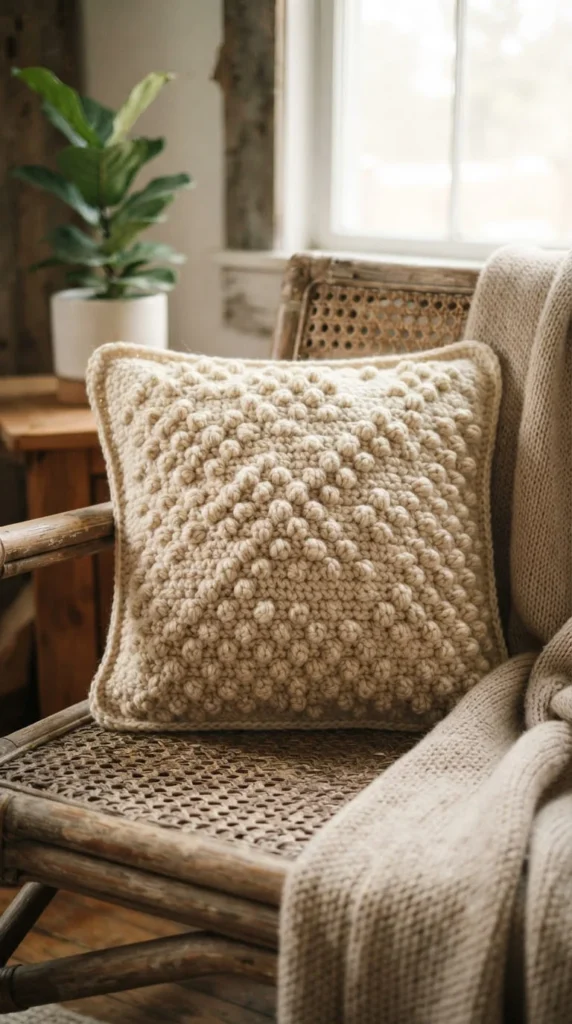
Bobble stitch adds dimension without adding difficulty. Each bobble is just a cluster of stitches worked into one spot, then closed off — it looks complicated but it’s really just repetition. Use this stitch for an all-over pillow cover, or work a bobble border on a plain single crochet base to save time and yarn. A worsted-weight yarn in a light neutral shows off the texture best; darker colors tend to hide the raised stitches. Budget tip: work bobbles only along the border instead of the whole pillow — you’ll get the textured look using half the yarn. This pillow adds visual interest to a plain sofa without adding pattern or color, which makes it easy to mix with other pieces. Pair it with a smooth knit throw for contrast. This is a good next-step project after granny squares, since it introduces a new stitch without a steep learning curve.
10. Alpine Stitch Nesting Baskets
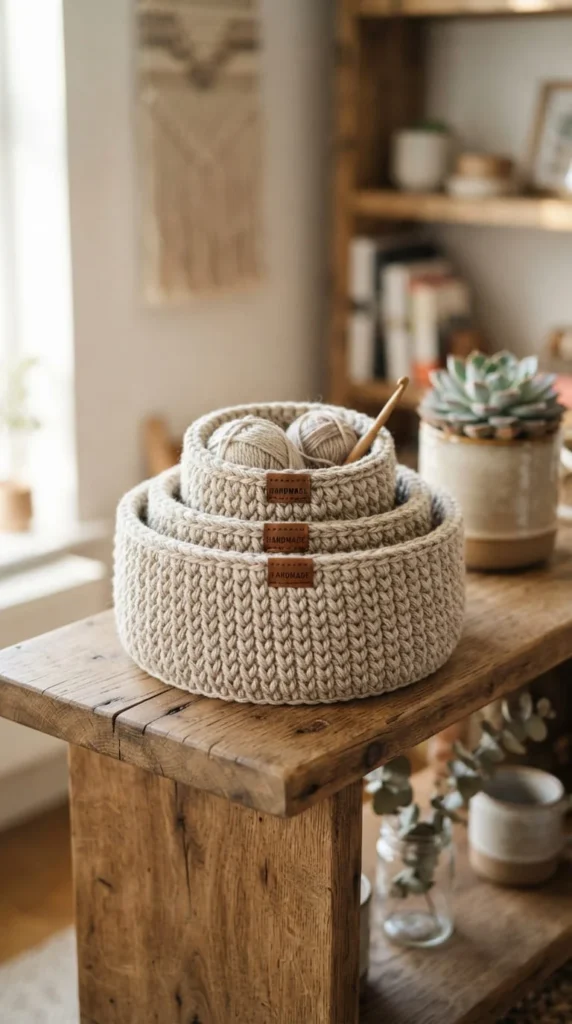
Alpine stitch creates a thick, ribbed texture that’s ideal for baskets that need to stand up on their own. It’s a slower stitch than basic single crochet, but the structure it creates means you can skip the double-strand trick. Make three baskets in graduated sizes using the same pattern, just adjusting stitch counts for the base. Use a super bulky yarn and a hook one size smaller than recommended for extra firmness. Budget tip: buy yarn in bulk skeins rather than smaller balls — the price per yard drops significantly. These nesting baskets work great for bathroom storage, entryway catchalls, or organizing craft supplies. Stack them by size on open shelving for a styled look that also solves clutter. This is a slower project, so plan for a few evenings rather than one sitting. The structure pays off, though — these baskets hold their shape without any stiffening spray or liner.
11. Scrap Yarn Granny Stripe Rug
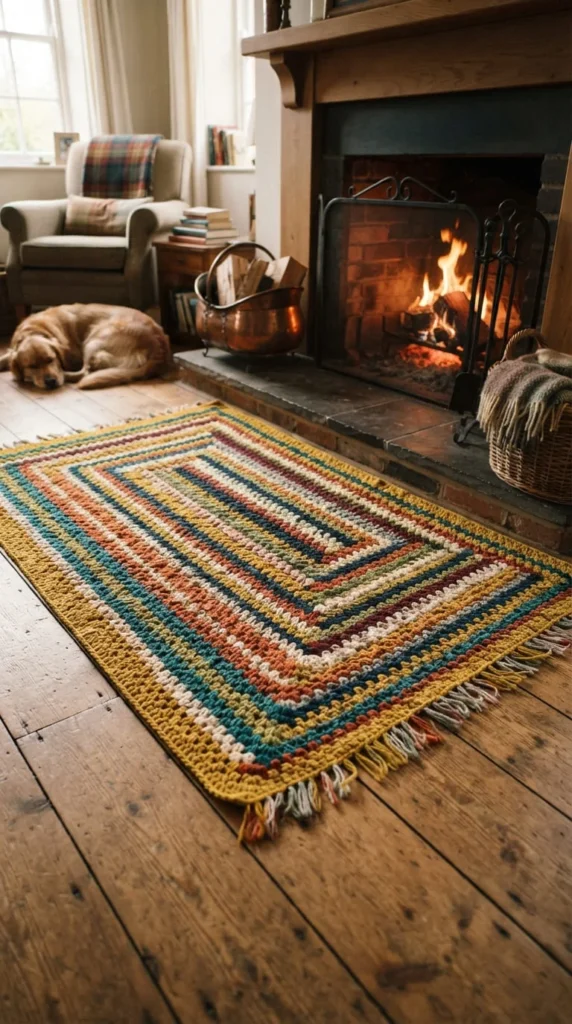
If you’ve got a bin of leftover yarn from old projects, this rug is the answer. Work simple granny stripes back and forth in rows, using whatever colors you have on hand. The random color changes actually work in this rug’s favor — it looks intentionally eclectic rather than mismatched. Use a sturdy worsted or bulky yarn so the rug holds up to foot traffic. Budget tip: this project can cost nothing if you’re using true scraps, making it one of the most affordable rugs on this list. Work it as wide or as long as your yarn allows, then bind off and weave in ends. This rug works well in a laundry room, mudroom, or kid’s playroom where a little wear and tear is expected. Because it’s made from many different yarns, washing instructions vary — hand wash to be safe. This is a great “use it up” project for anyone with a growing yarn stash.
12. Coiled Trivet and Coaster Set
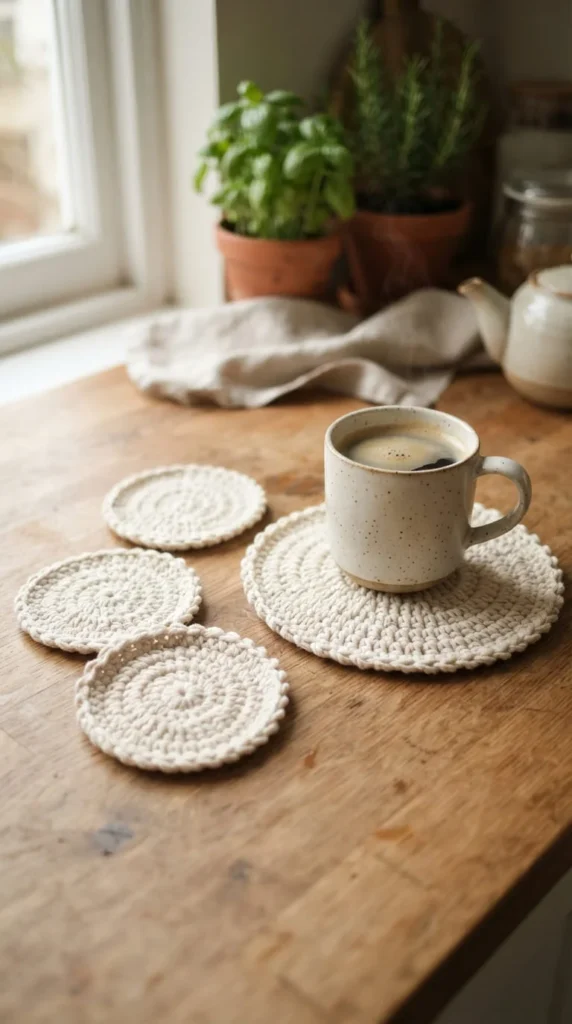
Coasters and trivets are the smallest projects on this list, and the fastest to finish. Work a simple spiral in cotton yarn, increasing evenly to keep it flat. A set of four coasters plus one larger trivet uses less than one full skein. Cotton yarn matters here since it handles heat and moisture better than acrylic. Budget tip: dishcloth cotton yarn from the craft store is inexpensive and comes in tons of colors, so you can make a full matching set for just a few dollars. This project is ideal for using up small leftover balls of cotton from other kitchen projects. Vary the stitch pattern slightly between the coasters and trivet for texture contrast, or keep them uniform for a cleaner look. These make a nice handmade gift too, bundled with a mug. It’s a low-commitment way to try a new stitch pattern without investing hours into a bigger project.
13. Textured Cable Stitch Pillow
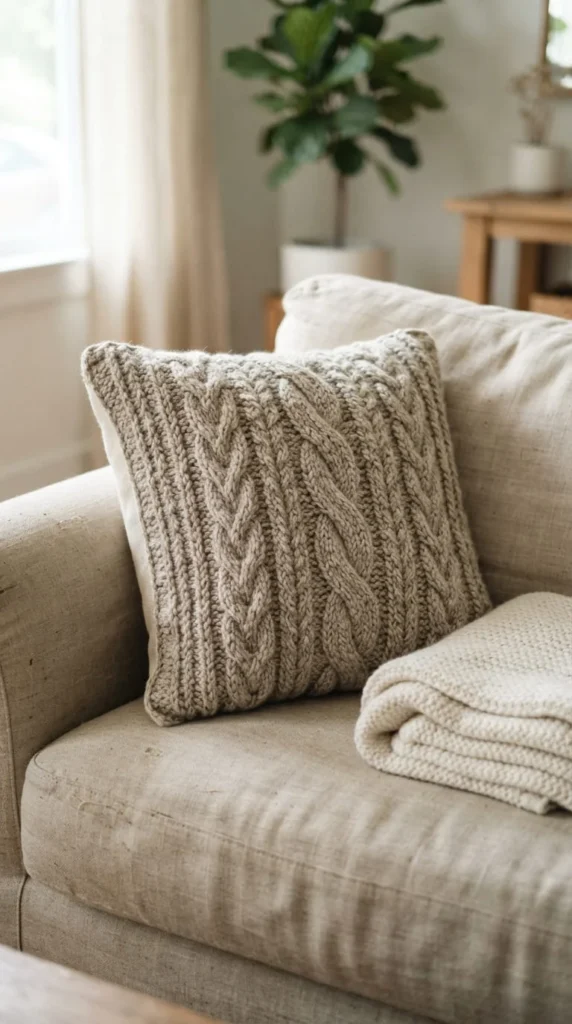
Cable stitch in crochet mimics the look of knit cables using front-post and back-post stitches. It takes a bit more focus than basic stitches, but the visual payoff is worth it. Work a panel with a single cable running down the center, flanked by simple single crochet on either side, then seam into a pillow cover. Use a light, solid-color yarn so the cable texture actually shows — busy or dark colors tend to hide the detail. Budget tip: work the cable only as an accent strip on the front panel instead of the whole pillow to save both yarn and time. This pillow adds a cozy, cabin-style texture to a room without going full rustic. It pairs well with a plain woven throw or a smooth knit blanket for contrast. This is a good project to practice front-post and back-post stitches, which come up in a lot of other textured decor patterns too.
14. No-Drill Tension Rod Garland
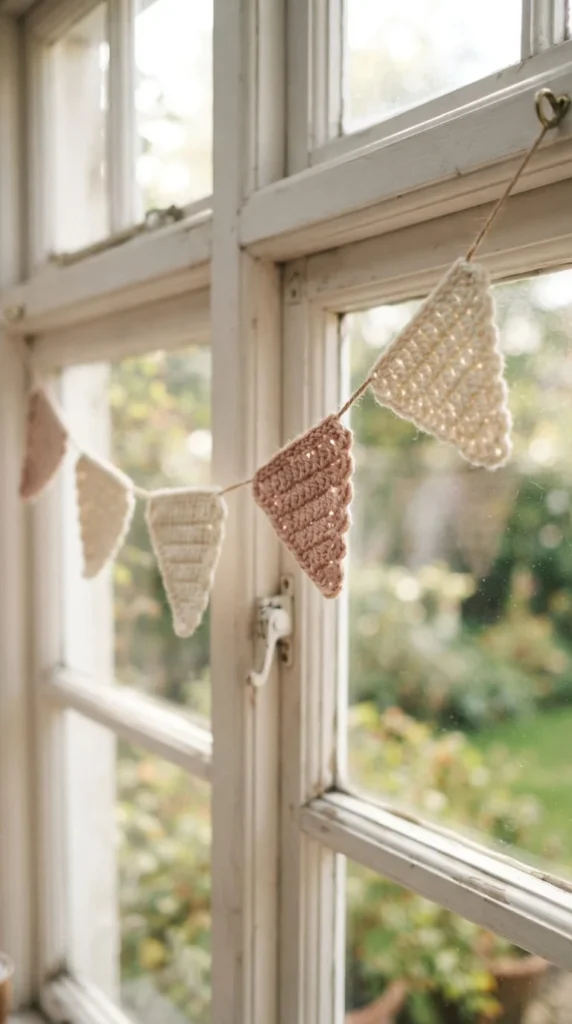
A crochet garland is one of the simplest ways to add handmade charm to a rental-friendly space. Make a series of small triangles or granny mini-squares, then string them along a length of yarn or twine. No hardware needed — drape it over a curtain rod, mantel, or window frame using a tension rod if there’s nothing to hang from. Budget tip: this project uses almost no yarn, so it’s a perfect way to burn through tiny leftover scraps in multiple colors. Each triangle takes just a few minutes, making this an easy project to work on while watching TV. Vary the sizes slightly for a more organic, handmade look rather than a uniform one. This garland works for everyday decor or can be swapped seasonally — pastels for spring, warm tones for fall. It’s low-risk, low-cost, and a good confidence-builder if you’re newer to crochet and want a quick win.
15. Chunky Knit-Look Floor Pouf
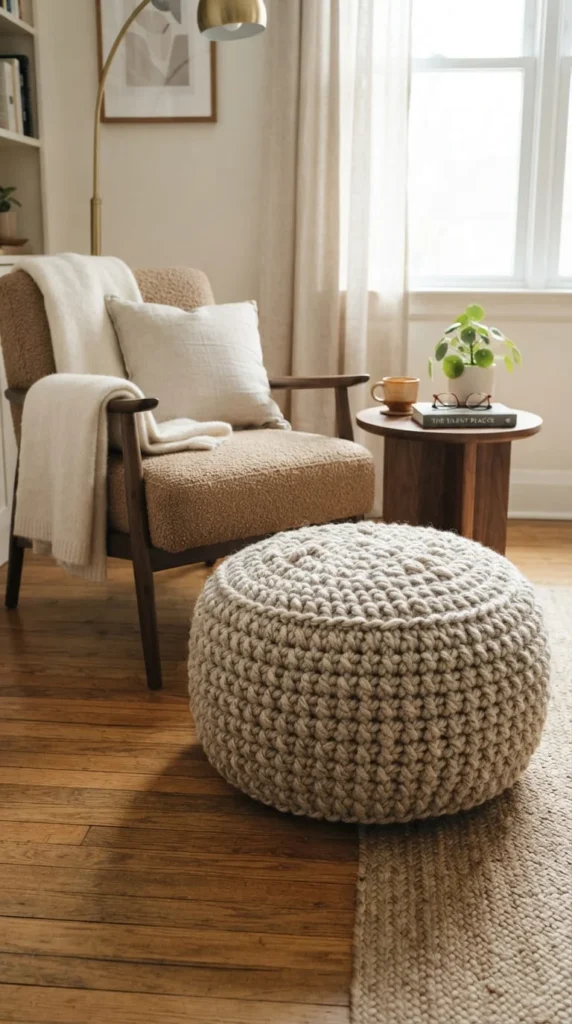
A floor pouf gives you extra seating and a soft landing spot for feet, and it’s more approachable to crochet than it looks. Work a large tube in the round using super bulky yarn, then close off the top and bottom, leaving a gap for stuffing. Fill it with an old pillow form, foam scraps, or even plastic bags for a firmer feel. Budget tip: skip buying poly-fil and use stuffing from an old, worn-out pillow instead — it’s a great way to repurpose something you’d otherwise toss. This project takes more yarn than most on this list, so it’s a good one to save for when you find bulky yarn on sale. Keep the color neutral so it blends with existing furniture. This pouf works well in a reading corner, kids’ playroom, or as extra seating when guests come over. It’s a bigger time investment, but the result is genuinely useful, not just decorative.
16. Linen Stitch Shelf Liner
Linen stitch makes a dense, flat fabric that works well as a shelf liner for open shelving or a linen closet. It’s the same stitch used for table runners, so if you’ve already tried one, this project will feel familiar. Measure your shelf, then work a rectangle to fit using cotton yarn for durability. Budget tip: this project uses very little yarn since it’s usually a narrow strip, making it a great way to use up a single ball of cotton. This is a subtle decor touch — most people won’t clock it as handmade at first glance, but it adds texture and warmth to open storage. Use it under folded towels, dishes, or books. It also protects wood shelves from scratches. This is a practical, low-visibility project that’s more about function than statement, which makes it a nice palate cleanser between bigger, more decorative makes.
17. Fringe-Trimmed Boho Pillow
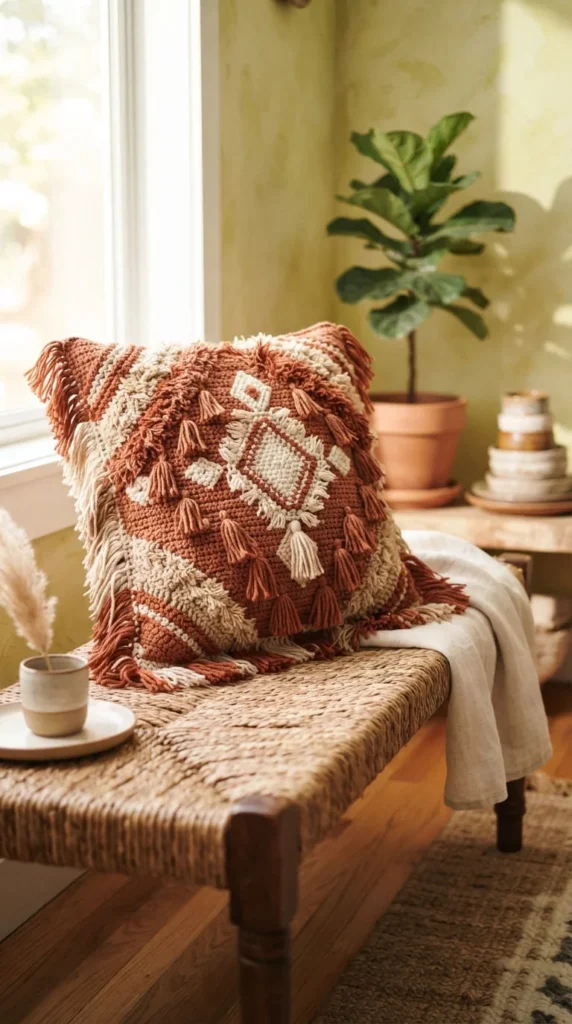
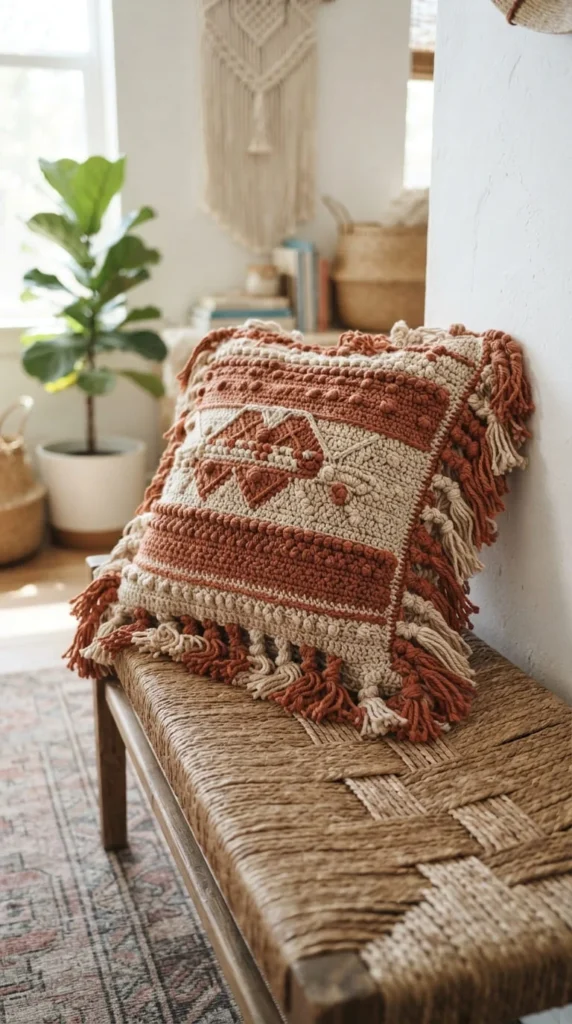
Fringe takes a basic pillow cover from plain to boho in about ten extra minutes. Crochet a simple front and back panel, seam three sides, then add fringe along the seams using a crochet hook and cut lengths of yarn. Insert a standard pillow form and close the last seam. Budget tip: use contrasting scrap yarn for the fringe instead of buying a whole new skein — it adds visual interest without extra cost. This pillow works well layered with other textured pillows on a bed or sofa for a curated, collected look. Keep the base panel simple (basic single or double crochet) so the fringe becomes the focal point. Trim the fringe evenly once attached for a cleaner finish, or leave it a little uneven for a more relaxed, handmade feel. This is an easy way to practice a new finishing technique without committing to a whole textured stitch pattern.
18. Two-Tone Kitchen Dish Towel Trim
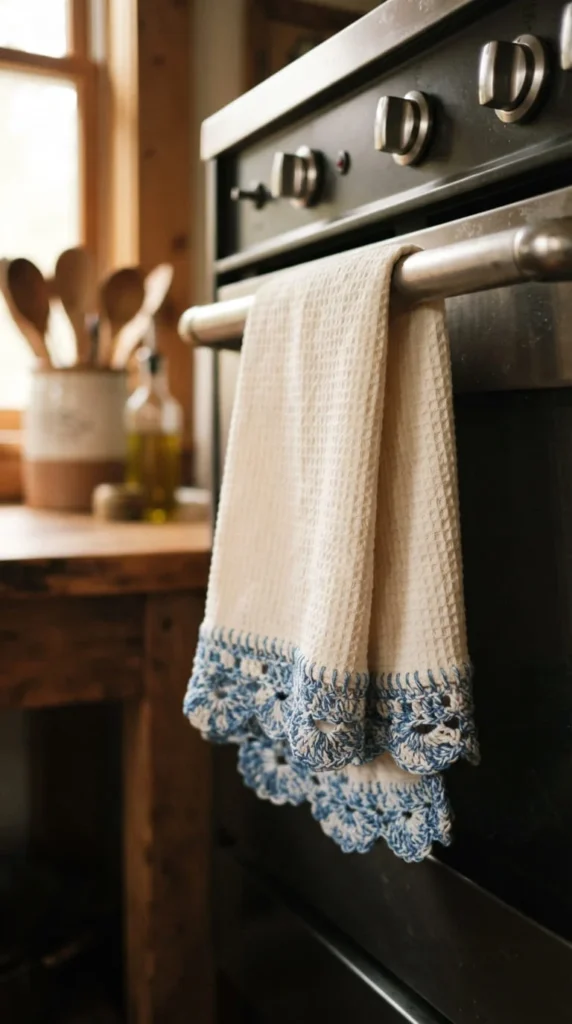
This one’s more upgrade than full project. Take a plain cotton dish towel you already own and add a simple crochet border along one edge. It’s a great way to practice working stitches directly into fabric, which is a useful skill for future projects. Use a contrasting cotton yarn so the trim actually stands out against the towel. Budget tip: this uses almost no yarn and zero new towels — just what’s already in your kitchen drawer. A row of single crochet followed by a row of shells is enough to make it feel special. This is a nice small project to give a kitchen a refreshed look without buying new textiles. Make a few towels with different trim colors to rotate through the seasons. It’s also a forgiving project since any small mistakes get tucked into the seam allowance of the towel itself.
19. Round Wall Mandala
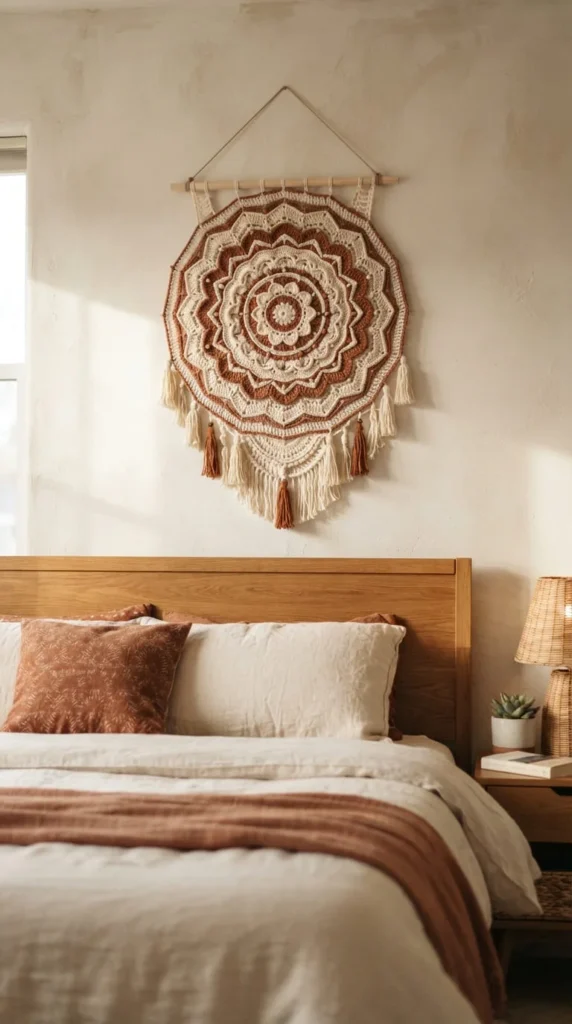
A crochet mandala is worked in the round, similar to a rug, but stays small and flat enough to hang on a wall. Start with a small circle and build outward in rounds, changing colors or stitch patterns as you go for visual interest. Once finished, block it flat, then attach a small loop of yarn or a hoop on the back for hanging. Budget tip: use an embroidery hoop you already own instead of buying a frame — it doubles as both structure and hanger. This piece works well above a headboard, on a stairwell wall, or grouped with a few smaller mandalas in different sizes. Keep the color palette tied to two or three shades so it doesn’t compete with other decor. This is a slower project since it requires careful blocking to lie flat, but it’s one of the more striking, gallery-worthy pieces on this list.
20. Textured Ottoman Cover
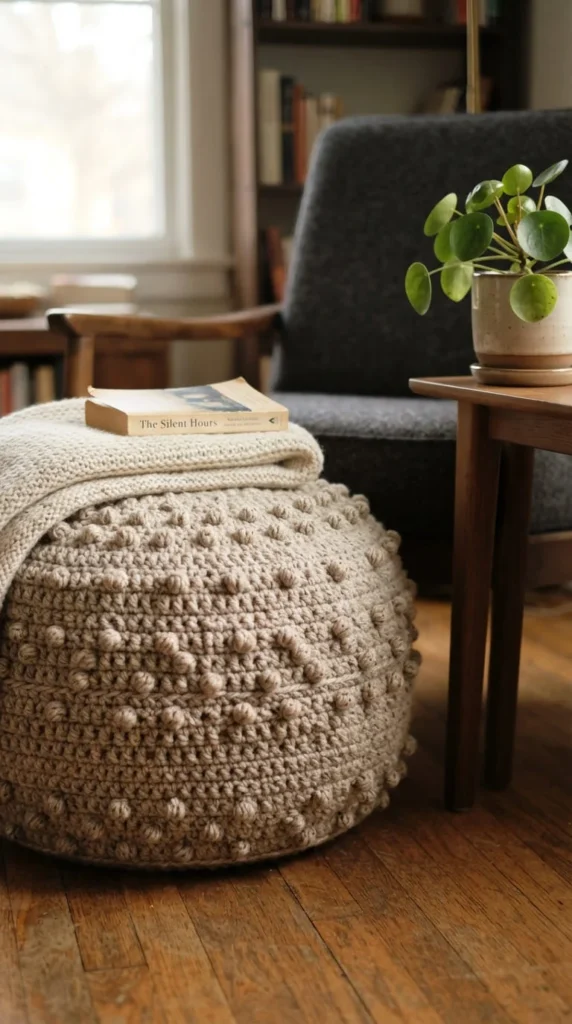
An old, worn ottoman gets a full refresh with a fitted crochet cover. Measure the ottoman’s dimensions, then work panels for the top and sides, seaming them together like a fabric slipcover. Use a sturdy worsted or bulky yarn since this piece gets sat on and stepped near often. Budget tip: this project is a great alternative to buying new furniture — instead of replacing a stained or dated ottoman, cover it. Add a textured stitch like bobble or alpine stitch to hide minor seaming imperfections. This is a bigger project, so break it into pieces over a couple of weeks rather than rushing it. The payoff is a piece of furniture that looks brand new for a fraction of the cost. This works especially well in a living room or bedroom where the ottoman doubles as a footrest or extra seating.
21. Mini Hanging Shelf Garland
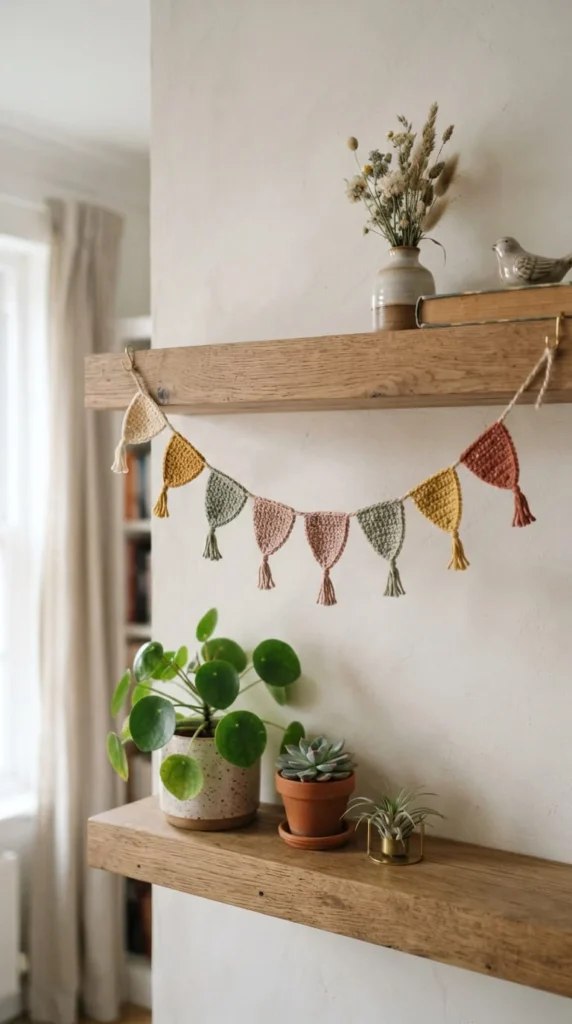
This small project pairs a mini garland with a floating shelf for a layered, styled look. Crochet a handful of tiny triangle or scallop shapes, then string them along a thin cord so they drape just below shelf height. Budget tip: this project takes almost no yarn, making it one of the cheapest ways to add handmade texture to a shelf display. Pair it with a small plant, a stack of books, or a candle for a finished vignette. Use two or three coordinating colors rather than a single shade for more visual movement. This is a great project for using up the very last bits of yarn from bigger projects — the pieces are small enough that even a few yards go a long way. It’s quick enough to finish in one sitting, which makes it a nice palate-cleanser project between bigger, more time-consuming makes on this list.
22. Seasonal Swap Pillow Covers
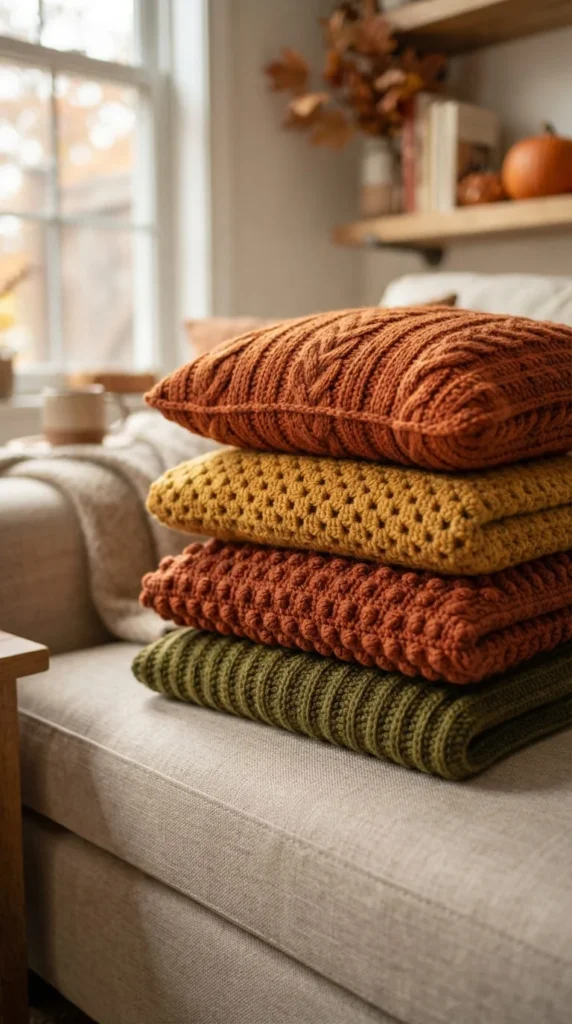
Instead of buying new pillows every season, make interchangeable covers that slip over the same insert. Crochet simple envelope-style backs so covers are easy to swap without a zipper. Make one set in warm oranges and browns for fall, another in cool blues for winter, and rotate them throughout the year. Budget tip: this saves money long-term since you’re only ever buying yarn, not new pillow inserts each season. Keep the front panel simple — a basic granny square or textured stitch works fine since the real value here is the swap system, not a complicated design. Store off-season covers flat in a drawer to save space. This project takes a bit of planning since you’ll want a few sets going, but it’s a practical, budget-conscious way to refresh a room throughout the year without buying anything new. It’s a smart last project to tie the whole list together.
Conclusion
Twenty-two projects, one common thread: a little yarn and a few evenings can genuinely change how a room feels. Start small — a coaster set or a garland — before working up to a rug or ottoman cover. Reuse what you already have, whether that’s leftover yarn, old t-shirts, or a plain pillow form, and let the projects build on each other as your skills grow. A handmade home doesn’t happen overnight, but one pattern at a time, it comes together.