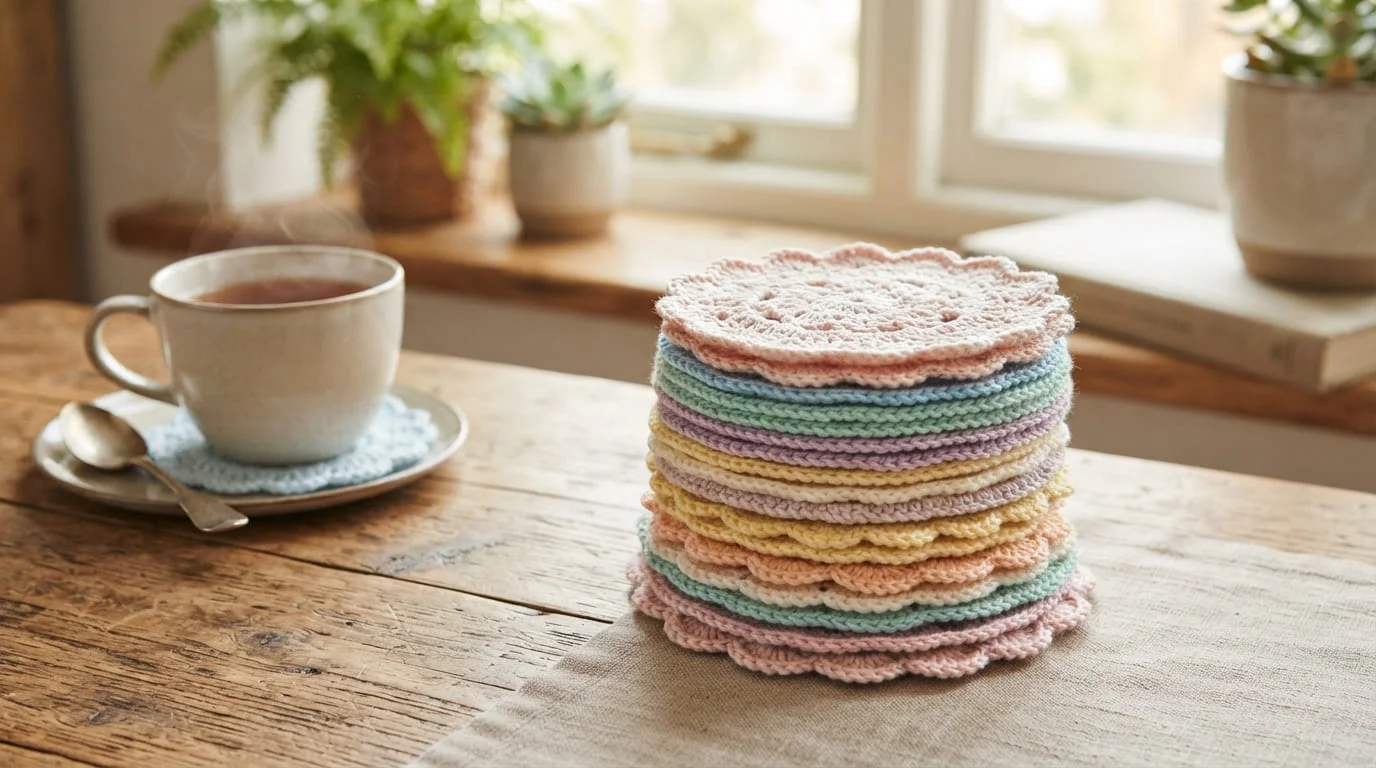
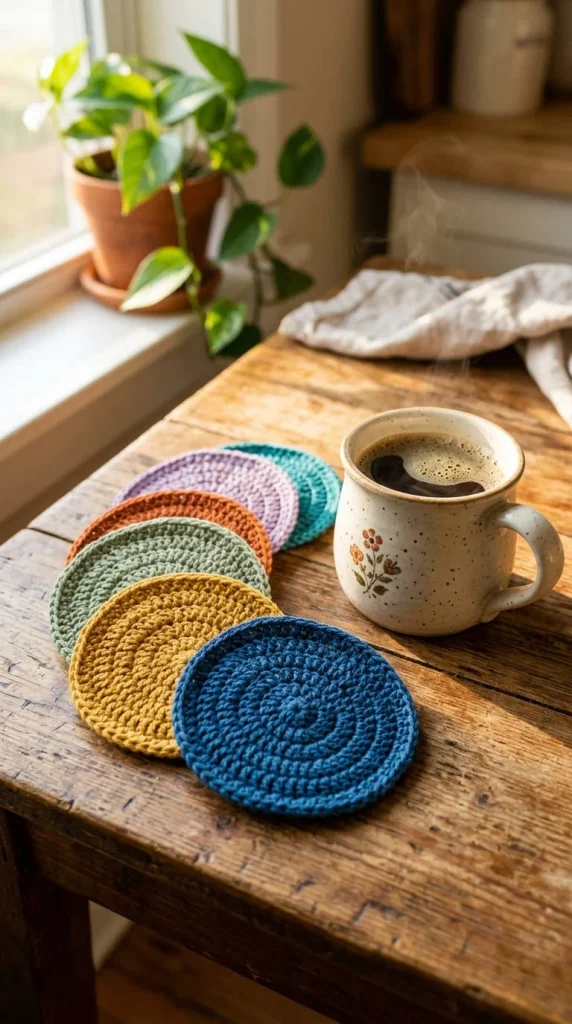
Crochet coasters are small, but they change a room fast. A handful of stitches turns scrap cotton into something you actually use every day. Whether you like clean granny squares, playful food shapes, or soft boho mandalas, there’s a coaster pattern here that fits your yarn stash and your style. This list walks through 23 designs, from simple circles for first-timers to textured, three-dimensional pieces for crocheters who want a bit more of a challenge. Grab a hook, a ball of cotton, and let’s get started.
1. Classic Granny Square Coasters
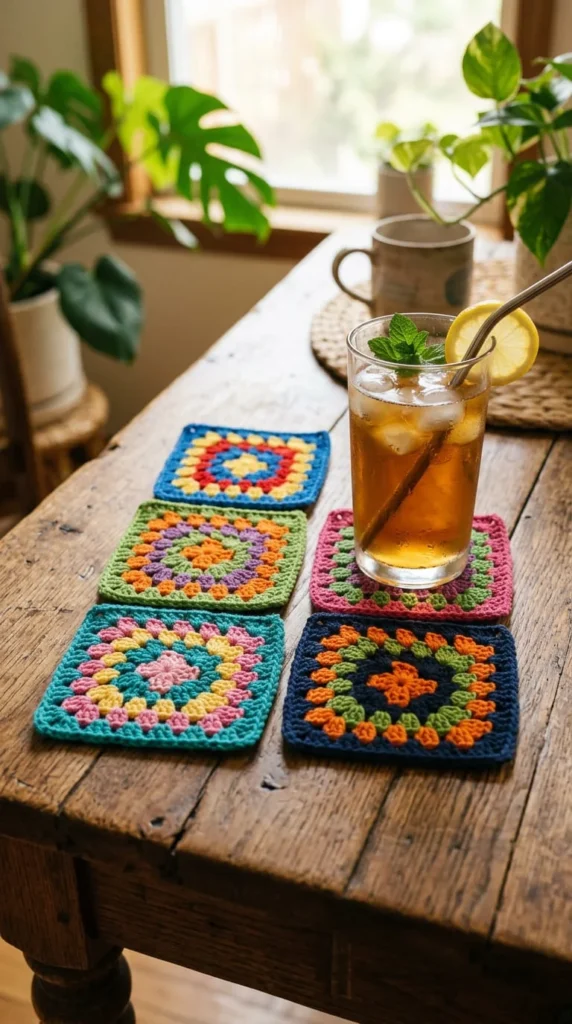
The granny square is where most crocheters start, and coasters are the perfect size to practice it. Each round adds a new color, so you can use up small bits of yarn from other projects. Four or five rounds usually gets you to the right size for a mug or glass. Cotton yarn works best here because it holds its shape and handles spills. If you want a budget-friendly option, raid your scrap basket instead of buying new skeins. Try pairing two neutral colors with one bright accent for a set that matches any kitchen. Weave in the ends as you go so finishing doesn’t pile up at the end. A set of four makes a nice housewarming gift, especially tied with twine and a wooden coaster holder from a thrift store. This pattern also teaches color changes, which you’ll use again and again. Once you’ve made one, the next nine go fast. Keep a small notebook of stitch counts so your squares stay the same size across a set.
2. Boho Mandala Coasters
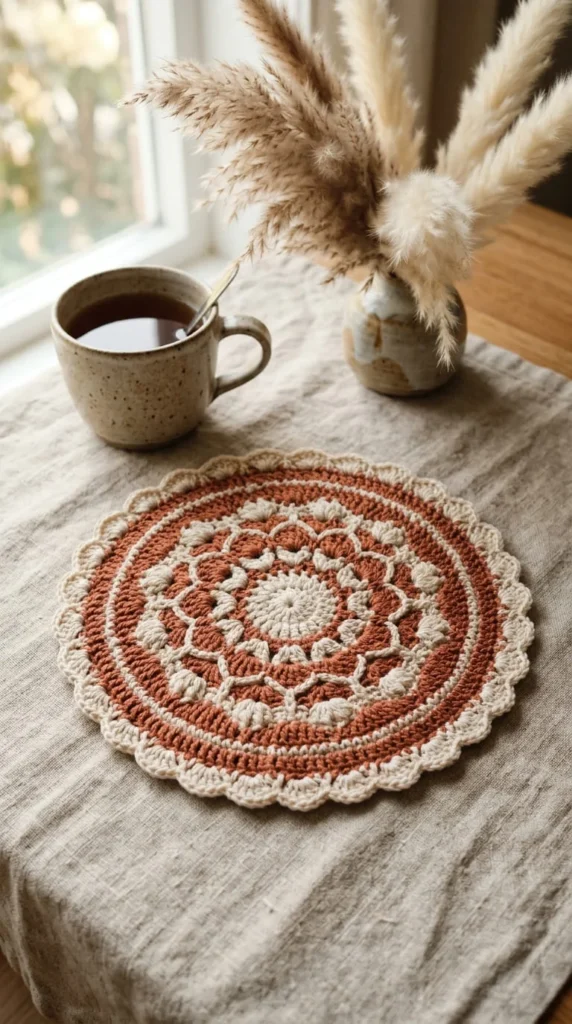
Mandala coasters bring a boho feel to any table setting. They’re worked in the round, so you build outward with a magic ring at the center. Each round can switch colors or stitch types, which is part of what makes them look so detailed. Stick to earthy tones like rust, cream, and sage for that farmhouse-meets-boho look people love right now. A magic ring keeps the center tight instead of leaving a hole, so learn that trick early. These coasters take a little longer than a basic circle, but the payoff is worth it. Use half double crochet for a denser feel that holds up to hot mugs. If you’re short on time, a three-round mini mandala still reads as detailed from a distance. Pair them with a matching plant hanger for a cohesive look. Cotton yarn in muted shades photographs beautifully for anyone selling on Etsy. This is a great project for using up small amounts of yarn in a coordinated palette.
3. Hexagon Patchwork Coasters
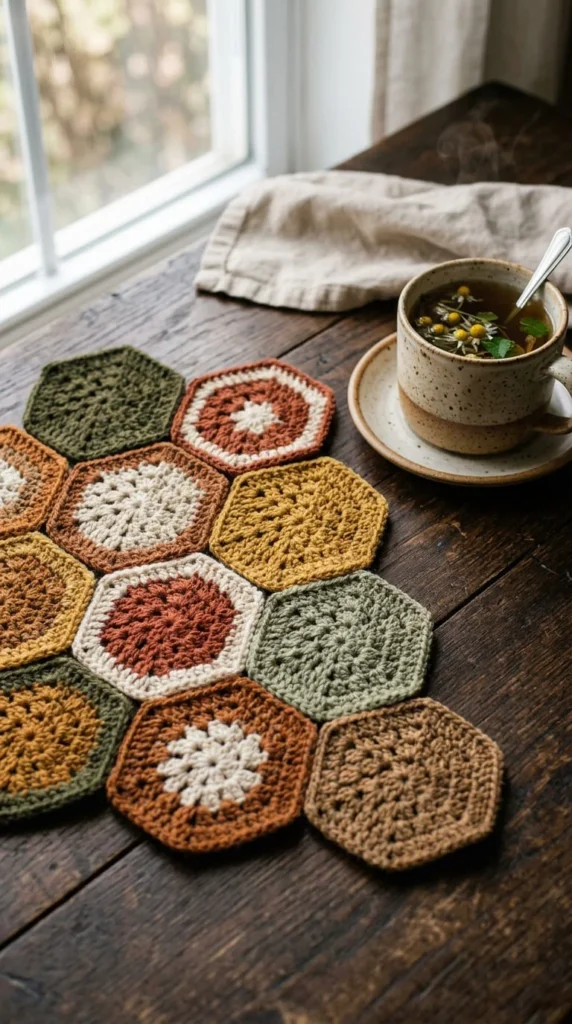
Hexagons give coasters a modern, geometric look that stands out from the usual circle or square. You work them in rounds like a mandala, but stop at six sides instead of going fully round. They fit together like a honeycomb, so a full set looks striking laid out on a table. This shape is a step up from a basic circle, so it’s a good next project once you’ve got magic rings down. Use two contrasting colors: one for the body, one for a bold border. Cotton yarn keeps the edges crisp, which matters a lot with straight sides. If your hexagon curls at the corners, add an extra stitch or two on the corner increases. These coasters work well as a modern-farmhouse gift set, especially in gray and mustard tones. Try mixing hexagons with a few matching squares for a patchwork table setting. Six coasters made from hexagons use less yarn than you’d think, so this is an easy stash-buster project too.
4. Flat Circle Beginner Coasters
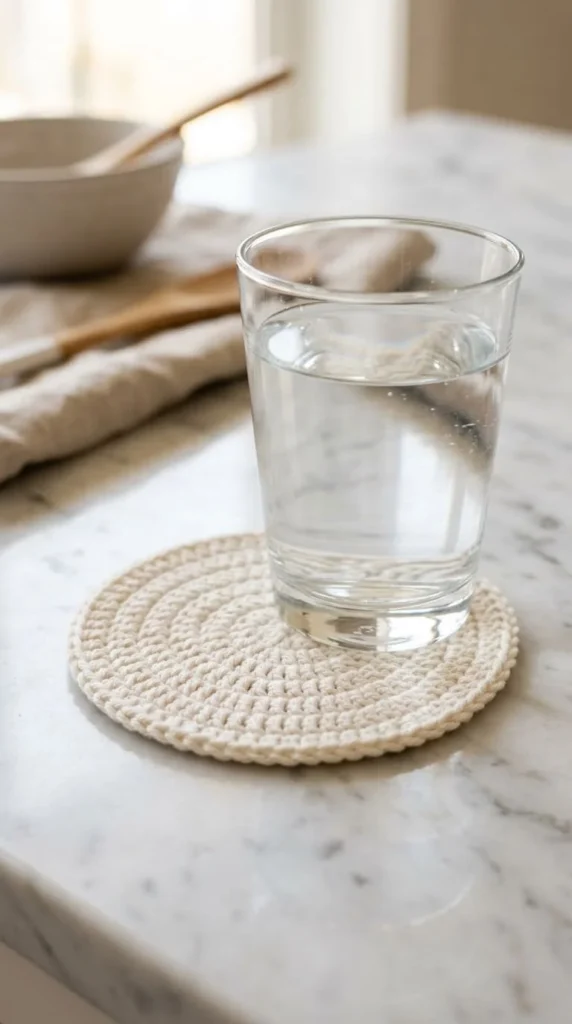
If you’ve never made a coaster before, start here. A flat circle is just single or half double crochet worked in increasing rounds from a magic ring. No fancy stitches, no color changes required. This is the pattern to practice keeping your work flat instead of curling into a bowl shape. The trick is adding the right number of stitches each round, usually six more per round for single crochet. Cotton yarn in a plain color like cream or gray gives you a clean, versatile base you can use anywhere. Once you’ve nailed the flat circle, every other round coaster on this list gets easier. This project also takes under thirty minutes per coaster, so it’s ideal for a quick evening make. Beginners should count stitches at the end of every round until it becomes second nature. A stack of six plain circle coasters makes a simple, useful gift for someone learning to crochet themselves. Keep the yarn light-colored so mistakes are easy to spot and fix.
5. Textured Puff Stitch Coasters
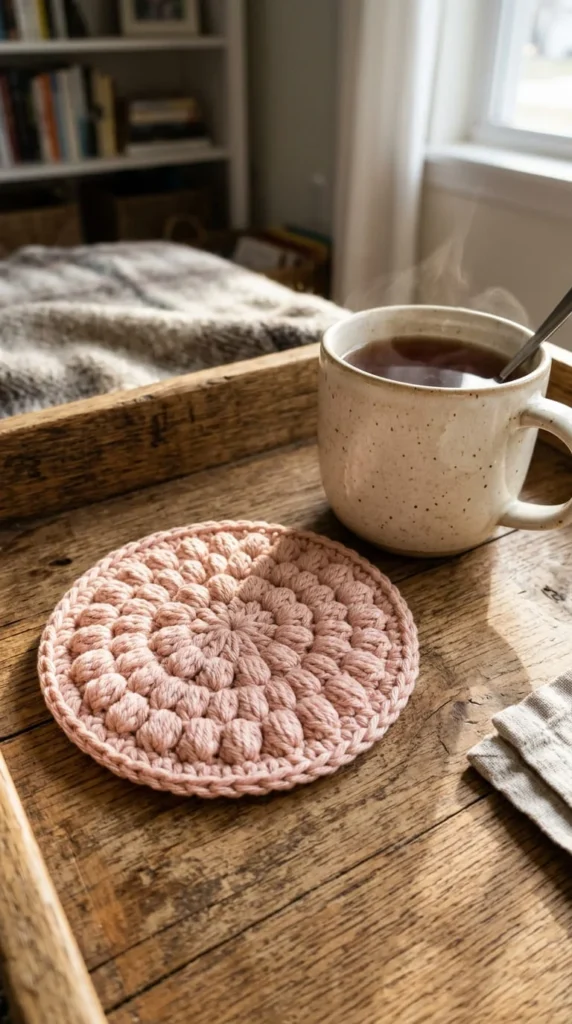
Puff stitches add bumps and texture that plain single crochet can’t match. Each puff is a cluster of loops pulled through together, so it takes a little practice to get consistent. Once you’ve got the rhythm, though, these coasters look far more detailed than they actually are to make. Space the puffs in a spiral or ring pattern for a look that catches the light. Cotton yarn in a solid color lets the texture do the talking, so skip busy color changes here. These coasters double as a small palm-sized fidget while you sip your coffee, since the bumps feel good under your fingers. Try a set of two in different shades for a his-and-hers gift. Puff stitches also hide small tension mistakes better than flat stitches do, which makes this forgiving for less experienced hands. Block the coaster lightly after finishing so the puffs sit evenly instead of leaning. This pattern is a nice bridge between beginner circles and more advanced textured work.
6. 3D Flower Coasters
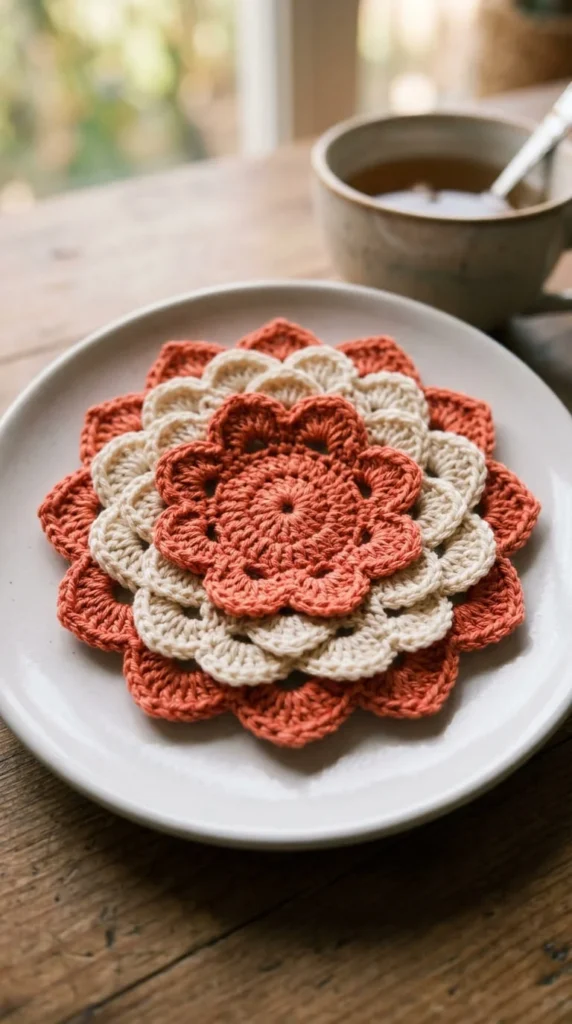
Flower coasters look complicated but come together in layers, which makes them more approachable than they seem. You crochet a base circle, then add a ring of petals on top using a separate round of stitches. Two-tone flowers, like coral petals with a yellow center, look especially good on a kitchen table. These coasters use more yarn than a flat circle because of the extra petal layer, so budget an extra small skein per coaster. Blocking matters here more than with other patterns, since it helps the petals lie flat instead of curling upward. A quick steam with an iron (held above the fabric, not touching it) can flatten stubborn edges fast. This pattern works well as a spring or summer gift set, paired with a small vase or a bundle of dried flowers. Try changing the petal count from five to seven for a fuller look. Once you’ve made one flower coaster, doubling the batch for a full set of six goes quickly.
7. Scalloped Edge Coasters
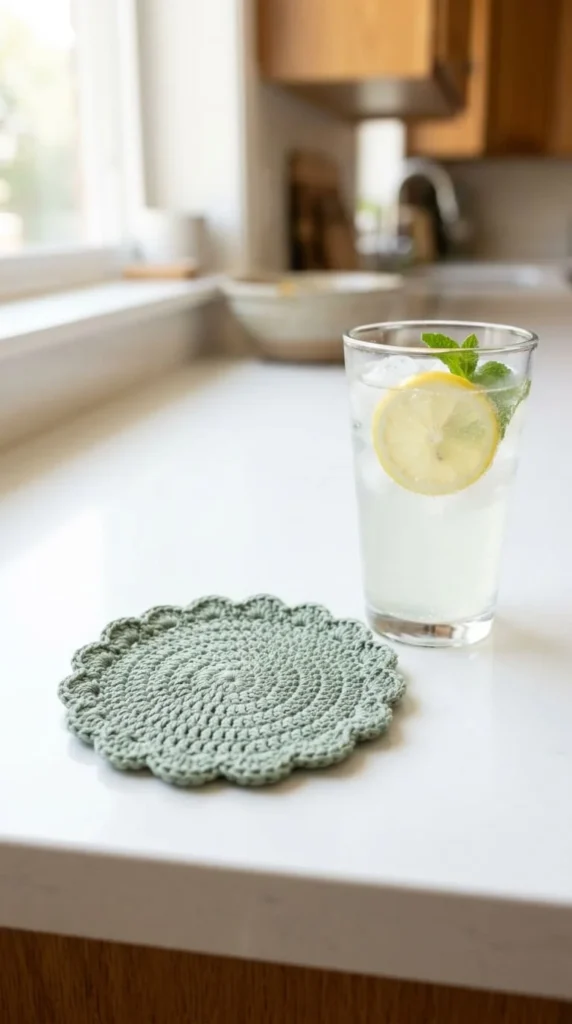
A scalloped edge turns a plain coaster into something that looks store-bought. You crochet the base as usual, then add one final round of small arches or shells around the outer edge. This last round is where the visual value comes in, so don’t skip it even if you’re short on time. Use a contrasting color for the scallop round to make it pop against the base. Cotton yarn holds the shell shape better than acrylic, which tends to flatten out after washing. This edging technique also works on squares and hexagons, not just circles, so once you learn it you can apply it everywhere. Keep your scallops evenly spaced by counting stitches between each shell rather than guessing by eye. A set of scalloped coasters photographs well for online shops, since the edge detail reads clearly even in small thumbnail images. This is a low-cost way to make a basic pattern look far more finished with almost no extra yarn.
8. Checkered Tapestry Coasters
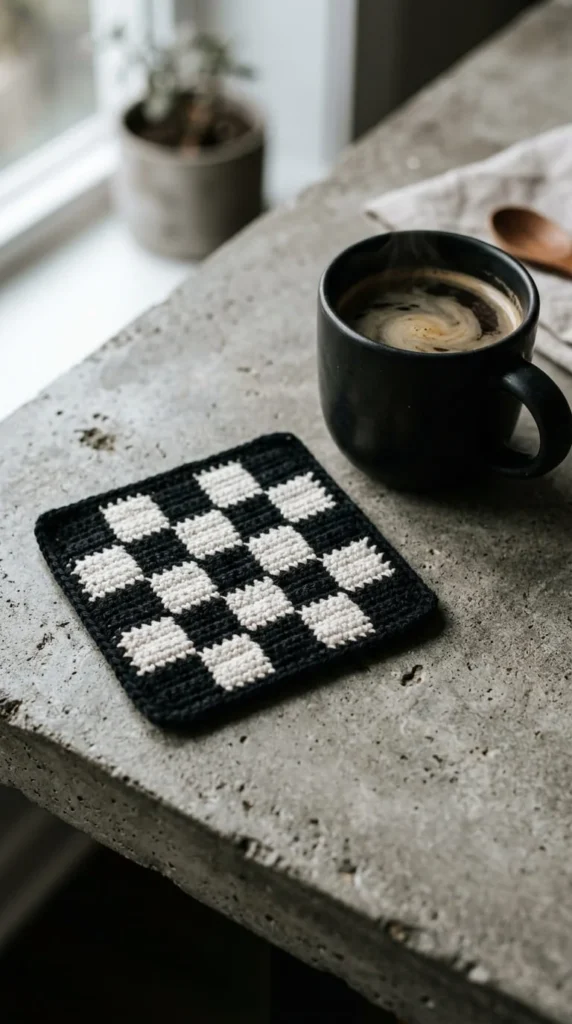
Checkered coasters use tapestry crochet, where you carry two colors at once and switch between them mid-row. It looks tricky in photos, but the technique itself is just single crochet with a color swap every few stitches. Start with a small four-by-four grid before attempting anything bigger. Black and white is the classic combo, but navy and cream reads just as sharp. Cotton yarn in two contrasting colors keeps the pattern crisp instead of muddy. Carrying the unused color along the back of your work (instead of cutting it each time) saves yarn and cuts down on ends to weave in. These coasters take a bit longer than solid ones, so don’t rush your first attempt. Once you understand the color-switching rhythm, you can design your own checkered layouts instead of following a chart exactly. A set of checkered coasters looks sharp against a plain wood table and works for almost any modern or minimalist kitchen. This is a fun project once you’re past beginner basics.
9. Farmhouse Minimalist Coasters
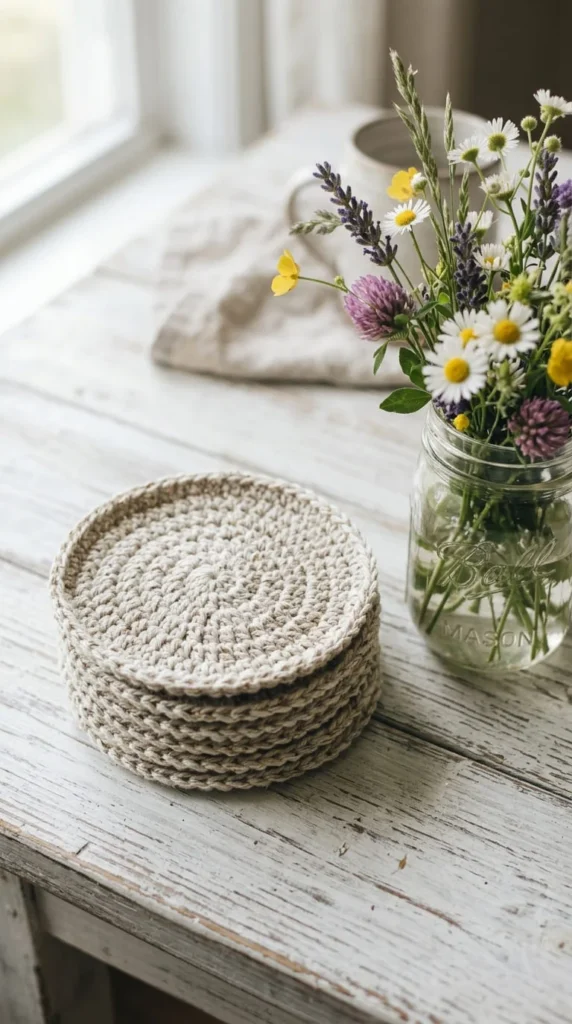
Minimalist coasters skip color changes and fancy edges in favor of one neutral shade and a simple textured stitch. Half double crochet worked in the back loop only creates a ribbed look without any extra effort. Oatmeal, cream, and light gray cotton yarns fit almost any kitchen decor without clashing. This pattern is fast to repeat, so a set of six or eight comes together in an afternoon. Because there’s no color matching involved, it’s a good project to grab yarn for on a budget, since a single large skein covers an entire set. Farmhouse-style coasters pair well with wooden coaster holders or a simple ceramic bowl for storage. Skip embellishments like buttons or beads if you want the plain look to stay clean and simple. This is also a good pattern to practice even tension, since any texture is more visible on the flat surface. A neutral coaster set works as a safe, useful gift for someone whose style you don’t know well.
10. Fall Pumpkin Coasters
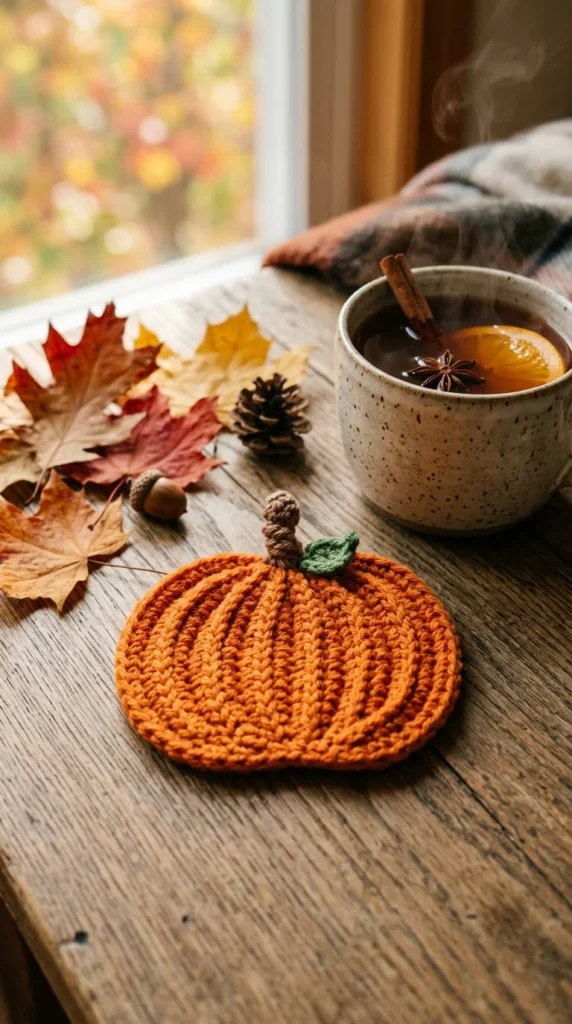
Pumpkin coasters bring a seasonal touch to your table without committing to full Halloween decor. The shape comes from working vertical ribs into a round base, usually with front post and back post stitches alternating. Orange cotton yarn is the obvious choice, but try a muted terracotta for a more grown-up palette. A tiny brown or green stem on top, made from a short chain and folded fabric, finishes the look. These coasters take a little longer than a plain circle because of the ribbing, but the shape reads as a pumpkin even from across the room. Make a set of four for a fall table setting, or gift them alongside a candle for a hostess present. Cotton yarn’s texture actually helps here, since it holds the rib lines cleanly. Try this pattern in late summer if you want it ready before pumpkin season starts. Kids love picking out the stem color, so this is also a fun one to make together.
11. Halloween Ghost Coasters
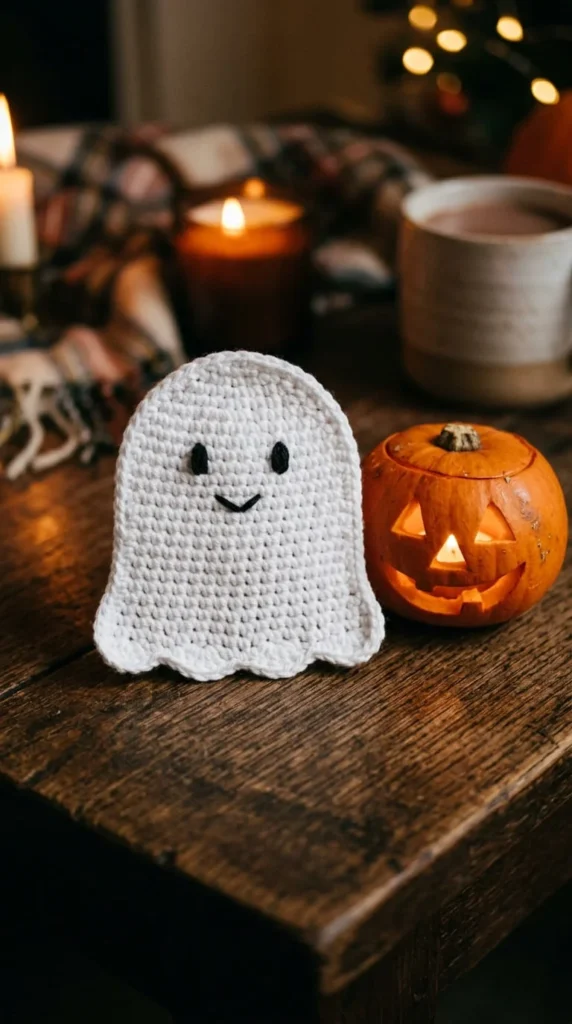
Ghost coasters are a simple shape: a rounded top with a wavy bottom edge, worked flat instead of in the round. White or cream cotton yarn is the base, and small black beads or embroidered dots make the eyes. This pattern is beginner-friendly since it’s mostly straightforward rows with a shaping decrease near the bottom edge. Keep the wavy hem simple with just two or three points instead of a busy scalloped edge, so the ghost shape still reads clearly. These coasters are a fun one-night project for a Halloween party, since each one only takes about twenty minutes. Make a set of six for trick-or-treaters’ hot cocoa mugs, or gift a pair to a friend who loves fall decor. Cotton yarn keeps the shape sturdy enough to use as an actual coaster instead of just a decoration. This pattern also works well as a keychain or ornament if you skip the coaster backing and just embroider a small loop on top.
12. Christmas Snowflake Coasters
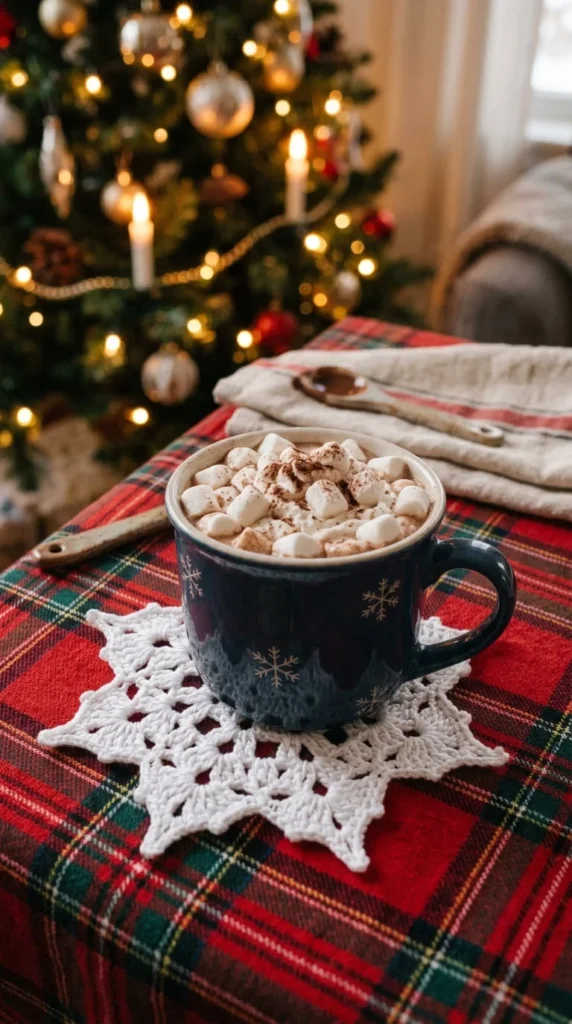
Snowflake coasters bring a lace-like look to your holiday table. They’re worked in the round with chain spaces and picot stitches that create the pointed, airy shape snowflakes are known for. White cotton yarn is the classic choice, but try icy blue or silver metallic thread mixed in for extra sparkle. This pattern takes more patience than a solid circle because of the open stitch pattern, so don’t rush your first one. A light starch spray after blocking helps the points hold their shape instead of drooping. Snowflake coasters look pretty layered over a solid-color coaster underneath, which also adds a bit more surface protection for hot mugs. Make a set of six for a holiday table, or turn a few into tree ornaments by skipping the coaster backing. This is a great pattern to make in bulk during November so you’re not rushing before guests arrive. Cotton yarn keeps the shape crisp even after repeated use.
13. Valentine’s Heart Coasters
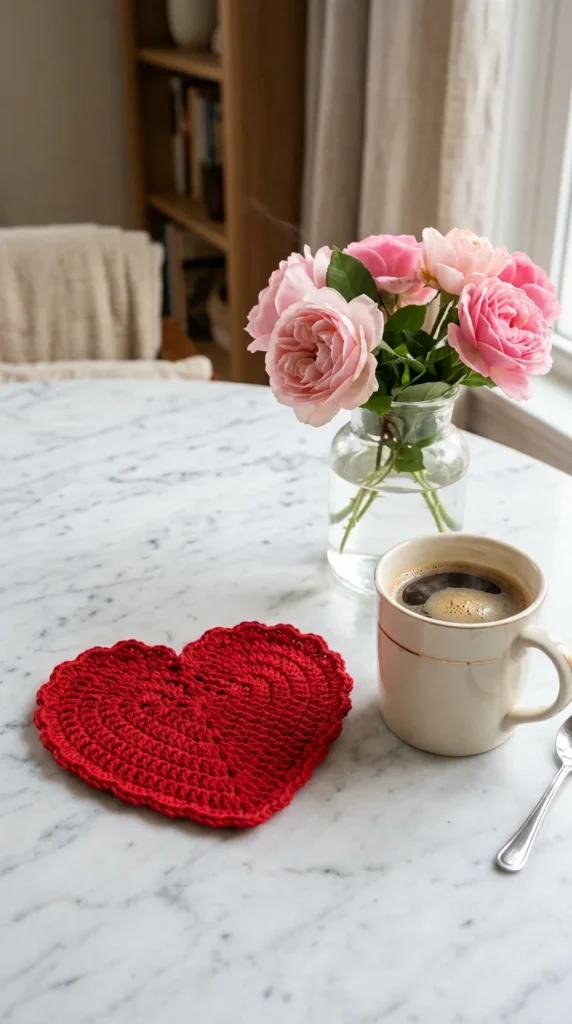
Heart coasters are worked flat, with two rounded top bumps and a pointed bottom. Red or pink cotton yarn is the obvious pick, but a soft blush shade feels less matchy and more like everyday decor. This shape uses simple increases and decreases, so it’s approachable even if you’ve only made a few coasters before. Add a scalloped edge in a contrasting color for extra detail without much extra effort. These make a sweet handmade gift for a partner, especially paired with a small box of tea or chocolate. A set of two, tied together with ribbon, works well as a small February gift for a friend or coworker. Cotton yarn keeps the heart shape sturdy enough for actual daily use instead of just sitting on a shelf. Try this pattern in white with a red border for a look that works past Valentine’s Day too. Kids also enjoy this project since the shape is easy to recognize even with a slightly uneven stitch count.
14. Donut Novelty Coasters
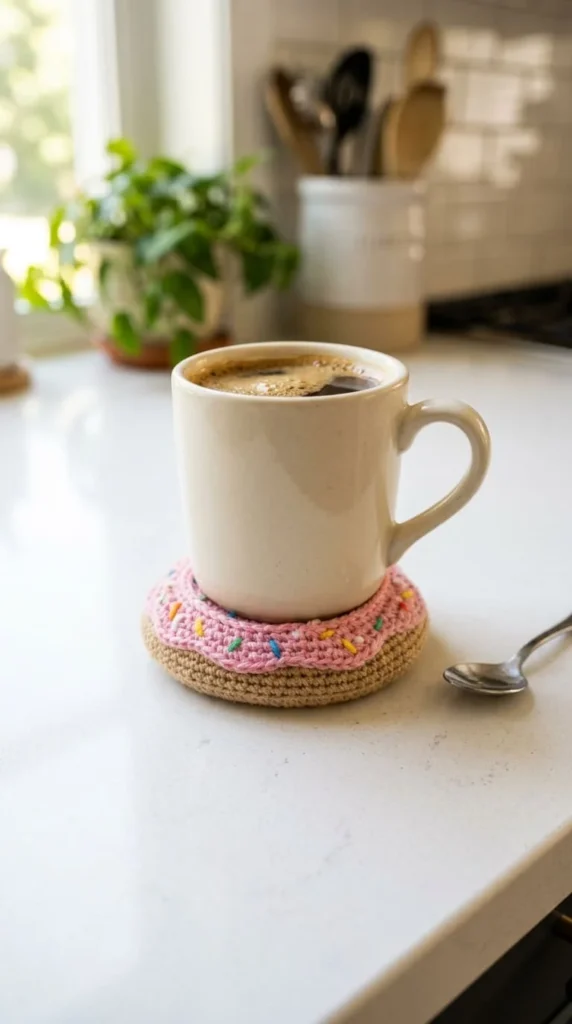
Donut coasters are a fun novelty pattern that always gets a reaction from guests. You crochet a ring base, then add a separate “icing” layer on top in a contrasting color, with small stitches or French knots standing in for sprinkles. Pink, chocolate brown, and vanilla are the go-to icing colors, but feel free to match your kitchen’s palette. This pattern takes more steps than a plain circle, but each piece is small, so it still comes together in under an hour. Cotton yarn keeps the ring shape sturdy for actual coaster use instead of just looking cute on a shelf. These make a playful housewarming gift for anyone who loves quirky kitchen decor. Try making a full “box” of six different donut flavors for a gift set that doubles as wall art when not in use. Kids especially love picking sprinkle colors for this one. Store them in a small basket near your coffee station so they’re easy to grab and use daily.
15. Strawberry Novelty Coasters
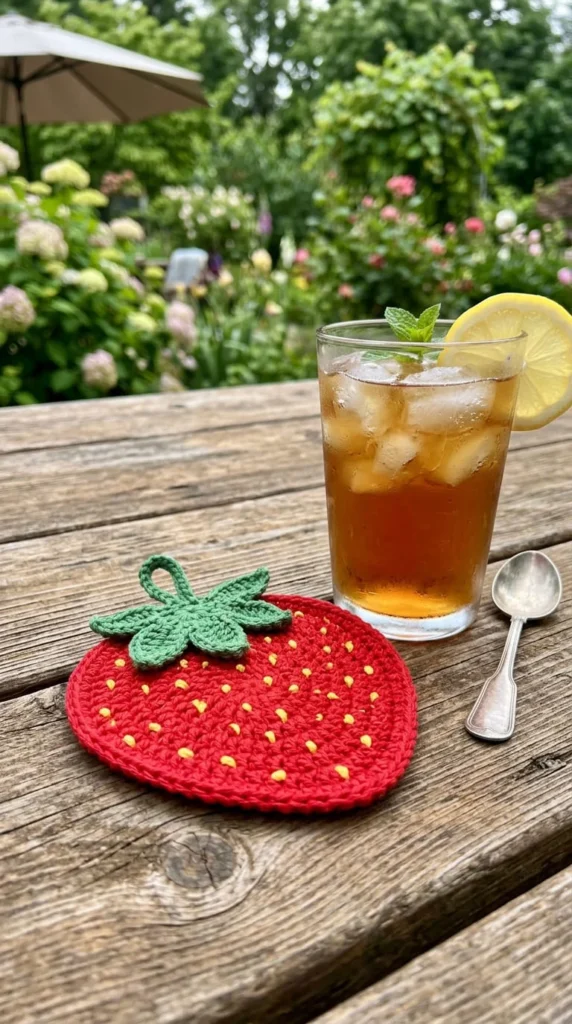
Strawberry coasters combine a rounded red body with a small green leaf cluster on top, plus tiny yellow stitches or French knots for seeds. This is a fun summer pattern that works well as a set with the watermelon and donut designs on this list. The shape is simple: a wide circle that tapers slightly at the bottom, worked in red cotton yarn with a green leaf piece attached separately. Keep the seed dots random rather than perfectly spaced for a more natural look. These coasters make a fun gift for a summer garden party or a kids’ birthday with a strawberry theme. Cotton yarn’s slight sheen actually helps the red color look brighter and more like a real strawberry. Try a batch of six in slightly different reds, from bright cherry to deeper berry tones, for visual variety in a set. This pattern is quick enough to finish two or three in one sitting, making it a good option when you want fast, satisfying results.
16. Coffee Cup Shaped Coasters
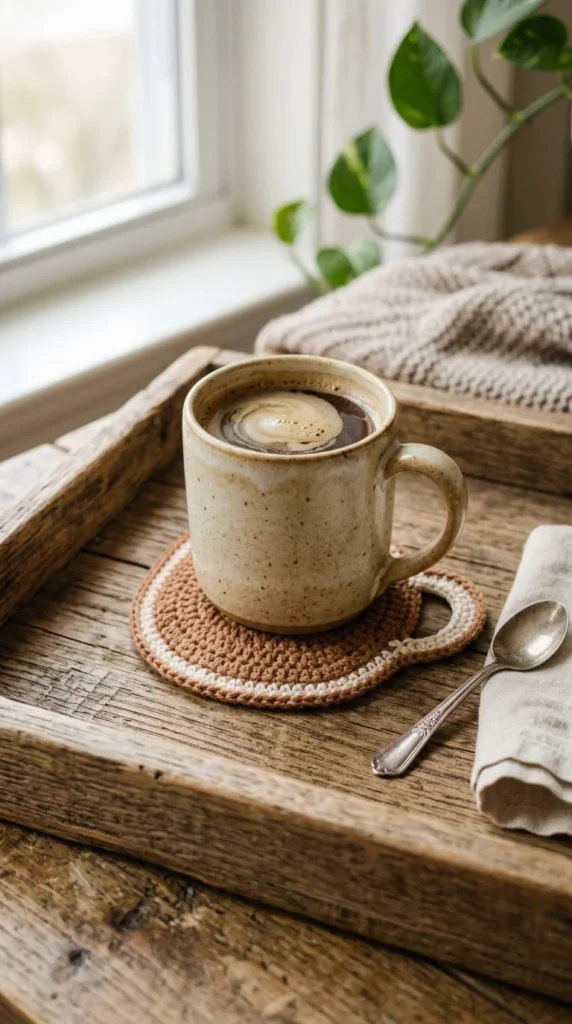
Coffee cup coasters are shaped like a mug silhouette, complete with a small handle loop on the side. This pattern works up flat in rows rather than in the round, so it’s a nice change of pace if you’re used to circular coasters. Brown and cream cotton yarn gives a coffee-toned look, but you can match any mug color scheme. The handle is the trickiest part, since it needs enough stitches to hold its loop shape without collapsing flat. A little extra starch or a thin plastic ring hidden inside the handle keeps it sturdy for repeated use. These coasters make a fun gift for the coffee lover in your life, especially bundled with a bag of good beans or a favorite mug. Because the shape is playful, this pattern works well even with slightly uneven tension, since the mug outline still reads clearly. A set of four in different coffee-inspired shades (espresso, latte, cream) makes a cohesive kitchen gift set for under the cost of one store-bought coaster set.
17. Watermelon Slice Coasters
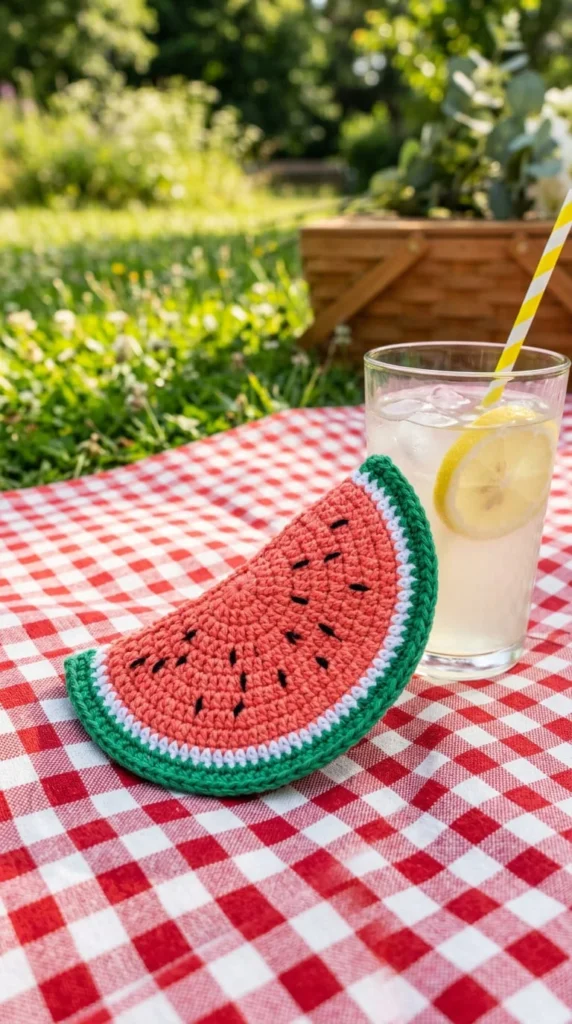
Watermelon coasters are shaped like a wedge, with pink at the top, a white ring in the middle, and green around the curved edge. Small black stitches or embroidered dots stand in for seeds. This pattern uses a half-circle shape instead of a full round, so it’s a nice change if you’ve made a lot of circular coasters already. Cotton yarn in bright pink, white, and green makes the colors pop, especially outdoors on a picnic table. This is a great summer project to make in batches, since each wedge only takes about twenty minutes once you know the color-change pattern. A full set of eight looks like a sliced watermelon when arranged in a circle on a table, which makes for a fun photo moment at a summer party. These coasters also work well as a kids’ craft project if you simplify the shaping to a plain triangle instead of a curved edge. Store them in a small basket by the back door for easy summer grabbing.
18. Sushi Roll Coasters
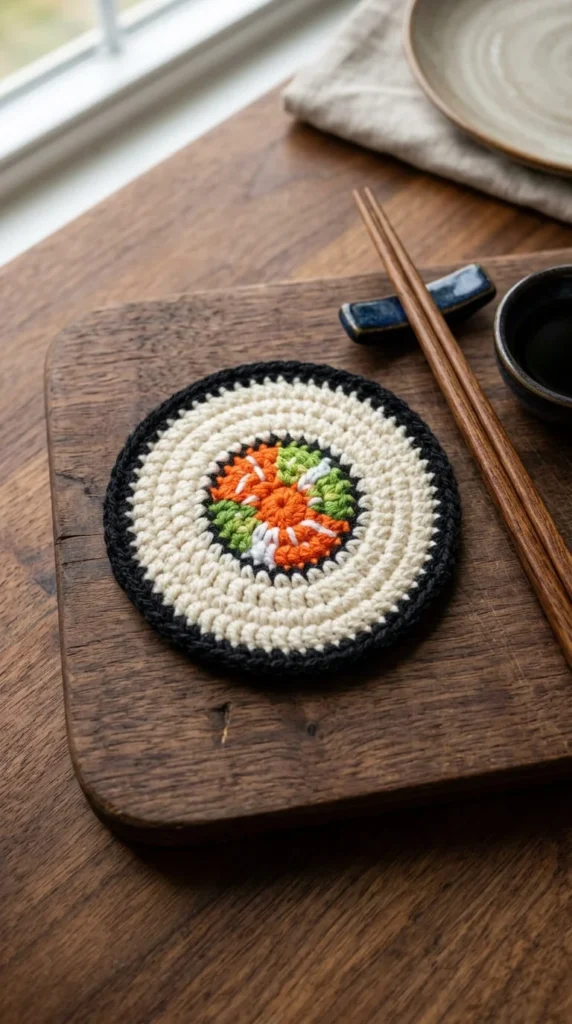
Sushi coasters are a quirky pick for anyone who loves food-themed decor. The base is a plain round or oval shape in white cotton yarn for the rice, with a black yarn border to represent the seaweed wrap. A small colorful center, worked separately and attached, adds the “filling” detail, like orange for salmon or green for avocado. This pattern uses more color changes than most coasters on this list, so it works better for crocheters who’ve already got a few projects under their belt. Cotton yarn’s matte texture actually helps the “rice” look more realistic than a shinier yarn would. These make a fun, conversation-starting gift for anyone who loves sushi or Japanese-inspired decor. Try a set of six with different “filling” colors for a look that mimics an actual sushi platter when laid out. This pattern takes a bit longer per piece, so budget an extra evening if you’re making a full set for a gift.
19. Cactus Coasters
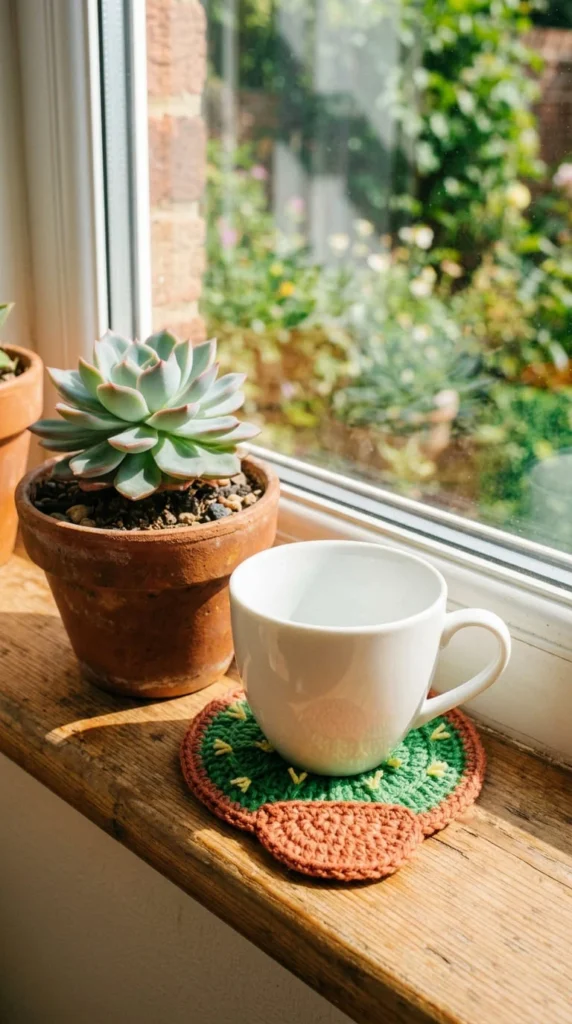
Cactus coasters combine a green ribbed cactus shape with a small terracotta pot base worked in a contrasting color. The ribbing comes from front post double crochet stitches worked in vertical lines up the cactus body. This pattern has more shaping than a plain circle, since you’re building both the pot and the cactus separately before joining them. Green cotton yarn for the body and a warm orange-brown for the pot gives the classic potted-plant look. Small yellow or pink French knots can stand in for cactus flowers if you want extra detail. These coasters make a great gift for anyone who loves plants but can’t keep real ones alive. A set of three or four different cactus shapes (tall and thin, round and short) looks like a mini plant shelf when displayed together. This pattern takes a little longer than most on this list, so it’s a good weekend project rather than a quick weeknight make.
20. Corner-to-Corner (C2C) Coasters
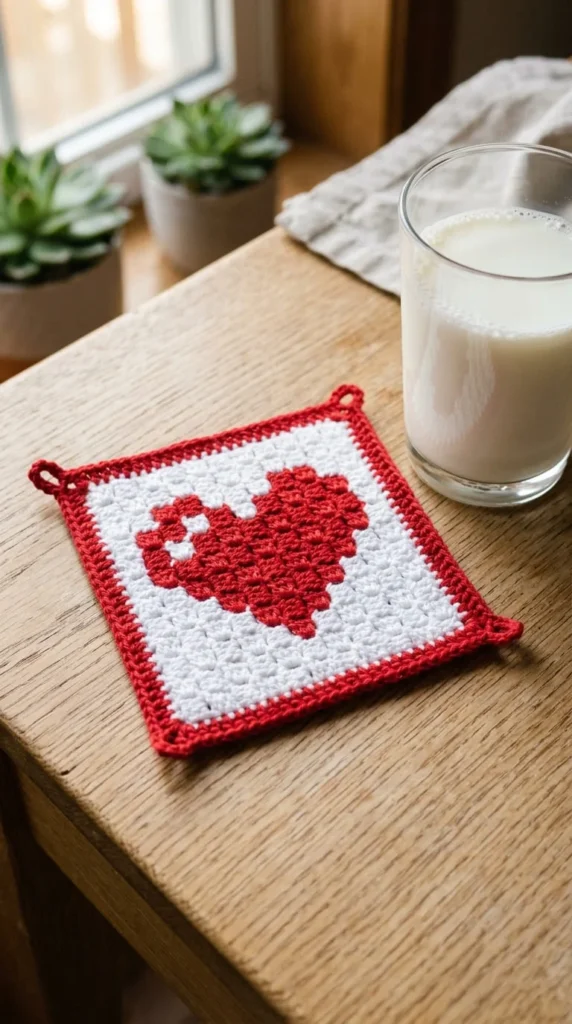
Corner-to-corner, or C2C, crochet builds a square from diagonal blocks, which makes it easy to create pixel-style pictures like hearts, stars, or initials. This technique is different from most other coasters on this list since you work diagonally instead of in rows or rounds. Start with a simple graph, like a heart or a single letter, before trying anything more detailed. Cotton yarn in two contrasting colors, like red and white or navy and cream, makes the pixel design stand out clearly. C2C takes practice to keep your tension even, so your first coaster might come out a bit wonky, and that’s completely normal. Once you get the rhythm down, this technique opens up endless design options, from initials for a personalized gift to simple shapes like a star or heart. A monogrammed C2C coaster set makes a thoughtful, low-cost wedding or housewarming present. Try a single-letter design first before attempting a full word or complex picture, since more blocks mean more time.
21. Star Stitch Coasters
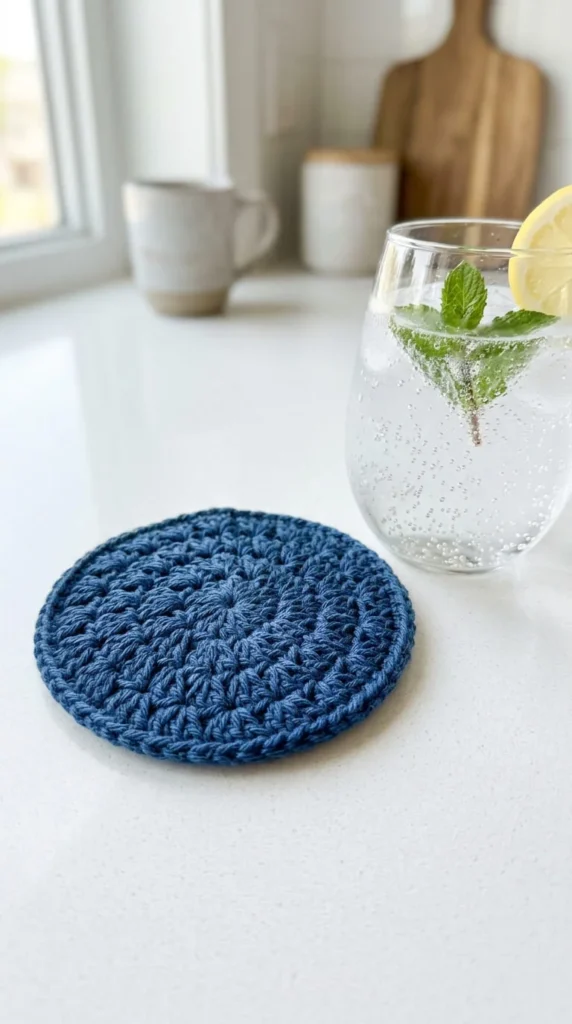
The star stitch creates a distinctive bumpy texture that looks like a field of tiny stars once you zoom out. It’s worked by pulling up loops from multiple stitches at once and closing them together, similar to the puff stitch but with a different final shape. This texture hides yarn imperfections well, so it’s forgiving if you’re using an odd leftover skein. Deep blue, burgundy, or forest green cotton yarn all show the star texture clearly without needing extra color changes. This pattern takes a bit more concentration than basic single crochet, so it’s a good one to make when you’re not multitasking. A set of coasters in this stitch looks more detailed than the actual difficulty level, which makes it a good confidence-building project after you’ve mastered basics. Try alternating two colors every other round for extra visual interest. These coasters also work well as small trivets if you double up on layers, since the thick texture holds up to warm dishes.
22. Oversized Mug Rug Coasters
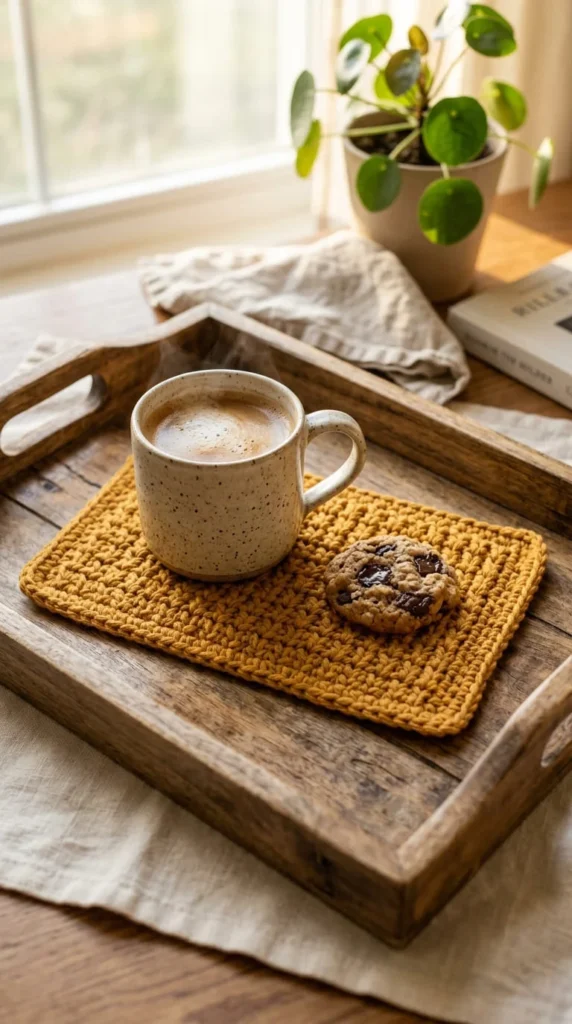
Mug rugs are an oversized cousin of the coaster, usually six to eight inches instead of the standard four or five. They’re big enough to hold a mug and a small snack, like a cookie or a piece of toast, at the same time. This pattern is worked flat in rows, similar to a mini placemat, so it’s a nice change if you’re used to circular coasters. Mustard, rust, or sage cotton yarn gives it a cozy, farmhouse feel that works well for a breakfast tray setup. Because mug rugs are bigger, they use more yarn than a regular coaster, so plan for a full skein rather than scraps. These make a thoughtful gift for someone who works from home and wants a dedicated coffee spot on their desk. Add a simple border in a contrasting color to define the edge and keep it from curling. A set of two mug rugs, one for each morning routine, makes a sweet gift for a couple who both drink coffee or tea.
23. Wooden Bead Boho Coasters
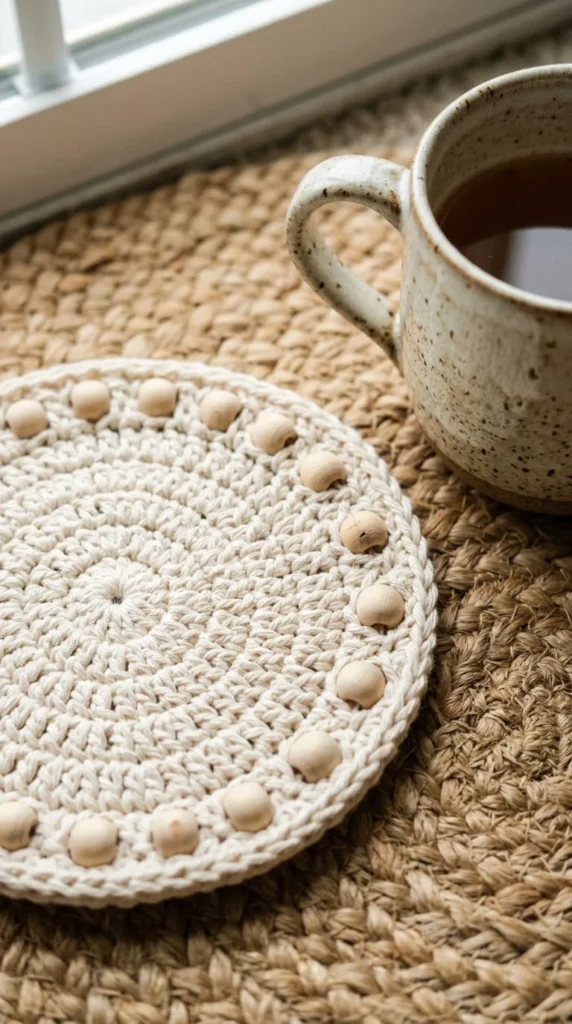
These coasters combine crochet with small wooden beads threaded onto the yarn before you start, which is a technique worth practicing on a scrap piece first. The beads sit along the outer round, catching the light and adding a natural, boho texture that plain yarn can’t match. Cream or natural undyed cotton yarn lets the wood tone stand out instead of competing with a bright color. Thread your beads onto the yarn before you begin the final round, since you can’t add them partway through without cutting your yarn. This pattern pairs well with a simple flat circle base, so the technique itself is the main challenge here, not the shaping. A set of these coasters looks right at home on a rattan tray or a woven placemat. They make a great gift for anyone into natural, minimalist home decor. Keep the bead spacing even by counting stitches between each one rather than placing them by eye, so the finished look stays balanced.
Conclusion
Twenty-three patterns, one hook, and a few balls of cotton yarn can fill your table with handmade pieces that actually get used every day. Start with a plain circle or granny square if you’re new, then work your way toward shaped novelty designs or textured stitches as your confidence grows. Keep your yarn stash in mind, since most of these patterns use small amounts and are a good way to clear out leftover skeins. Whether you’re making a set for your own kitchen or putting together a gift, coasters are a small project with a big payoff. Pick two or three from this list, grab your hook, and start your next one tonight.