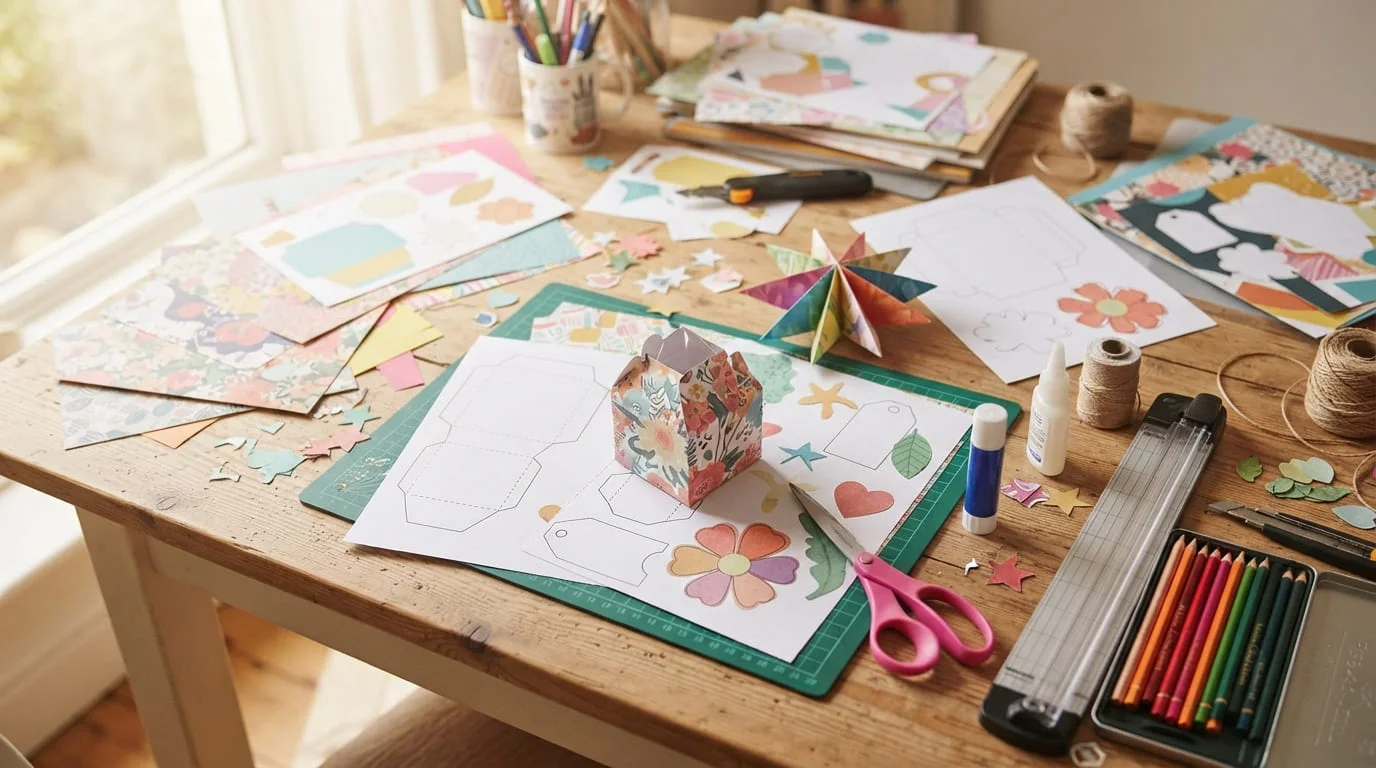
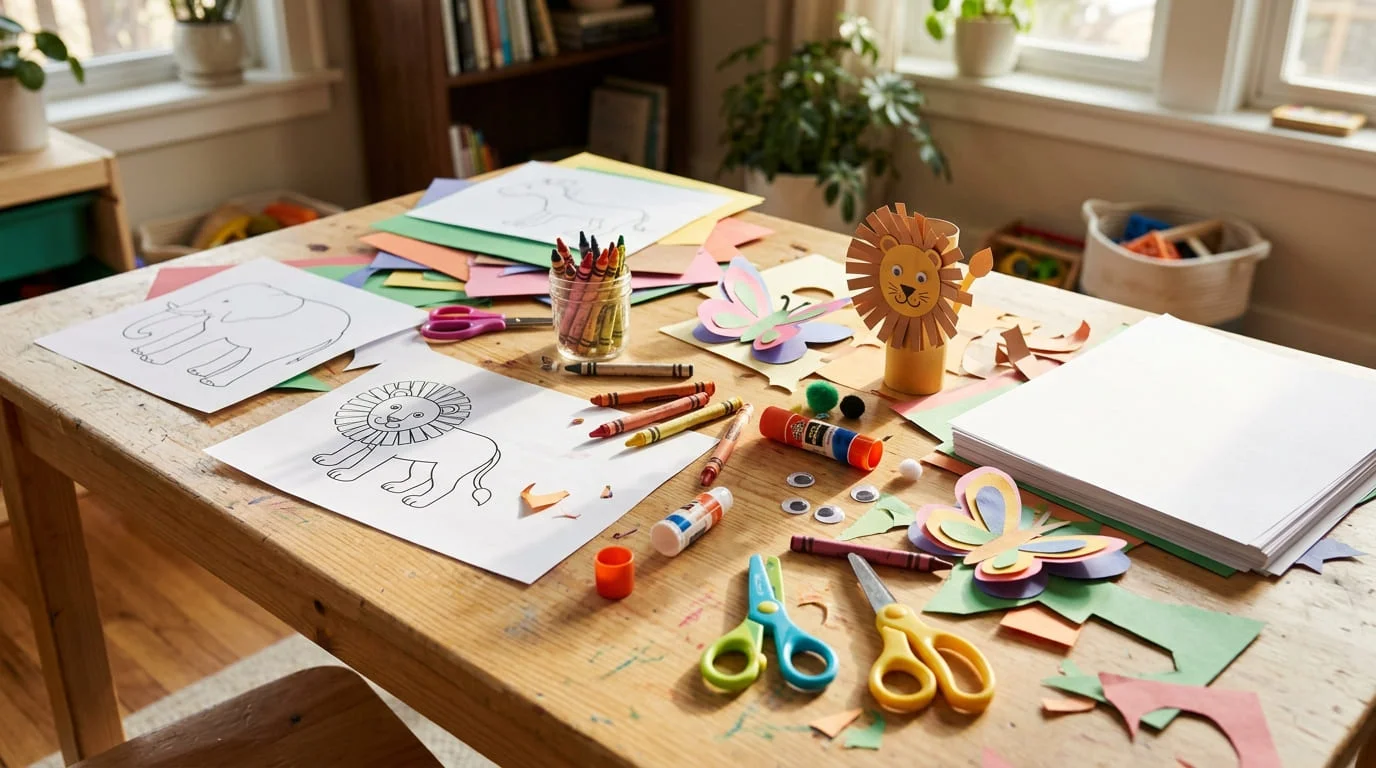
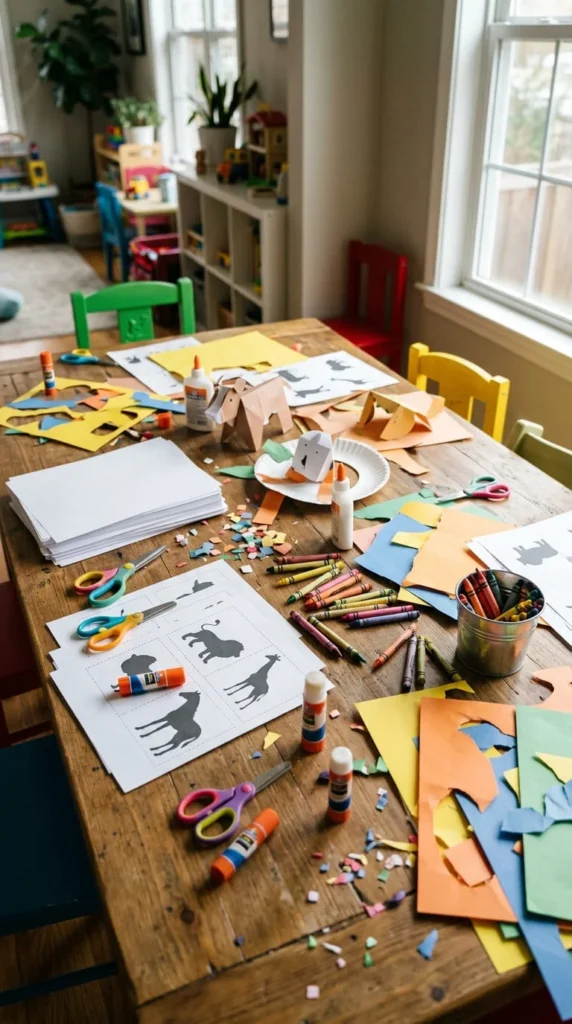
Printable crafts for kids make it easy to turn ordinary paper into creative play, simple learning activities, and screen-free entertainment. Most projects can begin with supplies already found at home, such as printer paper, crayons, scissors, glue, and colored pencils. The best ideas give children something to do before, during, and after the craft: they can color a template, cut and assemble it, then use the finished piece for pretend play, storytelling, games, or decoration. This collection focuses on 21 different printable craft ideas for children, including paper toys, animal projects, imaginative play, simple educational activities, and hands-on creations. Whether you are planning a rainy-day activity, a classroom project, a travel folder, or a quiet afternoon at home, you can choose a project based on your child’s age, interests, and available supplies.
1. Printable Animal Masks for Imaginative Play
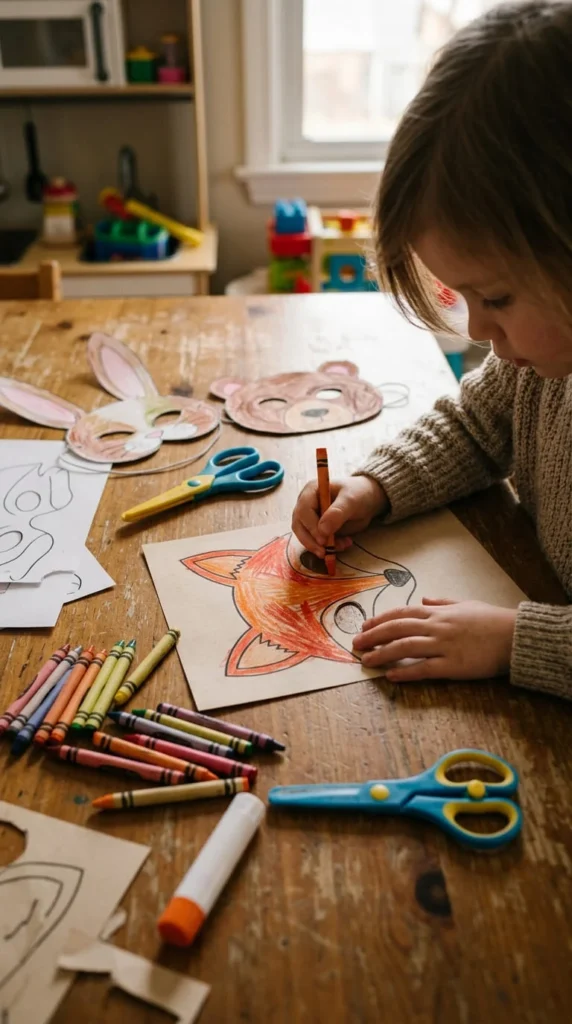
Animal masks can turn a simple printable template into an afternoon of pretend play. Choose designs such as foxes, rabbits, lions, bears, cats, or dinosaurs and let children decide how their characters should look.
Print the template on cardstock if available. Regular printer paper also works, but thicker paper usually holds its shape better. Children can color the face, cut around the outline, and add extra details such as paper ears, yarn whiskers, or cardboard decorations.
For younger children, adults can handle difficult cuts around the eyes. A craft stick attached to the bottom can make the mask easier to hold.
After the craft is finished, extend the activity into a pretend-play game. Ask children to choose an animal and act out how it moves, eats, sleeps, or communicates.
You can also create a small animal group. Several children can choose different masks and invent a forest, farm, or jungle story together.
The printable template provides the starting point, while the storytelling gives the finished craft another purpose.
2. Paper Bag Puppets With Printable Characters
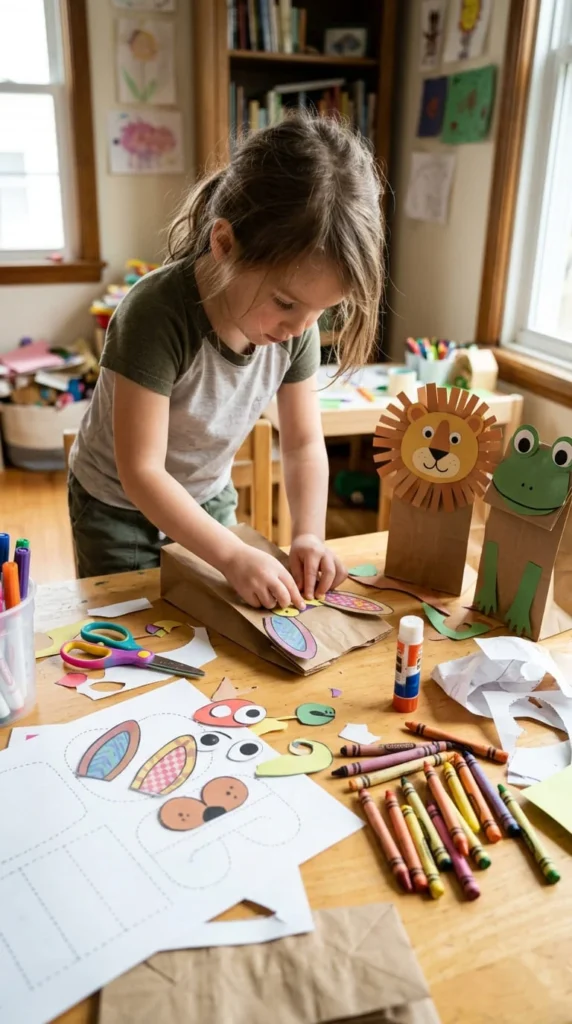
Paper bag puppets are a practical choice when you want a craft that becomes a toy afterward. A plain paper lunch bag can become a dog, owl, monster, farmer, pirate, or imaginary character with a few printable pieces.
Print eyes, ears, noses, hair, hats, and other character parts. Children can color the pieces before cutting them out and attaching them to the folded flap of the bag.
Try giving each character a simple personality. One puppet might be shy, another curious, and another always looking for snacks. This makes the craft useful for storytelling and imaginative play.
Once several puppets are finished, create a small homemade theater from a cardboard box. Children can take turns moving the puppets while another child tells the story.
For classroom use, give each child a different character and let the group create a short scene. The activity combines cutting, coloring, gluing, speaking, and creative thinking without requiring expensive supplies.
Store finished puppets inside a large paper bag or box so they can be used again.
3. Printable Crowns for Make-Believe Adventures
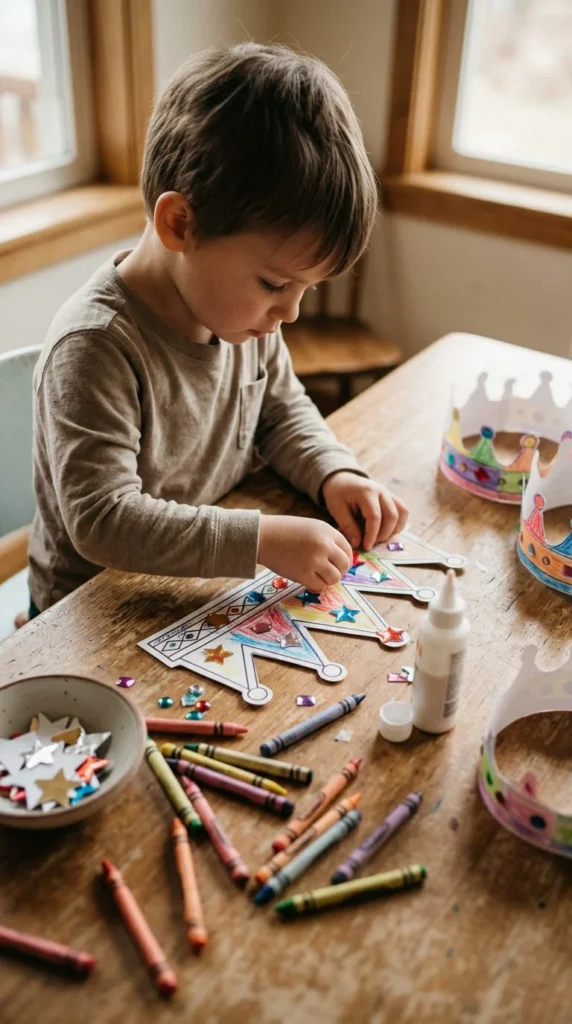
A printable crown can become part of almost any pretend-play theme. Instead of making only a traditional royal crown, children can design one for a fairy, dragon keeper, forest explorer, space captain, or imaginary creature.
Print the crown on cardstock when possible. Let children color the base and decorate it with paper shapes, stickers, crayons, or leftover craft materials.
Before attaching the ends, measure the crown around the child’s head. Leave enough room for a comfortable fit rather than making the band too tight.
To add a storytelling element, ask children to invent the character who wears the crown. What is their kingdom? What animals live there? What special job do they have?
You can also create several crowns for a group activity. Each child can make a different character and then participate in a homemade storybook adventure.
For younger children, prepare the template in advance and let them focus on coloring and decorating. Older children can cut and assemble the entire project themselves with age-appropriate supervision.
The finished crown can be used for dress-up, playdates, birthday activities, or a homemade photo booth.
4. Mix-and-Match Printable Paper Dolls
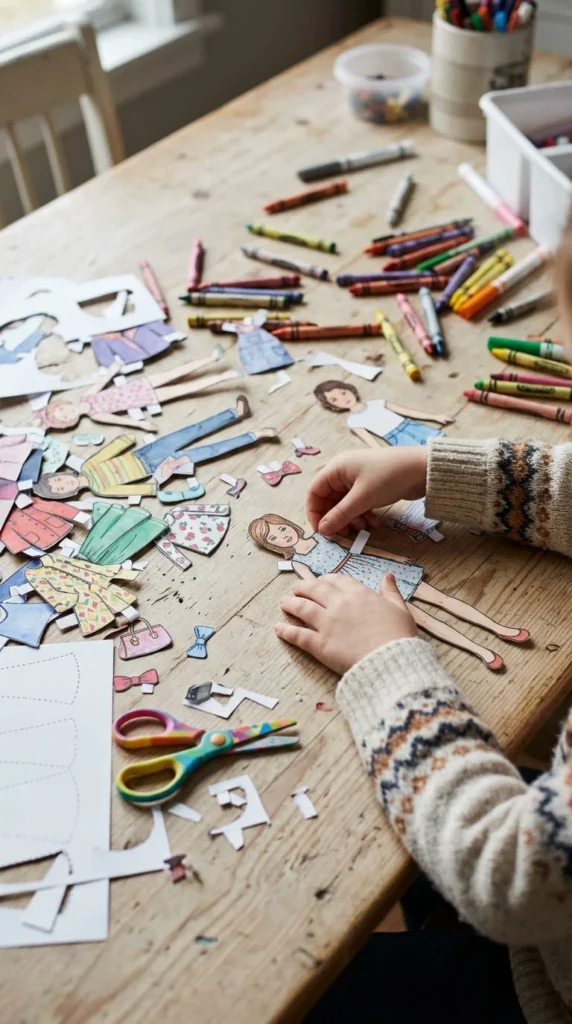
Paper dolls give children plenty of room for personal choices. A printable set can include characters, hairstyles, outfits, shoes, bags, hats, and other accessories that children can color and combine.
Choose larger templates for younger children because small pieces can be harder to cut and handle. Older kids can work with more detailed clothing designs.
Create a theme for the characters. They could be going camping, visiting a farm, exploring space, attending a pretend party, or spending a day at the beach.
After the pieces are colored and cut, ask children to create a short story around their dolls. Where are they going? Who are they meeting? What happens during their adventure?
A paper envelope or small folder makes a useful storage place for the finished pieces. Children can bring the collection back later and create new combinations.
This type of printable craft supports color recognition, cutting practice, storytelling, and imaginative play without requiring many materials.
You can also turn the finished dolls into a homemade paper theater by placing them against different printable backgrounds.
5. Build a Tiny 3D Paper House
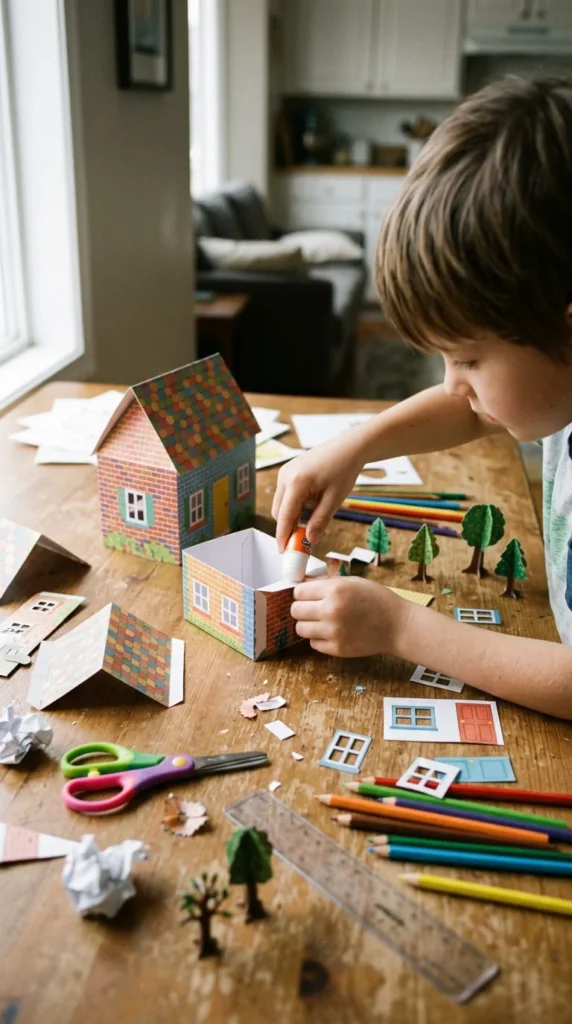
Three-dimensional paper houses give children a chance to see how a flat printable template can become a standing structure. This makes the project more hands-on than a traditional coloring page.
Print the house on cardstock if possible. Let children decorate the walls, windows, doors, and roof before assembling the model.
They can add small details such as:
- Paper flower boxes
- A tiny mailbox
- Curtains
- Trees
- A garden
- A driveway
Younger children may need help with folding and gluing. Older children can measure, fold, and assemble more independently.
Once the house is complete, make two or three more models and create a mini paper neighborhood. Add roads, trees, vehicles, and paper people to create a small play scene.
The project also introduces simple spatial concepts because children see how individual sections connect to form a structure.
Keep finished houses on a shelf or place them on a cardboard base. Children can return to the scene later and add new buildings or characters.
6. Printable Dinosaur Paper Models
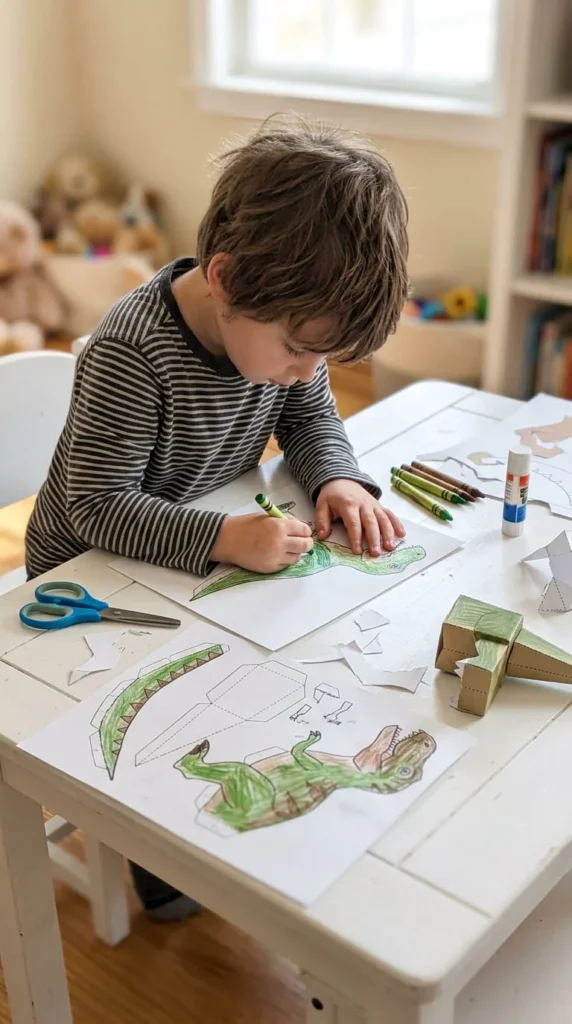
Dinosaur paper models are a fun option for children who enjoy prehistoric animals. Instead of stopping at a flat coloring page, choose a printable template that can be folded or assembled into a standing dinosaur.
Start with simple designs such as a triceratops, long-necked dinosaur, or small raptor. Children can use natural colors or invent completely imaginary patterns.
After assembling the dinosaurs, create a prehistoric landscape using construction paper. Add mountains, trees, rocks, water, and paper plants.
You can introduce simple science ideas while children play. Talk about herbivores and carnivores, fossils, dinosaur habitats, and how scientists learn about animals from fossil evidence.
Younger children can focus on coloring and basic assembly. Older children can make several dinosaurs and arrange them into different habitats.
A printable dinosaur craft can become both a finished decoration and a small play object. Keep the completed models on a shelf or use them in a homemade dinosaur world.
7. Create a Printable Paper Flower Garden
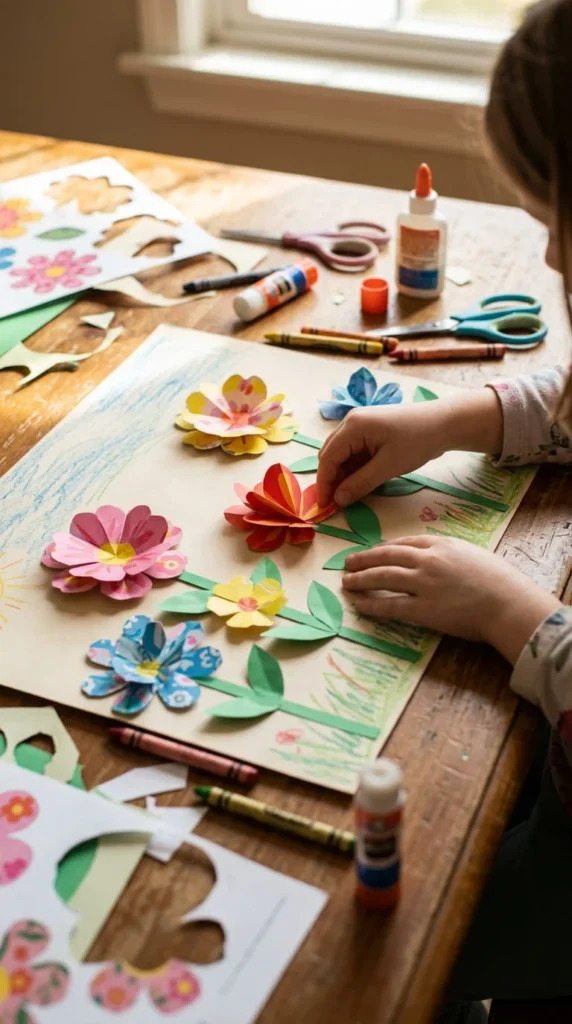
Paper flowers are easy to personalize because children can experiment with colors, shapes, and patterns. Print several flower designs and let kids create a garden that does not have to look like a real one.
Children can color the petals before cutting them out. Folded petals can add dimension, while green paper stems and leaves make the flowers look more complete.
Try including:
- Tulips
- Daisies
- Sunflowers
- Simple wildflowers
- Butterflies
- Bees
- Leaves and vines
Attach the flowers to a large sheet of paper to create a garden display. For a freestanding version, use craft sticks, drinking straws, or rolled paper as stems.
You can turn the project into a simple learning activity by talking about flower parts, colors, insects, and plant growth.
A paper garden is also suitable for group activities. Each child can make a few flowers and combine them into one large classroom display.
Because the pieces are lightweight, the finished garden can be placed on a wall, bulletin board, bedroom shelf, or activity corner.
8. Ocean Animal Finger Puppets
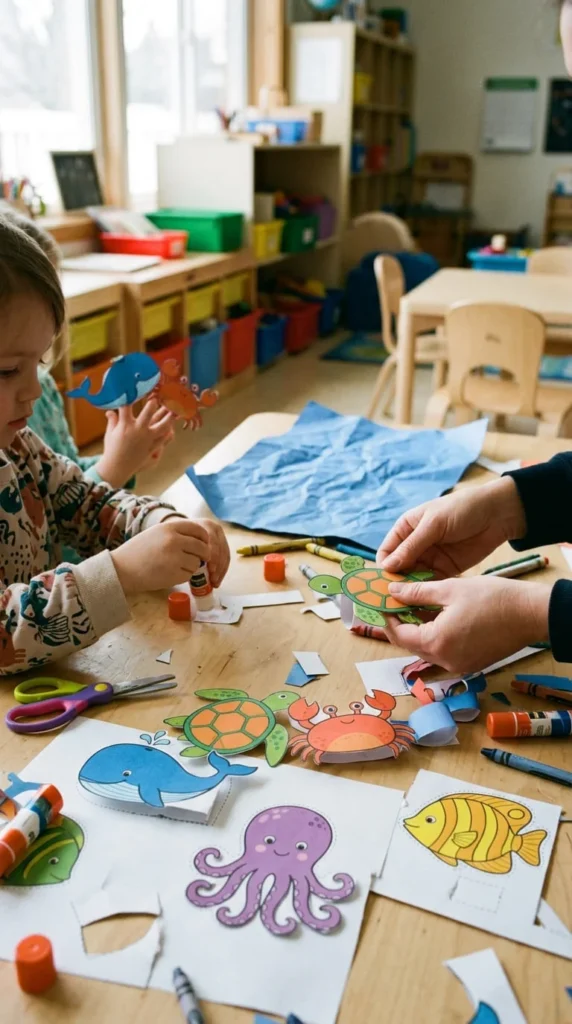
Finger puppets are small, portable, and easy to turn into storytelling props. Ocean animals make a particularly fun theme because children can create an entire underwater cast.
Print simple whale, fish, turtle, crab, shark, and octopus templates. Children can color the pieces and fold or attach them to small paper loops that fit around their fingers.
Once the puppets are ready, make a paper ocean background with blue paper. Add seaweed, coral, bubbles, rocks, and shells.
Then create a short story. A turtle could search for a safe place to rest, while a fish helps guide it through the reef.
The activity can also support basic learning. Talk about where ocean animals live and how different animals move through water.
For travel, store the puppets in a small envelope or zip pouch. The compact size makes them suitable for a screen-free activity folder.
Children can also invent new sea creatures by combining features from different templates.
9. Make a Printable Space Adventure
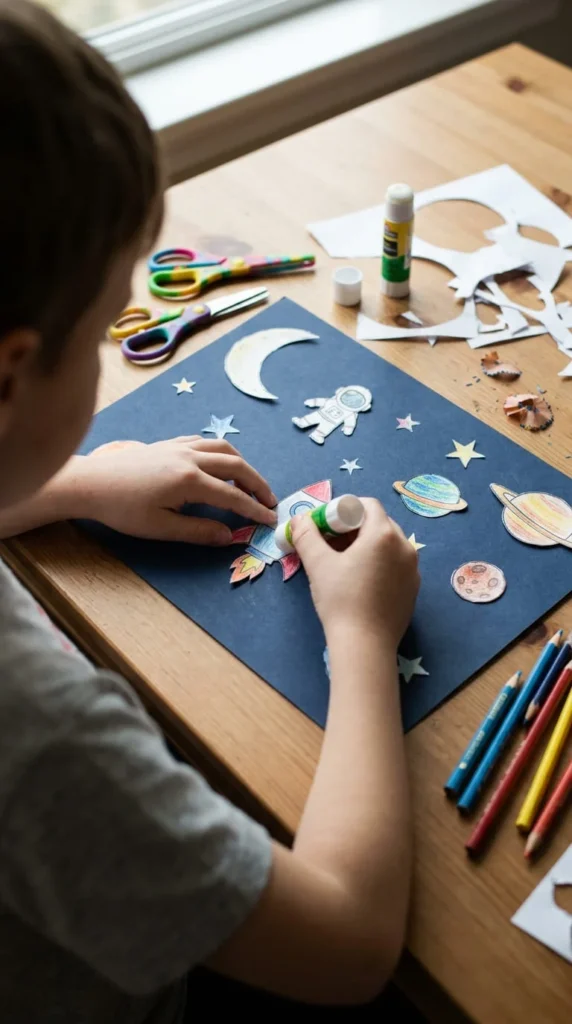
A printable space set can turn a sheet of paper into a small universe. Start with a rocket, astronaut, planets, moon, stars, and other simple space-themed shapes.
Children can color each piece and arrange them on dark construction paper. Encourage them to invent a planet rather than copying a familiar one.
Ask questions such as:
- What does the planet look like?
- Is it hot or cold?
- Does it have water?
- What kind of creatures live there?
- How would an astronaut explore it?
The answers can become part of a short story.
Older children may enjoy making a solar system-inspired display, while younger kids can focus on coloring and arranging the pieces.
You can also attach a paper rocket to a craft stick so children can move it through the scene during pretend play.
This printable craft connects creative work with simple conversations about planets, astronauts, spacecraft, and space exploration.
10. Design a Printable Storybook Scene
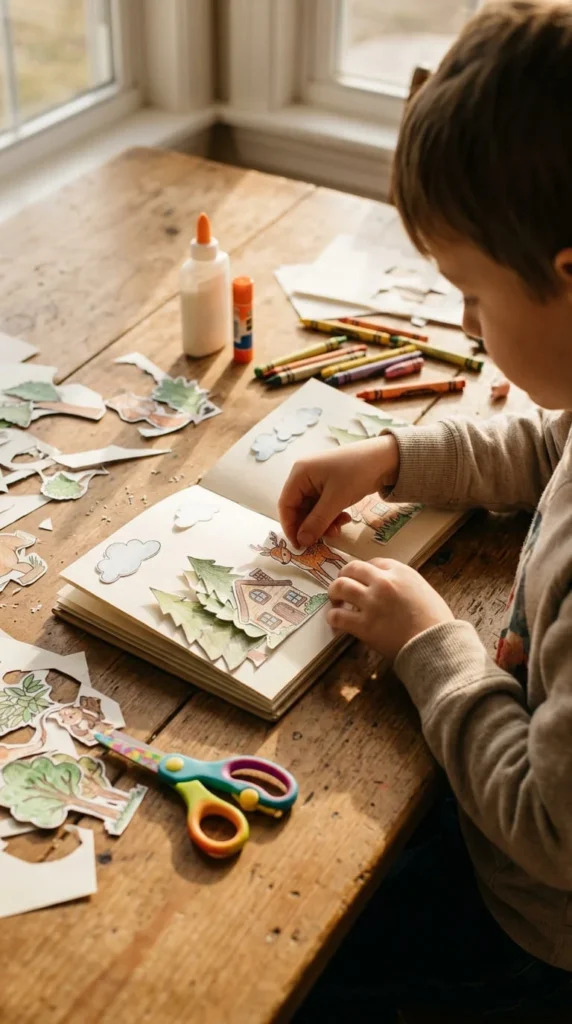
Instead of making one isolated craft, children can build an entire story scene from printable pieces. A forest theme works well because it allows many characters and objects to fit together.
Print trees, animals, houses, mushrooms, rocks, clouds, and other simple elements. Children can color and cut each piece before placing them on folded paper pages.
Encourage a basic story structure. The first page can introduce the character, the second can show a problem, and the third can show how the character solves it.
Younger children can tell the story aloud while an adult writes their words. Older kids can write short sentences themselves.
This activity combines paper crafting, storytelling, early writing, and imaginative play.
Keep the characters separate from the background pieces so they can be moved into different scenes. A folder or envelope can hold the loose pieces.
The same collection can produce several different stories, making the craft useful beyond one afternoon.
11. Build a Printable Weather Wheel
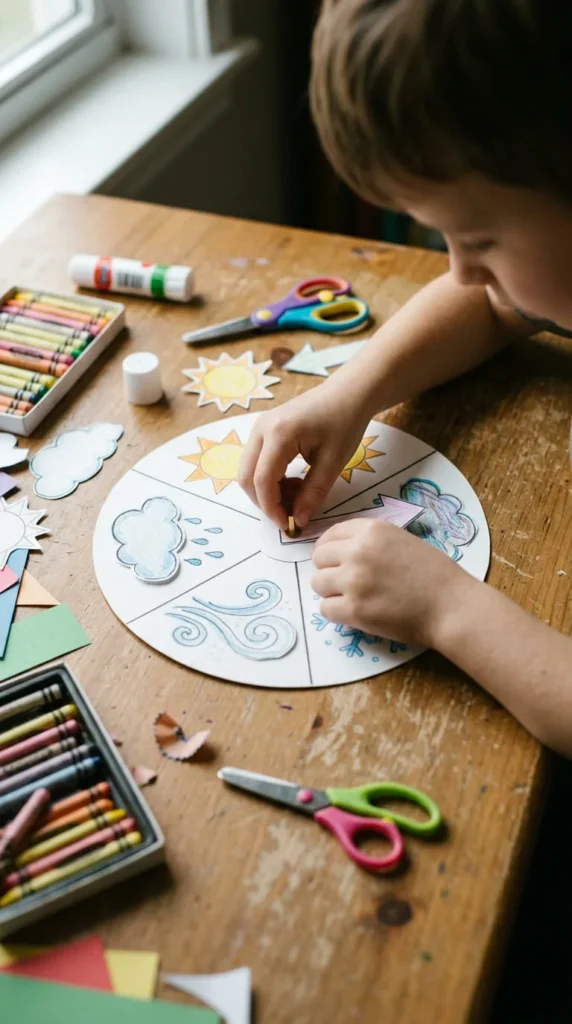
A weather wheel can turn a printable template into a reusable daily activity. Create sections for sunny, cloudy, rainy, windy, and snowy weather.
Children can color each section and decorate it with simple details. A paper fastener in the center can allow the pointer to move between the different conditions.
Adults should handle small fasteners with very young children.
After the wheel is assembled, use it each morning. Ask children to look outside and choose the weather that best matches what they see.
You can extend the activity with questions about clothing, temperature, clouds, or outdoor plans. For example, ask what someone might wear on a rainy day or what could happen to puddles after several hours of sunshine.
This project works especially well in classroom and homeschool settings because the finished craft becomes part of a repeated routine.
12. Assemble a Mix-and-Match Robot
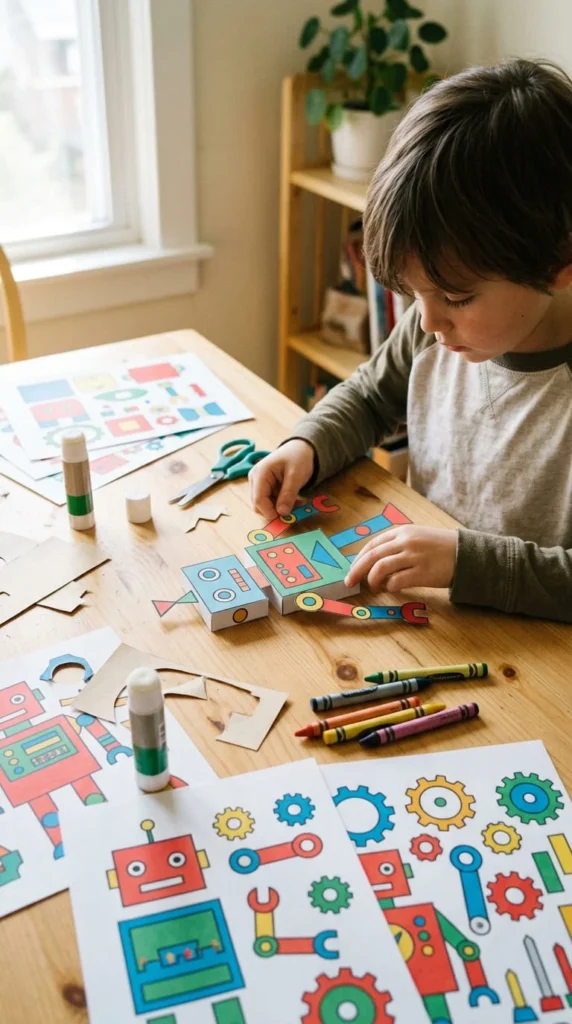
A printable robot can become a creative design challenge because there is no single correct final appearance. Print different heads, bodies, arms, legs, wheels, antennas, and buttons.
Children can color every piece before deciding how to assemble the character. One robot might have four arms, while another could have oversized feet and a tiny head.
After the robot is finished, create a personality for it. Ask what the robot does during the day.
Maybe it:
- Collects toys
- Waters plants
- Helps in a kitchen
- Explores planets
- Tells stories
- Builds paper houses
Older children can think about which body parts help the robot move, see, communicate, or carry objects.
The activity combines cutting, design choices, imaginative play, and simple problem solving.
Save unused robot pieces in a craft envelope. Children can later create a completely different character without printing another set.
13. Create Feeling-Face Characters
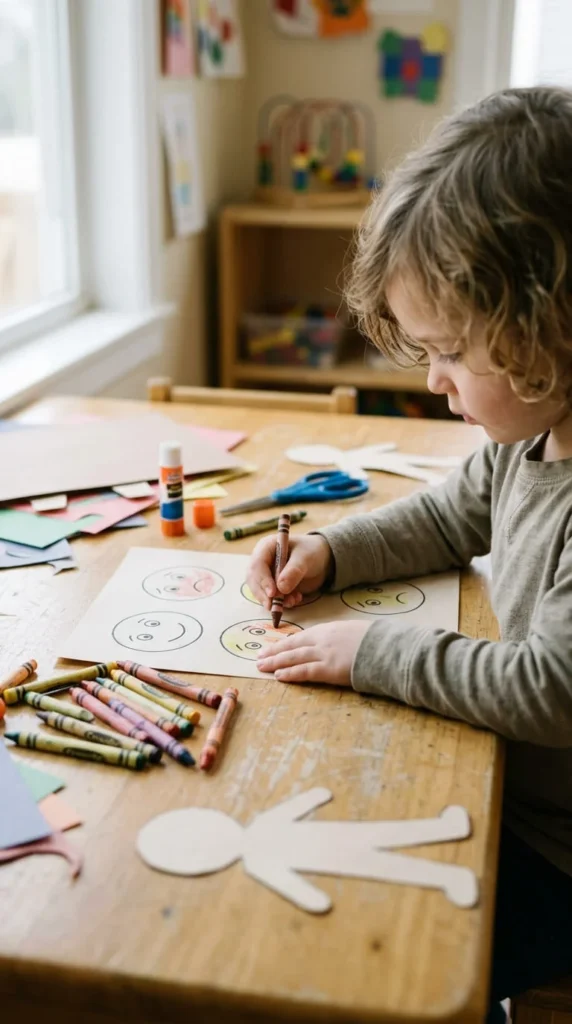
Feeling-face crafts can combine creative work with simple emotional vocabulary. Print blank faces and let children create expressions such as happy, sad, surprised, excited, worried, calm, or frustrated.
Encourage children to experiment with eyebrows, eyes, and mouths. Different combinations can create very different expressions.
After the faces are complete, attach them to simple paper characters. Create everyday situations and ask which expression might fit each one.
For example:
- A favorite toy is found.
- A drawing gets damaged.
- A friend shares a snack.
- Someone receives a surprise.
- A child tries a difficult activity.
Avoid telling children that one emotion is always the correct answer. The same situation can feel different to different people.
The finished characters can become part of short stories. Store several faces in an envelope so children can reuse them during future storytelling sessions.
14. Make a Printable Paper Maze Game
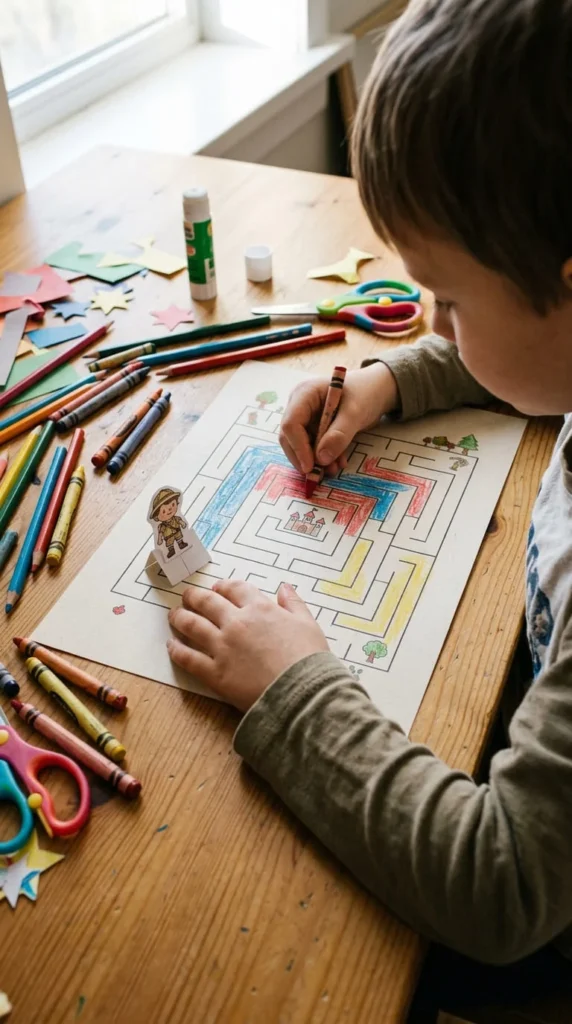
A printable maze becomes more engaging when children help decorate the world around it. Start with a simple path for younger kids or a more detailed maze for older children.
Choose a theme such as a jungle, castle, ocean, farm, or space station. Children can color the background and create a small paper character to travel through the maze.
Once they finish solving it, ask them to design a maze of their own. They can draw paths on paper and create a challenge for a sibling or friend.
For repeated use, place the printed maze inside a clear plastic sleeve and use a washable marker.
This activity combines visual tracking, hand control, problem solving, and creative drawing.
A few printed mazes can also form part of a travel activity folder. Add crayons and a pencil case, and the entire kit can fit into a backpack.
15. Make a Butterfly Garden Scene
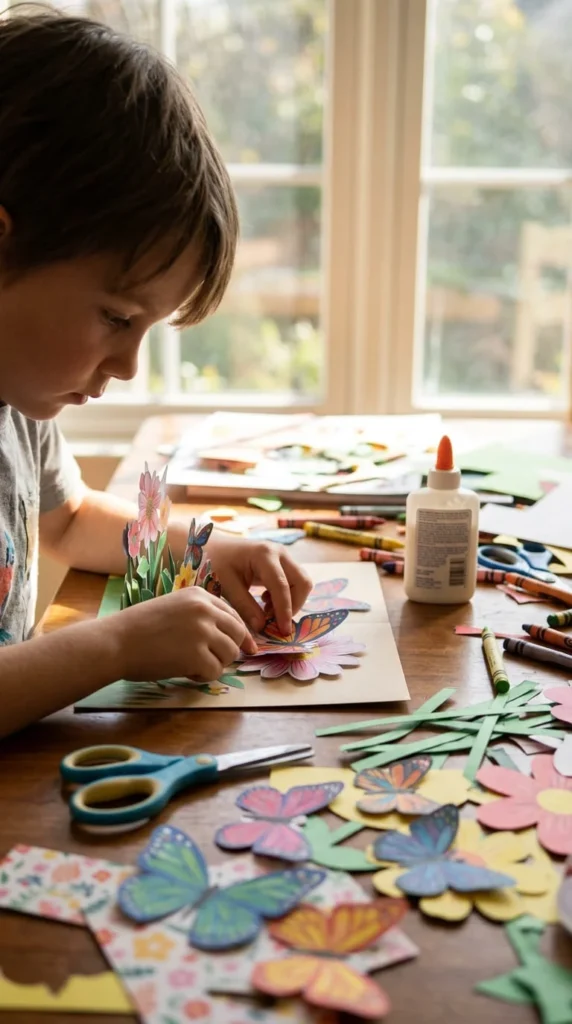
Butterfly crafts give children plenty of room to experiment with patterns and colors. Print butterflies in several sizes and let kids create their own wing designs.
They can use dots, stripes, circles, hearts, zigzags, or completely invented patterns. Once the butterflies are colored and cut, create a garden background with flowers, grass, leaves, clouds, and insects.
For a dimensional effect, fold each butterfly slightly along the center before attaching it to the background. This makes the wings stand away from the paper.
You can also create a butterfly counting activity by making different groups of butterflies and asking children to count them by color or size.
For older kids, talk about the basic butterfly life cycle while they craft. Keep the conversation simple and connected to the activity.
The completed garden makes a cheerful wall display and can be expanded over several craft sessions.
16. Create a Printable Farm Animal Set
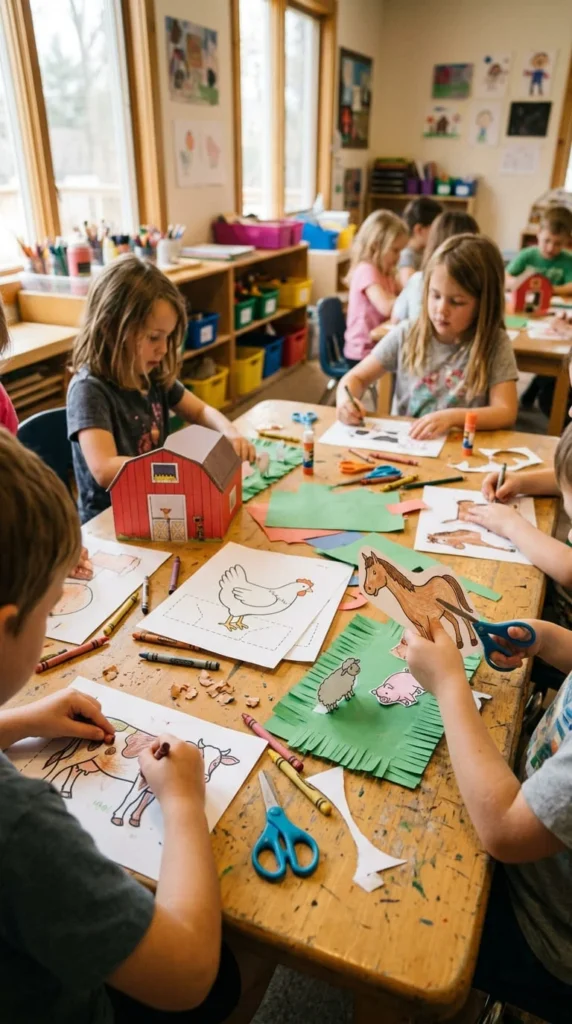
A printable farm set can turn several individual templates into one large play scene. Print animals such as cows, horses, pigs, chickens, sheep, and ducks along with a barn, fence, trees, and grass.
Children can color each piece and arrange the finished parts on a large sheet of paper or cardboard.
Give every animal a place in the scene. The cow might stay near the barn, while the chickens gather near a small fence.
You can turn the activity into a simple learning game by asking children to match animals with sounds, foods, or baby names.
Younger kids can focus on coloring and placing the pieces. Older children can create signs for different areas of the farm or write short stories about what happens there.
The finished farm can become a small-world play scene, allowing children to move the animals and create new stories.
Store the pieces in a large envelope so the scene can be rebuilt later.
17. Make a Printable Paper Aquarium
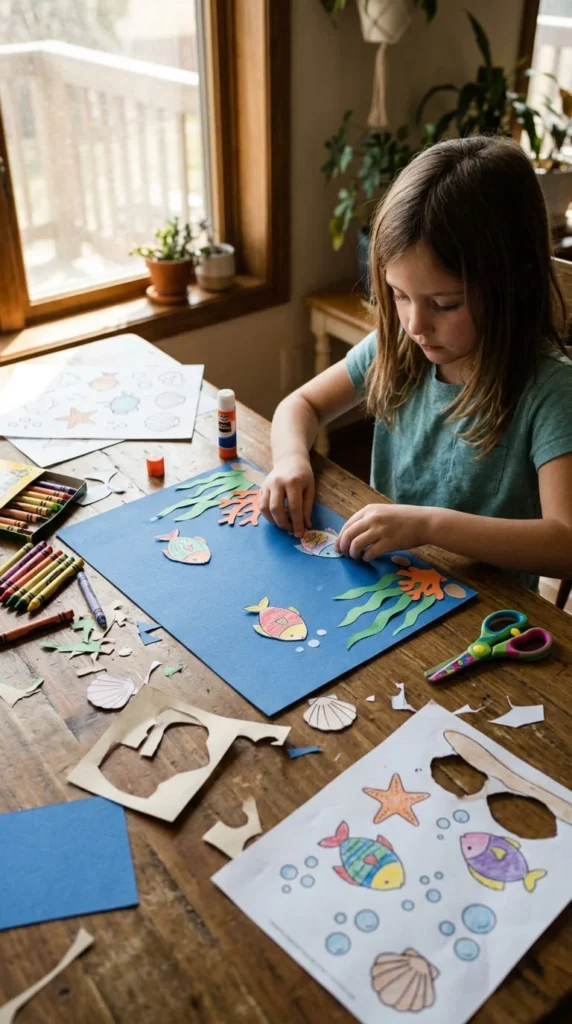
A paper aquarium is a good project when children enjoy colorful underwater scenes. Start with a blue paper background and printable fish, coral, seaweed, shells, bubbles, and other ocean elements.
Children can choose where each piece belongs. Encourage them to create different areas rather than placing everything in the center.
For a simple 3D effect, fold some fish slightly before gluing them down. You can also attach certain pieces with small folded paper tabs so they stand away from the background.
Add a variety of fish shapes and colors. Children can invent one unusual sea creature and decide what it eats or where it lives.
This craft can support ocean-themed learning without turning the project into a worksheet. Talk about coral reefs, fish, turtles, and other marine animals while children work.
The finished aquarium can become bedroom artwork, a classroom display, or the background for a later storytelling game.
18. Create a Printable Mini Grocery Store
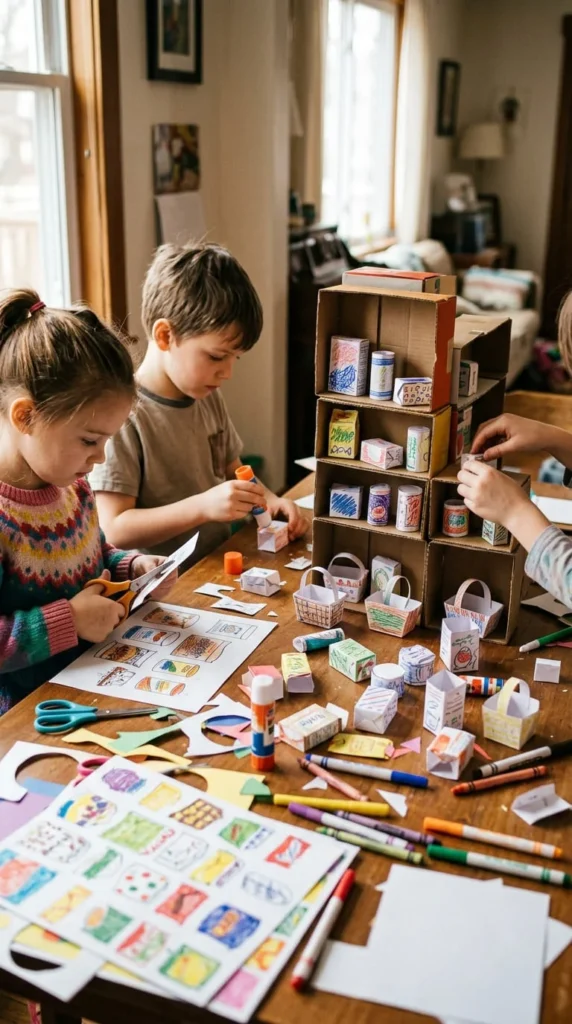
A printable grocery store turns paper crafts into pretend play. Create templates for fruits, vegetables, bread, cereal boxes, milk cartons, shopping bags, baskets, and simple store shelves.
Children can color the items and arrange them inside a small cardboard box or on a table.
Once the store is ready, play different roles. One child can be the shopper while another runs the store. Add a paper shopping list for an extra challenge.
You can introduce simple math concepts by giving pretend prices to a few items. Younger children can count objects, while older kids can practice adding small amounts.
The project also encourages role play and everyday vocabulary because children use familiar objects in an imaginary setting.
Keep the paper food pieces in a small box when the game is finished. The same store can be rebuilt later with a different layout.
19. Make a Printable Paper Train
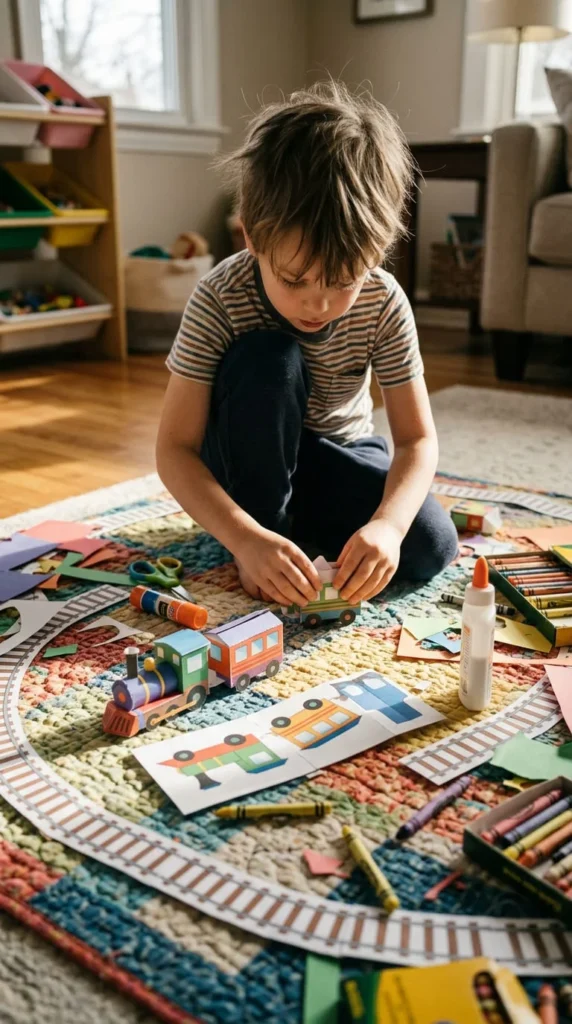
A printable paper train can become a small transportation-themed playset. Create an engine, several carriages, wheels, tracks, signs, trees, and simple scenery.
Children can color each carriage differently and decide what it carries. One might transport animals, another toys, and another imaginary passengers.
Arrange the paper tracks on a large sheet of cardboard or directly on the floor. Add bridges, stations, hills, and trees using extra paper.
For younger children, focus on matching carriage pieces and placing them in order. Older children can design their own train route and invent destinations.
The finished train can support pretend travel and storytelling. Ask children where the train is going and what happens at each stop.
If you want to reuse the set, keep the individual pieces in a folder. Paper clips or small envelopes can help separate the engine, carriages, scenery, and tracks.
20. Design a Printable Scavenger Hunt
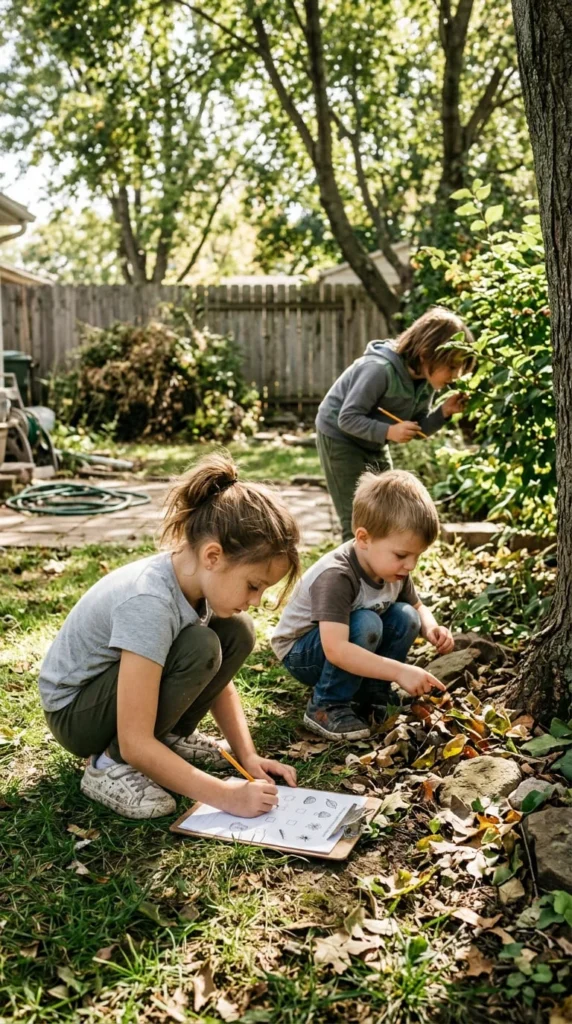
A printable scavenger hunt combines crafting with movement, making it useful when children have spent too much time indoors. Create a simple checklist with pictures or symbols representing things they can safely find.
For a backyard version, include objects such as:
- A smooth stone
- A yellow flower
- A small leaf
- A feather
- A stick
- Something round
Avoid asking children to collect living plants or disturb animals. They can simply point to an item or draw it on the sheet.
Let children decorate their scavenger hunt page before going outside. They can color the borders and add small drawings around the activity.
For travel, create a location-specific version using things children might see on a walk or during a park visit.
This project adds an outdoor activity to the printable crafts category rather than keeping children at the craft table. It also encourages observation and drawing.
21. Build a Printable Paper Town
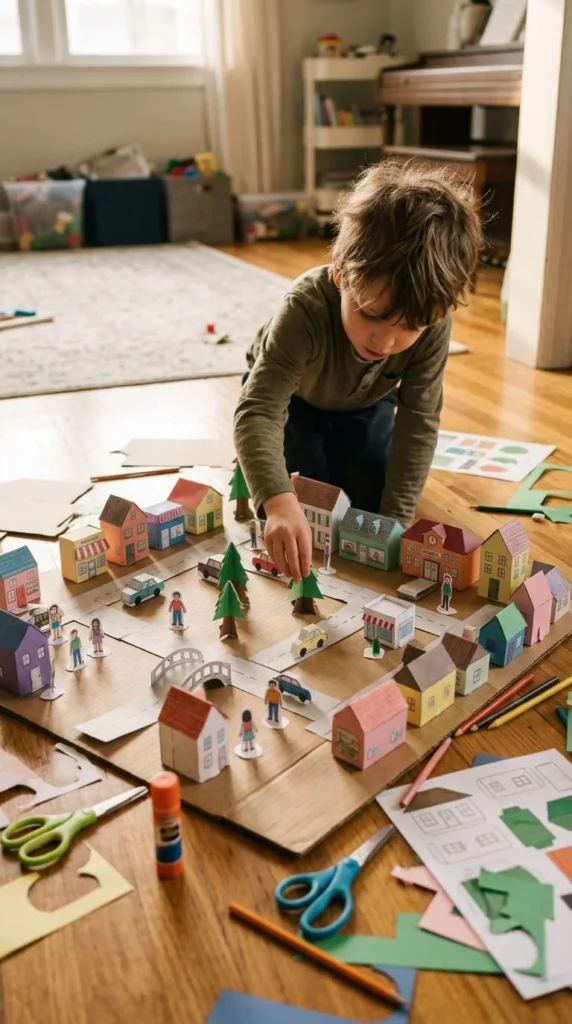
A printable paper town can bring many simple crafts together into one larger project. Start with houses, roads, trees, cars, shops, traffic signs, and paper people.
Children can color each piece and decide how the town should be arranged. Leave open spaces for new buildings so the scene can grow over several sessions.
Give the town a simple story. Perhaps there is a bakery near the park, a school beside the road, and a small house near the trees.
Older children can design their own buildings and add extra details. Younger children can focus on placing objects and creating simple pretend-play scenes.
A cardboard base makes the town easier to move and store. If space is limited, build the scene on a large sheet of paper that can be rolled or placed inside a folder.
This project works particularly well because one printable craft leads to many activities: coloring, cutting, arranging, storytelling, role play, and simple design.
Conclusion
Printable crafts for kids can turn a few sheets of paper into hours of hands-on activity. Animal masks, paper puppets, 3D models, finger puppets, story scenes, scavenger hunts, and miniature worlds each offer a different way to create and play. Start with a project that matches your child’s age and interests, keep the materials simple, and let them make their own choices about colors, characters, and designs. With a small folder of printable templates and basic craft supplies nearby, you can create an easy screen-free activity collection for rainy afternoons, classroom time, travel days, or creative play at home.