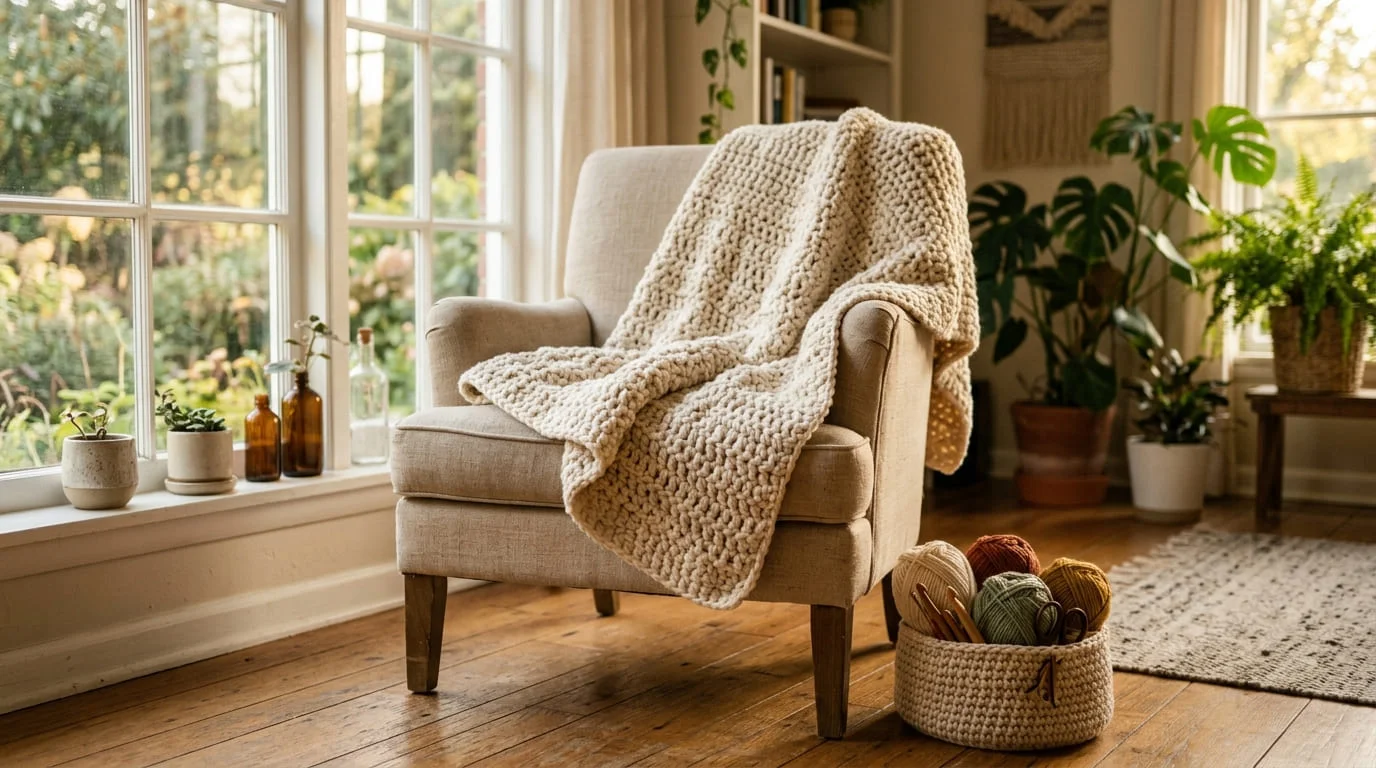
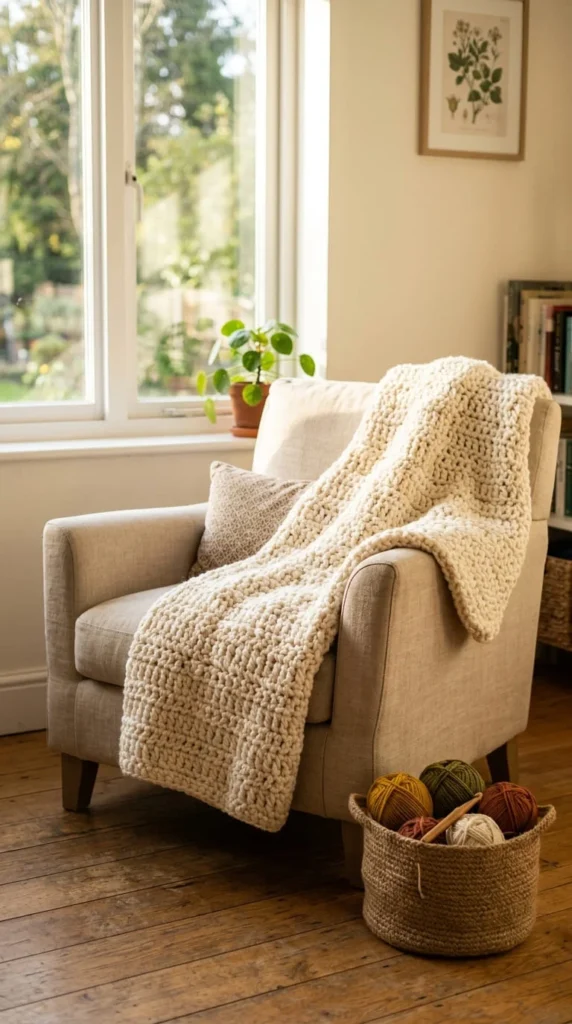
Crochet has moved far past the doilies and toilet-roll covers that used to define it. Today’s crochet home decor ideas lean into texture, sculptural shapes, and neutral palettes that fit right alongside linen sofas, wooden shelving, and ceramic planters. Whether you’re a beginner with a hook and one skein of yarn or someone hunting for a weekend project that actually changes how a room feels, this list covers pieces for every space in the house — living room, bedroom, kitchen, bathroom, and entryway. Each idea includes what it takes to make, roughly how long it takes, and where it fits best, so you can pick projects that match your time, budget, and skill level instead of scrolling through hundreds of patterns with no direction.
1. Chunky Oversized Throw for a Reading Corner
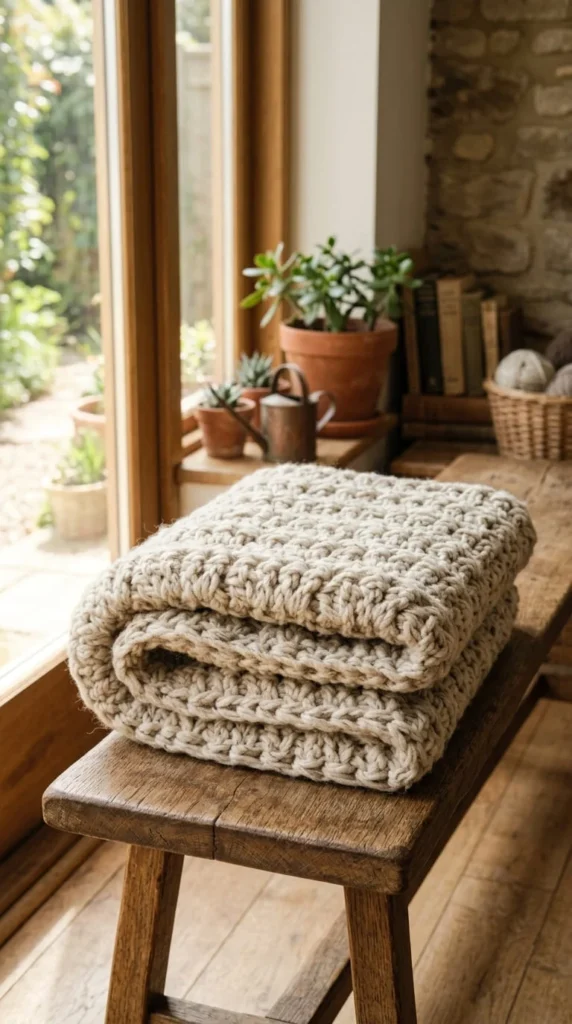
A chunky crochet throw is one of the fastest ways to change the feel of a room without touching the furniture. Using super bulky yarn and a large hook (size N or bigger), you can finish a lap-sized throw in a weekend instead of a month, since the stitches themselves cover more ground per row.
Stick to a simple stitch — half double crochet or moss stitch — so the texture does the visual work instead of a busy pattern. Oatmeal, stone gray, or soft charcoal keep the piece flexible enough to sit on a sofa, an armchair, or the foot of a bed.
Budget roughly 4–6 skeins of super bulky yarn for a 40×60 inch throw, depending on your gauge. This is also a good project for testing whether a yarn brand pills or softens with use before committing to a larger piece like a rug.
Tip: wash a swatch first. Some bulky acrylics stretch significantly when laundered, which changes the finished size more than people expect.
2. Mandala Accent Pillow for a Boho Reading Nook
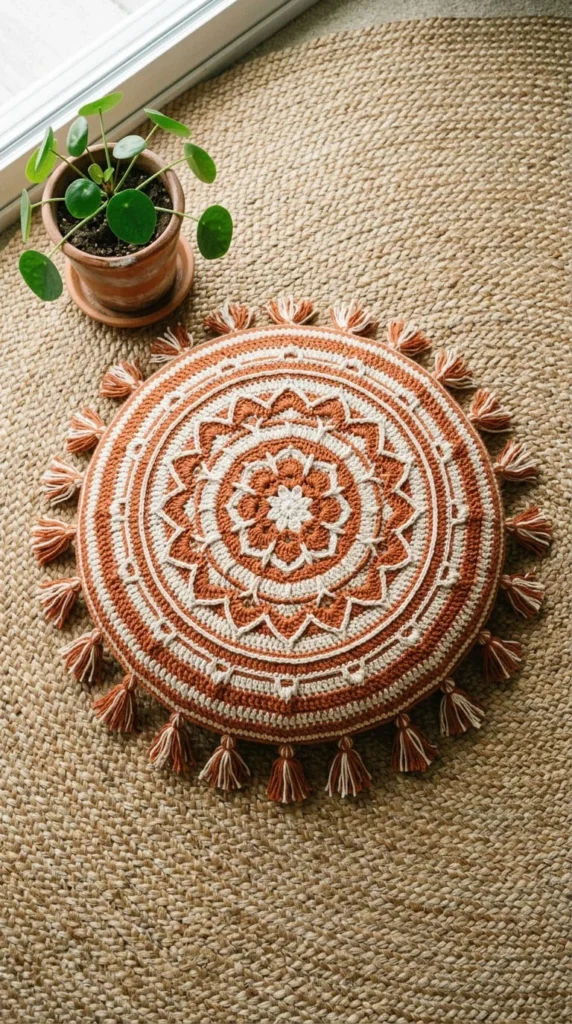
Mandala pillows work because they give you a focal point without needing an entire room redesign. The circular, layered stitch pattern reads as intentional even from across the room, which makes it a strong choice for a single accent chair or a window seat.
Most mandala patterns build outward in rounds, so you can stop at any point if you want a smaller cushion cover, or keep going for a larger 20-inch pillow. Terracotta, mustard, and sage work well together for a warm, grounded look; cream and dusty blue lean more coastal.
Use a removable cover with a zipper or button closure rather than crocheting a sealed pillow. This makes washing far easier and lets you swap the cover seasonally without buying a new insert every time.
Best for: intermediate crocheters comfortable with increasing and color changes. Beginners can start with a simpler striped round instead of a full mandala and still get a similar effect on the shelf or chair.
3. Sturdy Storage Basket for Blankets and Throws
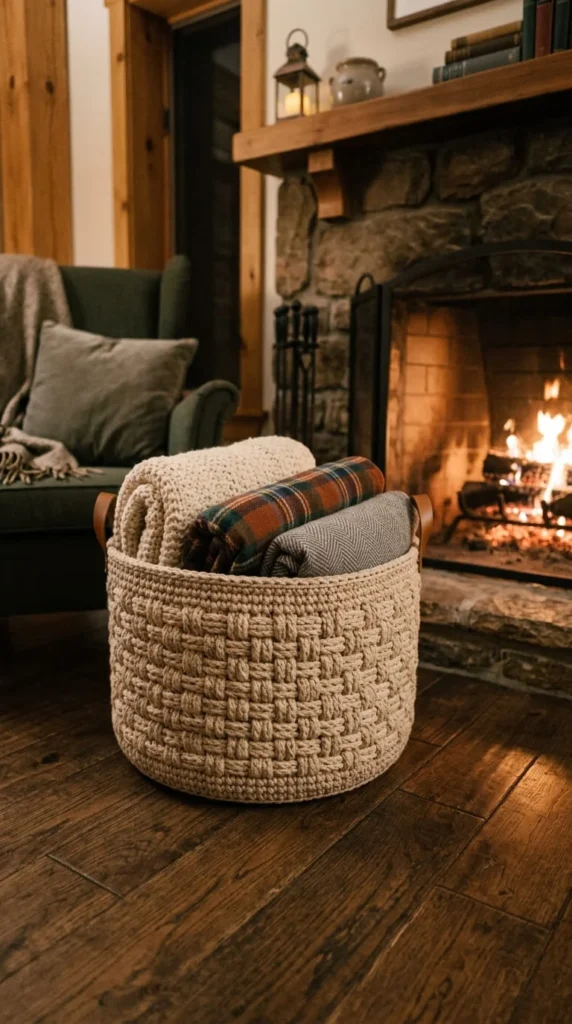
A crochet basket solves a real problem: where do the extra blankets, remotes, or magazines go without cluttering a shelf? Made with cotton yarn or T-shirt yarn and a firm single crochet stitch, these baskets hold their shape far better than a soft blanket-weight yarn ever will.
For anything larger than a 12-inch basket, line the inside with a fabric liner or fold in a wire or plastic mesh insert at the base. This stops the sides from sagging once you load it with heavier items like folded blankets.
Cotton rope or jumbo yarn works fastest for bigger baskets, while thinner cotton is better for smaller bathroom or desk versions that hold cosmetics or office supplies.
Sizing guide:
- Small (6–8 inches): pens, remotes, small toys
- Medium (10–12 inches): magazines, yarn, bathroom items
- Large (14+ inches): blankets, toys, laundry
Reinforce the base with a double layer of stitches on anything meant to carry real weight.
4. Framed Granny Square as Wall Art
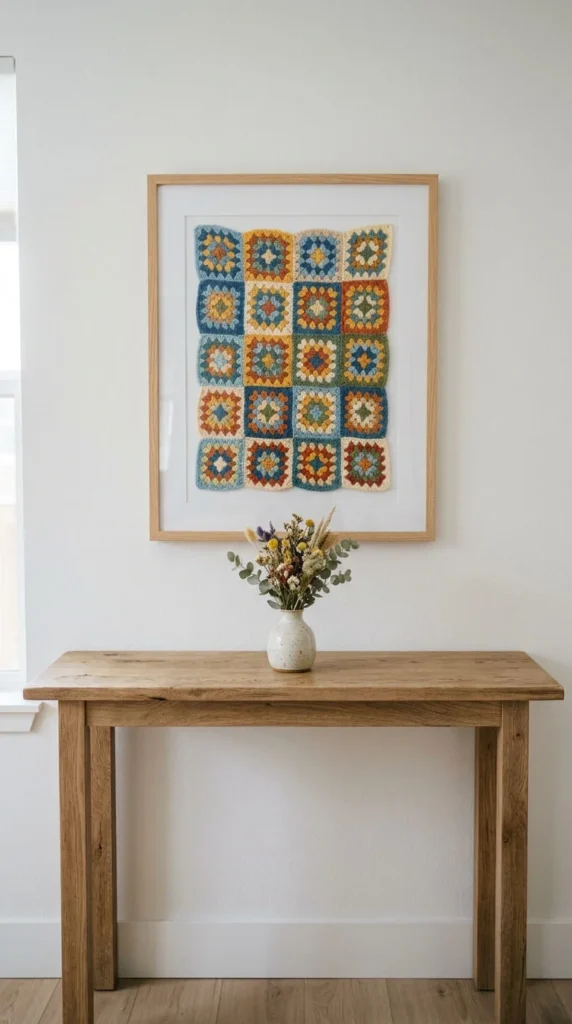
A single granny square, stretched over a canvas frame or mounted in a shadow box, turns a small practice project into real wall art. This is a smart option if you already have granny squares left over from another project and don’t want to sew them into a full blanket.
Choose two or three colors that match your existing wall palette rather than a rainbow mix, since a framed piece reads more like art when the color story is restrained. Mustard and cream, or terracotta and charcoal, both photograph well in a gallery-style grouping.
To mount it, stretch the square gently over canvas board and secure the edges with fabric glue or small tacks on the back, then drop it into a simple frame. A shadow box also works if you want the texture to stay visible rather than flattened.
Placement idea: group three small framed squares in a horizontal row above a console table or bed headboard instead of using one large piece — it gives the same visual weight with less crochet time.
5. Crochet Plant Hanger for Trailing Greenery
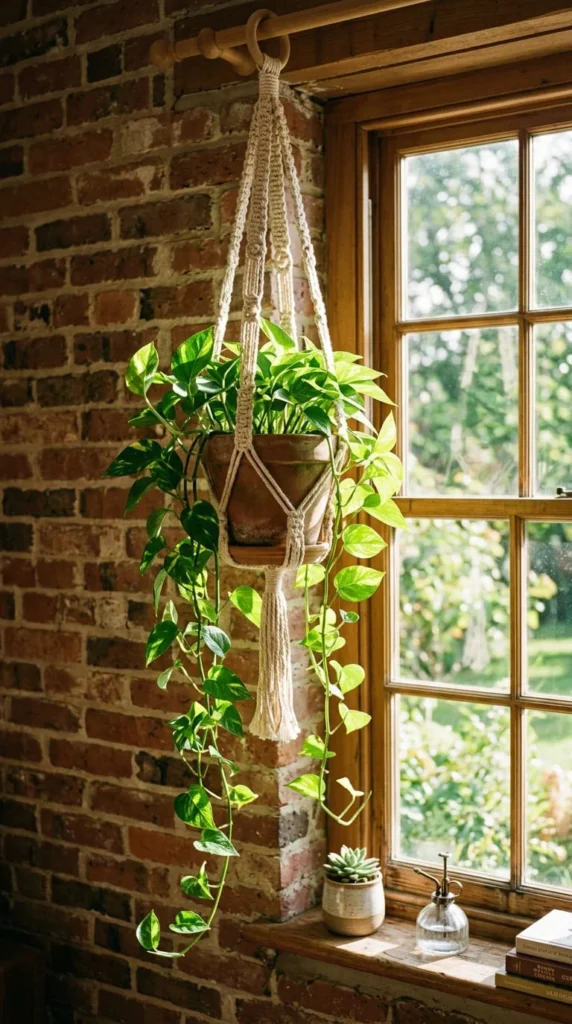
Plant hangers made from crochet cord give trailing plants like pothos, string of pearls, or ivy somewhere to spill over without a bulky macrame knot pattern. A basic four-strand crochet cord, gathered at the top into a ring, holds most standard 6-inch pots without extra reinforcement.
Cotton cord or jute-look acrylic yarn both work, but cotton holds up better in humid spots like a bathroom or kitchen window. Keep the cord length adjustable by leaving extra at the top so you can raise or lower the plant as it grows.
Test the hanger with an empty pot first, then add soil and the plant gradually. This confirms the stitching can hold the full weight before you commit to hanging it near a window where a drop would be messy.
Where it works best: corners with natural light, above a kitchen sink, or grouped in a cluster of three at different heights near a large window for a layered, plant-filled look.
6. Chunky Floor Pouf as Extra Seating
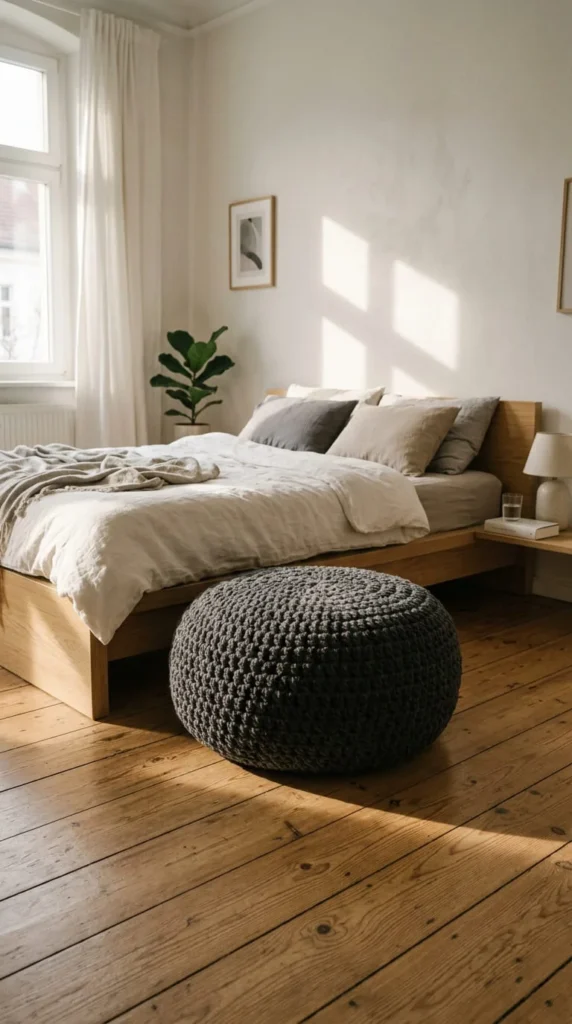
A crochet pouf gives a room flexible seating without adding another chair. It works as a footstool, a low side table, or extra seating when guests come over, and the round, sculptural shape softens a space full of straight-edged furniture.
Most poufs are crocheted as a tube, then stuffed with a fabric-covered foam insert or filled with poly-fil and a secondary fabric liner to hold its shape under weight. Chunky yarn in a single solid color keeps the piece from competing with patterned rugs or pillows nearby.
Plan for more yarn than you’d expect — a 16-inch pouf can use 8 to 10 skeins of bulky yarn, so this is a better project for someone who already has yarn on hand or is comfortable with the cost.
Durability tip: double up the base stitches where the pouf touches the floor. That’s the spot that takes the most wear, especially if it doubles as a footstool.
7. Personalized Monogram Pillow
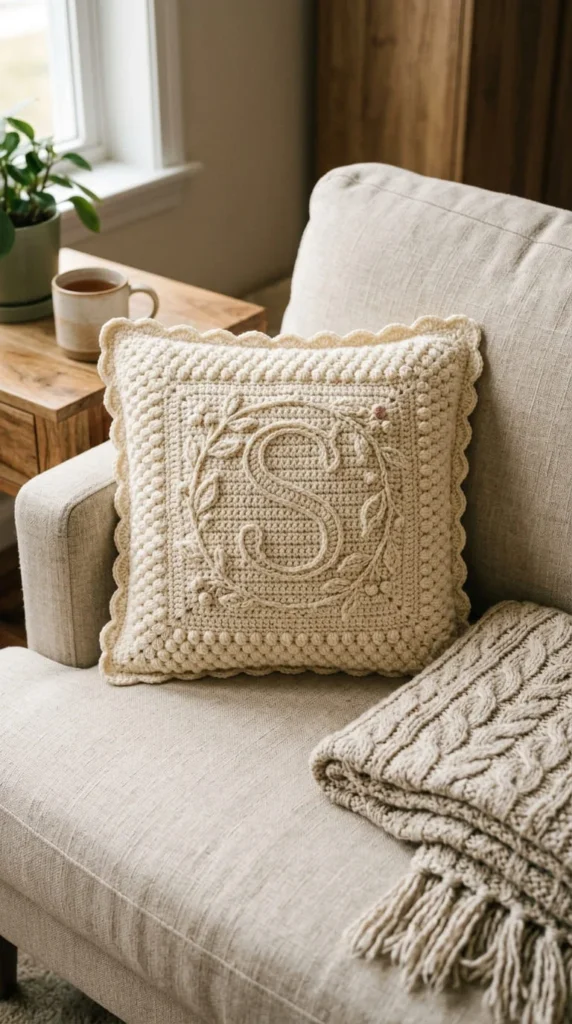
Adding a single letter, initial, or short word to a pillow turns a generic accent piece into something that feels made for the room. Tapestry crochet or intarsia techniques let you work a contrasting color directly into the design instead of embroidering it on afterward, which holds up better through washing.
Keep the lettering simple — a single block letter or a short three-letter word reads clearly even in a small font. Overly detailed script styles tend to blur together once they’re worked in yarn instead of thread.
This works well as a gift, a nursery accent, or a way to mark a shared space like a reading nook with a family initial. Pair the monogram color with an existing accent color in the room so it looks coordinated rather than added on.
Skill note: intarsia and tapestry crochet both require carrying multiple yarn colors at once, so this is a better fit for someone who has already made at least one solid-color pillow cover.
8. Soft-Light Lamp Shade Cover
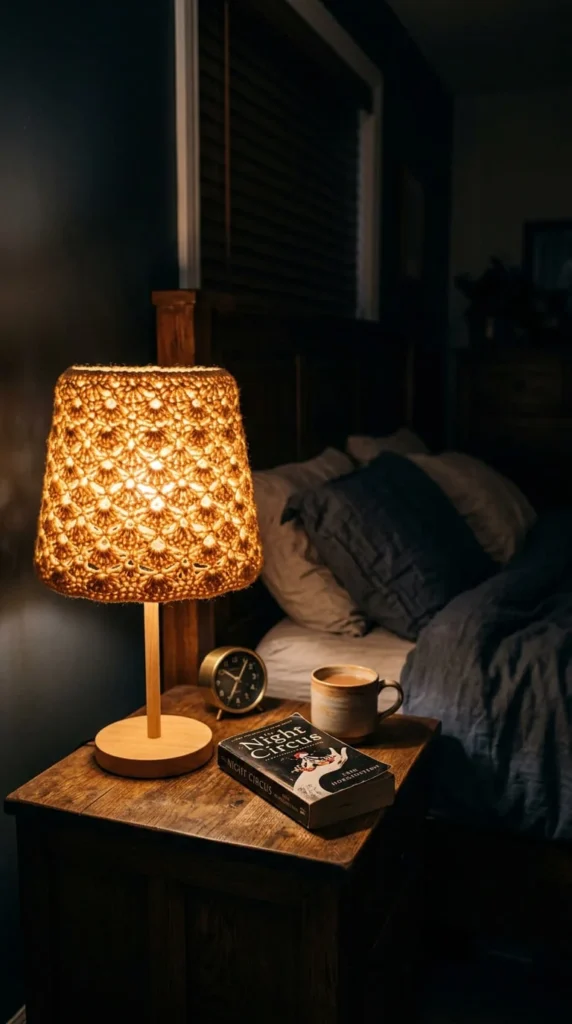
A crochet lamp shade cover changes the quality of light in a room without an electrician or a full fixture swap. Open, lacy stitches let more light through and cast a dappled pattern on the wall, while denser stitches soften the light into a warmer, more diffused glow.
Fit the cover over an existing plain shade using a drawstring at the top and bottom edge, or crochet it as a tube slightly smaller than the shade so it stretches snugly into place. Natural cotton or linen-blend yarn is safer near a heat source than synthetic yarn, which can warp under prolonged warmth.
Safety note: always use LED bulbs with a crochet shade cover. They run cooler than incandescent bulbs, reducing any fire risk from the yarn sitting close to the light source.
This project pairs especially well with a bedroom or reading nook where you want ambient light rather than bright, direct lighting for daily activities.
9. Striped Cotton Potholders for the Kitchen
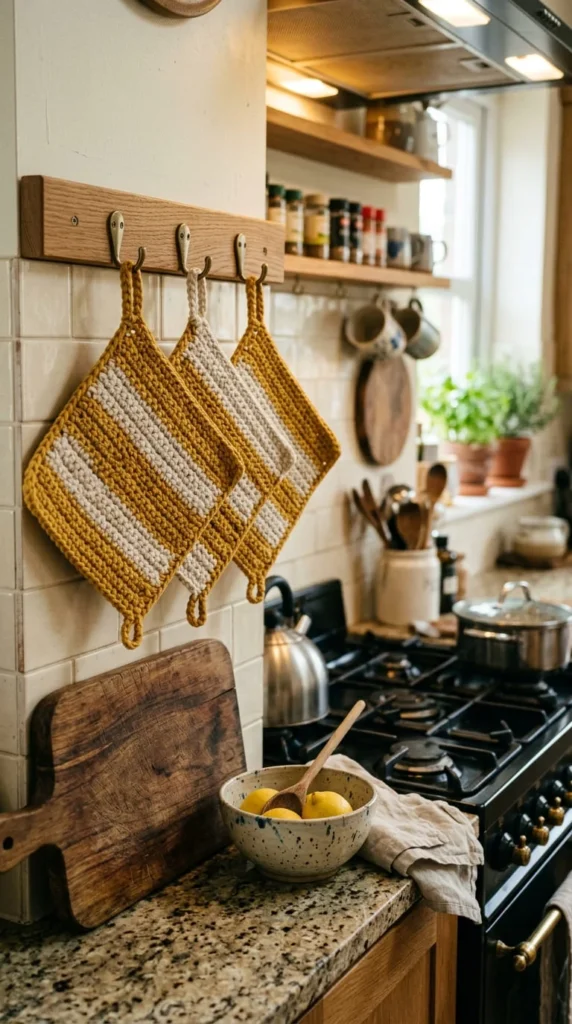
Potholders are one of the fastest crochet home decor projects, usually finishing in under an hour once you’re comfortable with basic stitches. Cotton yarn is non-negotiable here — acrylic melts near heat, while cotton handles regular contact with hot pans safely.
Double up the thickness by working two layers together or using a thermal lining fabric sandwiched between two crocheted panels for extra heat protection on anything that goes near the stovetop or oven.
Stripes in two or three coordinating colors let you use up leftover cotton yarn from other kitchen projects like dishcloths or towel toppers, so almost nothing goes to waste.
Quick project idea: make a set of four in the same colorway to hang near the stove — it reads as an intentional kitchen accent rather than a random mismatched collection, and gives you an easy handmade housewarming gift.
Hang them from a small cup hook or magnetic hook strip so they stay within reach but off the counter.
10. Lace-Stitch Table Runner for Dining
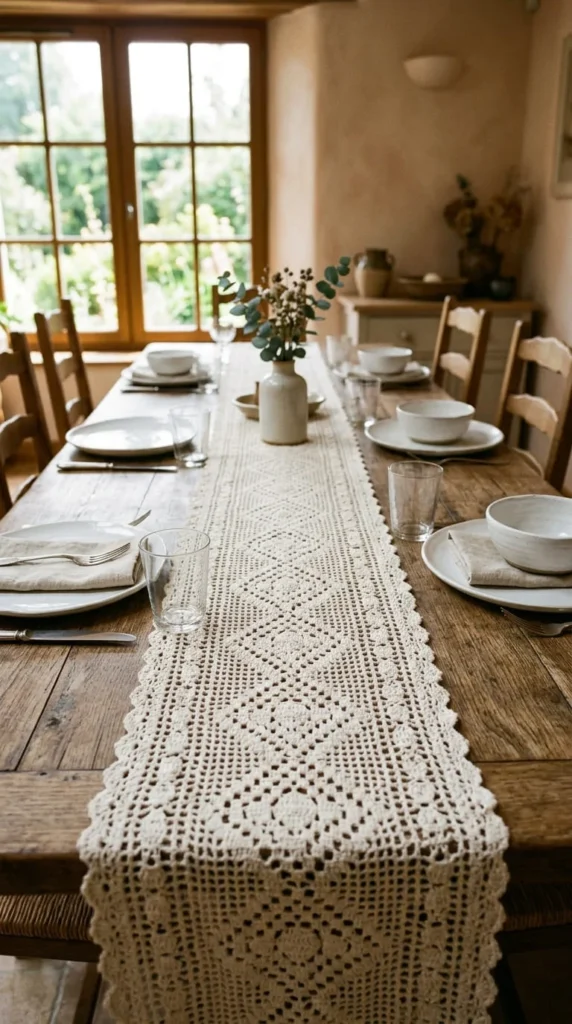
A table runner gives a dining table personality without covering the wood grain the way a full tablecloth does. An open, lace-style stitch — filet crochet or a simple shell pattern — lets the table surface show through, which keeps the look light rather than heavy.
Natural or off-white cotton yarn is the most flexible choice, since it works with wood, marble, or painted table surfaces without clashing. If you want more color, a single muted tone like sage or dusty blue still reads as neutral enough for everyday use.
Measure your table before starting: a runner should hang 6–8 inches past each end of the table for a balanced look, and roughly 12–14 inches wide fits most standard dining tables without overwhelming the place settings.
Care tip: cotton runners can be hand-washed and laid flat to dry. Avoid the dryer, which can shrink and distort the open stitch pattern over repeated washes.
11. Chunky Cotton Bath Mat
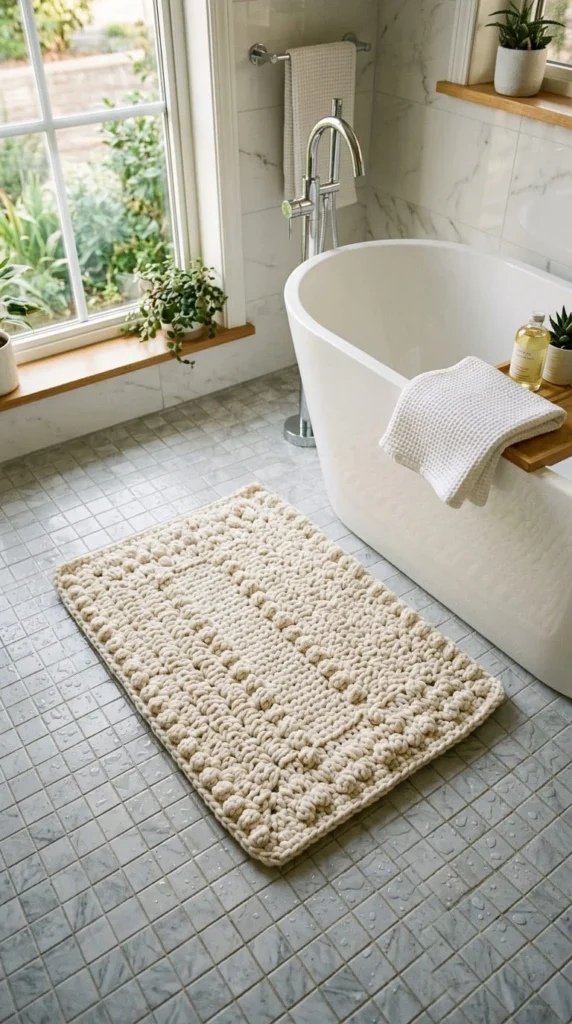
A crochet bath mat brings texture into a bathroom that’s usually full of hard, cold surfaces — tile, porcelain, glass. Chunky cotton yarn absorbs water better than acrylic and dries faster, which matters in a room that stays damp.
Work the mat in a dense single crochet or moss stitch so there’s minimal gap between stitches; open lace patterns look nice but let water pass straight through to the floor underneath, defeating the purpose.
Add a non-slip rubber backing on the underside once the mat is finished. You can buy non-slip fabric spray or a rubber shelf-liner sheet cut to size and stitched or glued to the back — skipping this step turns a decorative mat into a slipping hazard on tile.
Realistic expectation: a bath mat sees more wear than almost any other crochet home decor piece. Plan to remake it every year or two, and keep the design simple enough that a repeat isn’t a big project.
12. Draught Excluder for Doors and Windows
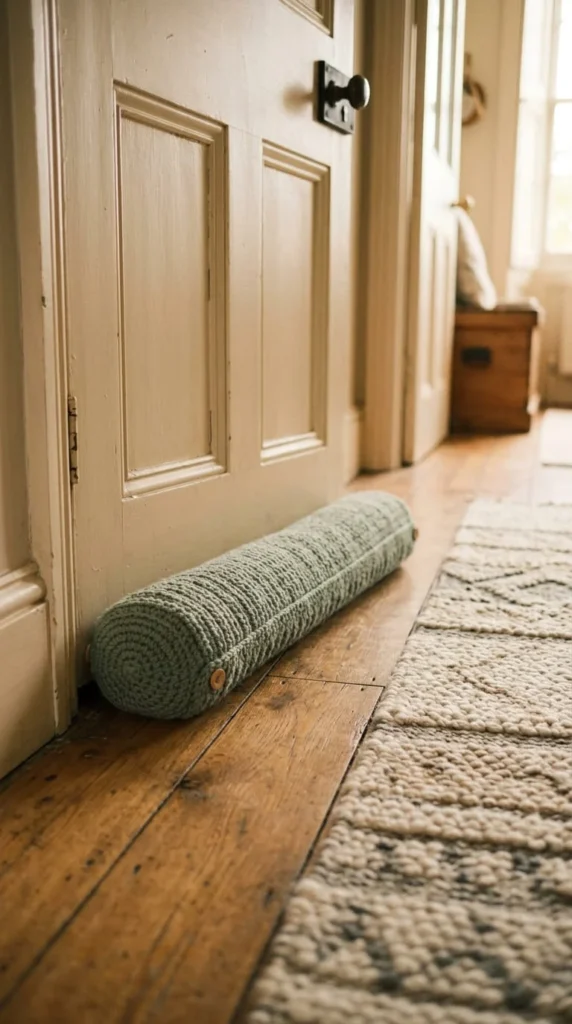
A draught excluder is a practical project that solves a real seasonal problem — cold air sneaking under a door or window frame. Crochet a simple tube shape, stuff it with rice, dried lentils, or polyester fiberfill, and it becomes a functional accent that also blocks drafts.
Rice or lentil filling adds weight that keeps the excluder in place better than fiberfill alone, though fiberfill is lighter and easier to move if you shift it between doors. A blend of both — fiberfill in the center with rice near the ends — balances weight and softness.
Simple stripes or a solid color both work well here since the shape itself is the main visual feature. Match it to your entryway or living room palette so it doesn’t look like an obvious add-on.
Sizing note: measure your door width before starting. Most interior doors need a tube around 30–36 inches long to cover the full gap at the base.
13. Seasonal Wreath for the Front Door
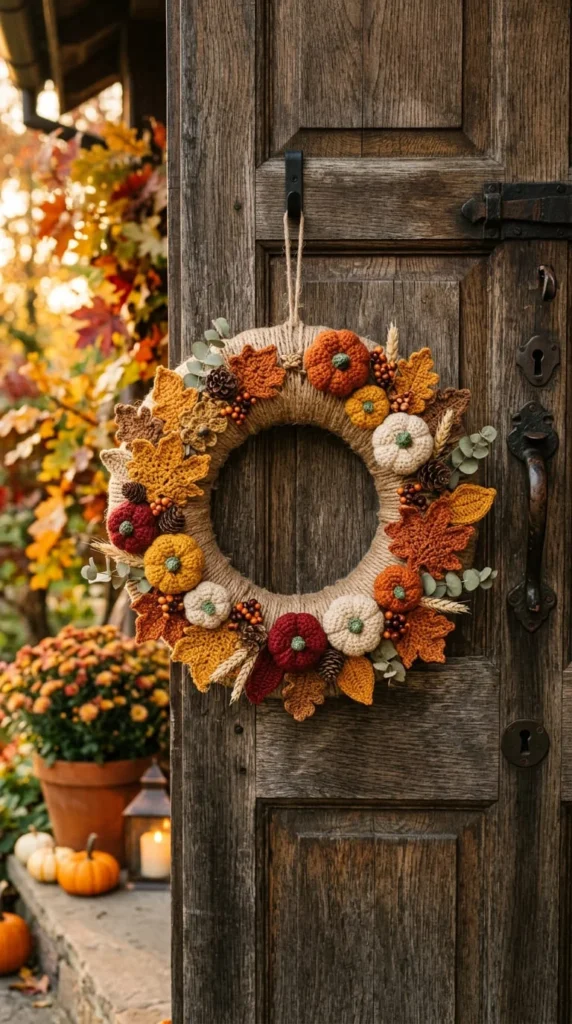
A crochet wreath gives you a handmade alternative to store-bought seasonal decor that can be swapped out room to room, not just on the front door. Small crochet pumpkins, leaves, or berries attached to a foam or wire wreath base build up quickly since each individual piece is small.
Autumn palettes — rust, mustard, deep green — are the most common starting point, but the same wreath base technique works for winter greenery, spring florals, or a plain neutral wreath that stays up year-round.
Hot glue or a needle and thread both work for attaching individual crochet elements to the base. Spacing them unevenly, with some overlap, looks more natural than a perfectly symmetrical arrangement.
Storage tip: store finished wreaths flat in a box rather than hanging them in a closet between seasons. Hanging storage can stretch the wire base out of shape over months of sitting.
This is also one of the more approachable gift projects, since a wreath reads as a finished, polished piece even with fairly basic stitches.
14. Quick Coasters for Coffee Tables
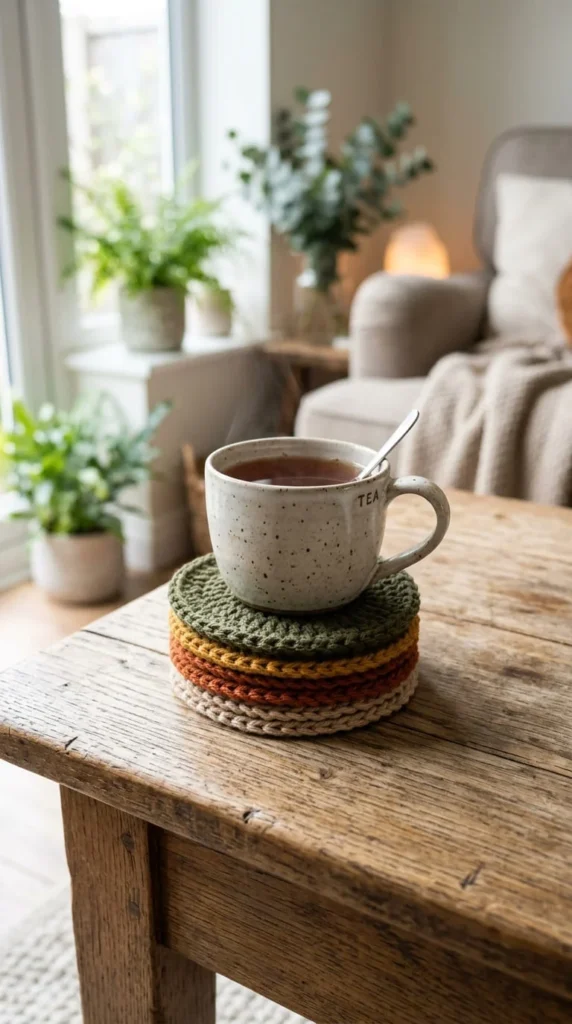
Coasters are the fastest entry point into crochet home decor, often finishing in 15–20 minutes each once you know a basic round or granny square pattern. Cotton yarn is the practical choice since it handles moisture from cups and glasses without staining as easily as acrylic.
A set of four or six in slightly different but coordinating colors looks more intentional than an exact matching set, and it’s a good way to use up small amounts of leftover yarn from bigger projects.
Beginner project note: if you’re brand new to crochet, coasters are one of the best places to practice consistent tension, since any unevenness shows clearly in a small, flat piece.
Add a layer of fabric stiffener or a thin cork backing if you want the coasters to hold a firmer, flatter shape instead of curling slightly at the edges over time, which is common with pure cotton yarn.
Keep a stack in a small crochet basket nearby so they’re easy to grab and just as easy to put away.
15. Fitted Plant Pot Covers
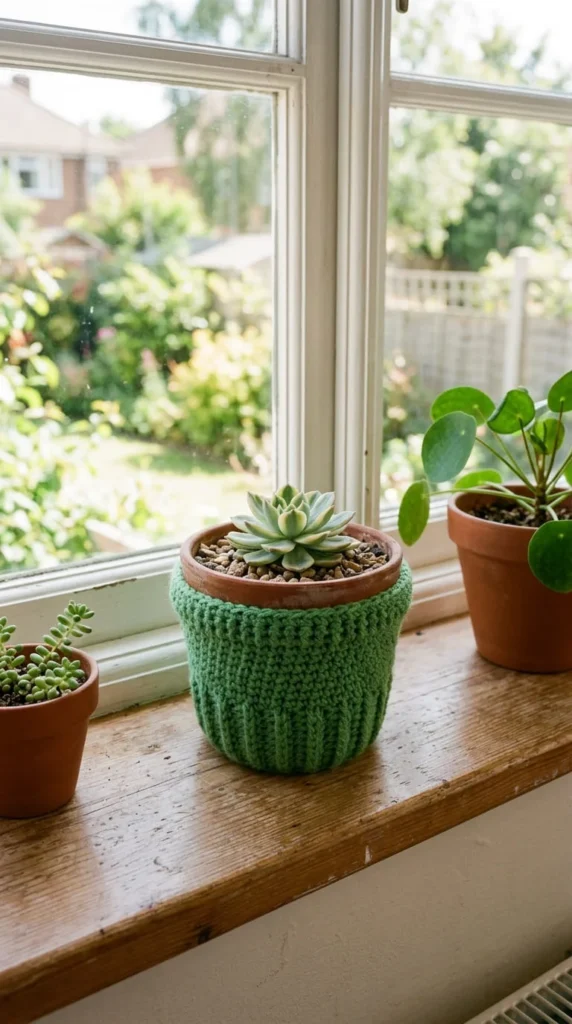
A crochet pot cover slips over a plain plastic or terracotta nursery pot and instantly makes it look intentional, without repotting the plant itself. This is one of the lowest-risk projects on this list since it doesn’t touch soil, water, or the plant’s roots directly.
Work the cover slightly smaller than the pot’s circumference so it stretches to fit snugly, and leave the bottom open or add small drainage-friendly gaps if the pot needs airflow. A simple ribbed stitch gives enough stretch to fit pots of slightly different sizes.
Textured stitches like bobbles or a basic granny square panel both work well here since the cover is small enough that even a busier pattern won’t overwhelm the space.
Styling idea: cover three or four pots of different sizes in the same yarn color for a matched plant grouping on a windowsill or shelf, even if the plants themselves are different species.
This is also a fast, low-yarn gift project for anyone who already has houseplants but wants their pots to look more finished.
16. Crochet-Wrapped Mirror Frame
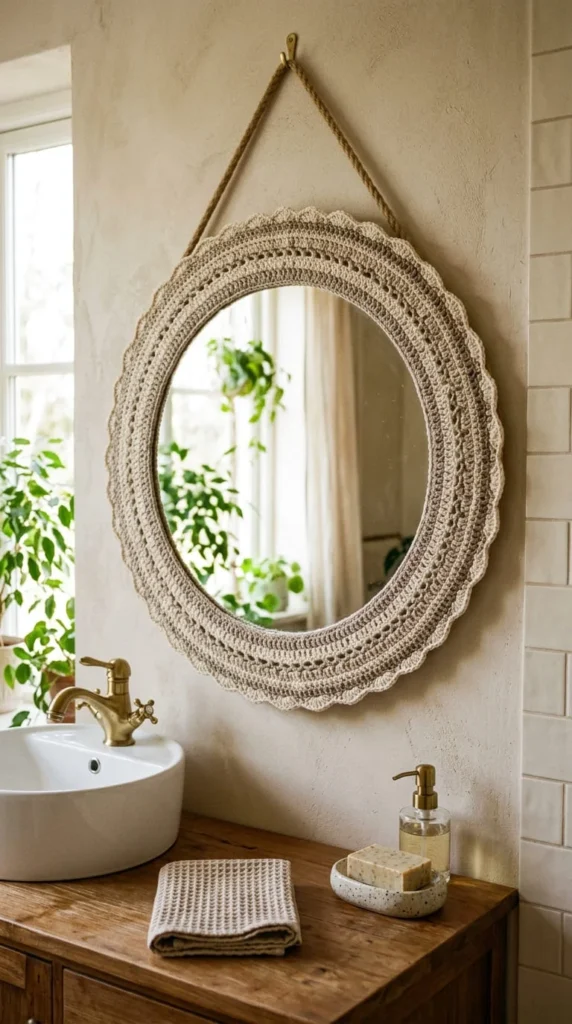
Wrapping a plain round or oval mirror frame in crochet fabric turns a basic mirror into a textured statement piece for a bathroom, entryway, or bedroom wall. Instead of crocheting the mirror itself, you crochet a fitted cover or trim piece that wraps around an existing frame.
Measure the frame’s circumference and width before starting so the crochet piece stretches to fit snugly without slipping loose over time. A firm stitch like single crochet with cotton yarn holds its shape better than a stretchy, open pattern.
Secure the wrap with fabric glue or a few discreet hand stitches on the back of the frame, keeping the front seam-free for a clean finished look.
Where it works best: entryway mirrors get the most daily visibility, but a bathroom vanity mirror wrapped in a neutral cotton texture also softens a room that’s usually full of hard, reflective surfaces like tile and glass.
This project works with an existing mirror you already own, which makes it one of the more budget-friendly wall pieces on this list.
17. Oversized Bean Bag for a Reading Corner
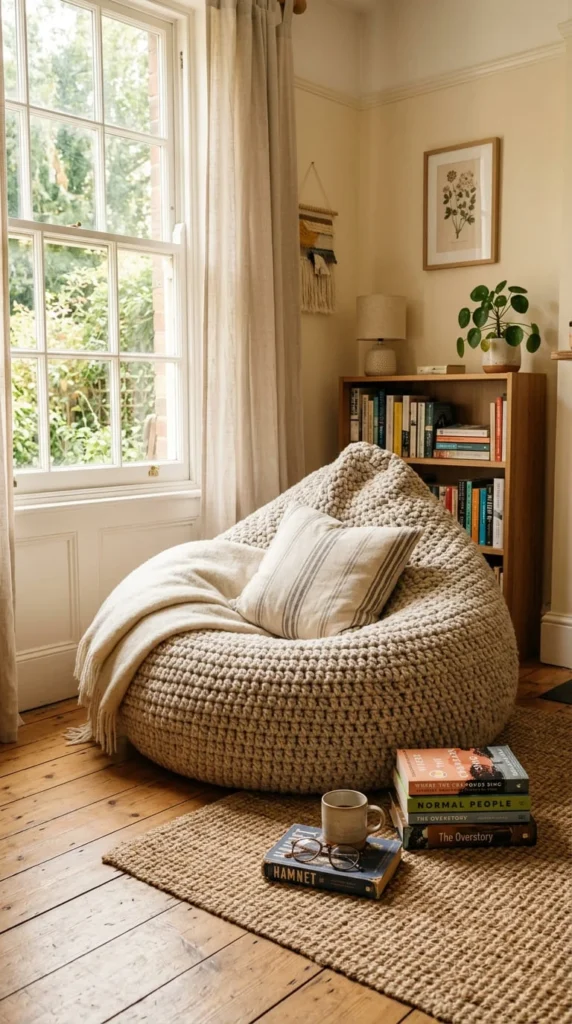
A crochet bean bag is a bigger commitment than a pouf, but it creates real, comfortable seating that works in a kids’ room, reading nook, or home office corner. The outer shell is crocheted in large sections and then joined, with a separate fabric liner holding the fill.
Use a durable cotton-acrylic blend for the outer shell since it needs to handle regular weight and movement without stretching out of shape. The fill goes inside a removable fabric liner, not directly against the crochet, so the cover can be washed separately.
Realistic time estimate: this is a multi-week project for most crocheters, not a weekend one. Break it into panels — sides, top, bottom — and treat each as its own smaller project to avoid losing momentum.
Solid neutral colors work best here since a bean bag is a large surface area, and a busy pattern across that much space can feel overwhelming rather than cozy.
This is a strong option for anyone who wants one large statement piece instead of several smaller accents scattered around a room.
18. Tapestry-Style Statement Pillow
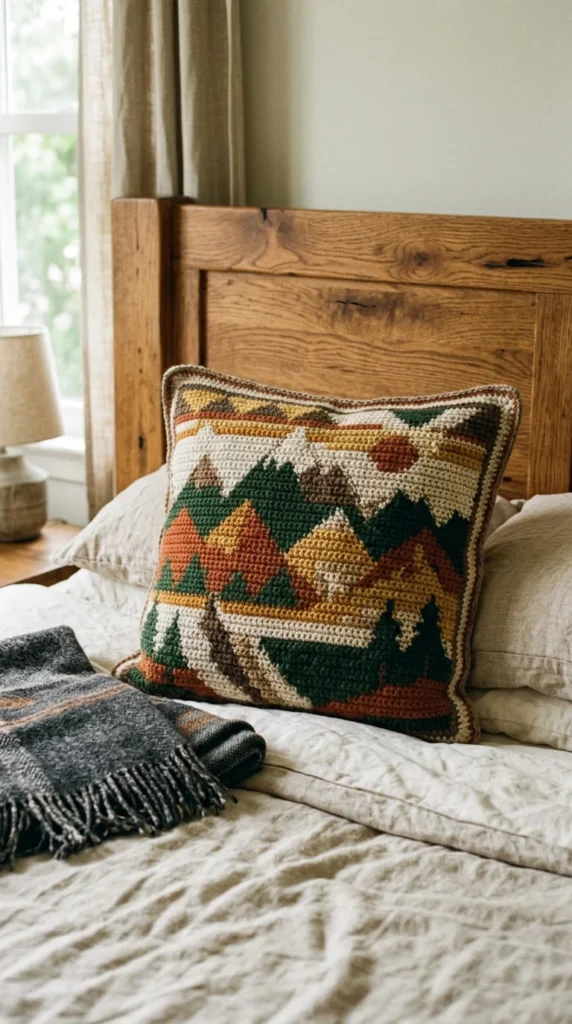
Tapestry crochet lets you build a picture or pattern directly into the fabric using multiple yarn colors carried together, rather than adding a design after the fact. A geometric mountain range, a simple sun motif, or an abstract striped landscape all translate well into this technique.
This is an advanced project since it requires managing several strands of yarn at once and following a color chart row by row, similar to reading a cross-stitch pattern. Start with a smaller design — a 12-inch pillow — before attempting a full-size statement piece.
Earthy tones like rust, olive, and cream keep a landscape-style design looking intentional rather than busy, especially against a plain sofa or bed.
Time expectation: a detailed tapestry pillow front can take considerably longer than a solid-color cover of the same size, since color changes slow down the row-by-row progress.
Pair it with plain solid pillows on either side rather than surrounding it with other patterned pieces, so the tapestry design stays the visual focal point of the seating area.
19. Scrap-Yarn Rag Rug for a Hallway
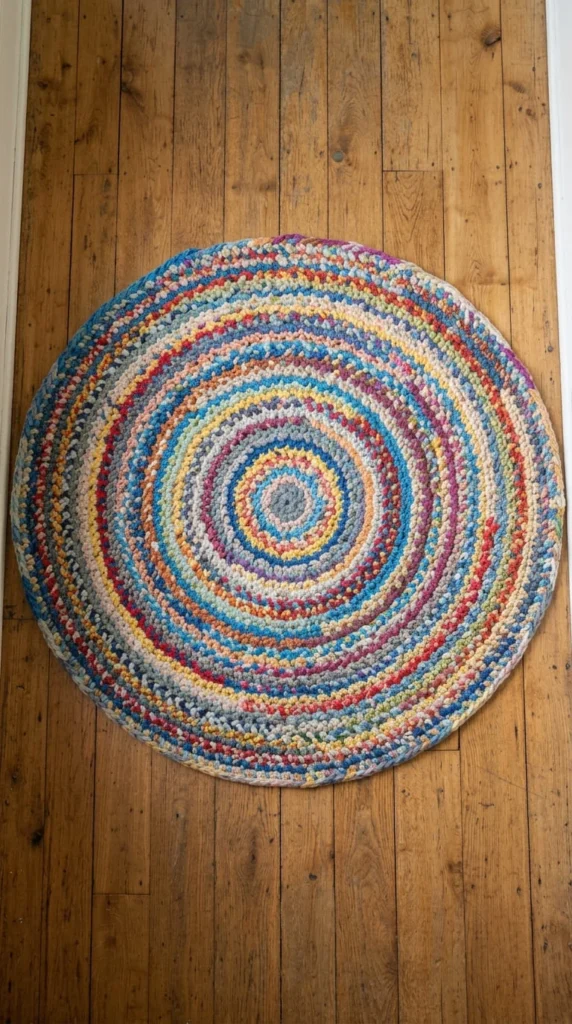
A rag rug is the project that finally uses up the odds and ends left over from every other item on this list. Small leftover balls of yarn get joined together into one continuous strand, then crocheted into a spiral or oval rug shape.
Color placement is naturally random with this technique, which is part of the appeal — no two scrap rugs turn out the same, and the mismatched colors read as a deliberate, layered look rather than clutter.
Use a firm single crochet stitch and a slightly smaller hook than you’d normally use for the yarn weight, since a tighter stitch keeps the rug flat and prevents it from curling at the edges as it grows.
Placement tip: hallways and entryways are ideal spots for a scrap rug, since the mixed colors hide dirt and wear better than a single solid color would in a high-traffic area.
Add a non-slip rug backing to the underside once it’s finished, the same way you would for a bath mat, since a rug on hardwood without backing can shift underfoot.
20. Crochet-Trimmed Doormat for the Entryway
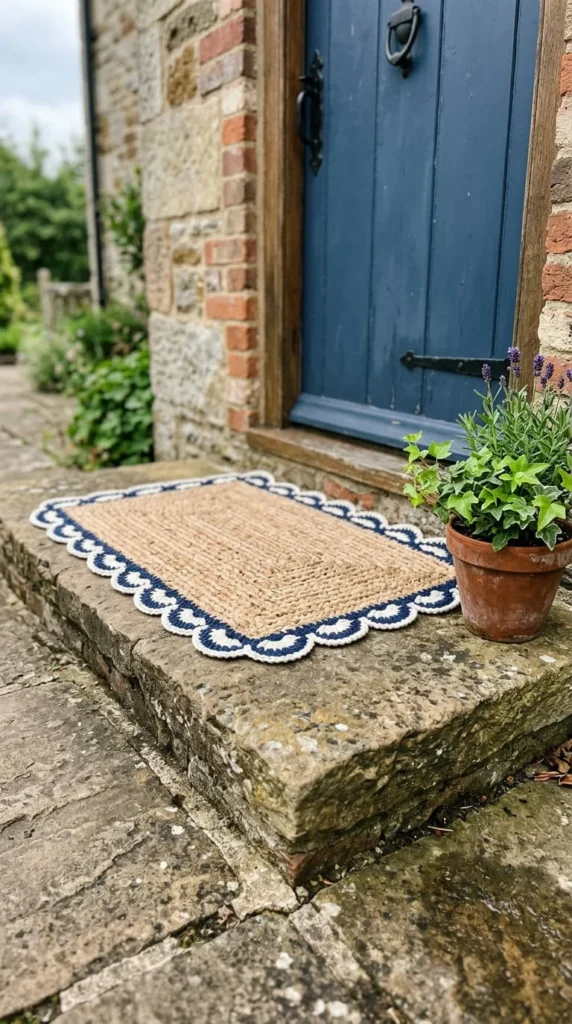
Rather than crocheting an entire doormat from scratch, which wears out quickly underfoot, this idea adds a crochet trim or edging to an existing natural fiber or rubber-backed mat. The scalloped or shell-stitch border gives the entryway a handmade detail without sacrificing durability.
Use outdoor-rated cotton or acrylic yarn if the mat sits somewhere exposed to weather, since regular indoor yarn can fade or weaken with sun and moisture exposure over a season or two.
Stitch the crochet trim directly through the existing mat’s edge using a large-eyed needle, working in short sections rather than trying to attach the whole border in one long pass.
Color pairing: navy and white, or forest green and cream, both hold up well against dirt and everyday wear better than very light or very bright colorways in a high-traffic entry spot.
This project takes an afternoon rather than a week, making it one of the faster ways to add a handmade touch to the very first thing guests see when they arrive.
21. Fringe-Edge Wall Hanging Above the Bed
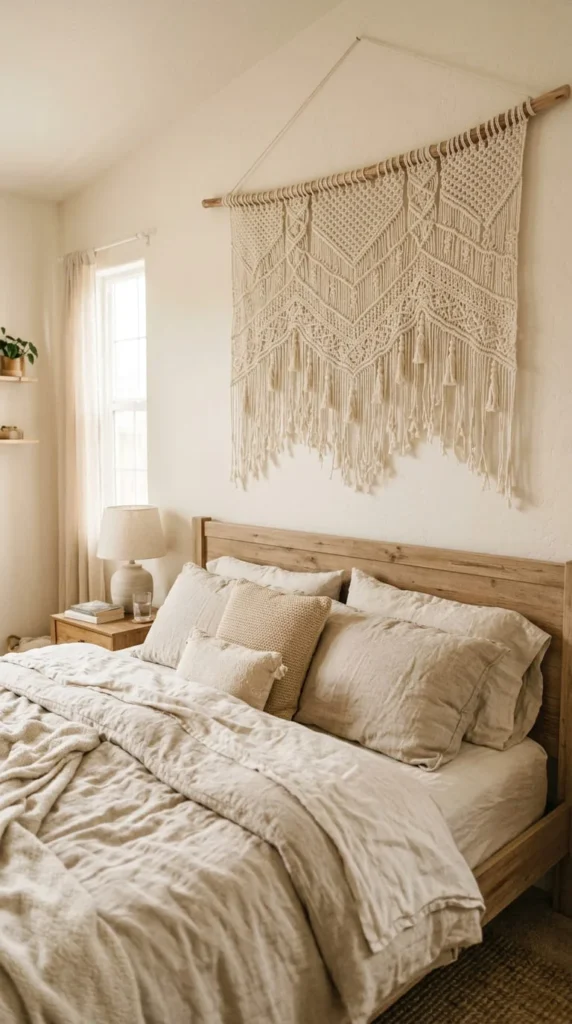
A large crochet wall hanging above a headboard fills empty wall space without needing to hang multiple smaller frames. A wide rectangular panel with a simple stitch, finished with a row of fringe along the bottom edge, gives it a textile-art feel rather than looking like an oversized doily.
Work the main panel in a solid neutral color, then add fringe in a slightly contrasting shade for subtle depth. Mount it on a wooden dowel with a simple loop stitch at the top, which makes it easy to hang from a nail or hook without a frame.
Scale guide: aim for a panel roughly two-thirds the width of your headboard so it reads as a deliberate design choice rather than an undersized afterthought above the bed.
This project uses more yardage than a standard pillow but far less time than a full blanket, making it a good middle-ground project once you’re comfortable with basic rectangular panels and simple fringe techniques.
22. Cozy Crochet Bed for a Cat or Small Dog
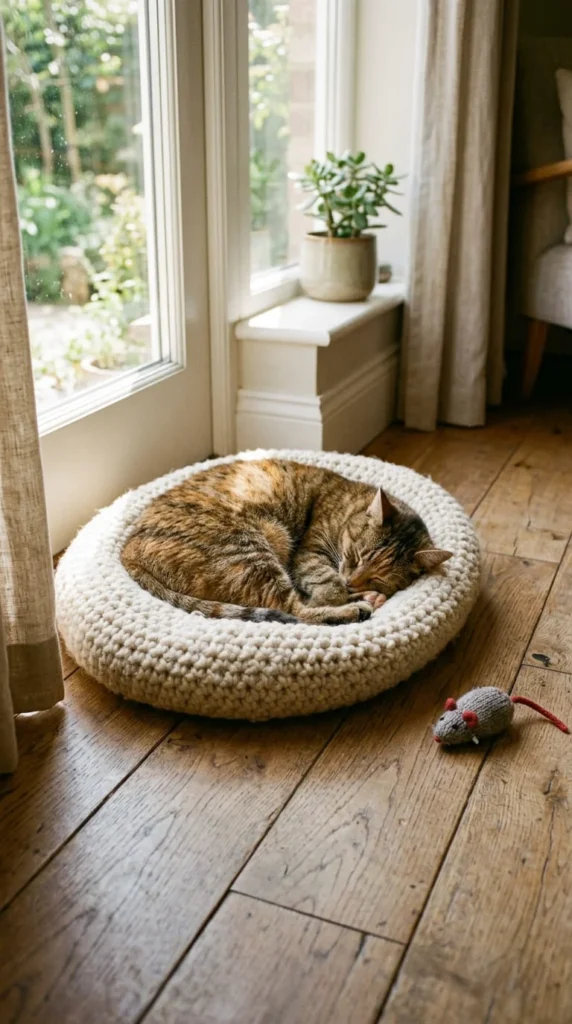
A crochet pet bed gives a cat or small dog a soft spot that also fits the rest of the room’s decor, instead of a plastic or brightly colored store-bought bed. An oval or round base worked in a firm stitch holds its shape once padded with a foam liner or thick fabric cushion inside.
Cotton or cotton-acrylic blend yarn is easier to wash regularly than pure wool, which matters given how much fur and dirt a pet bed collects over time. Choose a removable liner you can pull out and machine wash separately from the crochet shell.
Safety note: avoid loose fringe, dangling embellishments, or long yarn tails on any pet project. Pets chew and pull at loose threads, which can become a choking risk.
Keep the color simple and durable — a medium gray or tan hides pet hair better than pure white or black, and won’t show wear as quickly in a spot that gets daily use.
This is a genuinely useful gift for any pet owner who already crochets, since it solves a real need rather than adding another purely decorative object.
23. Mini Ornaments for Holiday Garlands
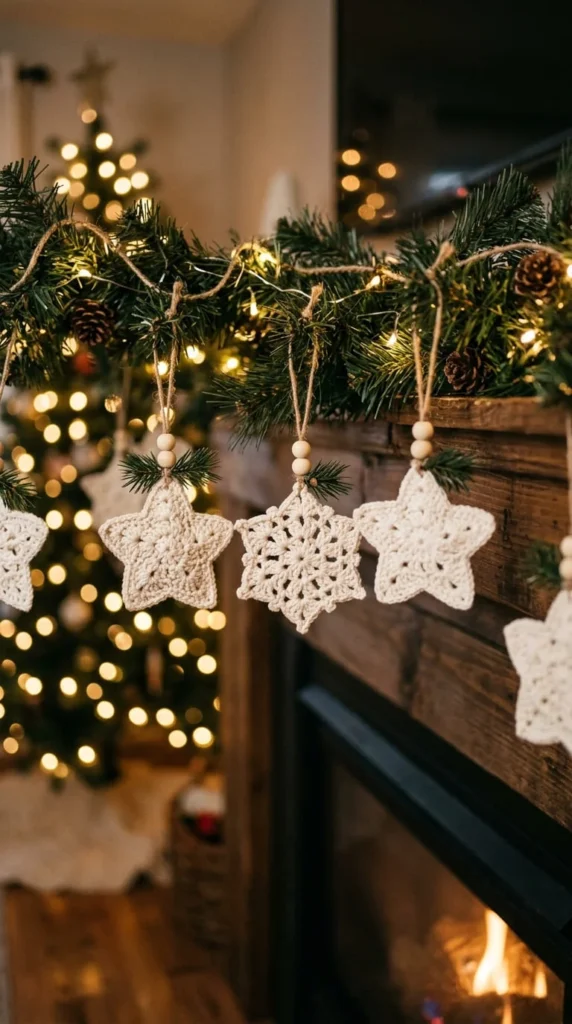
Small crochet ornaments — stars, simple snowflakes, or plain round baubles — give a mantel, tree, or garland a handmade layer that store-bought decorations don’t have. Each piece is small enough to finish in under 30 minutes, making this a good project for using scrap time between bigger projects.
Stiffen the finished ornaments with a fabric stiffener spray or a diluted glue-and-water soak, then let them dry over a form like a small balloon or plastic mold if you want a rounded, structured shape instead of a soft, floppy one.
A neutral cream and gold color combination works for a modern mantel display, while red and green suit a more traditional holiday look. Either way, keep the color count to two or three so the collection looks coordinated when grouped together.
Storage tip: once the season ends, store the ornaments flat in a labeled box with tissue paper between layers to prevent the stiffened shapes from bending or cracking before next year.
These also make simple, low-cost gift toppers tied onto a wrapped present with a piece of ribbon.
Conclusion
Crochet home decor works best when you pick projects that match what your space actually needs, rather than starting with whatever pattern looks nicest online. A cluttered living room probably needs a basket before it needs another pillow. A cold hallway floor could use a rag rug more than a wreath. Start with one or two pieces from this list that solve a real problem in your home, get comfortable with the stitches and yarn weight involved, then build outward from there. Keep leftover yarn from every project, since it almost always finds a home in a coaster, ornament, or scrap rug later on. Pick up a hook, grab a skein in a color that fits your space, and turn one of these ideas into something you’ll actually use every day.