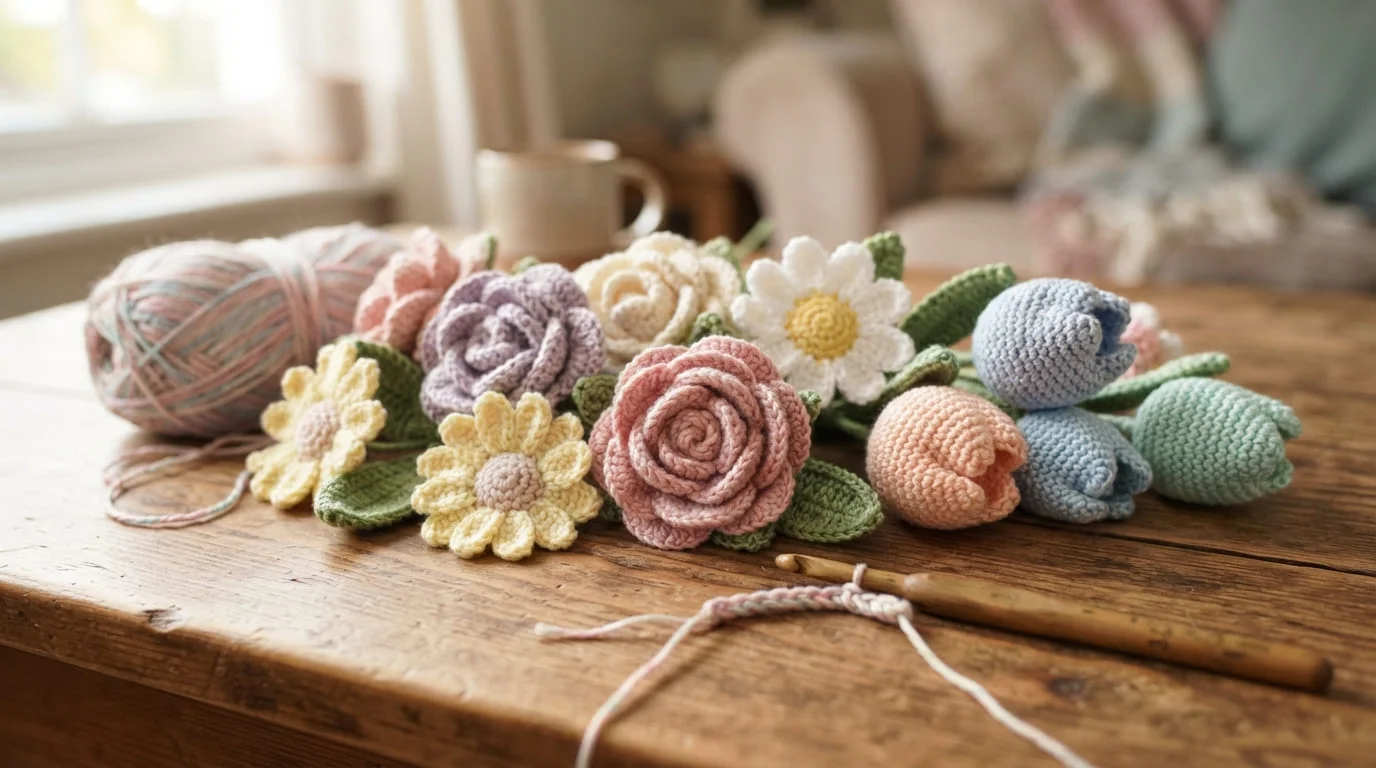
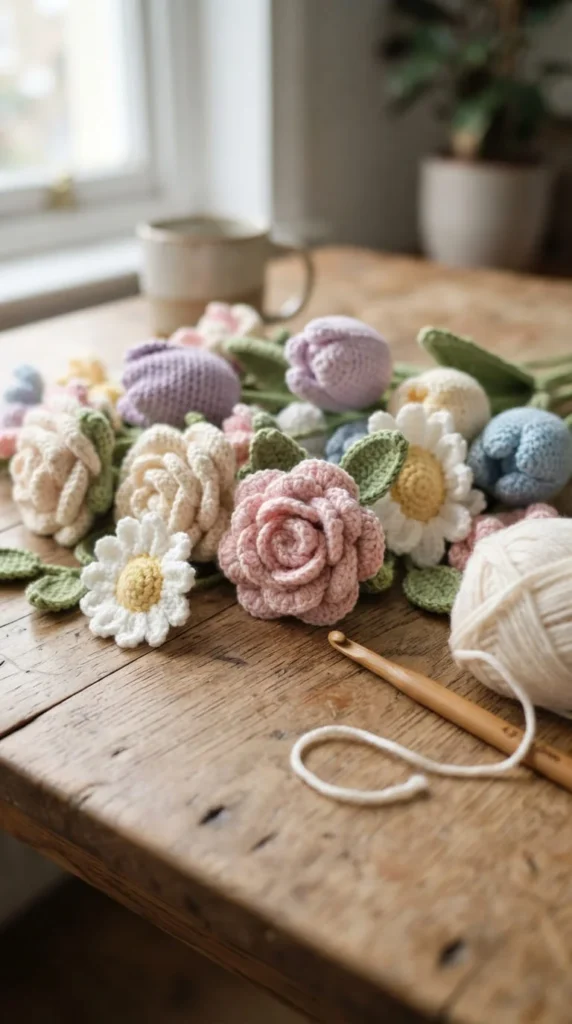
Crochet flowers are one of the most rewarding places to start if you love working with yarn but want something faster and more colorful than a full-sized project. A single flower can take ten minutes and barely uses any yarn, yet it can become a brooch, a bookmark, a bouquet, or the finishing touch on a hat or bag. This list rounds up 23 beginner-friendly flower ideas, from quick five-petal motifs to layered 3D blooms and full stemmed bouquets, so you can pick a project that matches your skill level, your yarn stash, and whatever you’re planning to make. Each idea comes with a practical tip so you can start today with supplies you probably already have.
1. Start With a Simple Five-Petal Flower
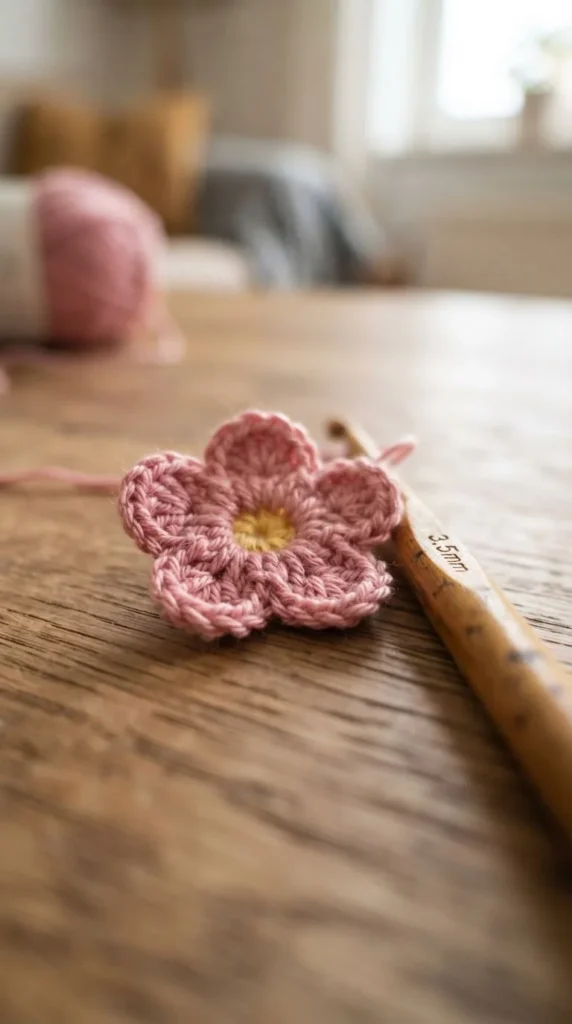
A five-petal flower is the easiest place to begin. It starts with a small center ring, then repeats one simple petal stitch five times around. There’s no shaping to memorize beyond that one repeat, which makes it a genuinely low-pressure first project. Budget tip: use any leftover worsted-weight yarn, since this motif barely uses a few yards per flower. Most beginners finish one in under 15 minutes once they get the rhythm down. This flower is also the base for almost everything else on this list, so mastering it early pays off. Try making a few in different colors to see how the same pattern looks with pastel versus bold yarn. Once you’re comfortable, you’ll recognize this same petal-repeat structure in daisies, appliqués, and even more complex layered blooms later in this guide.
2. Make a Quick Scrap-Yarn Daisy
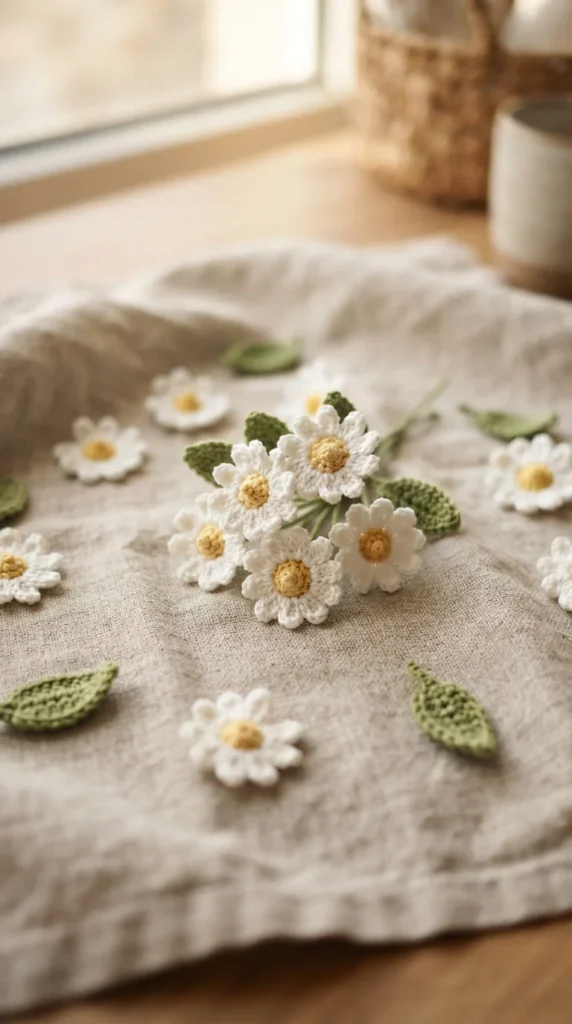
A daisy is one of the most beginner-friendly flowers you can make, thanks to its narrow, uniform petals and simple round center. It’s often recommended as the first flower to add to a bouquet because it repeats so quickly. Budget tip: this is a perfect project for tiny leftover scraps, since each daisy uses only a small amount of white or yellow yarn. Most daisies take under ten minutes once you know the pattern. Try making eight to twelve in slightly different shades of white, cream, or pale yellow for a fuller, more natural-looking bunch. Because daisies are so quick, they’re also a great “practice while watching TV” project. Once you’ve made a handful, you’ll have enough for a small vase arrangement, a hair clip, or a scattered accent across a blanket or pillow.
3. Crochet a Layered Rose
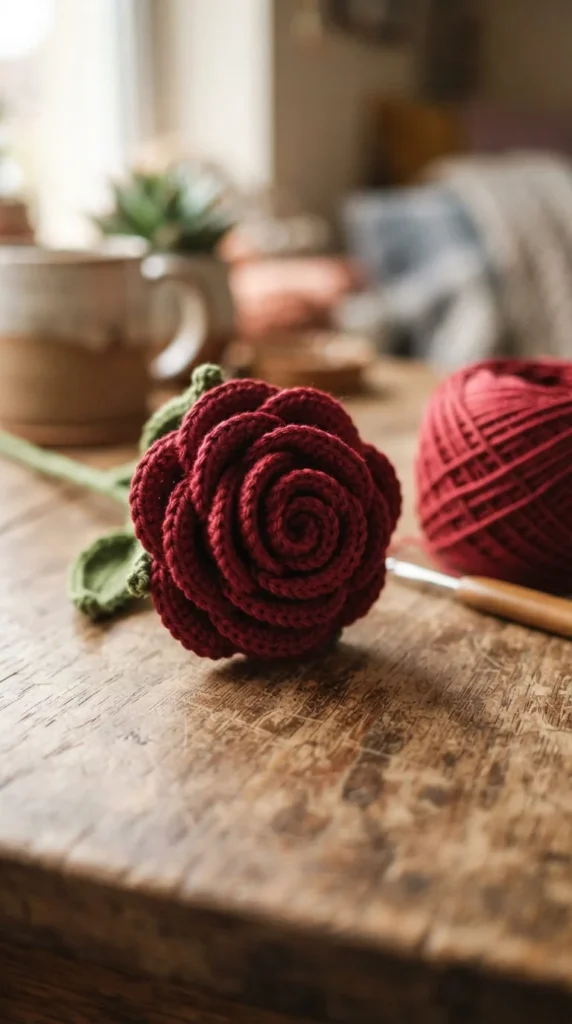
A layered rose is a step up from a flat motif, built by crocheting a long strip and rolling it into a spiral to mimic real rose petals. It looks far more advanced than it actually is, since the shaping happens through rolling and stitching rather than complex increases. Budget tip: one small skein makes several roses, so it’s an affordable way to add a focal flower to any project. Expect about 20 to 30 minutes per rose. This flower works well repeated five to seven times across a few different red or pink shades for a coordinated bouquet look. Try securing the rolled spiral with a few small stitches at the base rather than glue, so it stays flexible and durable. Once you’ve made one rose, you’ll understand the rolling technique used in several other layered flower styles.
4. Build a 3D Layered Bloom
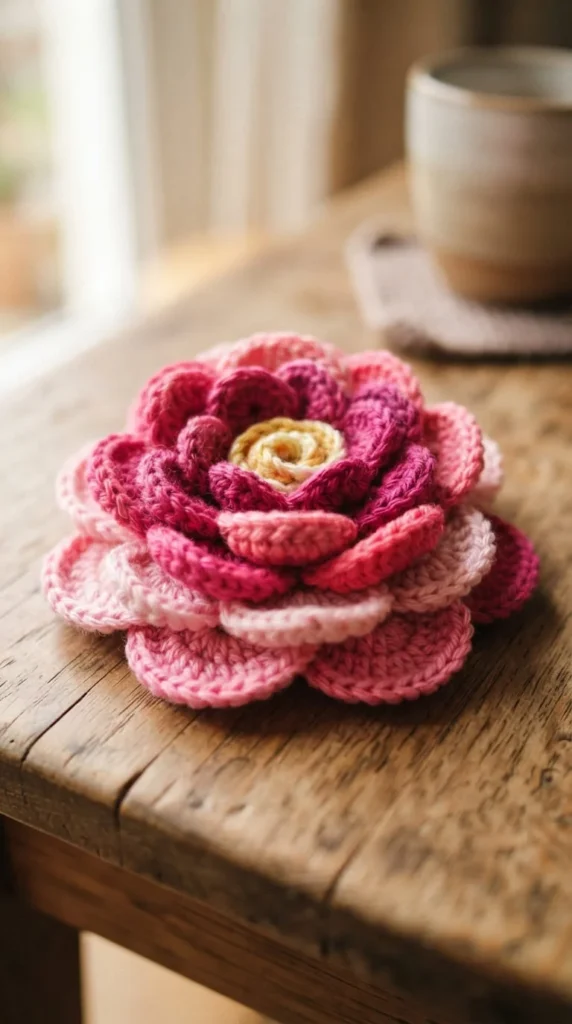
A 3D layered flower stacks two or three flower motifs of decreasing size on top of each other, then joins them at the center for a fuller, more dimensional look. It’s a simple way to make a flower look far more detailed without learning any new stitches. Budget tip: use three different shades of the same color family, like blush, dusty rose, and ivory, so you can use up several small scraps at once. This project takes about 20 minutes total. It’s a strong choice when you want one standout flower rather than a whole bouquet of small blooms. Try stacking a five-petal flower, a smaller round motif, and a tiny button-sized circle for the center. Once assembled, this layered technique also works beautifully as a statement brooch or a hair accessory.
5. Try a Ten-Minute Appliqué Flower
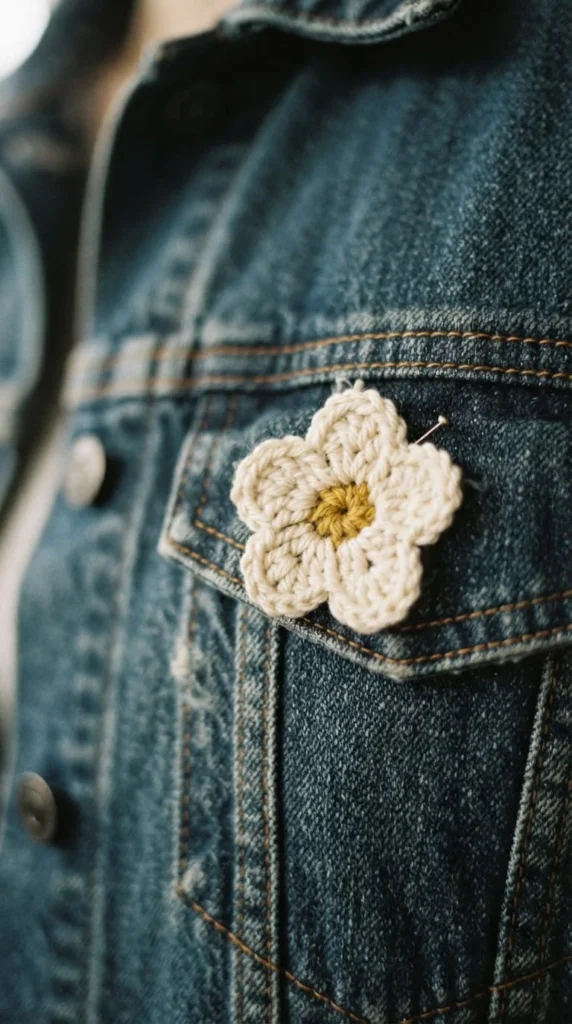
A ten-minute appliqué is designed purely for speed. It’s a flat, single-layer flower meant to be sewn directly onto another project rather than displayed on its own. Because it’s flat, there’s no rolling, stuffing, or wire involved. Budget tip: this is the ideal project for using up tiny amounts of yarn left over from a bigger project, since each flower uses just a few yards. Most people finish one in well under ten minutes once they’ve made a couple. Try sewing a few onto a plain tote bag, beanie, or baby blanket for an instant handmade upgrade. Because it’s so quick, this is also a great pattern to batch-make while waiting for other projects to finish drying or blocking. It’s proof that a flower doesn’t need to be complicated to look intentional and pretty.
6. Make a Sunflower Centerpiece
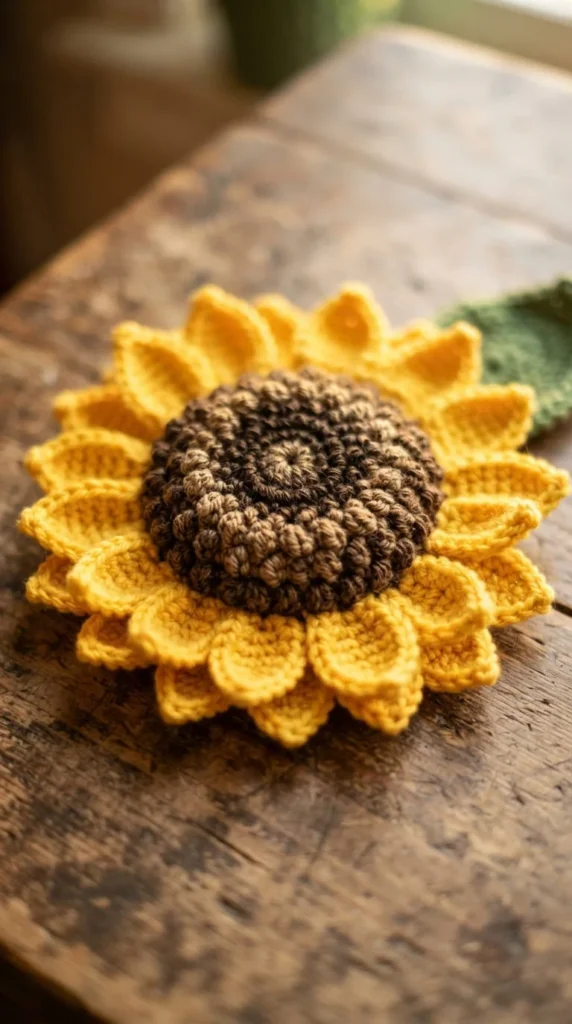
A sunflower makes a bold focal flower thanks to its dark textured center and bright yellow petals. The center is usually worked using a slightly different stitch, like half double crochet, to create a rougher, seed-like texture that contrasts with the smooth petals. Budget tip: brown or dark yellow yarn scraps are enough for the center, so the main cost is just the bright yellow petal yarn. This flower takes about 30 to 40 minutes. It’s a strong choice as a single statement piece rather than something you’d make in bulk, since its size and detail naturally draw attention. Try pairing one sunflower with a few smaller daisies for a rustic, late-summer bouquet look. Because the shape and color are so recognizable, it also works well as a stand-alone gift or a bold addition to a sunhat or basket.
7. Crochet a Simple Tulip
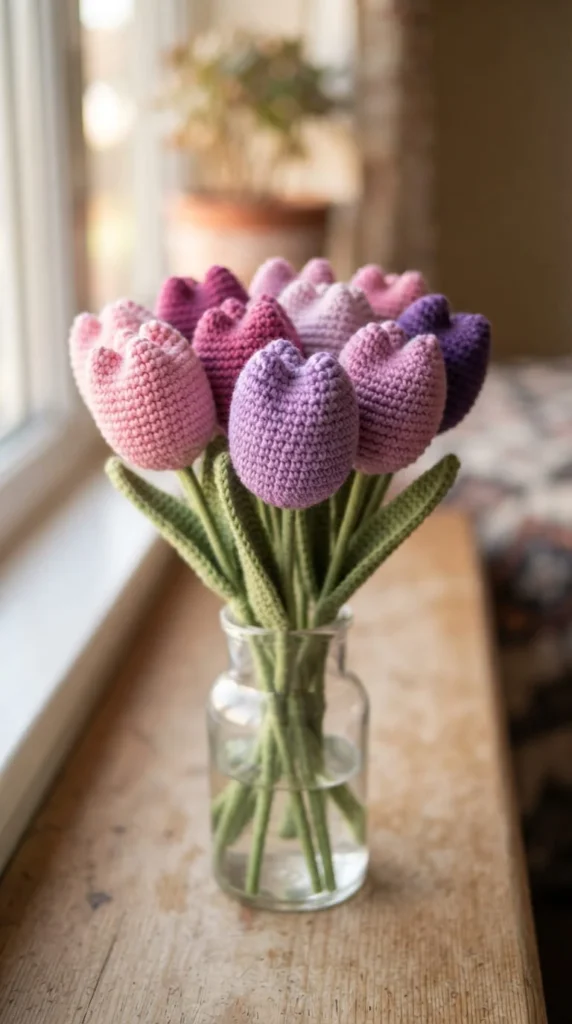
A tulip has a distinct closed-cup shape instead of open petals, giving you a chance to practice a slightly different silhouette than the flat flowers earlier on this list. The petals are usually worked as one connected piece, then curved gently around the center. Budget tip: this project uses a small amount of yarn in one or two colors, and the curved shape naturally hides small tension inconsistencies. It takes about 20 minutes. Tulips look especially good in a stemmed bouquet, standing tall in a small vase alongside greenery. Try making a row of five in graduating pink or purple shades for a springtime centerpiece. Because the shape is so recognizable, even a slightly imperfect tulip still reads clearly as a tulip, which makes it a forgiving project for a beginner.
8. Add Simple Crochet Leaves
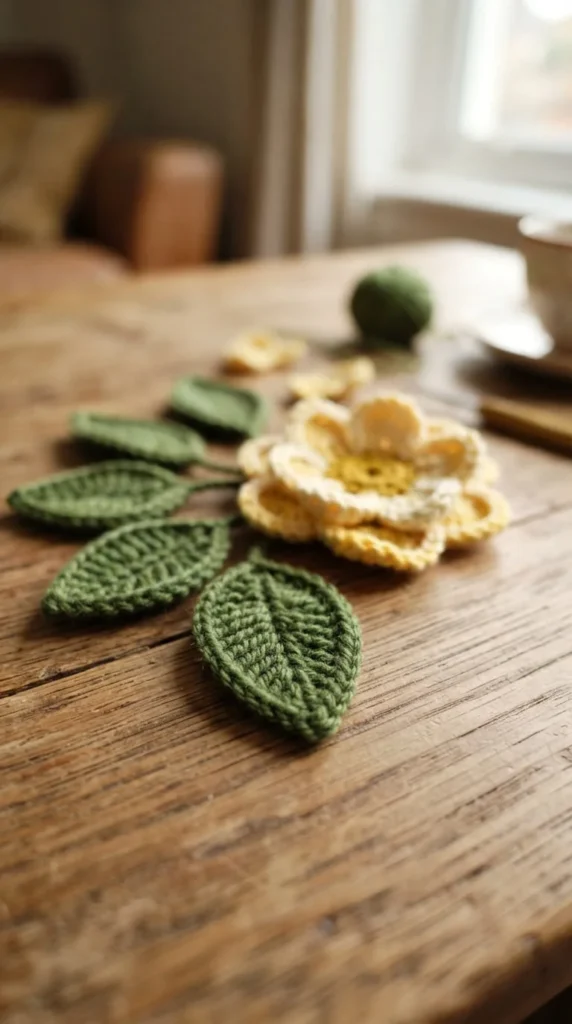
Crochet leaves aren’t flowers themselves, but they’re what makes a bouquet or appliqué look finished instead of sparse. A simple leaf is just a small pointed oval, usually made with a chain base and a few rows of single crochet worked around it. Budget tip: green yarn scraps go a long way here, since each leaf uses only a small amount. Expect about ten minutes per leaf. Leaves work as spacers between flowers in a bouquet, fillers around a wreath, or small accents on a headband. Try making a mix of two leaf sizes for a more natural, layered look. This is also a great project to practice a raised center vein using a simple back-stitch or contrasting yarn line. Once you have a few leaves ready, they’ll make every flower project on this list look noticeably more polished.
9. Build a Focal-and-Filler Bouquet
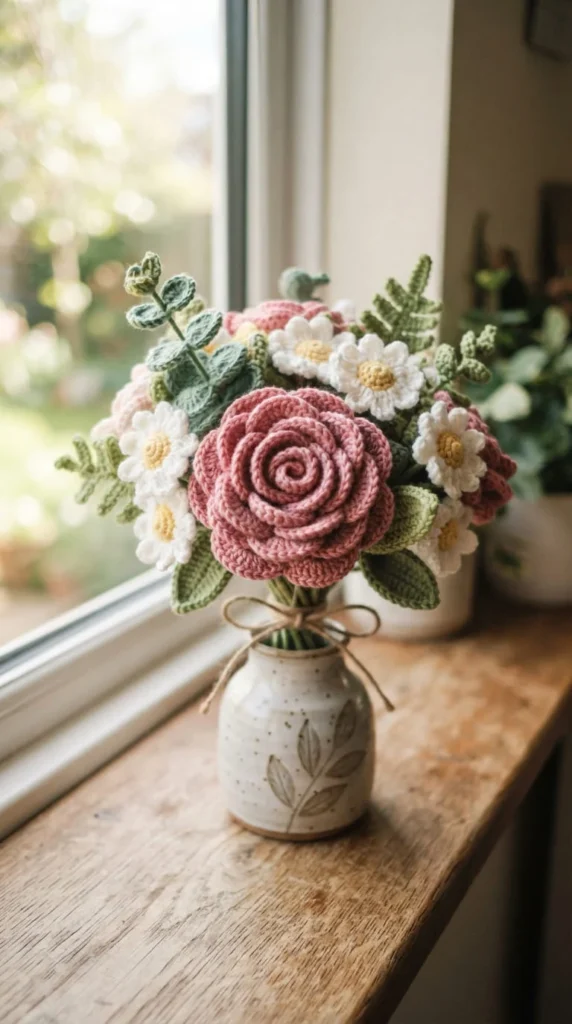
A balanced crochet bouquet follows a simple formula: one or two focal flowers, two or three smaller filler blooms, and a handful of leaves. This structure takes the guesswork out of arranging and instantly makes any bouquet look intentional. Budget tip: reuse the rose, daisy, and leaf patterns from earlier in this list rather than learning new ones, since repetition is what makes a bouquet feel cohesive. A small five-stem bouquet takes about two hours total. Try a rose as your focal flower, three or four daisies as filler, and two leaves for balance. Stick to three to five coordinating colors, like blush, ivory, and dusty rose, so the whole arrangement feels planned rather than random. This formula scales easily, so once you’ve made one small bouquet, a larger one just means repeating the same ratio.
10. Make a Wire-Stemmed Flower
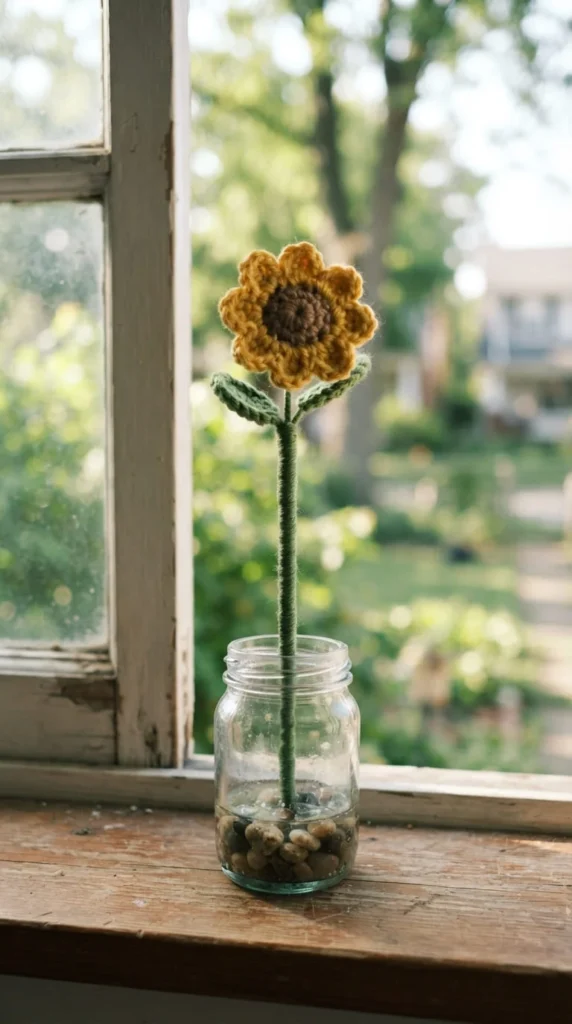
A wire-stemmed flower turns a flat motif into something that can stand upright in a vase. Floral wire is inserted through the base of the flower, then wrapped in yarn or floral tape to hide it and add some texture. Budget tip: 20-gauge wire works well for sturdy stems, and a small roll lasts through dozens of flowers, so the cost per stem is minimal. This project adds about 15 extra minutes to any flower you’ve already made. Always fold the wire ends over before wrapping so nothing sharp pokes through, especially important if the flower is a gift for a child or older relative. Try bending the stem gently to arrange it naturally in a vase. Once you’ve made one wired flower, you can apply the same technique to roses, tulips, or daisies for a full stemmed bouquet.
11. Crochet a Mini Potted Flower
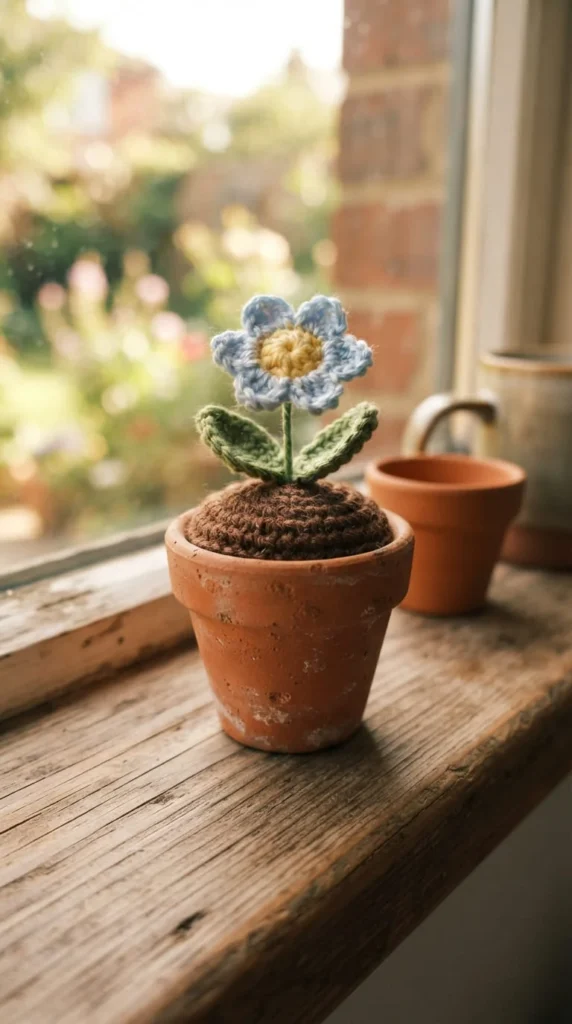
A mini potted flower places a single wired flower into a tiny pot, using stuffing or foam as the “soil” base to hold the stem upright. This project turns one flower into a complete, giftable object rather than a loose motif. Budget tip: a small terracotta pot from a craft store costs very little, and one flower is all you need to fill it, keeping this a low-cost gift option. Total time runs about 30 minutes including the pot setup. This is a popular gift idea for teachers, coworkers, or anyone who loves plants but doesn’t have time to care for real ones. Try adding two small leaves peeking out from the base of the stem for a more realistic look. Because it never needs water or sunlight, it makes a genuinely low-maintenance, long-lasting alternative to a fresh flower gift.
12. Try a Chunky Statement Flower
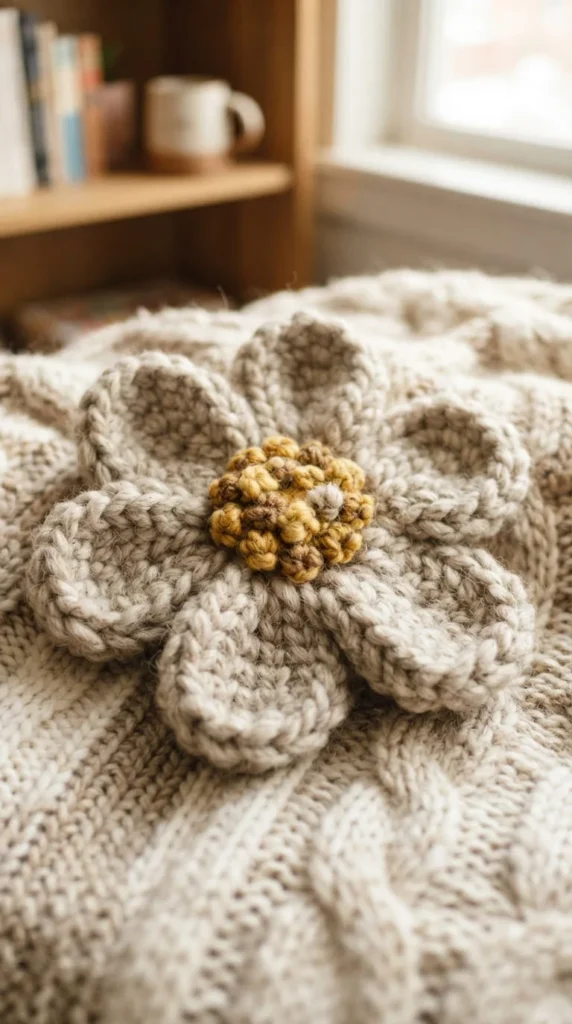
A chunky statement flower uses thick yarn and a large hook to create an oversized bloom in a fraction of the time a standard-weight version would take. Fewer stitches per round means faster progress and easier-to-see shaping while you’re still building confidence. Budget tip: one skein of chunky yarn easily covers two or three large flowers, so the cost per piece stays reasonable despite the bigger finished size. This project takes about 20 minutes. A chunky flower makes a bold accent on a coat, bag, or wide-brimmed hat, standing out in a way that small motifs can’t. Try a single bold color rather than a multicolor design, since the thick yarn already provides plenty of visual weight on its own. It’s also a great confidence-building project if smaller, more detailed flowers have felt fiddly so far.
13. Make a Flower Hair Clip
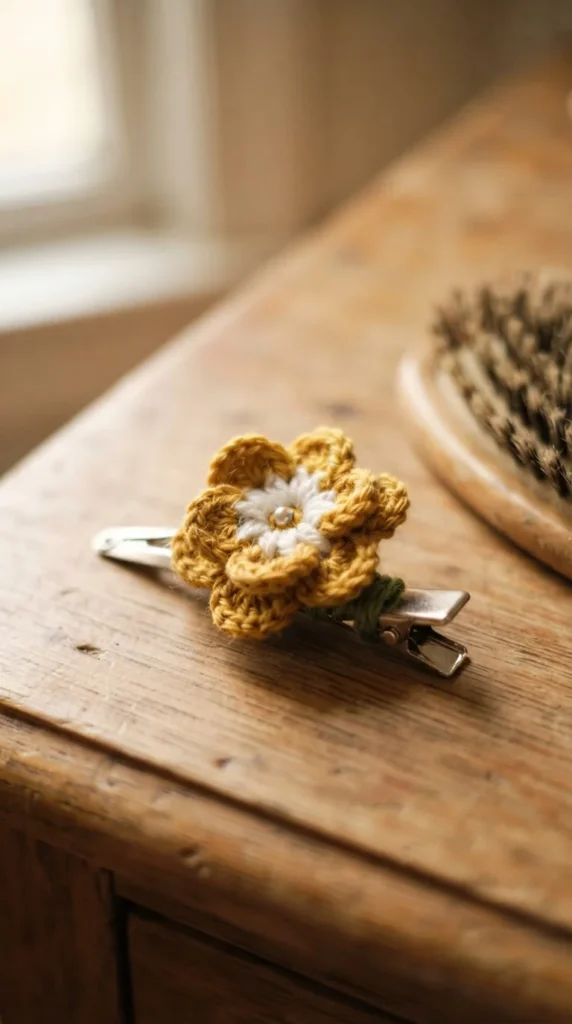
A flower hair clip takes any small flower motif and glues or sews it onto a plain metal or alligator clip base. It’s a fast way to turn a five-minute flower into a genuinely wearable accessory. Budget tip: plain metal clips are inexpensive in bulk from any craft store, and one small flower is all you need per clip. This project takes about 15 minutes total, including attachment. Try using a strong fabric glue for a secure hold, or stitch the flower on with a few small hidden stitches if you’d rather avoid glue altogether. This is also a great project to make in a batch of five or six, since kids and adults alike tend to want more than one color option. Because the base flower is so quick, clips like this are an easy handmade gift for birthdays or teacher appreciation.
14. Crochet a Flower Bookmark
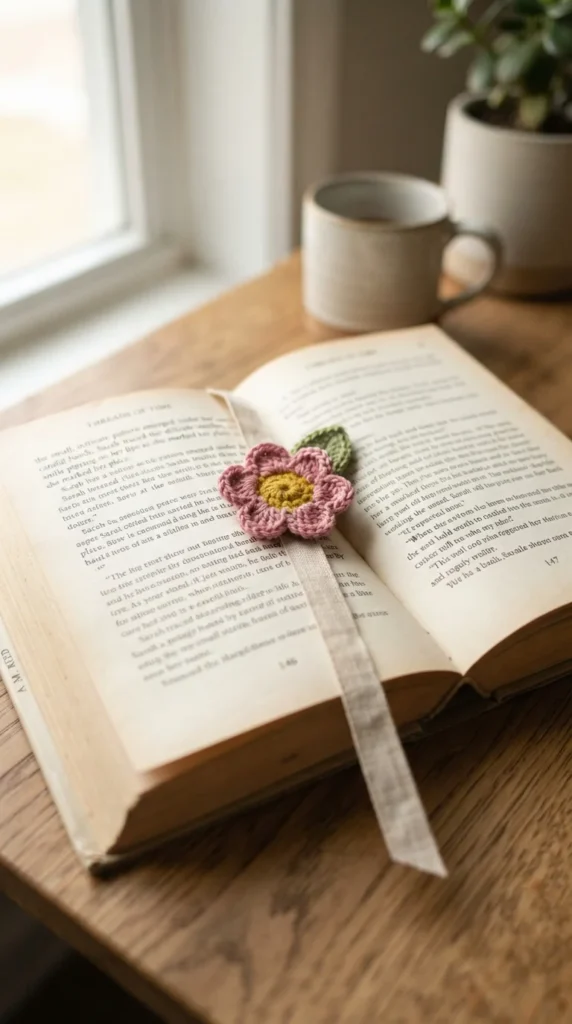
A flower bookmark combines a small flat flower motif with a short length of ribbon or crocheted chain, giving you a practical, giftable item that takes almost no time to finish. Budget tip: this project uses barely any yarn and a small scrap of ribbon, making it one of the most affordable ideas on this list. It takes about 15 minutes total. This is a great project for a book-loving friend or as a small thank-you gift, since it feels personal without requiring a big time investment. Try attaching the flower directly to the top of a ribbon strip, or loop it through a small tassel for extra detail. Because bookmarks are flat and lightweight, they also make excellent additions to a wrapped gift, tucked in alongside a card or a paperback.
15. Build a Flower Garland
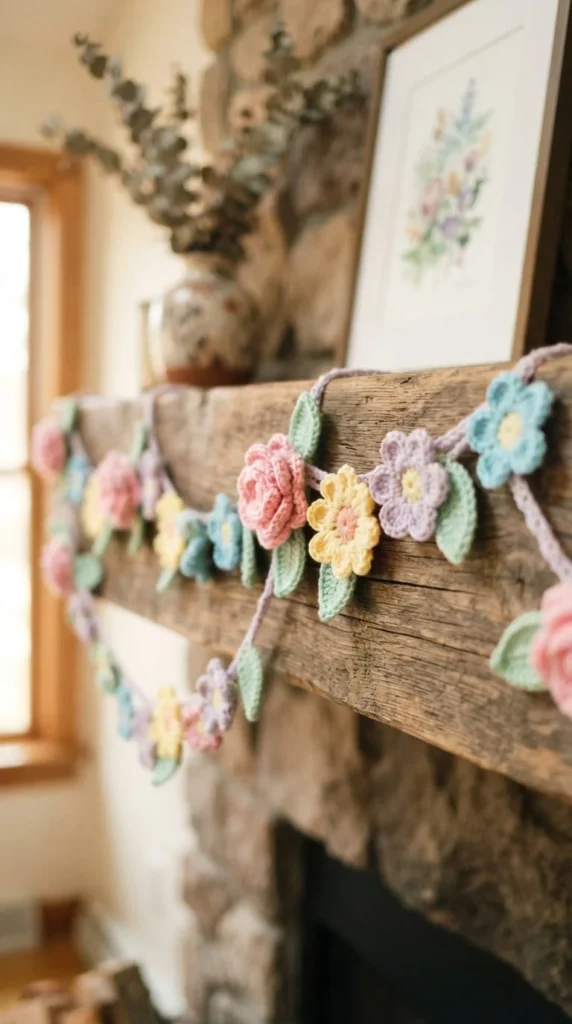
A flower garland strings several small flowers along a length of yarn or ribbon, creating a soft, handmade decoration for a mantel, wall, or party backdrop. Each flower is made separately, then simply threaded or tied onto the main strand. Budget tip: since garlands use many small flowers, this is a perfect project for using up scraps in several different colors at once. A five-foot garland with ten flowers takes about two to three hours total, but works well as a make-a-little-at-a-time project. Try alternating two or three coordinating colors for a rhythm that feels planned rather than random. This is a popular choice for baby showers, birthday parties, or spring home décor. Because it’s lightweight and flat, it’s also easy to store and reuse for multiple occasions once you’ve made it.
16. Make a Flower Wreath
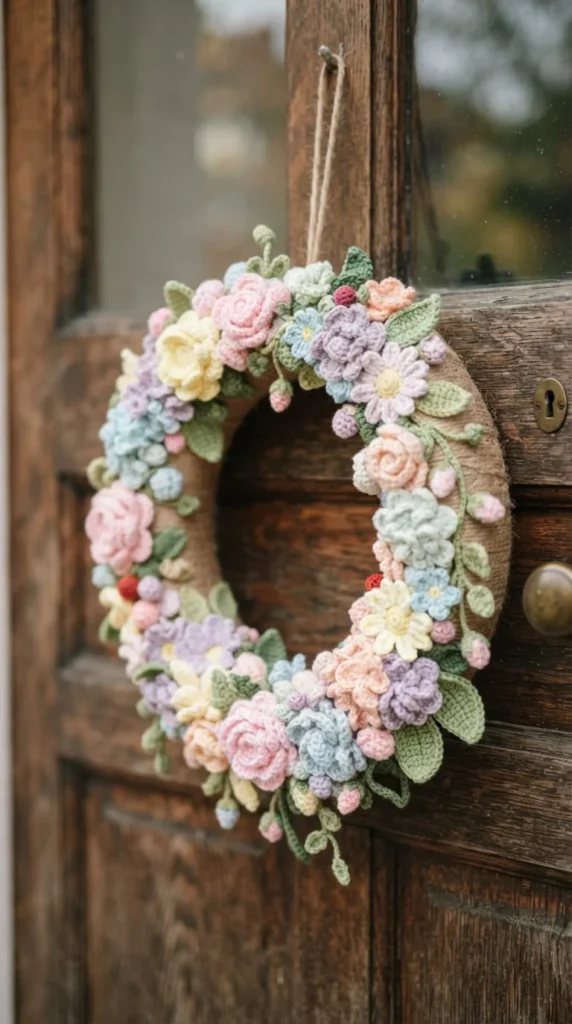
A flower wreath attaches a cluster of flowers and leaves to a base ring, whether that’s a purchased foam wreath form or a simple crocheted circle. It’s a bigger project than a single bouquet, but it breaks down into the same small, familiar steps. Budget tip: a plain foam or straw wreath base costs very little, and you can build up coverage gradually using flowers from your existing collection rather than buying anything new. Expect two to three hours spread across a few sessions. This project works well seasonally, swapping pastel spring flowers for deeper reds and oranges in the fall. Try clustering three or four flowers together at the bottom rather than spacing them evenly around the whole ring, which tends to look more natural. Once finished, it’s a long-lasting decoration that never needs replacing like a fresh wreath would.
17. Crochet a Carnation
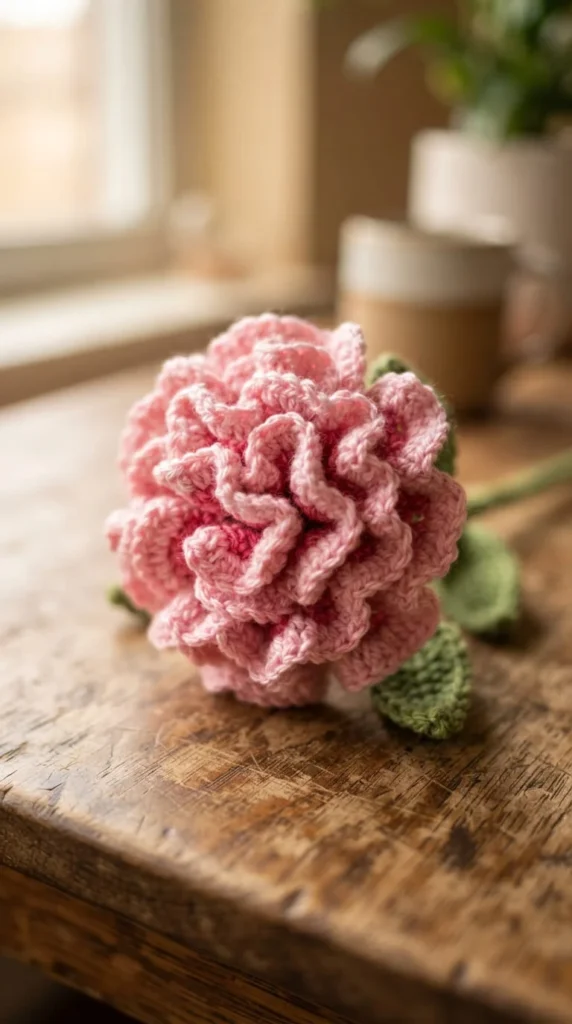
A carnation has a distinctive ruffled, textured look created by working extra stitches into each petal to make the edges naturally frill and curl. It’s a fun project because the texture does most of the visual work without needing a complicated shape. Budget tip: one small skein makes several carnations, and the ruffled texture hides minor tension inconsistencies well, making it forgiving for beginners. This project takes about 25 minutes. Carnations work beautifully as filler flowers in a bouquet, adding texture without competing with a focal flower like a rose or sunflower. Try a mix of two shades of the same color, worked in alternating rounds, for a subtle two-tone ruffle effect. Once you’ve made one, the ruffling technique is easy to repeat quickly, making carnations a good option for a fuller, textured arrangement.
18. Try a Lavender Sprig
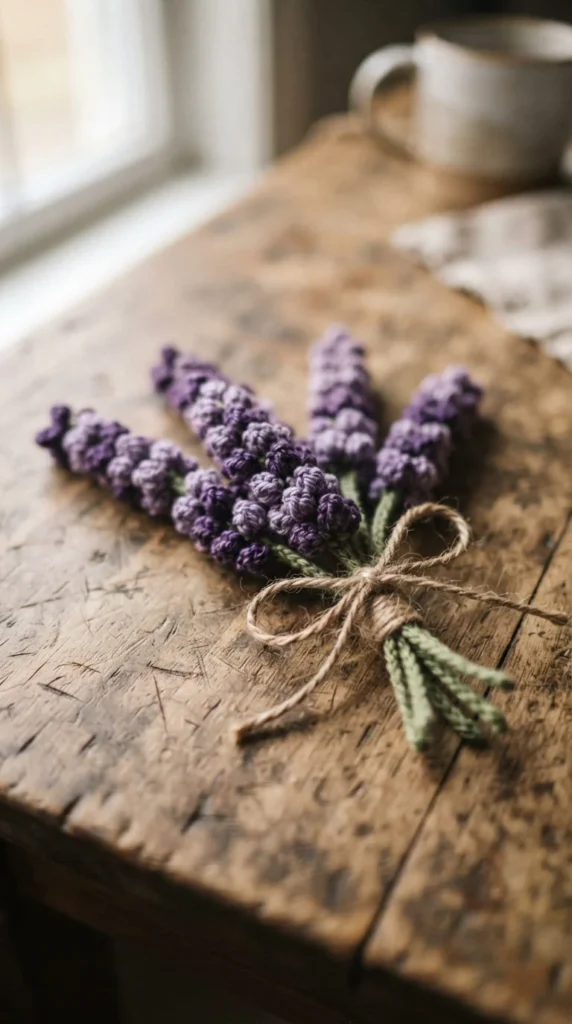
A lavender sprig is made from a series of tiny bobble or knot stitches worked along a crocheted stem, mimicking the small clustered buds of real lavender. It’s a different technique than the round flowers earlier on this list, giving you practice with a linear rather than circular motif. Budget tip: this project uses very little purple yarn, since each bud is tiny, making it another strong scrap-yarn option. A single sprig takes about 15 minutes. Lavender works beautifully as a filler alongside roses or daisies, adding a soft, textured contrast to rounder blooms. Try bundling three or four sprigs together with a small piece of twine for a rustic, cottagecore-style bunch. Because the color and shape are so recognizable, even a simplified version reads clearly as lavender, making it a satisfying project for a relatively low level of effort.
19. Make a Flower Brooch
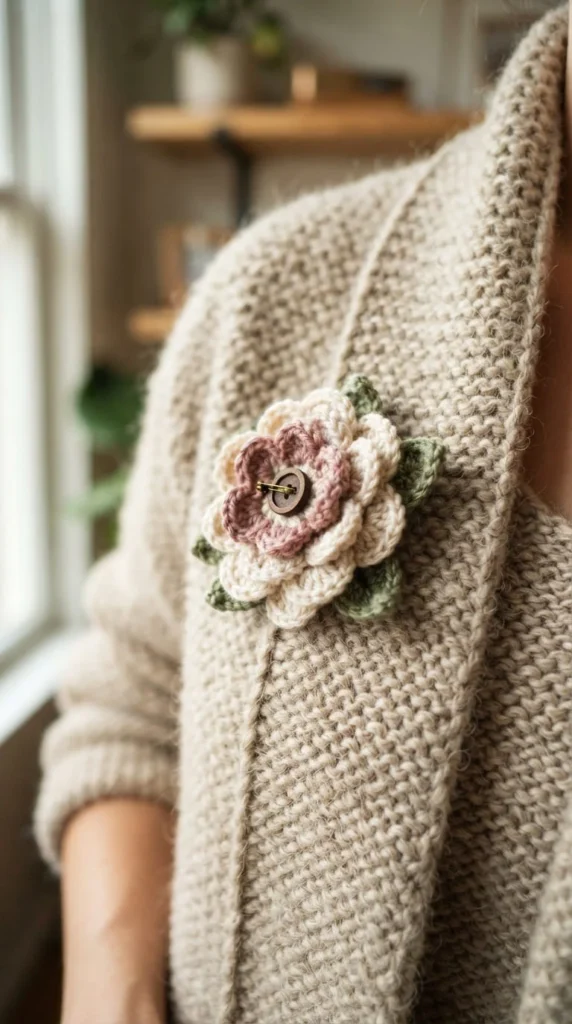
A flower brooch attaches a finished flower motif to a simple pin backing, turning it into a wearable accessory for a coat, cardigan, or bag strap. It’s essentially the same process as the hair clip idea, just with a different attachment hardware. Budget tip: pin backs are inexpensive and widely available at craft stores, and one flower covers the whole project. This takes about 15 minutes including attachment. A layered rose or a 3D bloom works especially well here, since the added dimension makes the brooch feel more substantial. Try gluing a small felt circle to the back before attaching the pin, which helps hide the hardware and adds durability. This is a lovely, low-cost handmade gift, especially for Mother’s Day or a birthday, since it’s wearable, long-lasting, and clearly made with care.
20. Crochet a Baby Blanket Flower Trim
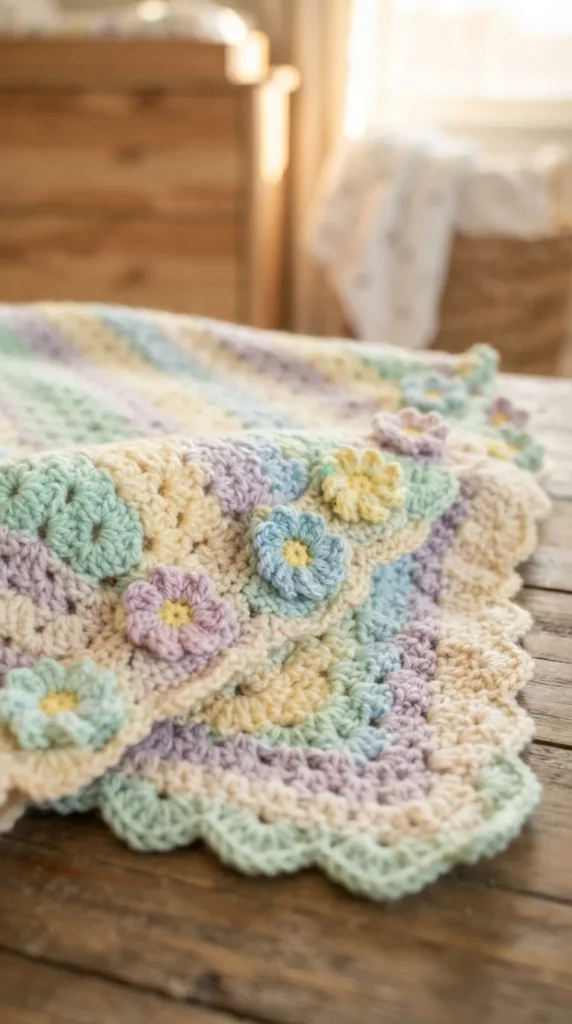
A flower trim adds a row of small flowers along the border of a blanket, turning a plain edge into something noticeably more decorative. Each flower is made separately, then sewn on at even intervals along the finished edge. Budget tip: this project uses your leftover blanket yarn plus small amounts of contrasting color for the flowers, so there’s little to no extra cost. Expect about ten minutes per flower, depending on how many you add. This is a lovely way to personalize a baby shower gift without redesigning the whole blanket pattern. Try spacing flowers every few inches rather than covering the entire border, which keeps the look clean rather than overwhelming. Because the flowers are added after the blanket is finished, this is also a great way to dress up an older, plain blanket you already have.
21. Build a Flower Keychain
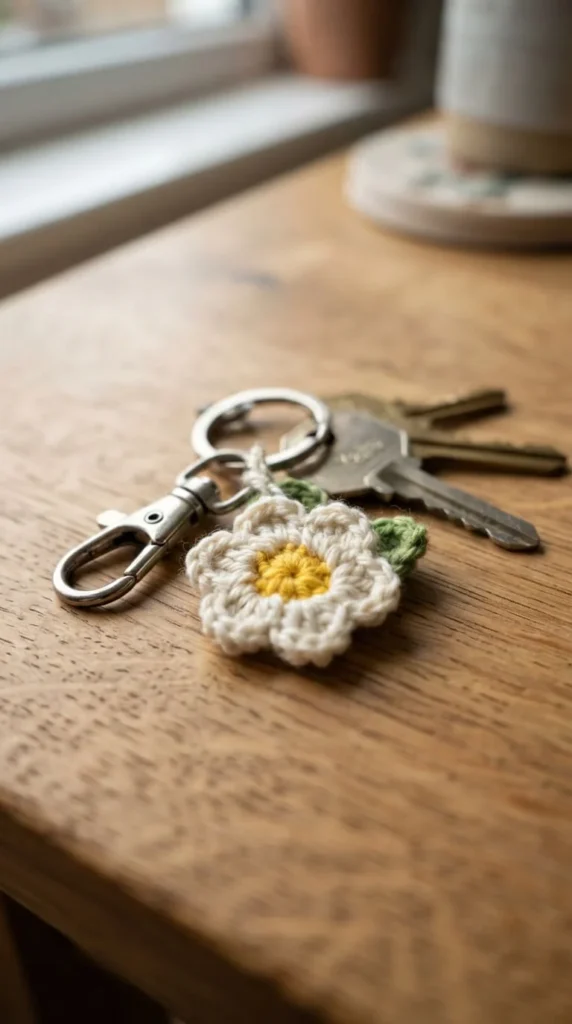
A flower keychain is a small, fast project designed to clip onto a bag or keyring rather than sit on display. A simple round or five-petal flower works best here, kept small and quick using thinner yarn. Budget tip: a metal keyring clasp costs very little, and the flower itself uses only a small amount of yarn, keeping this an inexpensive project overall. It takes about ten minutes. This is a strong choice if you’re thinking about making items to sell at a craft market, since it’s quick to repeat and low in material cost per piece. Try batching five or six in different colors once you’re comfortable with the shape, since repetition at this size goes quickly. It’s also an easy, affordable gift for coworkers, classmates, or anyone who appreciates a small handmade detail.
22. Make a Flower Table Runner Accent
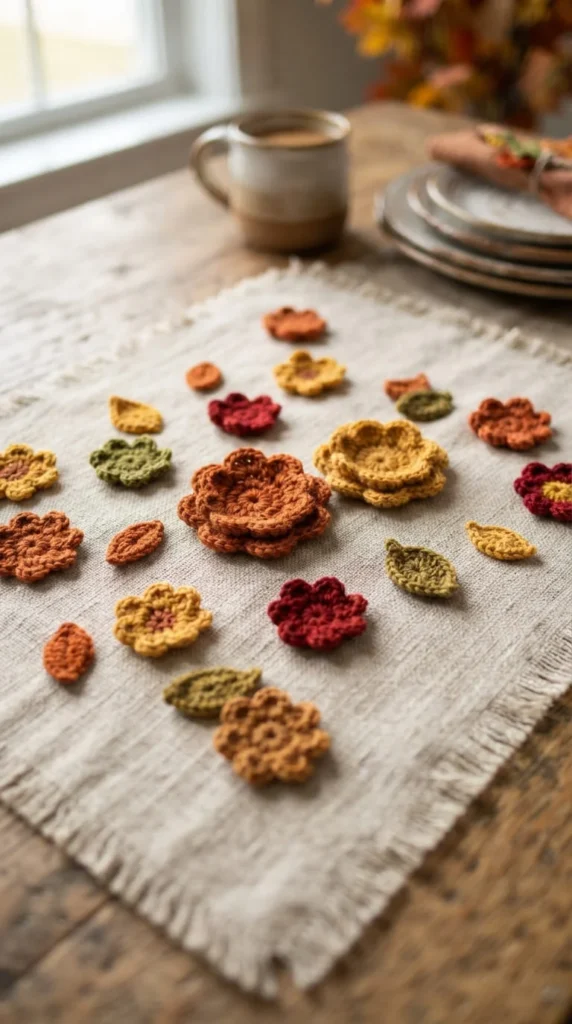
A table runner accent scatters a handful of flat flower motifs across a plain fabric or crocheted runner, adding color and texture to a dining table without a full redesign. Flowers are usually sewn on rather than glued, so they hold up to regular use and washing. Budget tip: this project reuses the same flat flower pattern from your appliqué practice earlier in this list, so there’s no new technique to learn. Adding five or six flowers to an existing runner takes about an hour. Try clustering flowers toward each end rather than spacing them evenly across the whole length, which tends to look more balanced on a table setting. This is a great seasonal project, since you can swap warm autumn colors for pastel spring shades depending on the time of year, all using the same base runner.
23. Crochet a Poppy for Bold Contrast
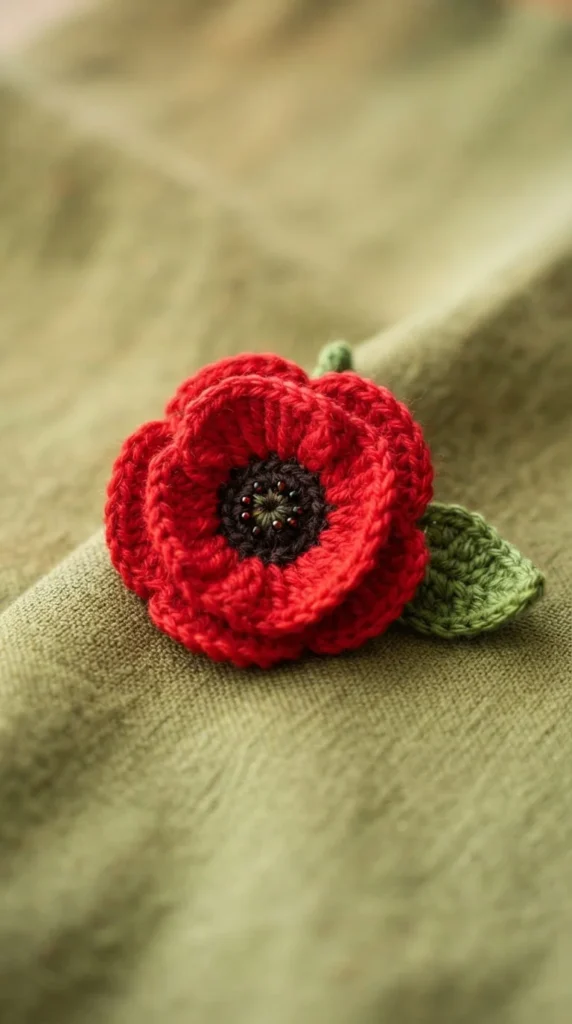
A poppy stands out with its bold red petals and a small, dark contrasting center, giving you practice with a clean, high-impact color change in a small project. The center is usually worked in black or deep brown using just a few stitches before switching to red for the petals. Budget tip: this flower uses only a small amount of yarn in two colors, making it another good scrap-yarn choice. It takes about 20 minutes. A poppy works well as a bold accent flower mixed into a softer pastel bouquet, giving the whole arrangement a pop of contrast. Try making two or three poppies alongside a batch of daisies for a striking color combination. Because the shape is simple but the color contrast is so strong, it’s an easy way to make a beginner project look noticeably more intentional and polished.
Conclusion
Twenty-three ideas is more than enough to keep your hook busy through every season, and the beauty of crochet flowers is how far one simple technique can stretch. Master the five-petal flower and daisy first, then branch out into layered roses, wired stems, and full bouquets once you’re ready. Turn extra blooms into brooches, bookmarks, keychains, or blanket trims so nothing goes to waste. Pick one idea that fits the yarn you already have on hand, set aside twenty quiet minutes, and make your first flower today. Once you see how quickly a single motif comes together, you’ll understand why so many crocheters can’t stop at just one.