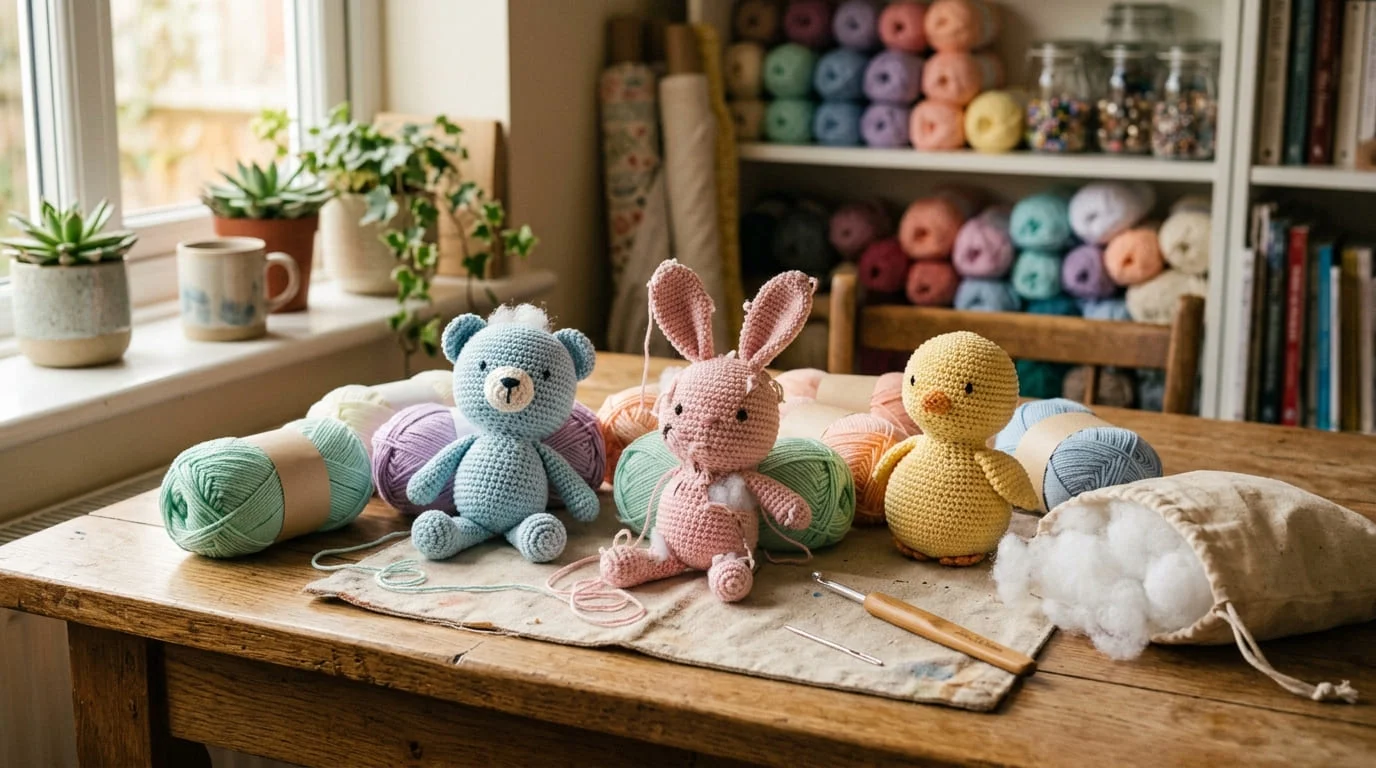
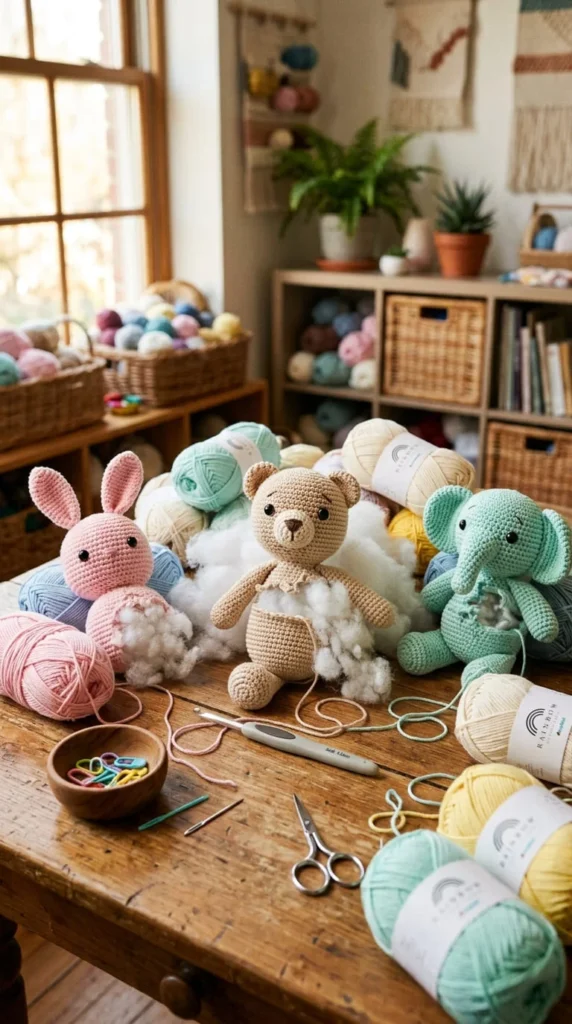
If you’ve ever scrolled past a tiny crocheted animal with round cheeks and oversized eyes and felt an immediate urge to make one yourself, you already understand the pull of crochet amigurumi dolls. This craft turns a few balls of yarn into characters with real personality, and the best part is how forgiving it is for people who are still learning their stitches. Below you’ll find twenty-three doll ideas that range from ten-minute keychain projects to weekend-long gift pieces, along with the small details — yarn choice, eye placement, stuffing order — that separate a lumpy first attempt from a doll someone actually wants to keep on their shelf.
1. The Floppy-Eared Bunny That Teaches Basic Shaping
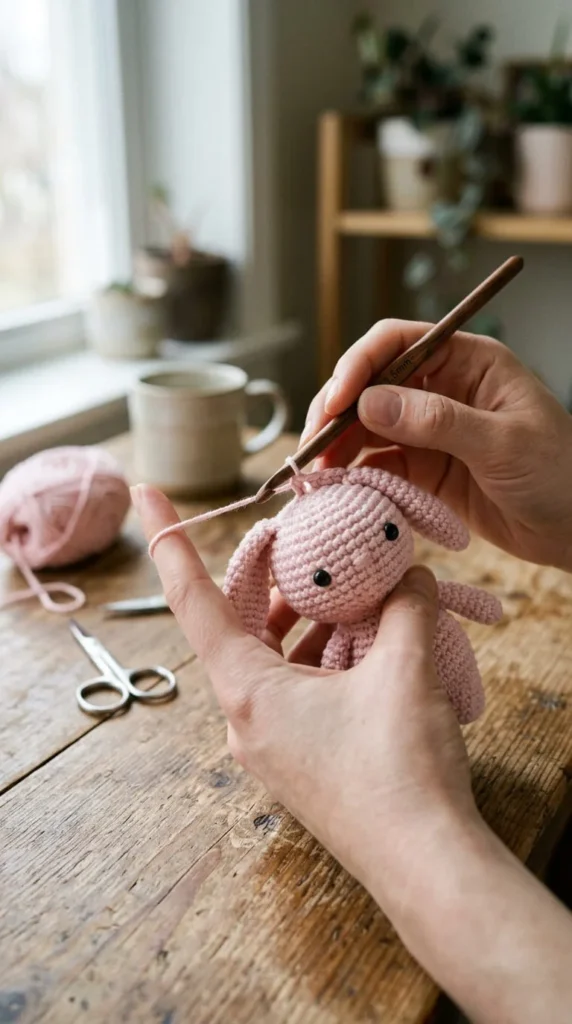
A bunny with soft, drooping ears is one of the friendliest places to start if you’re new to amigurumi. The body is a simple rounded shape built from single crochet in a spiral, so you’re mostly practicing consistent tension rather than anything technical. Floppy ears are attached loosely at the top, which means you don’t need to worry about them standing up straight or matching perfectly.
What makes this project useful beyond the finished doll is the shaping practice it gives you. You’ll learn how increases and decreases change the curve of a round, which carries over into almost every other doll on this list. Use a slightly heavier worsted-weight yarn so the ears keep some structure without stiffening.
For a baby-safe version, skip plastic safety eyes and embroider small French knots instead. This removes any small parts that could come loose over time. Pair the bunny with a tiny fabric bow or a crocheted carrot for extra charm, and consider working it in a heathered oatmeal yarn for a look that feels handmade rather than mass-produced.
2. A No-Sew Highland Cow for Anyone Who Hates Finishing Work
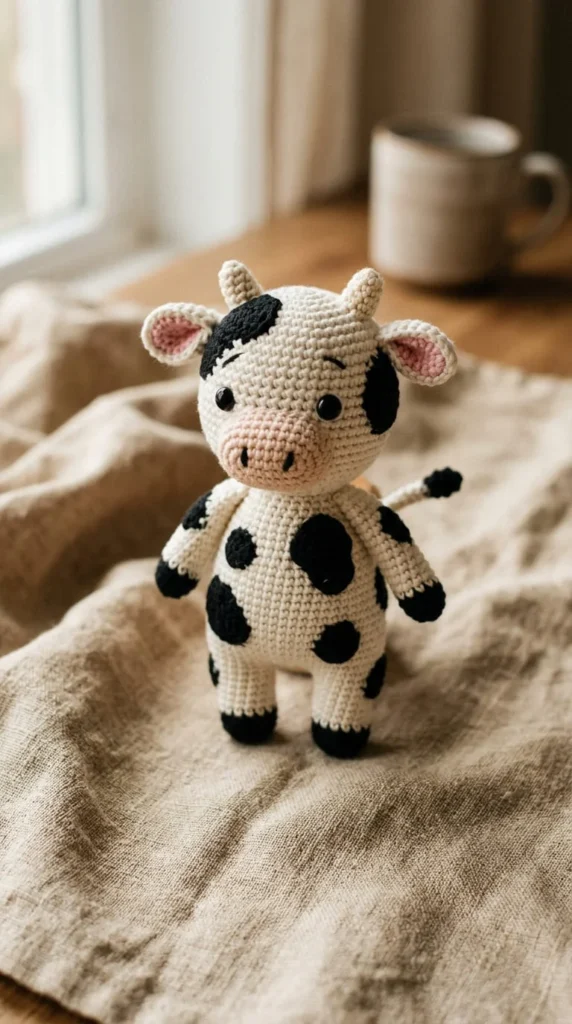
Highland cow amigurumi have become one of the most requested animal patterns, and part of that popularity comes down to how manageable they are to assemble. A no-sew build means the head, body, and legs are crocheted as continuous pieces or joined with slip stitches as you go, so there’s no separate sewing session at the end.
This matters more than it might sound. Sewing pieces together is where a lot of beginners lose momentum, because it requires patience and a steady hand with a yarn needle. Working parts in one continuous piece keeps the project feeling like actual crochet the whole way through.
The shaggy fringe on the forehead and ears is what gives this doll its personality. Cut short lengths of contrasting brown yarn and loop-stitch or knot them directly into the stitches, then trim them into shape once they’re all attached, similar to trimming bangs. Use a warm caramel and cream color combination for a realistic look, or go bold with lavender and white for something that leans more decorative than lifelike.
3. An Embroidered-Eye Bear Built Specifically for Newborns
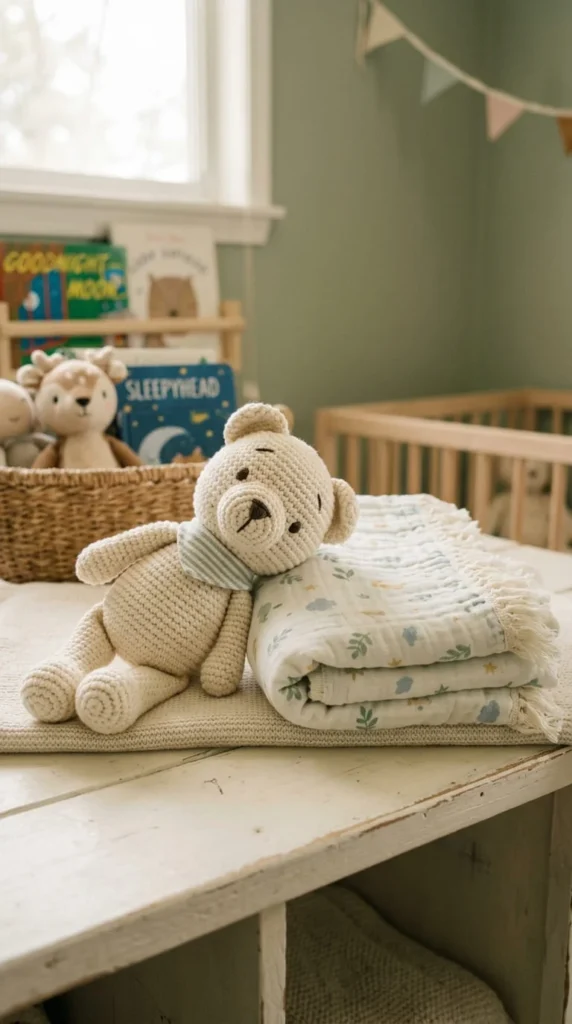
Any doll intended for a baby under three needs a different approach than one made for display. Plastic safety eyes, however securely they’re locked in place, still carry some risk of loosening over years of handling and washing. An embroidered face removes that concern entirely while still giving the bear plenty of expression.
Work the eyes as two simple satin-stitch ovals in dark brown or black, and keep the nose as a small triangle in the same thread. This takes a bit longer than snapping in plastic eyes, but the payoff is a doll that can be handed to a baby without hesitation.
Stuffing density matters here too. Overstuff a nursery doll and it becomes hard and unyielding; understuff it and the shape sags. Aim for a firm-but-squeezable feel, similar to a ripe peach. Choose a hypoallergenic polyester filling rather than natural fibers if the doll will be washed regularly, since synthetic stuffing holds its shape better through repeated laundering.
4. Pocket-Sized Keychain Charms for Quick, Giftable Projects
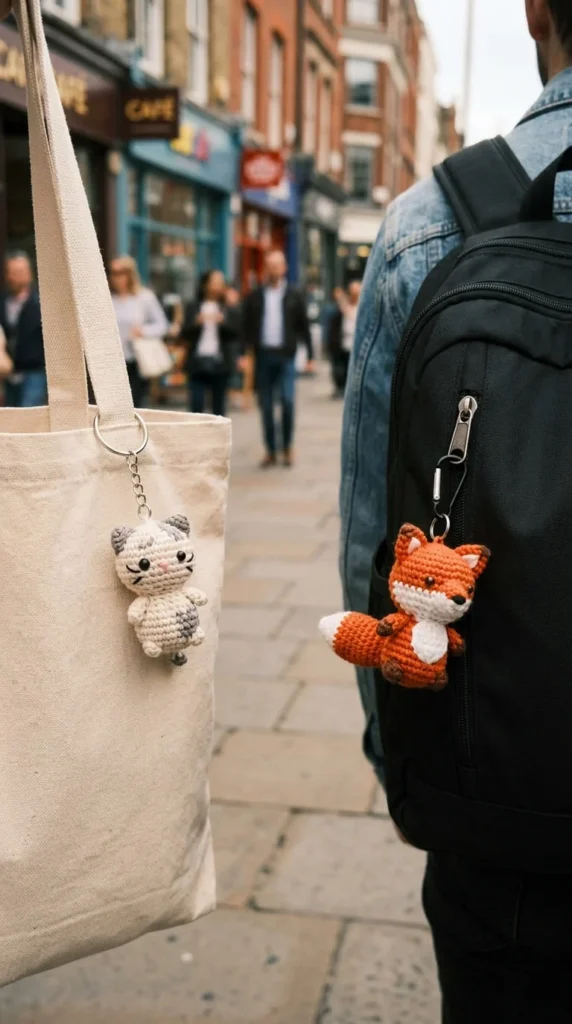
Not every amigurumi project needs to be a multi-day commitment. Miniature keychain-scale dolls, usually two to three inches tall, can be finished in under an hour once you’re comfortable with the basic stitches. They’re an easy way to use up small leftover amounts of yarn instead of letting them sit in a bin.
Cats, foxes, and little round bears tend to work best at this scale because their features simplify down cleanly. Use a fine-weight yarn with a small hook to keep the proportions tidy, and attach a metal keyring or lobster clasp through a loop worked into the top of the head.
These make excellent party favors, stocking stuffers, or spontaneous gifts for coworkers and friends. Because the yarn and time investment per piece is so low, you can batch several at once in an evening. Try coordinating a small set — three animals in the same color family — so they read as a matched collection rather than random pieces.
5. A Waldorf-Style Soft Doll for a Gentler Aesthetic
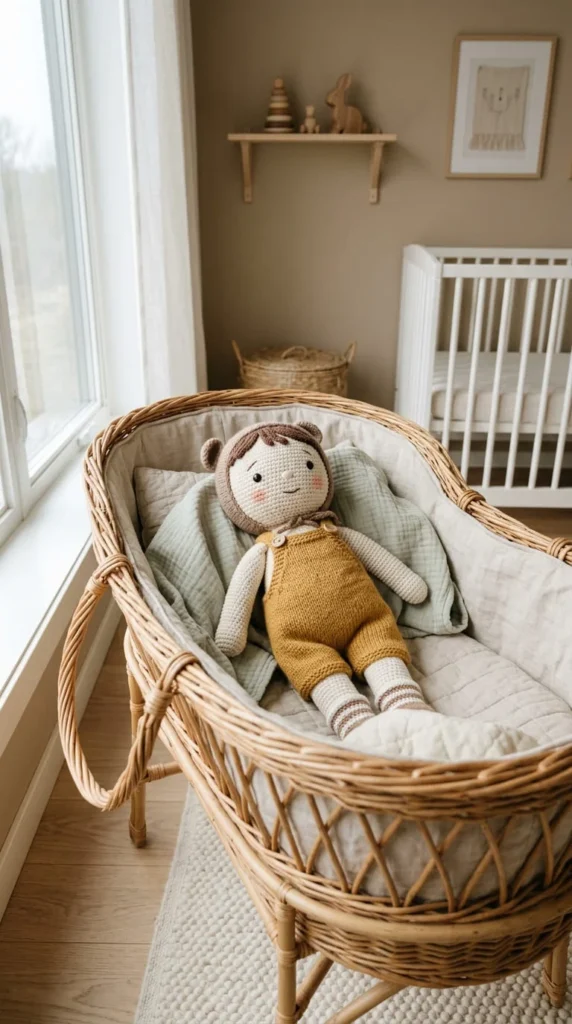
If bright colors and exaggerated features aren’t your style, a Waldorf-inspired amigurumi takes a quieter approach. These dolls favor simplified faces, muted natural yarn colors, and soft, huggable proportions over precise detail. The result feels more like a keepsake than a toy display piece.
The face is typically limited to a single embroidered dot or line for each eye and a small curved stitch for the mouth, which keeps the expression calm rather than cartoonish. This also happens to make the doll faster to finish, since you’re skipping multiple rounds of detailed facial shaping.
Stick to undyed or naturally dyed cotton yarn in cream, dusty rose, or sage green for the most authentic look. A rounded body with stubby arms and legs, rather than jointed limbs, keeps the silhouette soft. These dolls suit babies and toddlers particularly well because there’s nothing rigid or overly textured for little hands to grab onto and pull apart.
6. A Gothic Chibi Doll for Fans of Darker Aesthetics
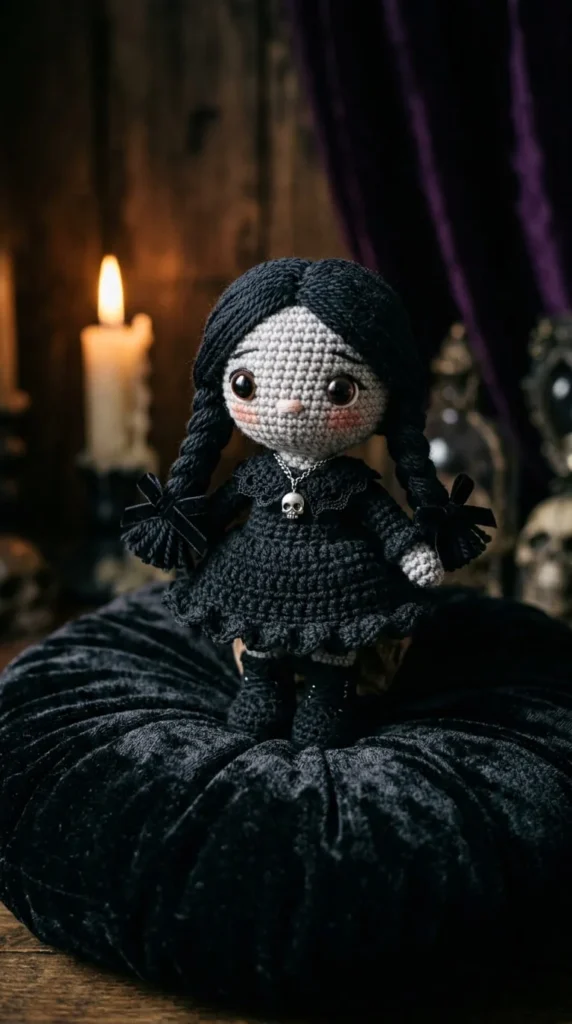
Not every amigurumi doll needs pastel colors and rounded cheerfulness. A gothic-styled chibi character, with a black pinafore dress, pale yarn for the skin tone, and dark braided pigtails, taps into a completely different mood while using the exact same construction techniques as any cheerful animal pattern.
The dress is worked as a small circular skirt attached at the waist, which you can make removable by crocheting a simple chain-stitch loop closure at the back. This lets the doll be restyled later, which adds replay value if you’re gifting it to a crafts-minded teenager or collector.
For the hair, work two long chain-stitch braids in black yarn and tack them down at the sides of the head. A pale gray or lavender accent on the collar breaks up the black without softening the overall tone too much. This style photographs well against dark backgrounds, so it’s a strong choice if you plan to sell finished pieces alongside product photos rather than just gift them directly.
7. A Customizable Fashion Doll With Interchangeable Outfits
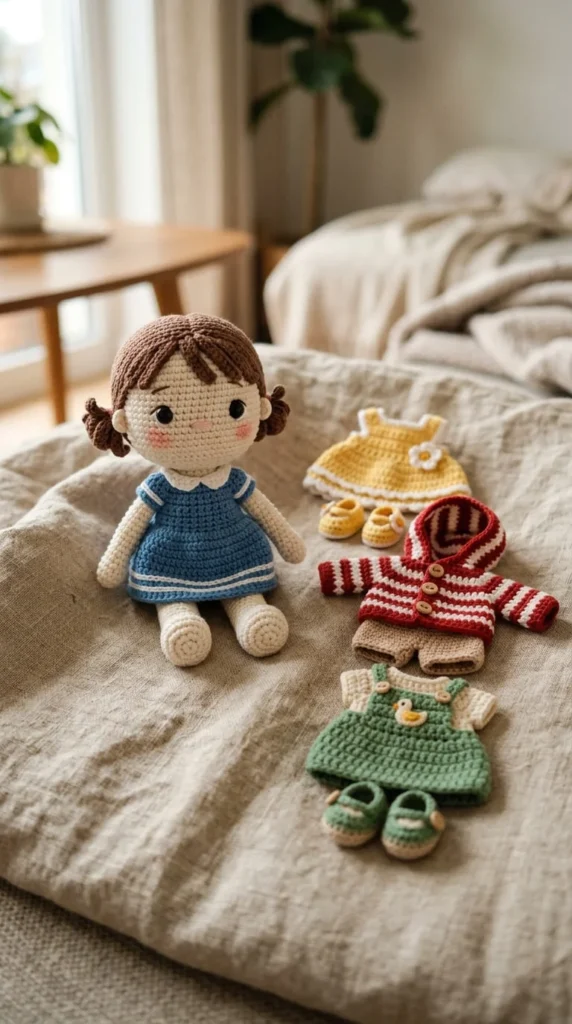
For crafters who enjoy repeat projects, a base doll body paired with several swappable outfits offers more long-term value than a single fixed design. The doll itself — head, torso, arms, legs — is made once, then you build a small wardrobe around it separately.
Simple options like a sundress, a knit sweater, or overalls can each be worked in an evening once you have the base pattern down. Attach clothing with a few strategic stitches or small buttons rather than crocheting it directly onto the body, so pieces can be removed and swapped.
This approach is especially good for gifts aimed at kids who like to play rather than just display. A doll with two or three outfit options holds a child’s attention longer than a single fixed design. It’s also a practical way to practice smaller-scale garment shaping, since doll clothes teach the same principles as larger crocheted garments at a fraction of the time and yarn cost.
8. A Chenille Sloth for Maximum Plush Softness
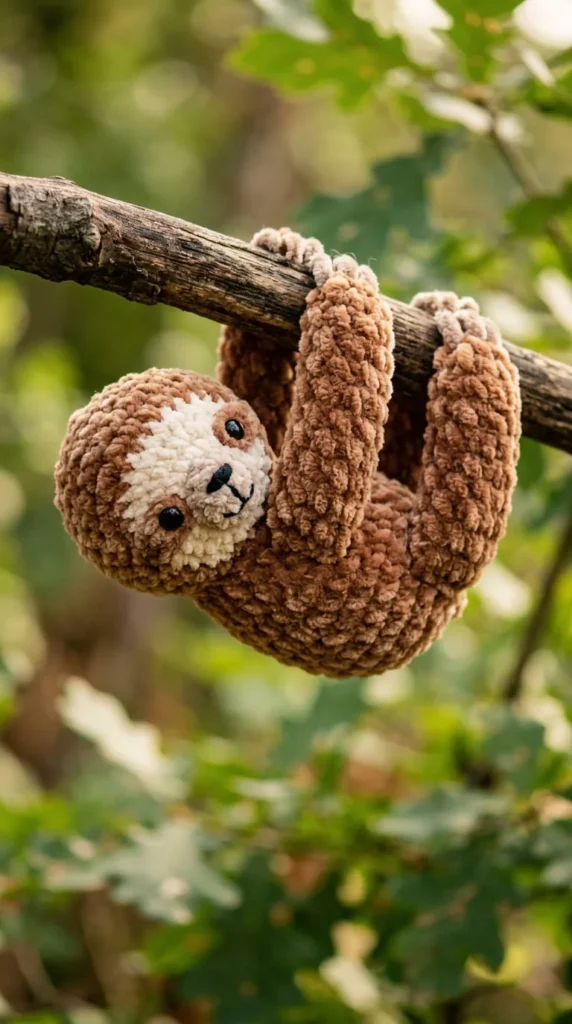
Chenille yarn produces a noticeably softer, fuzzier finish than standard acrylic, which makes it a favorite for animals meant to be cuddled rather than displayed. A sloth is a particularly good match for this yarn because its slightly shaggy, textured coat hides minor stitch inconsistencies that would show more clearly on a smooth-yarn doll.
There’s a tradeoff worth knowing before you commit to a full project in this yarn. Chenille sheds more than standard fibers, especially in the first few washes, so it’s not the best choice for a doll intended for a baby who puts things in their mouth. It works well for older children and adults instead.
Keep the sloth’s arms slightly longer than standard proportions and curve them so they can wrap around a branch, a bedpost, or a bag strap. A two-tone color scheme — tan body with a darker brown face patch — gives it visual depth without adding extra construction steps. Hand wash rather than machine wash to extend the yarn’s texture and reduce shedding over time.
9. A Perched Raven for Halloween Displays
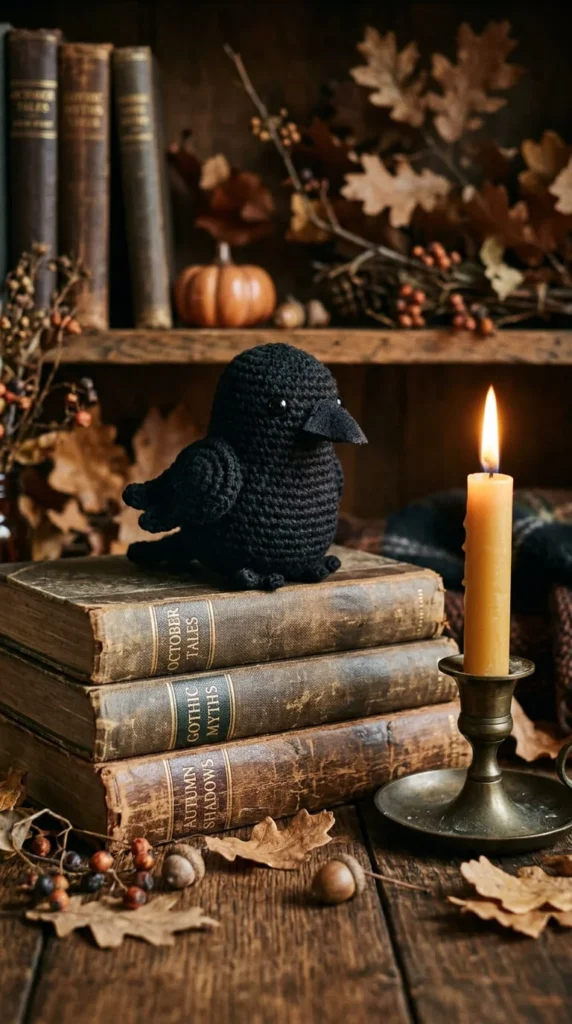
Seasonal amigurumi pieces sell and give well because they have a built-in occasion attached to them. A small black raven, wings tucked and head slightly tilted, works as a shelf decoration for weeks around Halloween without feeling like a children’s toy, which broadens who you can make it for.
The wings are the most important detail here. Work them as flat, slightly curved triangular pieces and attach them along the back rather than the sides, angling them downward so the bird reads as perched rather than mid-flight. A short, pointed beak in gray or black yarn, stuffed lightly so it holds its shape, finishes the face.
Because this doll doesn’t need a friendly expression, you can skip the usual big round eyes and instead use small black beads or tight satin-stitch dots for a sharper, more alert look. Set it on a stack of books, a windowsill, or beside a candle for photos, since ravens tend to look better styled within a small scene than photographed alone.
10. A Holiday Gnome With a Tall Removable Hat
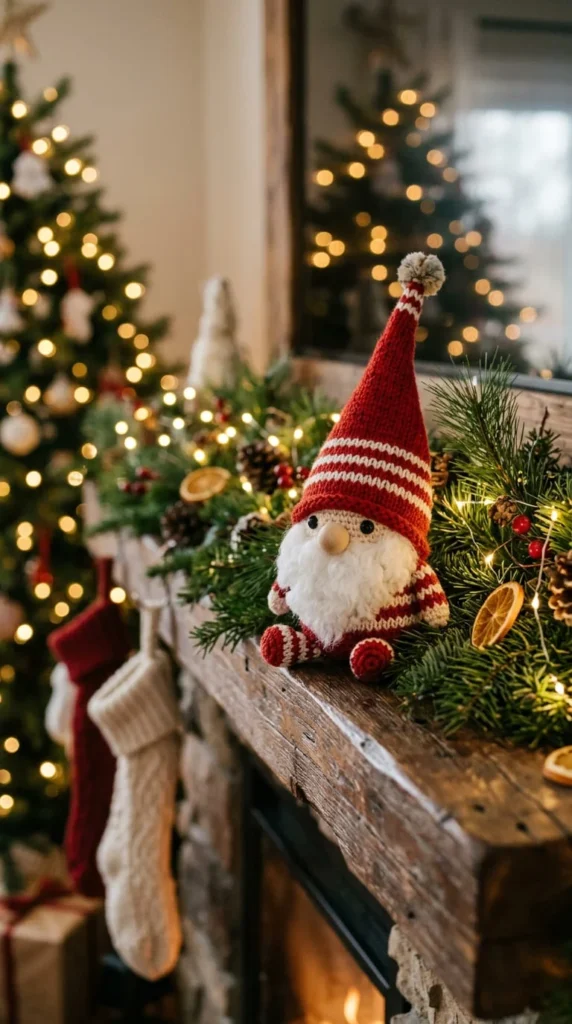
Gnome-style amigurumi have an advantage over character dolls: there’s no face to get wrong. Most patterns hide the face entirely behind a long beard, which means the doll’s charm comes almost entirely from color choices, hat shape, and beard texture rather than precise facial stitching.
The hat is worked as a tall cone shape, increasing gradually from the brim before switching to straight rounds to create the pointed tip. Making it as a separate piece that simply rests on the head, rather than sewing it on permanently, means the same gnome body can be restyled for different seasons by swapping hat colors.
For the beard, loop-stitch or fringe white or cream yarn across the lower half of the face, then trim it into a rounded shape once it’s fully attached. A wide fabric or crocheted belt around the middle adds definition to an otherwise simple cylindrical body. These make particularly good gifts for people who collect seasonal decor, since a small shelf of differently dressed gnomes builds naturally over a few years.
11. A Round-Bodied Dinosaur for Toddler Play
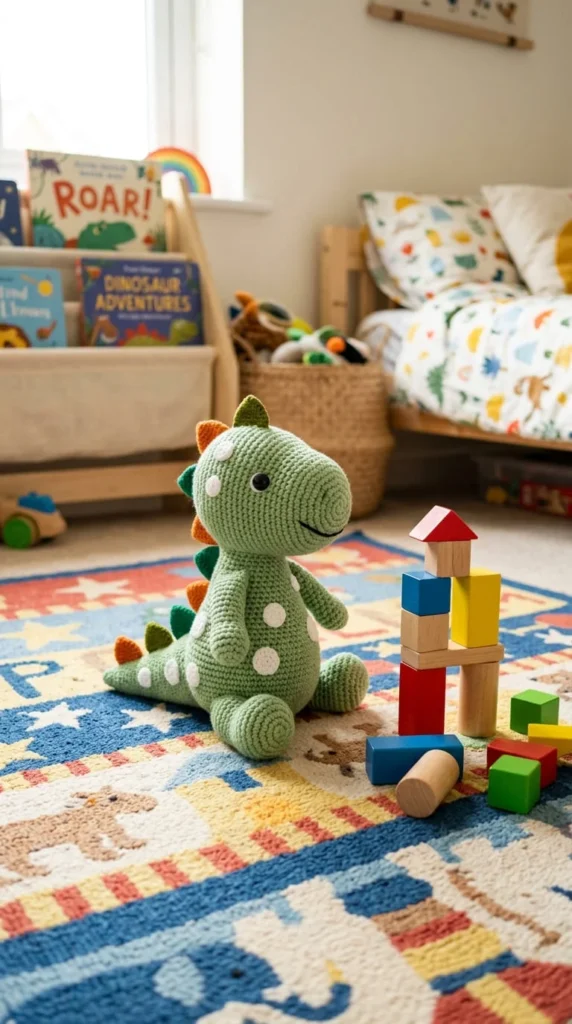
Dinosaur amigurumi are consistently popular with young kids, but the standard spiky-backed designs can create sharp points that aren’t ideal for a two- or three-year-old’s rough handling. A rounder, simplified dinosaur shape keeps the appeal without the pointed ridges.
Instead of individual triangular spikes down the spine, work a single scalloped strip and sew it flat along the back rather than letting each point stand upright. This softens the silhouette considerably and holds up better to being dragged around, dropped, and chewed on.
Choose a saturated but single-tone green, teal, or purple rather than multiple colors, since younger kids tend to respond to bold, simple color blocks more than intricate patterning. Keep the legs short and thick rather than long and thin, both for structural durability and because stubby limbs read as more toddler-friendly. A soft squeaker or crinkle insert tucked into the stuffing (secured well inside a fully closed lining) can add an extra layer of sensory play for babies old enough to be past the mouthing stage.
12. A Pastel Robot Doll for a Futuristic Twist
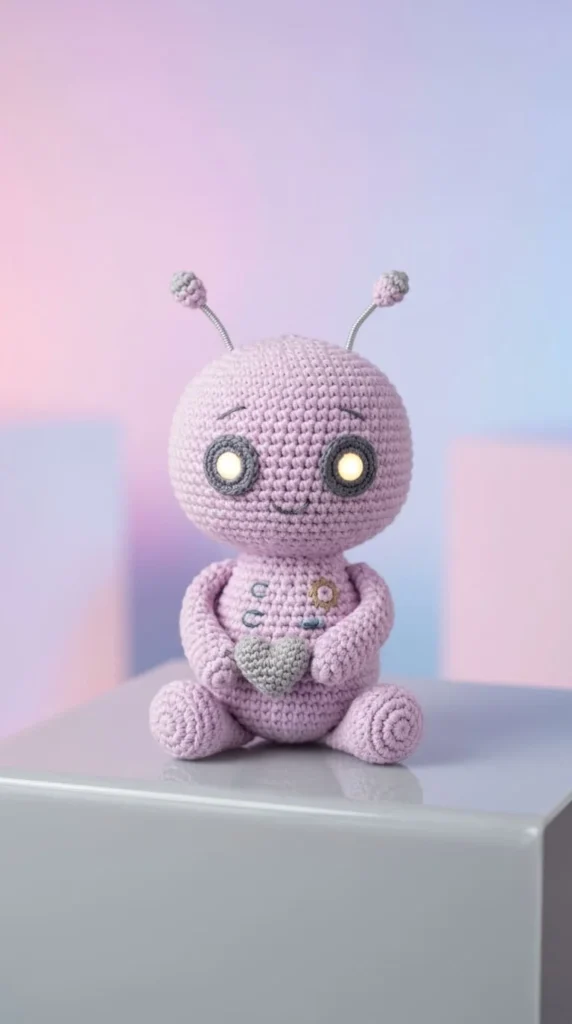
Kawaii-inspired designs have started drifting toward softer, futuristic themes, blending round cute proportions with small mechanical details like antennae, screen-style faces, and geometric limb shapes. A pastel robot doll sits right at that intersection and stands out from the usual roster of animals and generic humanoid dolls.
Keep the overall shape rounded, since sharp mechanical edges are harder to achieve in crochet and tend to fight against the medium. A flattened oval panel on the front of the head, worked in a contrasting color, mimics a small screen and gives you a spot to embroider simple expression lines.
Two short chenille or wire-reinforced antennae add personality without much extra effort — insert a short length of pipe cleaner into a crocheted tube for each one so they hold their shape and bend slightly. Pastel lavender, mint, or baby blue reads as friendly rather than industrial. This design tends to appeal to older kids and teenagers who’ve outgrown traditional stuffed animals but still like a soft collectible object.
13. A Heart-Shaped Comfort Doll for Difficult Moments
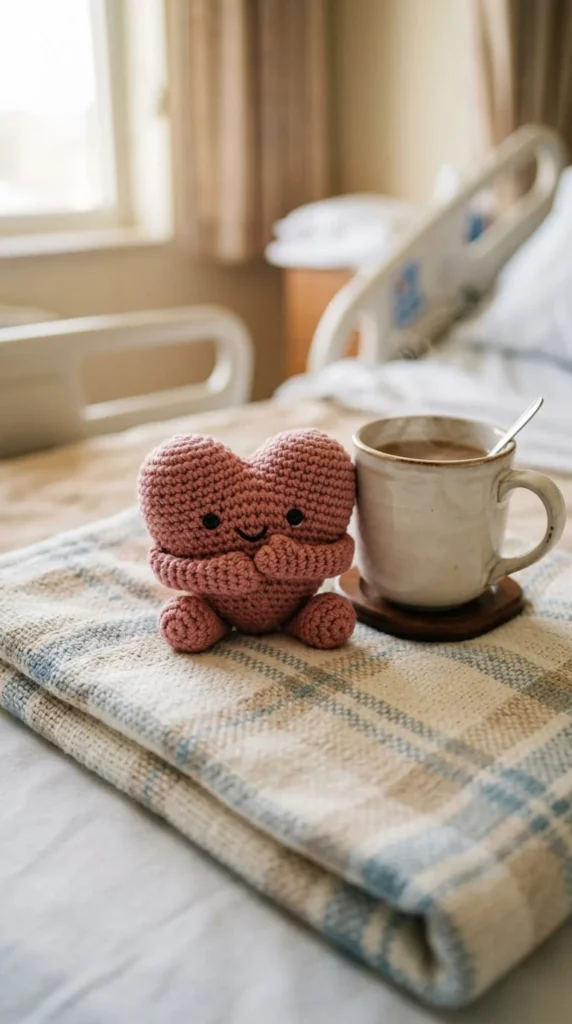
Some amigurumi projects are made less for decoration and more for the person receiving them to hold onto during a hard stretch of time. A simple heart-shaped doll, with short stubby arms that appear to wrap around its own middle, works well as this kind of gift because the shape itself reads as comforting without needing an elaborate design.
Construction is straightforward: two heart-shaped panels crocheted flat, joined around the edges, and stuffed before closing the last section. The arms are small tubes attached at slight angles so they curve naturally across the front, giving the impression of a self-hug.
Soft, muted colors — dusty pink, warm gray, pale yellow — tend to suit this piece better than bright primary tones. Consider adding a small tag or a short handwritten note when giving it, since the doll works best paired with a personal message rather than as a standalone object. It’s a thoughtful option for a friend going through a health scare, a loss, or simply a stretch of stress.
14. A Mini Mascot Charm Built for Bag Display
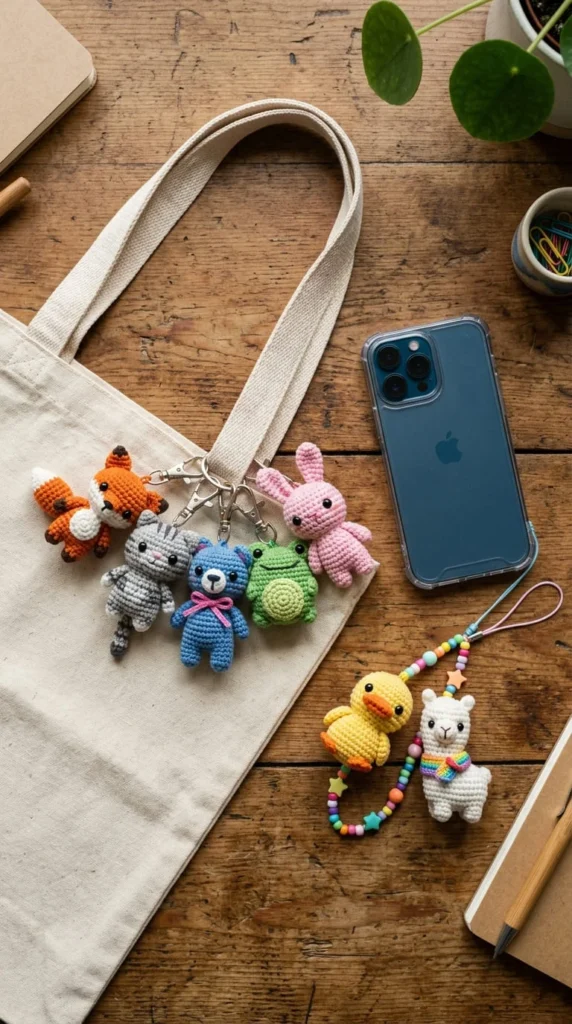
Clipping a small handmade character onto a bag or backpack has become a popular way for people to show off a favorite hobby or aesthetic without wearing an obvious logo. A mini mascot doll, built at roughly two inches tall with a sturdy clip or keyring loop, fits this trend directly.
The key design choice here is keeping the silhouette instantly readable at a small scale. A round body, two simple ears or antenna, and one bold accent color communicate the character clearly even from a few feet away, which matters more than fine detail at this size.
Use a firm fine-weight cotton yarn rather than a fluffy or textured one, since texture tends to blur small details even further. Attach a secure metal clip rather than a plain loop, since bag charms get pulled and knocked around throughout the day. Making a small set in coordinating colors — say, three animals sharing the same base palette — gives whoever receives them room to mix and match across different bags.
15. A Pocket Panda Sized for a Backpack or Pencil Case
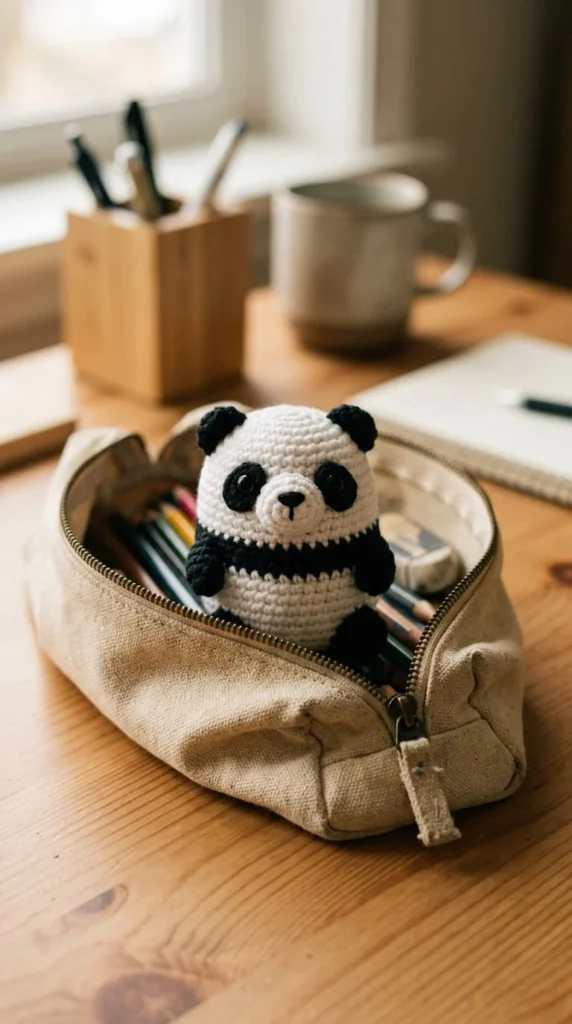
Pandas translate especially well into amigurumi because their two-tone coloring does most of the design work for you. A pocket-sized version, small enough to tuck into a pencil case or a coat pocket, makes a practical everyday companion rather than a shelf-only decoration.
Work the body as a single round shape in white, then add black patches for the ears, eye markings, and limbs using a simple appliqué technique rather than color-changing mid-round. This is considerably easier for beginners than managing multiple yarn colors within the same stitch pattern, and it still produces a clean, recognizable result.
Keep the eye patches as flattened ovals rather than perfect circles, angled slightly downward, since this small adjustment gives the classic sleepy panda expression. A stuffed panda this size works well as a school gift, a travel companion for a nervous flyer, or a small thinking-of-you item mailed to a friend who’s moved away. Because it’s compact, postage costs stay low if you’re sending it any distance.
16. A Flip Doll That Shows Two Different Expressions
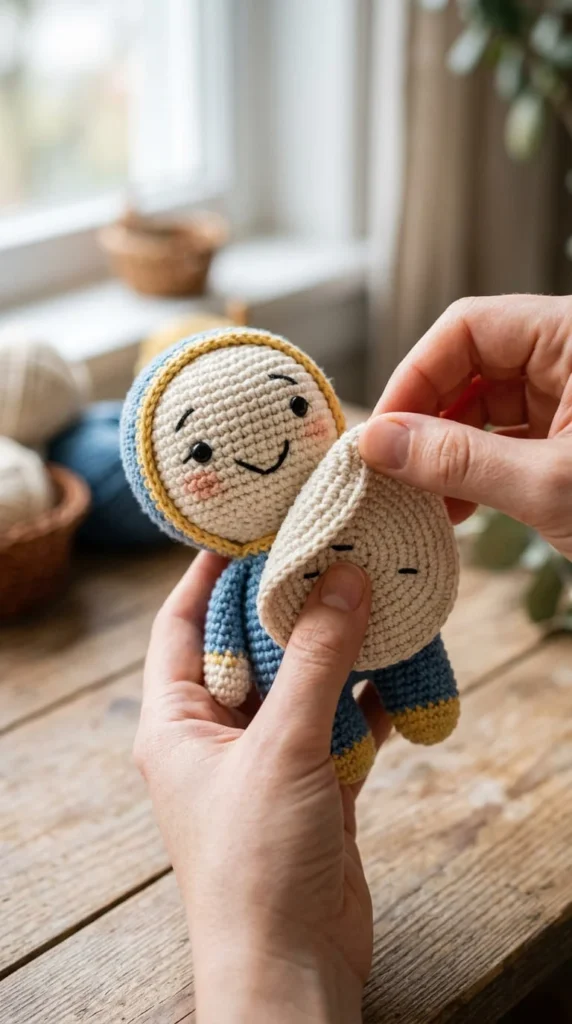
A reversible or “flip” amigurumi is built with two faces on opposite sides of the same head, or as two small dolls sewn together at the base so flipping one over reveals the other. The novelty comes from the transformation itself, which tends to make this a memorable gift rather than just another stuffed shape.
The simplest version to construct is a two-headed design, worked as a single elongated body with a face embroidered on each end. When you flip the doll upside down, the skirt or base fabric folds over to hide one face and reveal the other, similar to the reversible mood dolls that became popular a few years back.
This design works particularly well for a mood-tracking gift aimed at kids or even adults managing anxiety, with one calm expression and one more expressive or playful one. Keep the skirt section wide and slightly stiffened with a firmer yarn so it holds its folded shape cleanly during the flip rather than flopping unpredictably.
17. A Farm Animal Trio for a Themed Nursery Set
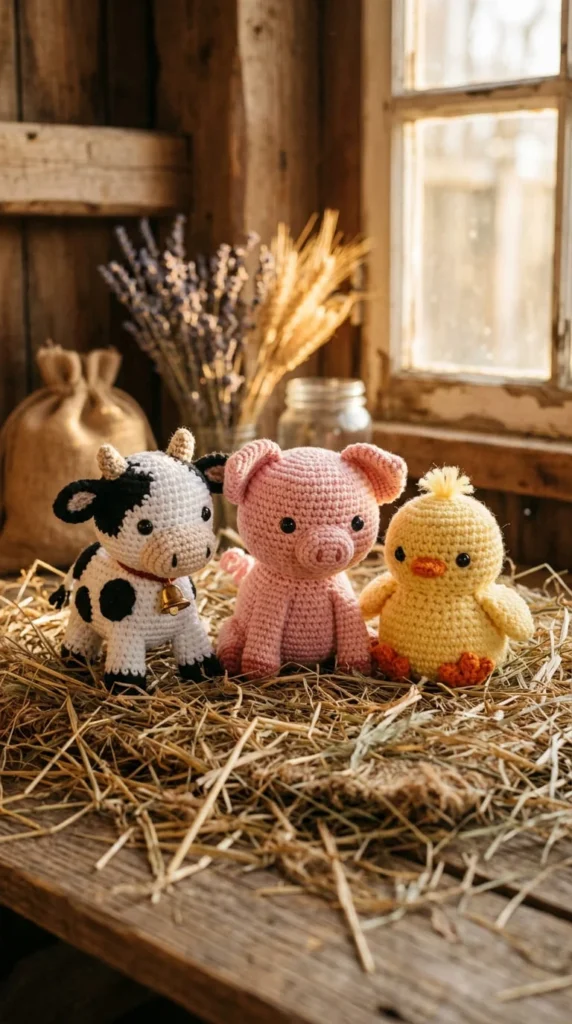
Rather than making a single doll, a small coordinated set of farm animals gives a gift more visual weight and works particularly well for a nursery or a young child’s first collection of stuffed toys. A cow, a pig, and a chick cover a good range of colors and shapes while sharing the same basic round-body construction.
Keeping all three animals at a consistent size, around four to five inches tall, makes them feel like a matched set rather than random leftover projects. Use the same base yarn weight and hook size across all three so the proportions stay visually consistent when they’re displayed or played with together.
The chick is the fastest of the three to finish, since it’s essentially one yellow oval with small orange details for the beak and feet. Save it for when you want a quick win between the more involved cow and pig patterns. Package all three in a small basket or fabric-lined box for gifting, which also gives the parent an easy storage solution once they’re home.
18. A Mushroom-Capped Fairy for a Woodland Theme
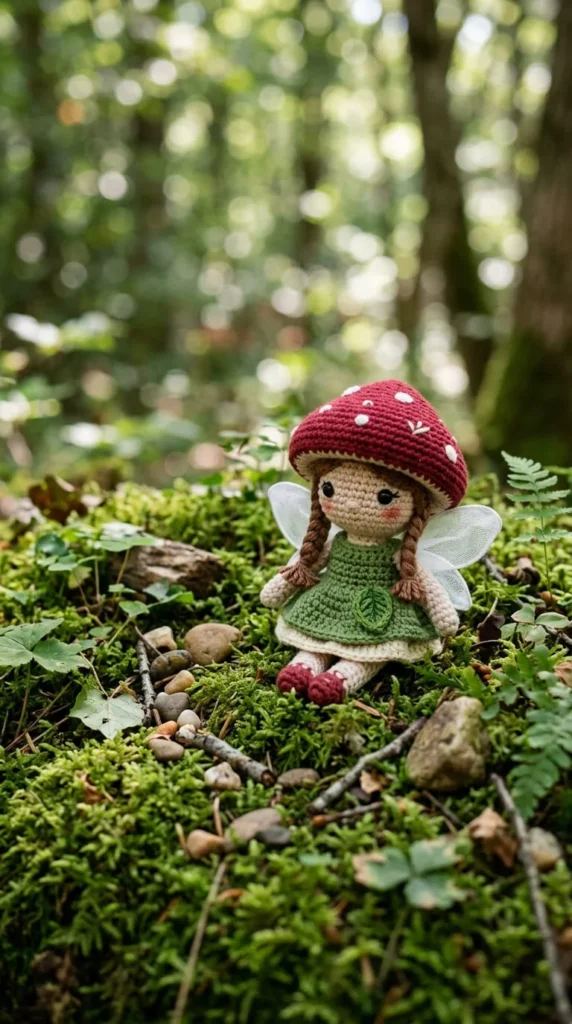
Combining a mushroom cap with a simple humanoid body creates a whimsical character that leans into the cottagecore and woodland aesthetic that’s remained steady in craft circles for a few years now. The mushroom cap doubles as a hat, which simplifies the overall silhouette compared to a fairy design with wings and separate hair.
Work the cap as a half-sphere with small white dot appliqués stitched on afterward for the classic spotted mushroom look. Red and white is the most recognizable combination, though a soft brown cap with cream spots gives a gentler, more naturalistic result if you’d rather avoid the classic storybook red.
Keep the fairy’s body simple, with a rounded torso and short limbs rather than an articulated humanoid shape, since the mushroom cap is doing most of the visual storytelling anyway. Style finished photos with real moss, small stones, or a few dried flowers for a display that photographs well for craft fair tables or online shop listings. This design tends to appeal to buyers who prefer nature-inspired decor over standard character toys.
19. A Spacesuit Bear for a Small Explorer
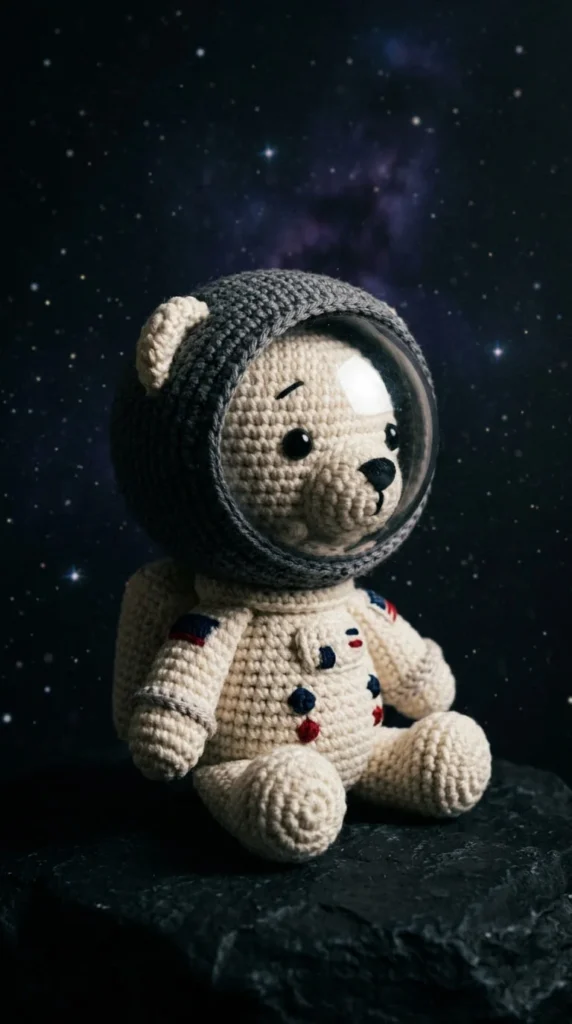
An astronaut bear takes a familiar, comforting animal shape and dresses it in a costume that appeals strongly to kids going through a space or science phase. The suit itself is worked as a simple removable jumpsuit rather than crocheted directly onto the bear, which keeps the bear itself usable as a plain toy later if the child’s interests shift.
The helmet is the piece that sells the whole design. Work it as a rounded dome slightly larger than the bear’s head, leaving an open front panel so the bear’s face stays visible, then finish the edge with a contrasting trim to suggest the seal of a real helmet. A small strip of clear or white felt sewn across the opening can mimic a visor if you want a more finished look.
White or pale gray is the most recognizable suit color, with a few small colored patches added for mission badges or a name tag. This project takes a bit longer than a plain bear because of the extra suit and helmet pieces, but it photographs particularly well and tends to be a memorable birthday gift for a space-obsessed five- or six-year-old.
20. A Vintage Rag Doll With Yarn Braids
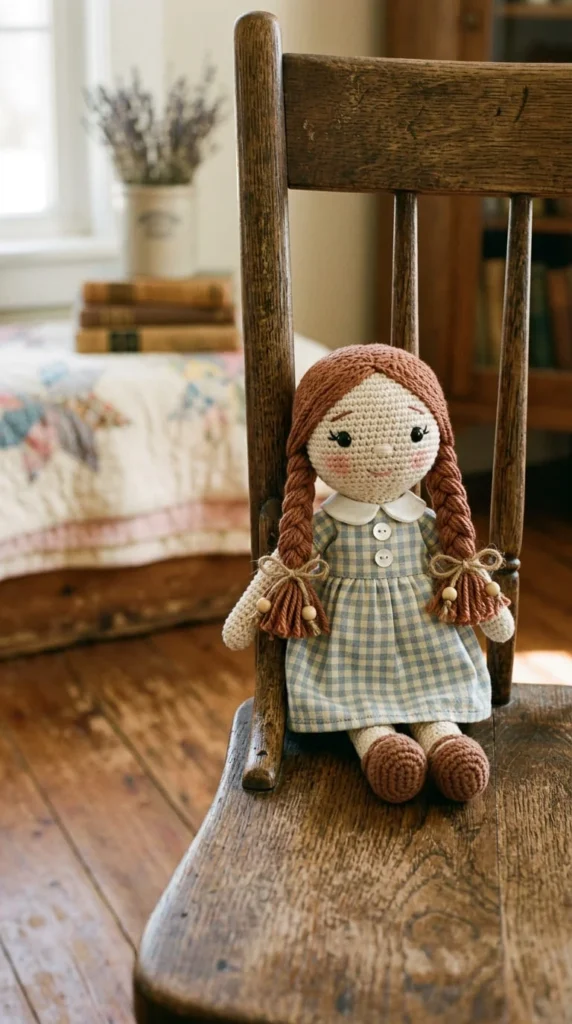
Long before amigurumi became a defined craft category, rag dolls with simple stitched faces and yarn hair were a household staple. Bringing that vintage look into a modern amigurumi build gives you a doll that feels timeless rather than trend-driven, which matters if you’re making something meant to be kept for decades rather than a season.
The hair is the defining feature here. Cut long strands of yarn, fold them in half, and loop them through stitches across the top of the head using a technique similar to adding fringe, then braid or twist sections into pigtails. This takes patience but is not technically difficult, making it a good project for someone comfortable with basic stitches who wants to try something slightly different.
Dress the doll in a simple gingham or calico-print fabric pinafore rather than a crocheted outfit, mixing sewing and crochet techniques for a more textured final result. Button eyes and a simple curved-line mouth keep the face expression gentle rather than cartoonish. This style holds up especially well as an heirloom-style gift for a new baby, since the aesthetic doesn’t tie itself to any particular passing trend.
21. A Personalized Portrait Doll Matched to the Recipient
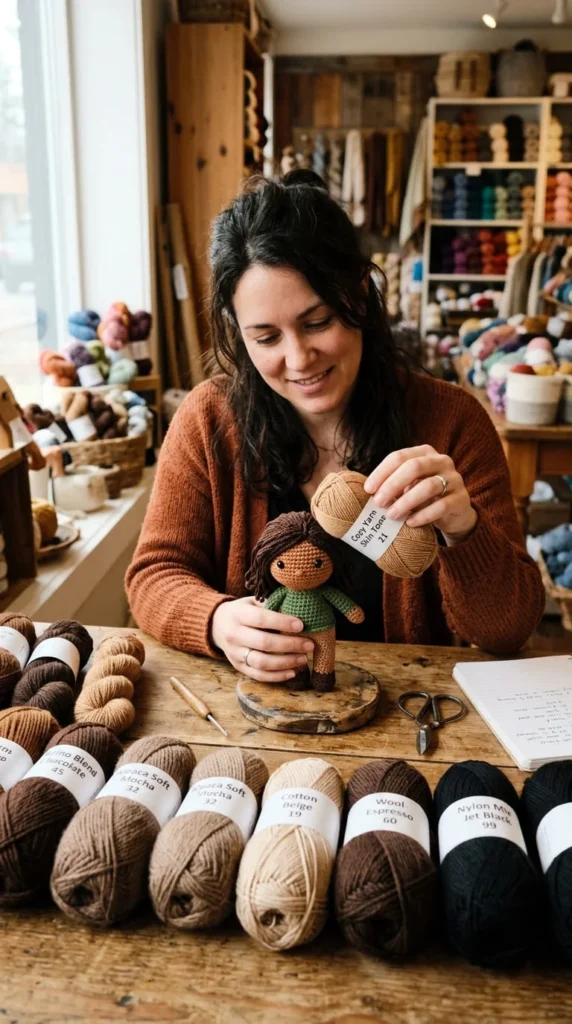
One of the more meaningful projects on this list involves crocheting a small doll designed to resemble a specific person, using yarn colors chosen to match their hair and skin tone as closely as possible, along with small details like glasses, a favorite outfit color, or a distinctive hairstyle.
This doesn’t need to be a precise likeness to feel personal. Even a rough approximation, paired with one or two accurate details, reads clearly as “this is meant to be you” to the recipient. Curly yarn hair worked in loop stitches, a specific sweater color the person always wears, or a small accessory like glasses made from bent wire can carry most of the recognition on their own.
Keep a small swatch card of your available yarn colors on hand when planning this project, since matching skin tone accurately is usually the hardest part. Warm caramel, cool beige, deep brown, and rosy tan cover a reasonably wide range when layered or blended. These dolls work well as birthday, anniversary, or new-baby gifts, since the personalization adds weight that a generic pattern can’t match.
22. An Ocean Buddy Set With an Octopus and Seal
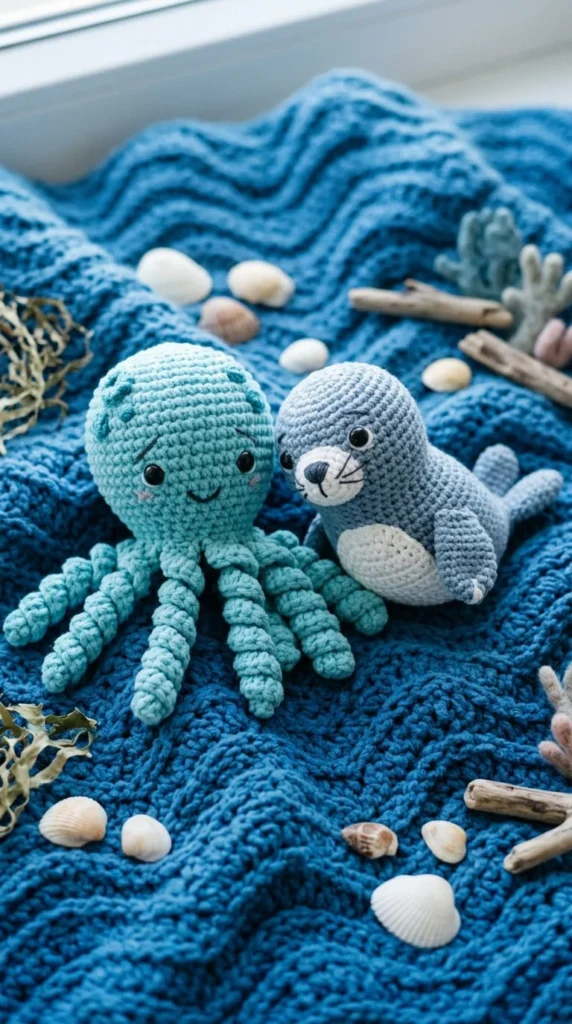
Underwater-themed amigurumi tend to get less attention than farm and forest animals, which makes an ocean-themed set a good way to offer something a little different at a craft fair or online shop. An octopus and a seal together cover a nice range of shapes and textures while staying within a manageable skill level.
The octopus is more approachable than it might look. Eight legs sounds intimidating, but each one is just a simple crocheted tube attached to a round body, and slight variation in how each leg curls actually makes the finished piece look more natural rather than less. Use a soft coral, teal, or lavender for a friendly, non-realistic color palette.
The seal relies on a smooth, elongated body shape and short flipper-like limbs rather than distinct legs, which makes it one of the faster animal patterns to complete. A grayish-blue or silvery yarn keeps it looking cohesive with the octopus when displayed together. Photograph the pair against a blue or wave-textured fabric background to reinforce the ocean theme for online listings.
23. A Cottagecore Bunny Dressed in Overalls
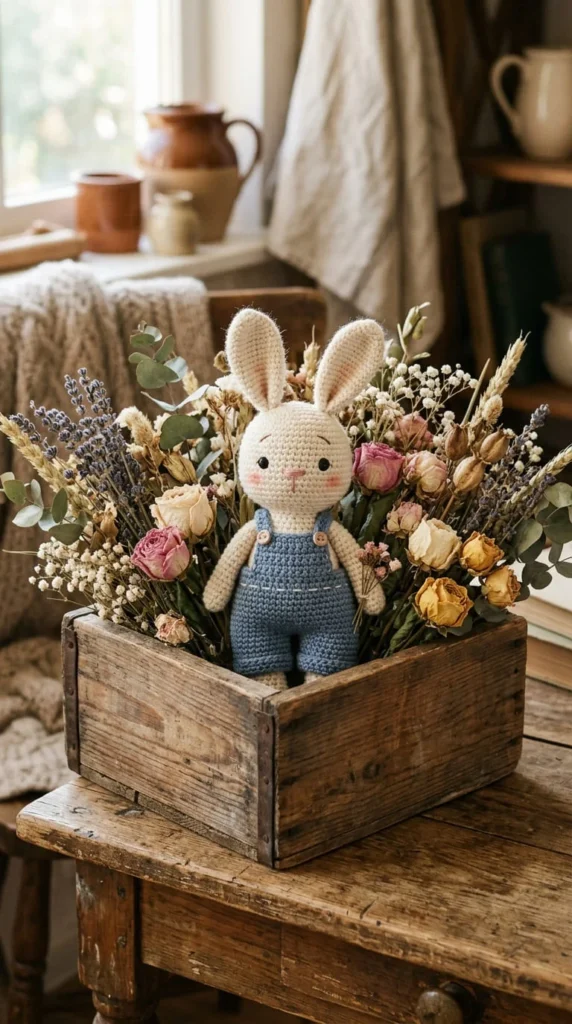
Rounding out this list, a bunny dressed in small crocheted overalls leans into the soft, rustic cottagecore aesthetic that’s remained a consistent favorite among crafters who prefer muted, homey colors over bright cartoon tones. The overalls add a layer of visual interest without requiring advanced techniques.
Work the overalls as two simple leg tubes joined at a waistband, with a small front bib panel and two thin straps crossing over the shoulders. Sew or button the straps in place rather than crocheting them directly onto the bunny’s body, so the outfit can be removed for washing or restyled later.
A soft sage green, dusty mustard, or faded denim-blue for the overalls pairs naturally with a cream or oatmeal-colored bunny body. Add a tiny fabric patch or embroidered detail on the bib pocket for extra charm. This design suits farmers-market displays, craft fair tables, or gift-giving for anyone who leans toward a natural, lived-in aesthetic rather than polished perfection in their handmade decor.
Conclusion
Twenty-three ideas is a lot to take in at once, so the easiest way to actually use this list is to pick one project that matches how much time and yarn you currently have on hand, rather than trying to plan out every doll at once. A keychain charm or a farm-animal chick fits into a single evening, while a vintage rag doll or a personalized portrait piece deserves a slower weekend session. Keep a small notebook of which color combinations and yarn weights worked well for you, since the details that make one doll feel finished — stuffing firmness, eye placement, fringe length — carry over into almost everything else on this list. Once you’ve made two or three, you’ll likely find yourself adjusting patterns on the fly instead of following them exactly, which is usually the point where the craft starts feeling like your own. Pick whichever doll caught your attention first and get your hook out tonight.