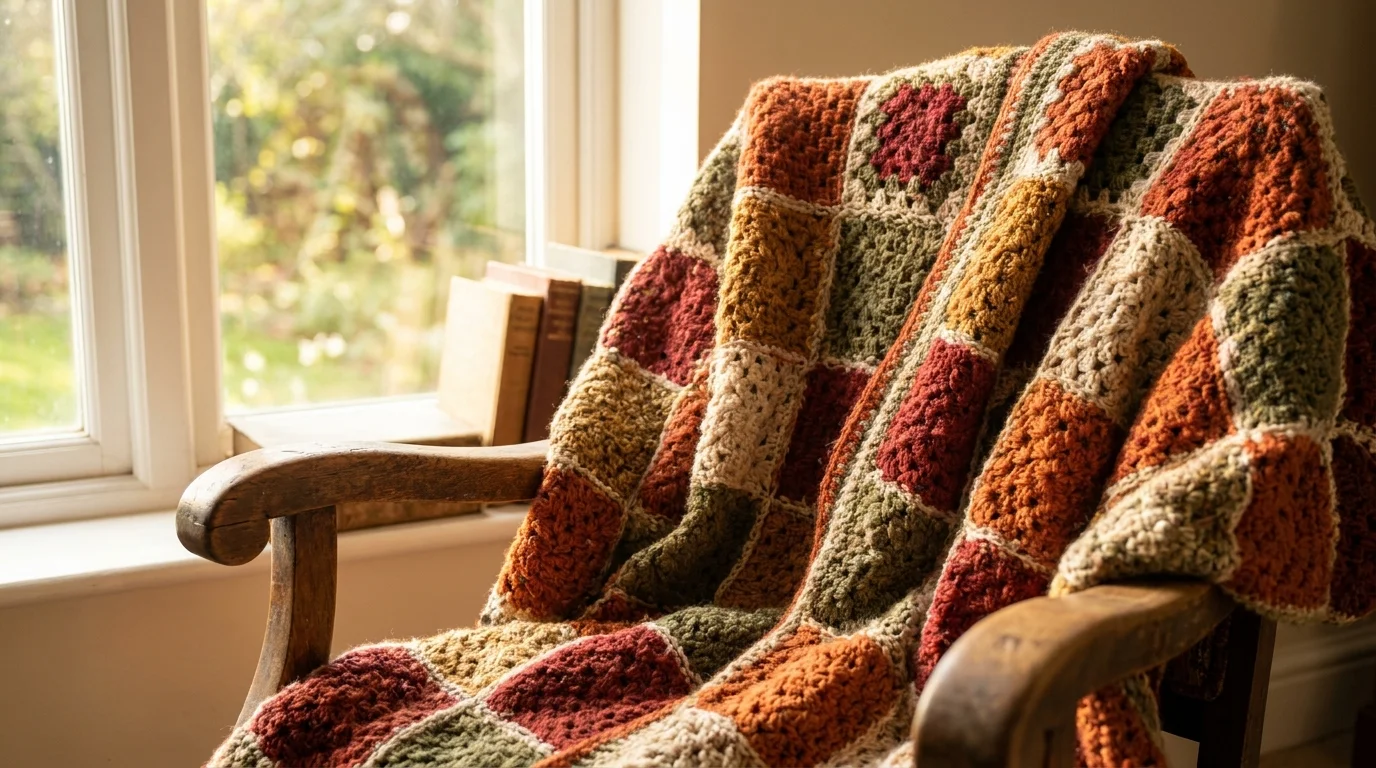
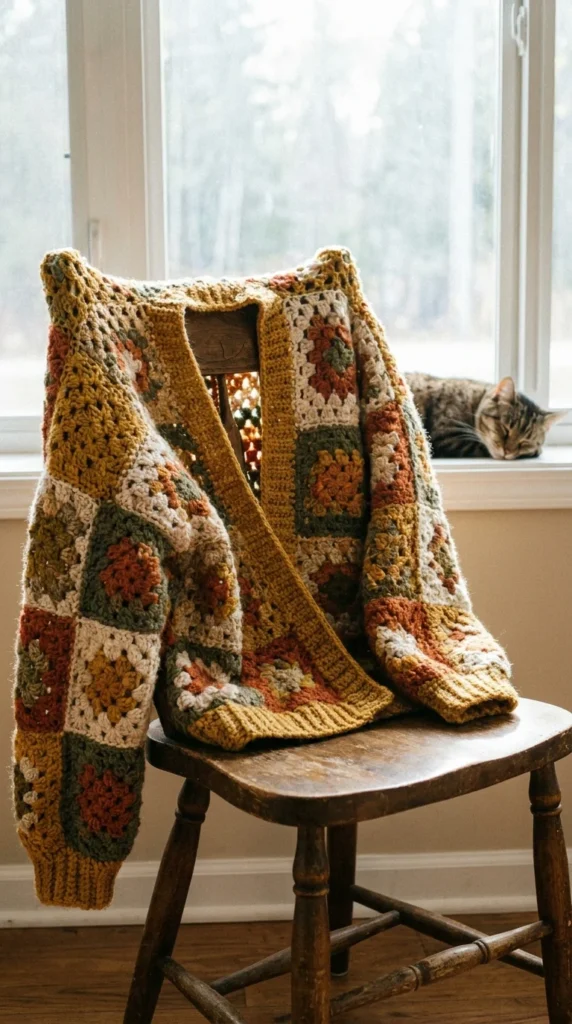
There’s a reason the crochet oversized granny square cardigan keeps showing up in feeds and pattern shops right now — it’s warm, forgiving, and genuinely fun to make. Whether you’re stitching one giant square and folding it into shape, or joining dozens of smaller motifs into panels, this style rewards patience with a piece you’ll actually wear for years. Below you’ll find 23 distinct takes on the granny square cardigan, covering construction methods, yarn choices, color stories, motif themes, and styling angles for different bodies and occasions. Some are beginner-friendly weekend makes, others are slower projects worth the extra hours. Pick the one that matches your skill level and the vibe you’re going for.
1. The One-Square Fold-and-Seam Cardigan for First-Timers
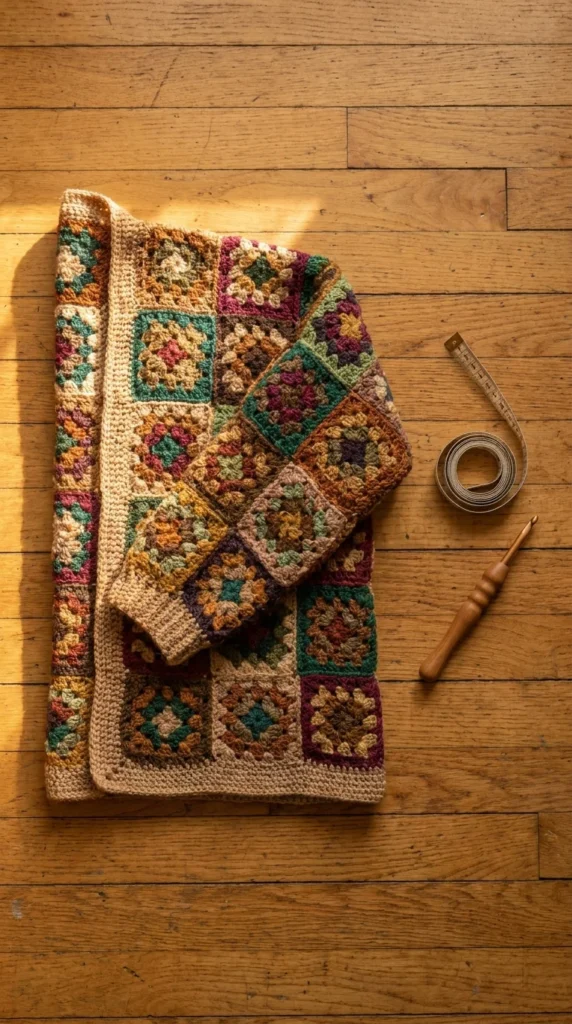
If you’ve never made a garment before, this is the version to try. Instead of joining dozens of motifs, you crochet one oversized square, fold it at the shoulders, and seam the sides and underarms. Two seams, no counting rows for sleeves, and no worrying about matching up dozens of small pieces.
The trick is starting with a hook and yarn combination that grows fast — a bulky weight yarn with an 8mm or 9mm hook gets you to garment size in a handful of evenings. Because the square is worked from the center out, you can try the piece on as you go and stop once it reaches the width you want across the back.
This construction method suits anyone who wants results without a steep learning curve. It also hides beginner-level tension inconsistencies better than smaller, tightly joined motifs would, since the eye reads the whole panel as one continuous piece rather than a patchwork. Block it flat before seaming so the edges lie straight, and the fold line will sit exactly where you want your shoulder seam to fall.
2. The Multi-Square Cardigan Built From 24 Panels
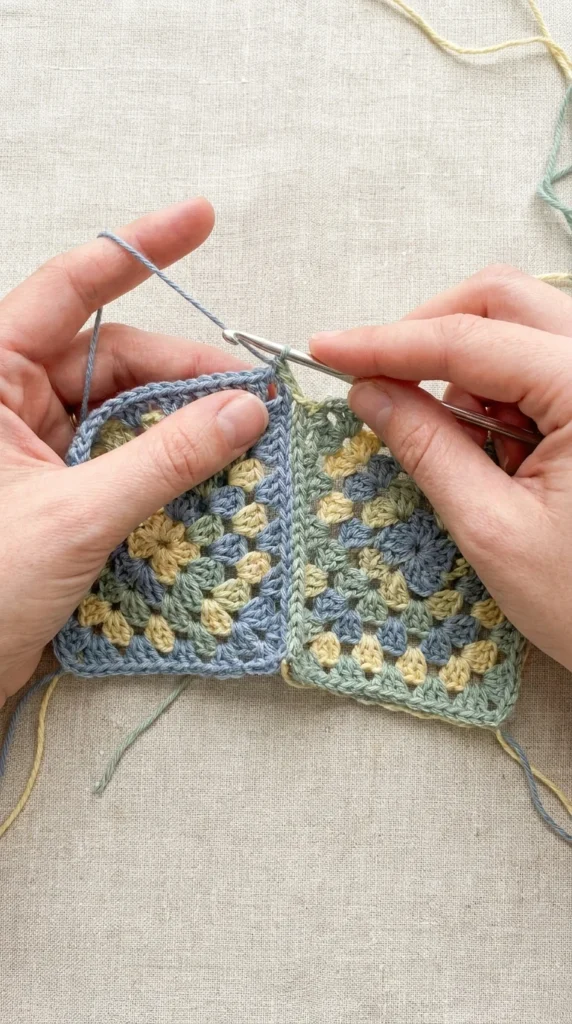
For crocheters who like a rhythm to their projects, working a cardigan from many smaller squares has its own appeal. You make one motif at a time — often between 18 and 30 for an adult size — then join them into front and back panels before adding sleeves.
The advantage here is portability. Each square is a small, self-contained project you can carry anywhere, which makes this approach easier to fit into a busy week than a single sprawling panel. It also gives you room to play with color changes between squares without disrupting the whole garment.
Use a flat join method, sometimes called a slip-stitch join, worked through the back loops so the seam lies nearly invisible from the right side. Lay all your squares out on the floor before joining so you can balance colors evenly across the body and sleeves. Keeping a simple tally sheet of finished squares versus your target count helps prevent the mid-project overwhelm that sometimes derails bigger motif-based makes.
3. The Weekend-Speed Bulky Yarn Cardigan
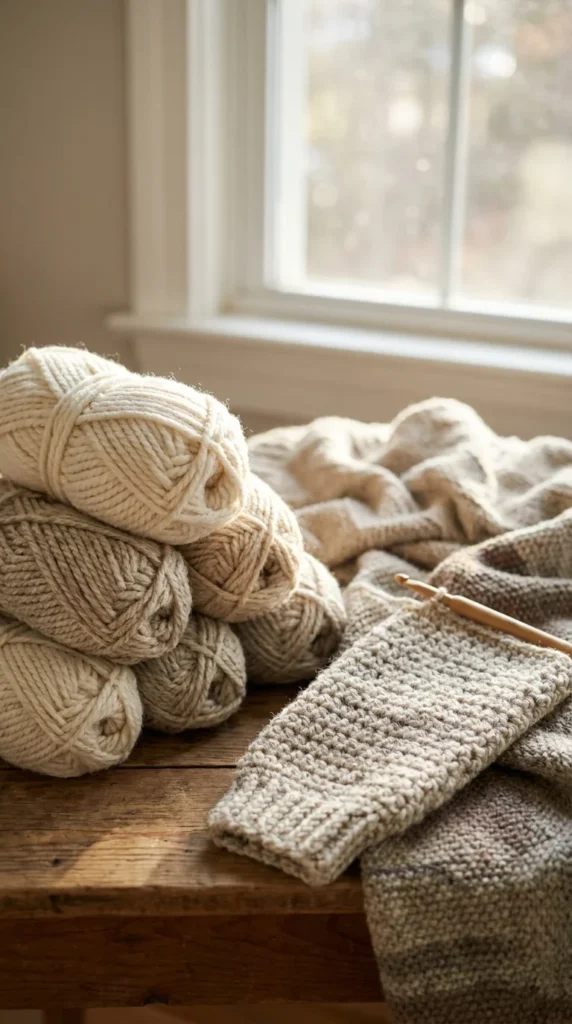
Some cardigans are meant to take months. This one is meant to take a weekend. Working with a bulky (category 5) yarn and a large hook, typically between 5.5mm and 8mm, means each square works up in under twenty minutes and the whole garment comes together in a couple of focused sitting sessions.
The trade-off is yardage — bulky projects eat through skeins faster than finer yarns, so budget for more balls than you’d expect based on weight alone. A typical oversized cardigan in this weight can use anywhere from ten to seventeen balls depending on size.
What makes this approach worth it is the drape. Bulky yarn squares, once blocked, hang with a heavy, substantial weight that reads as intentional rather than bulky in the negative sense. Choose a fiber with some body to it, like a wool-acrylic mix, rather than a pure cotton, since cotton in this weight can feel stiff and boardy instead of soft. This is the version to reach for when you want a finished, wearable piece fast.
4. The Worsted Weight Cardigan for a Lighter, Everyday Fit
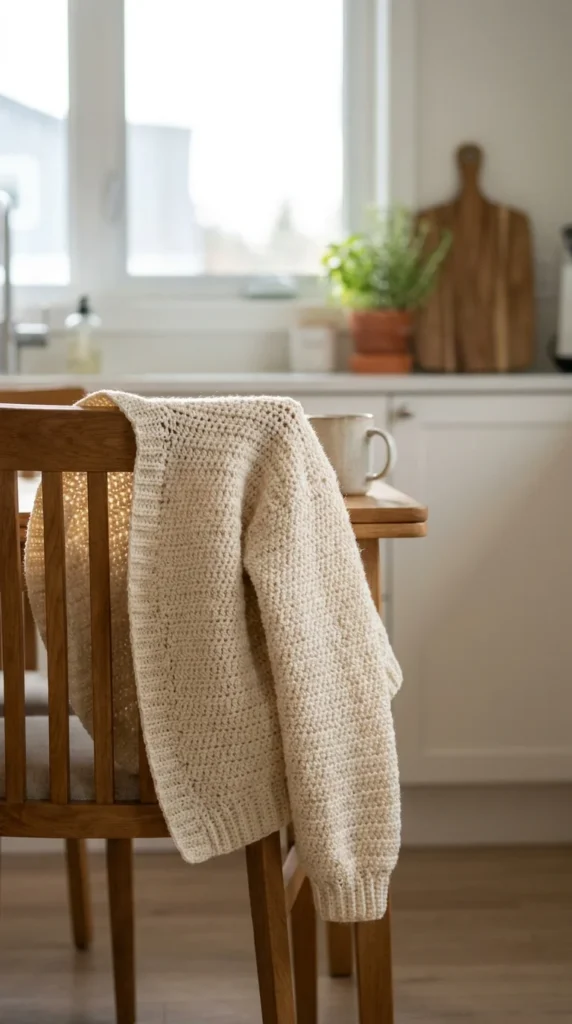
Not every granny square cardigan has to be oversized and heavy. A worsted weight (category 4) yarn gives you a lighter fabric that drapes closer to the body and layers more easily under a coat.
This weight is a good match for anyone who runs warm or lives somewhere without long stretches of deep cold. The finished garment still has the classic granny square texture, but it moves more like a regular sweater than a blanket you’ve climbed into.
Because the stitches are smaller, expect more squares and more joining time compared to a bulky version. It’s a slower project, but the payoff is a cardigan you can actually wear indoors at the office or out to dinner without overheating. Pair a worsted mercerized cotton with a hook around 4mm for a crisper stitch definition, or a wool-mix worsted for extra softness and stretch. This is the version worth choosing if you want something between a cozy home layer and a piece with a bit more structure and polish.
5. The Cocoon-Style Shrug for a Relaxed Wrap Feel
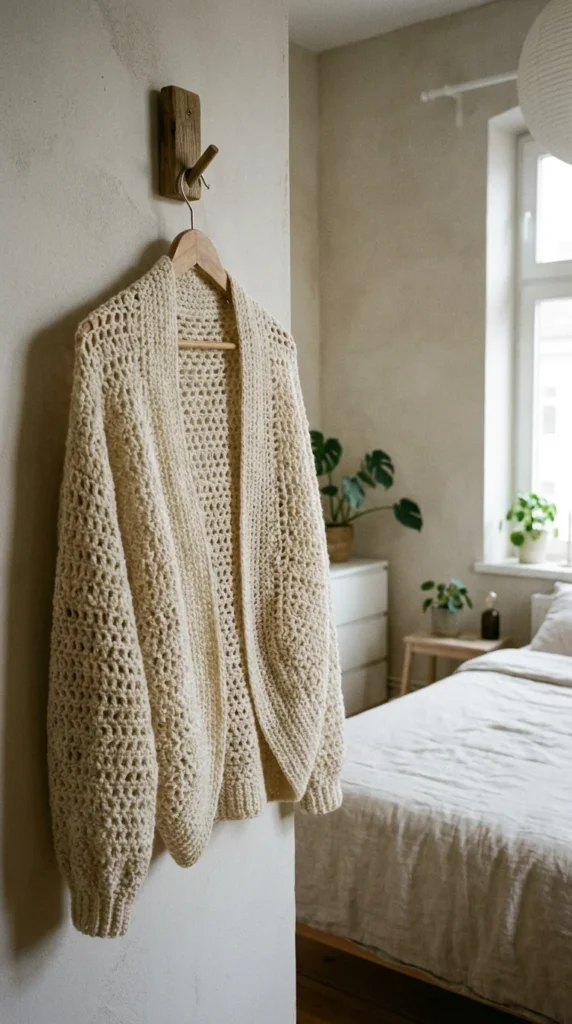
If a full cardigan with sleeves feels like more commitment than you want right now, a cocoon or shrug-style version built from just a handful of oversized squares is worth trying. Some patterns use as few as six large squares to build the entire body, with the sleeves formed naturally by how the panel folds.
This construction skips separate sleeve pieces entirely, which cuts your total working time by a significant margin. The result drapes loosely over the shoulders and closes with a simple front tie or a single button, rather than fitting close to the arms.
It works particularly well as an in-between layering piece — something to throw over a tank top on a cool evening or layer over a dress without adding bulk under the arms. Because there are fewer seams, any small tension differences between squares are less noticeable. Choose a soft fiber with good drape, like a bamboo-cotton mix or a lightweight wool, so the shrug falls naturally rather than standing away from the body stiffly.
6. The Hexi-Cardi: A Hexagon Take on the Classic Square
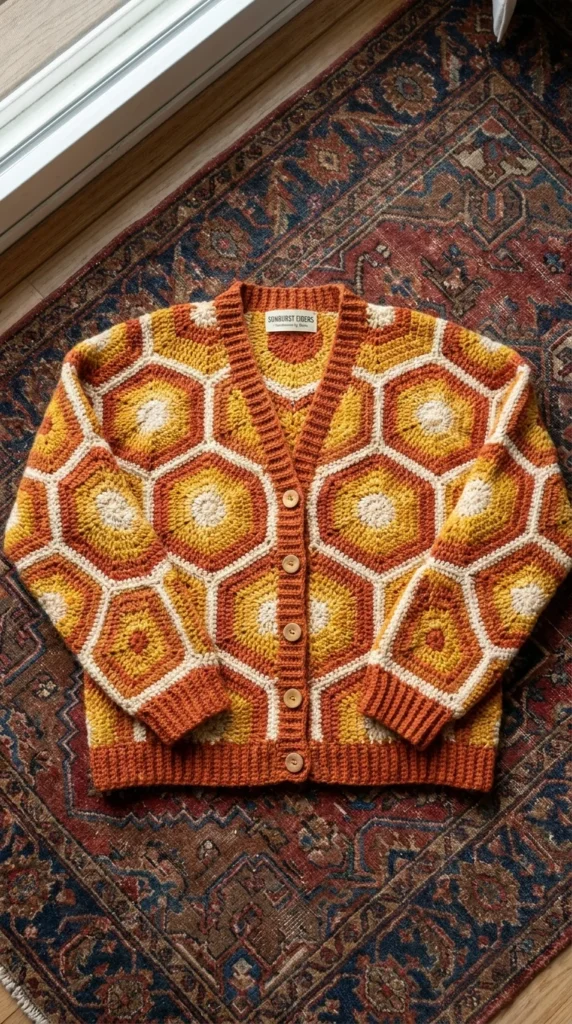
The granny square has a geometric cousin worth exploring: the hexagon, sometimes nicknamed the “hexi-cardi” in pattern circles. Instead of four-sided motifs, you work six-sided ones that interlock in a honeycomb pattern across the body and sleeves.
Hexagons create a different visual rhythm than squares — the diagonal lines pull the eye in a way that reads as more modern and less obviously “granny square” at first glance, even though the underlying technique is nearly identical. A sunburst color pattern, worked with a bright center ring fading to a neutral outer round, is a popular way to style this shape.
Joining hexagons takes a little more planning than squares, since you’ll have partial motifs along straight edges like the cardigan front and hem. Working half-hexagons for these spots keeps your edges straight instead of jagged. This version suits anyone who has already made a square-based cardigan and wants a new geometric challenge without switching away from the granny motif family entirely.
7. The Pastel Rainbow Cardigan for a Soft Color Story
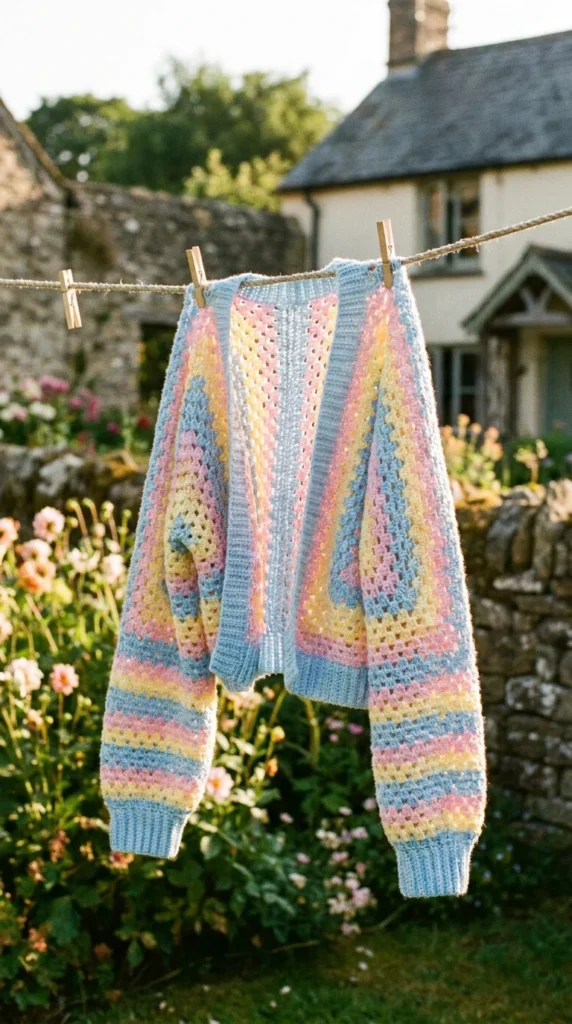
Color sequencing turns a plain granny square cardigan into something closer to wearable art. A pastel rainbow approach — working each square or round in a soft gradient from blush to lavender to sky blue to butter yellow — gives the finished piece a gentle, cohesive look rather than a scrappy mix of leftover yarn.
Plan your color order before you start rather than picking randomly as you go. Lay out your yarn skeins in the sequence you want them to appear, and work through that order square by square or round by round within each square. This keeps the gradient consistent across the whole garment instead of clustering similar shades together by accident.
Pastel palettes work well for both baby and adult sizes, though the visual effect is more striking on a larger garment where the eye has more room to travel across the gradient. Stick to yarns from the same dye lot family when possible so the pastels read as intentionally coordinated rather than mismatched.
8. The All-Lavender Cardigan for a Single-Shade Statement
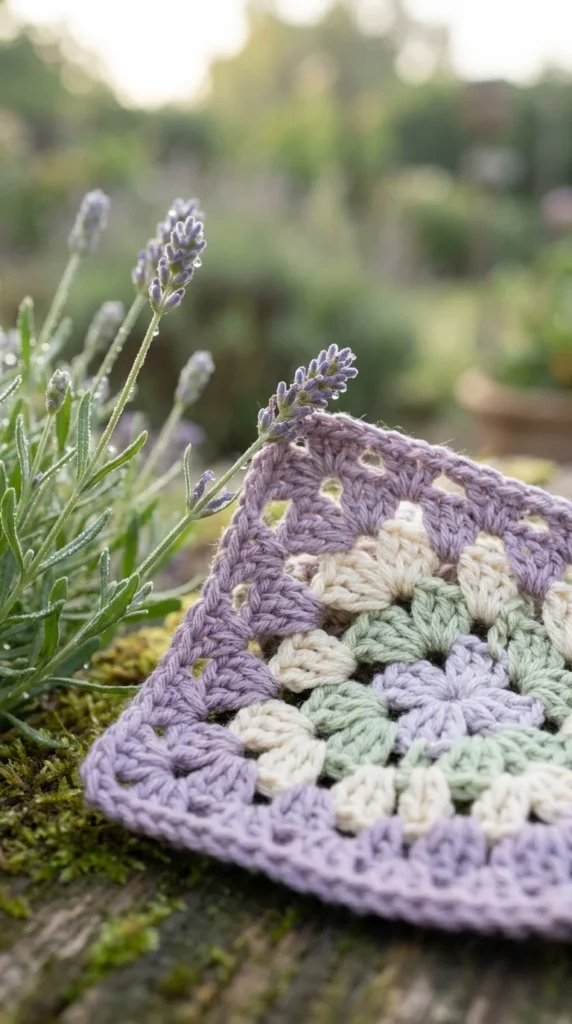
Not every color cardigan calls for a gradient or a rainbow mix. Working the entire piece in a single lavender shade, with maybe one contrasting round of cream or white for the edging, creates a calmer, more grown-up version of the trend.
A monochrome approach like this puts the stitch pattern itself front and center. Because there’s no competing color to distract the eye, texture becomes the main visual interest — so this is a good project to practice a slightly more decorative granny square variation, like a puff-stitch center or a picot edge, since the detail will actually show.
Lavender in particular photographs well and pairs easily with denim, cream, and gray in an everyday wardrobe, which makes this a practical choice if you want a cardigan that works with what you already own rather than one that demands to be styled around. Choose a semi-solid or tonal yarn rather than a flat solid if you want subtle depth in the color without introducing a second shade.
9. The Strawberry Motif Cardigan for a Playful Detail
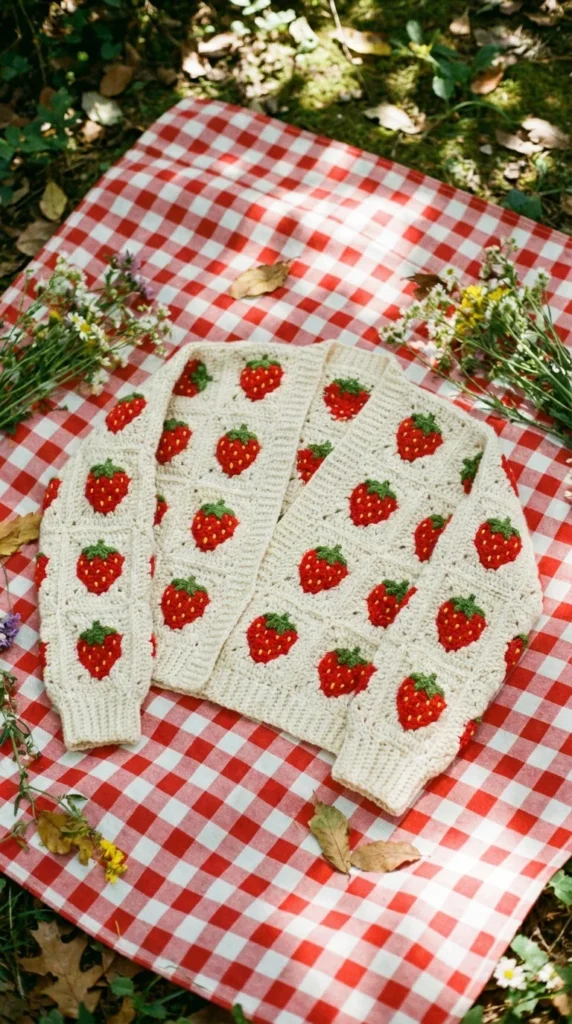
Themed motifs turn a basic granny square project into something with a bit of personality. A strawberry-shaped square, worked in red with a green leafy top, adds a playful accent when scattered across a cardigan front or used as a border trim rather than covering the whole garment.
This works especially well as a set piece — pairing a strawberry-motif cardigan with a matching hat or a simple dress for a child, or scaling it up as a statement piece for an adult who wants something less predictable than a plain solid-color square.
Because the strawberry motif has more color changes than a standard square, expect more yarn ends to weave in per piece. Weaving as you go, rather than leaving it all for the end, saves a lot of finishing time later. If you’re new to shaped motifs, start with just a few strawberry squares mixed into an otherwise plain-square cardigan rather than committing to thirty of them right away — that way you can gauge how much extra time the shaping and color changes add before scaling up the whole project.
10. The Heart Motif Cardigan for a Handmade Gift
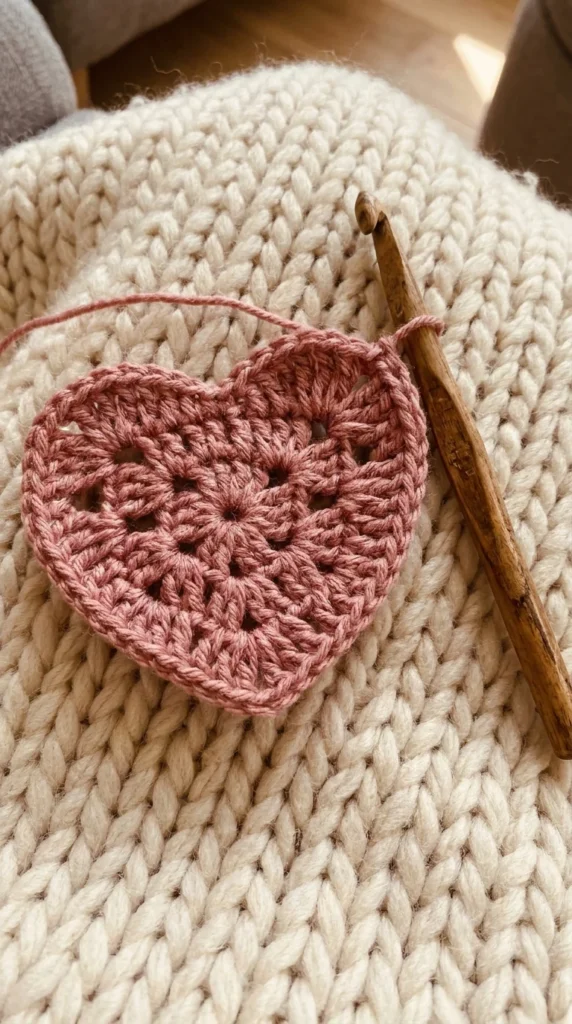
A heart-shaped granny square is one of the more approachable themed motifs to learn, since it builds on the same increase pattern as a standard square but shapes the top into two rounded lobes. Used sparingly — as a back panel focal point or a pocket detail — it gives a cardigan a handmade, gift-worthy feel without turning the whole piece into a novelty item.
This motif is a good match for a cardigan made specifically for someone else, like a new parent or a close friend, since the shape reads clearly even to people who don’t crochet. Keep the rest of the garment in plain squares and let the heart motifs do the visual work in a few key spots.
If you want the heart to stand out rather than melt into the surrounding squares, work it in a contrasting color and outline it with a single round of single crochet in a third shade. This small trick makes the shape read clearly from a distance, which matters if the motifs are spaced out across a larger panel rather than clustered together.
11. The Flower Motif Cardigan for Spring and Summer Wear
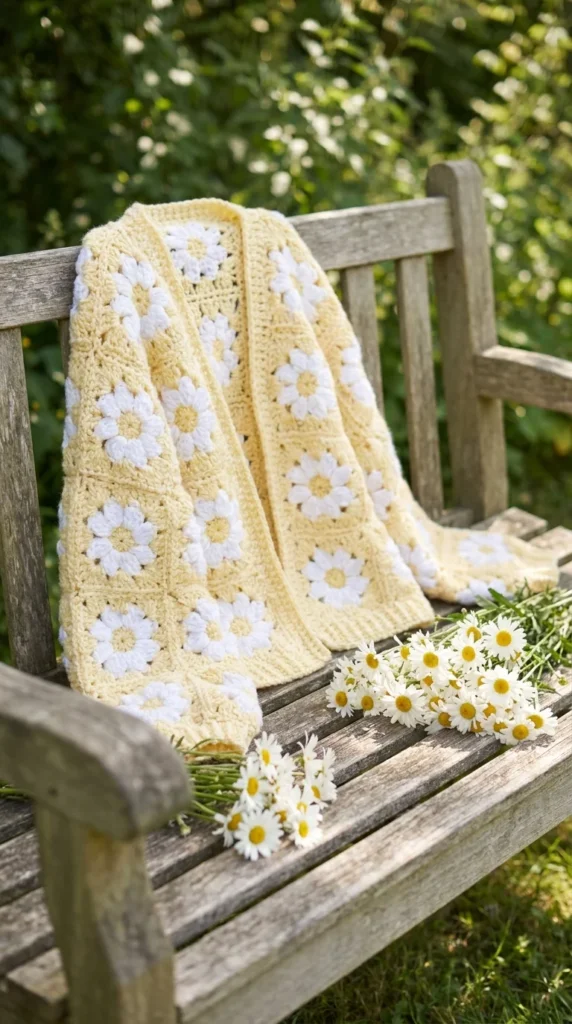
A flower-shaped granny square swaps the usual sharp corners for rounded petals, giving the finished cardigan a softer, more organic look than the standard geometric grid. This motif suits lighter seasons better than the heavy bulky versions, since it’s often worked in a finer cotton or cotton-mix yarn that breathes more in warm weather.
Because flower motifs have curved edges, joining them leaves small gaps between the rounded petals rather than a flush edge. Some crocheters fill these gaps with a simple mesh or filet background worked between the flowers, which also adds breathability and a bit of visual lightness to the finished piece.
This is a good project for anyone who wants a granny square cardigan that doesn’t read as strictly a cold-weather layer. Worked in a lightweight cotton with a smaller hook, the finished garment works as a beach cover-up or an evening layer for a warm-climate summer rather than a heavy winter piece. Pale yellow, white, and soft green combinations tend to read as the most seasonally appropriate for this motif style.
12. The Sunburst Cardigan for a Bold Statement Piece
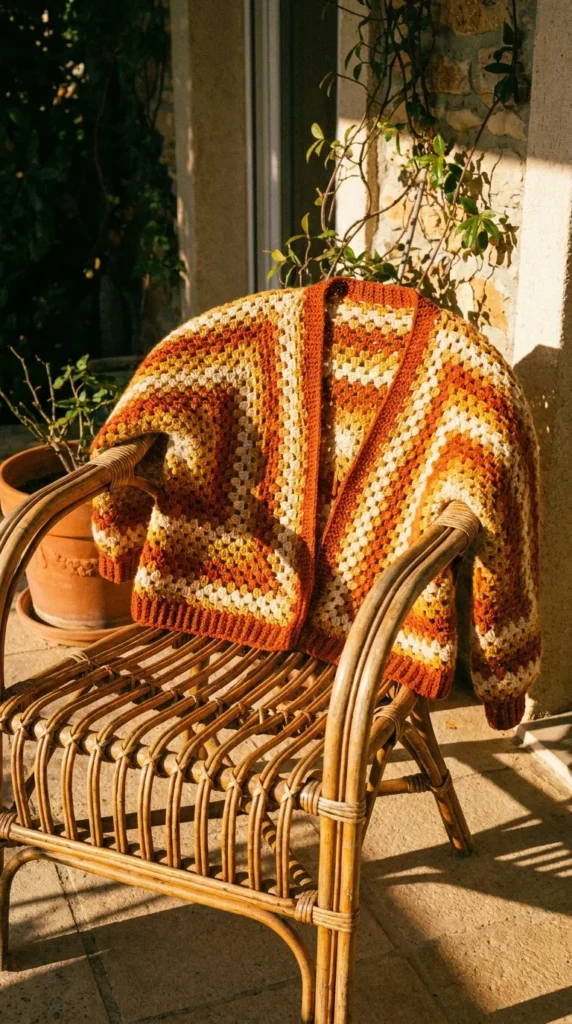
A sunburst motif takes the standard granny square center and expands it into radiating rounds of warm color — deep orange fading to gold, then cream at the outer edge. Worked across an entire cardigan, this creates a genuinely eye-catching piece that stands apart from the softer pastel and neutral versions most people default to.
Because the color changes happen within each square rather than between squares, this motif requires more frequent yarn switches per motif than a plain solid square. Carrying your yarns up the side of the work, rather than cutting and rejoining each color, saves a considerable amount of finishing time across a full garment’s worth of squares.
This is a strong choice for someone who already has a plain-color granny square cardigan and wants a second, bolder piece for occasions where they want to stand out rather than fade in. Because the color palette is warm and saturated, this style photographs particularly well outdoors in golden hour light, which is worth keeping in mind if you plan to show off the finished piece.
13. The Roomy-Sleeve Cardigan Made to Flatter Every Body
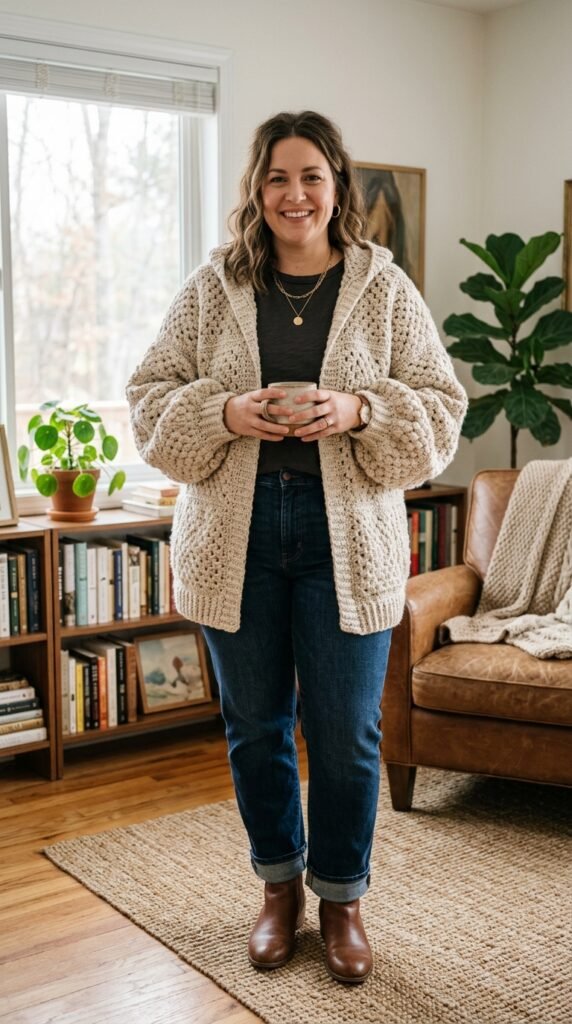
Oversized doesn’t mean shapeless. A granny square cardigan built with a hip-length hem, roomy but not overly wide sleeves, and a slight A-line shape from the underarms down works well across a wide range of body types, not just smaller frames.
The key adjustment is proportion. Keep the shoulder line at or just past your natural shoulder rather than letting it drop several inches further, since an extremely dropped shoulder can shorten the visual line of the arm on a larger frame. A hip-length hem, rather than one that stops at the waist or extends past the hip, tends to sit at the most flattering point for the widest range of body shapes.
If you’re modifying an existing pattern, add width through extra squares in the body panels rather than simply upsizing the hook, which can distort the stitch pattern and drape. This keeps your gauge accurate to the size chart while still building out the extra room you want. Pairing the finished cardigan with a simple bodysuit or fitted top underneath keeps the silhouette balanced rather than overwhelming the frame.
14. The Festival-Ready Boho Layer
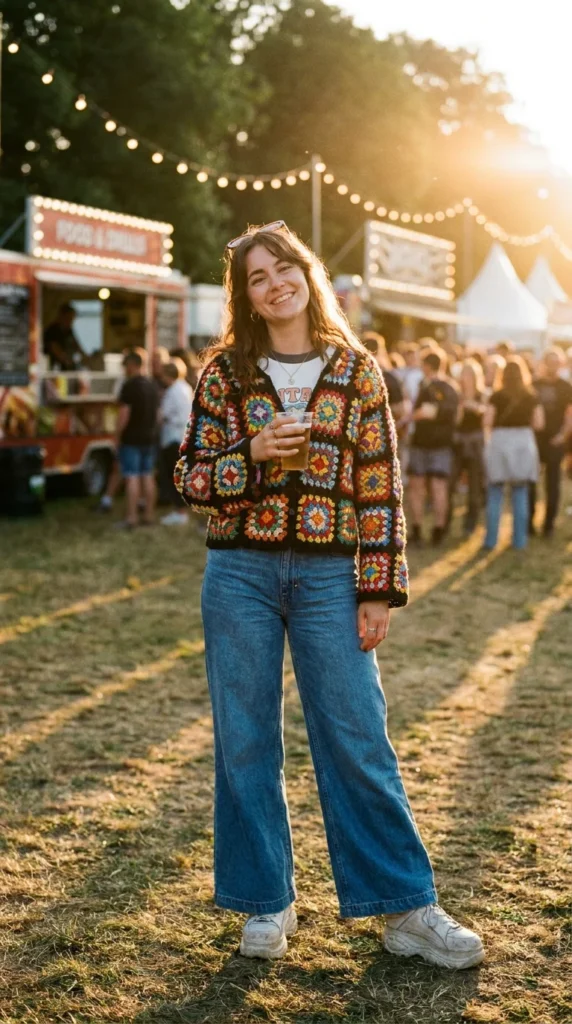
A granny square cardigan is close to a uniform piece for boho and festival styling, and there’s a reason it works so consistently well in that setting. The relaxed, textured silhouette pairs naturally with flowing layers, wide-leg jeans, and platform sneakers, without needing to match too precisely.
For this look, reach for a cardigan with some length — past the hip rather than cropped — so it moves with you rather than staying stiff. Fringe or tassel trim along the hem, added after the main garment is finished, amplifies the boho feel without changing the construction at all.
Layer it open over a simple slip dress or a fitted tank, and let the cardigan itself carry the visual interest rather than competing with a busy print underneath. Because festival settings often mean temperature swings between hot afternoons and cool evenings, a granny square cardigan works as a practical layer as much as a styling choice — light enough to tie around a bag when it’s warm, warm enough to wear once the sun goes down.
15. The Office-to-Weekend Neutral Cardigan

Most granny square styling leans casual, but a version worked in gray, cream, or camel can move into a work setting without looking out of place. The trick is choosing a slimmer profile than the classic oversized cut — still roomy through the body, but with a shorter, more tailored sleeve length that won’t bunch under a blazer.
Pair it over a simple blouse or fitted knit top, and choose a single flat button or a tie closure rather than leaving it fully open, which keeps the look more put-together for a desk setting. A worsted weight yarn, rather than bulky, keeps the finished piece from adding too much bulk under a coat during a commute.
The same cardigan then works for a weekend by swapping the blouse for a plain tee and adding jeans, which is part of what makes this neutral version worth the extra planning. Rather than owning separate cardigans for different parts of your week, one well-chosen neutral piece in a slightly more tailored cut can cover both settings without feeling like it belongs to just one context.
16. The Matching Toddler Cardigan and Dress Set
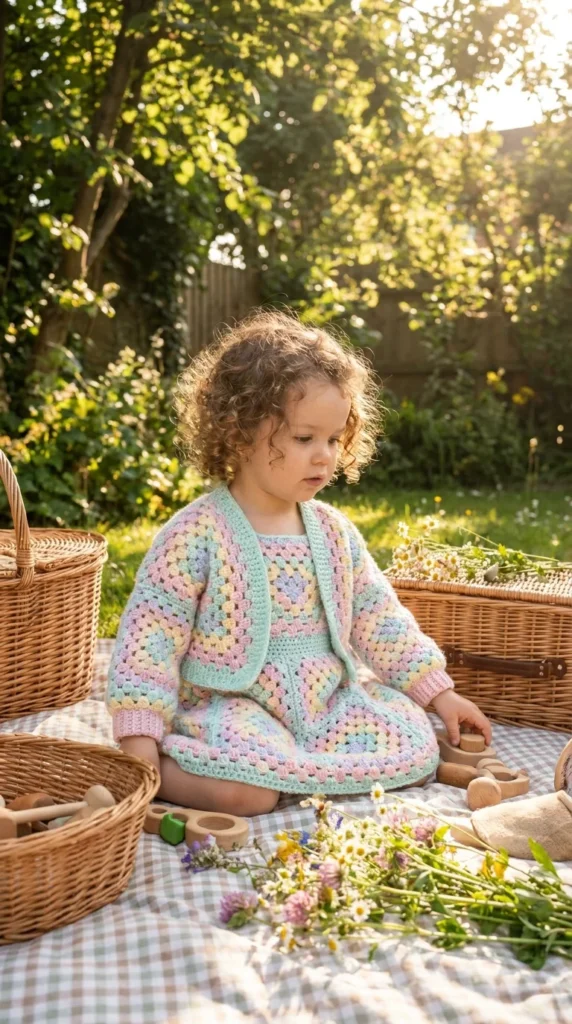
Granny square cardigans scale down well for children, and a matching set — cardigan plus a coordinating dress or romper — is a popular project for anyone making for a baby or toddler. Because the pieces are smaller, this is also a faster project overall than an adult-size garment, even accounting for the extra piece.
Keep the yarn fiber soft and machine-washable, since practicality matters more here than in an adult piece that gets handled more gently. A cotton-acrylic mix holds up well to regular washing without losing its shape, which matters for anything made for a young child.
Size up slightly rather than making an exact-fit toddler size, since children grow quickly and a set with a little extra room will get more wear before it’s outgrown. Match the color palette between the two pieces rather than the exact motif, which gives you some flexibility to use a plain square cardigan with a motif-based dress, or the reverse, while still reading as a coordinated set.
17. The Bamboo-Cotton Cardigan for Extra Drape
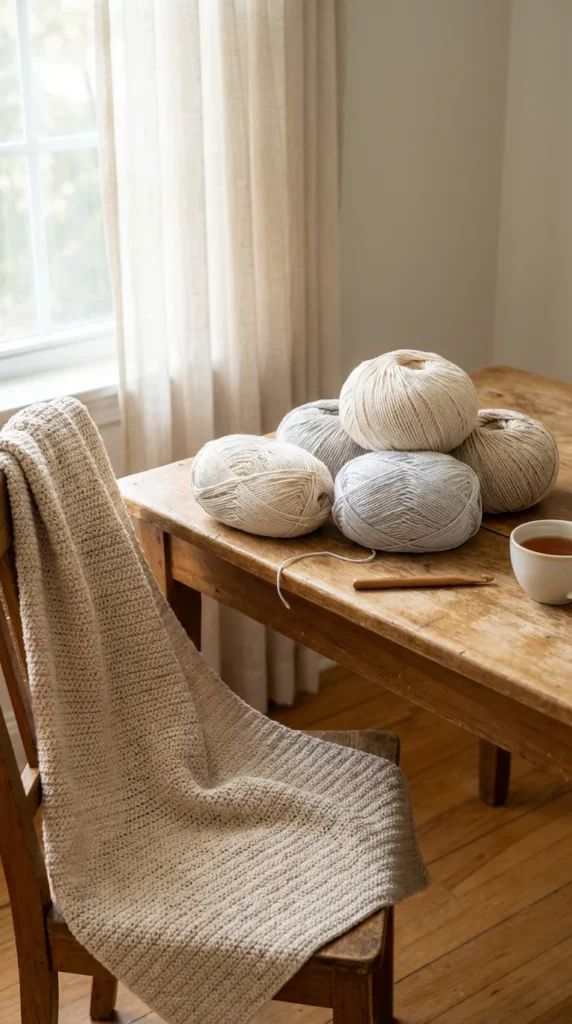
Fiber choice changes the character of a granny square cardigan as much as the stitch pattern does. A bamboo-cotton yarn gives a noticeably soft, fluid drape that hangs closer to the body than a stiffer pure cotton or a springy acrylic, which matters for anyone who finds oversized crochet pieces too structured or box-like.
This fiber works particularly well for cocoon and shrug-style cardigans, where drape does most of the visual work, but it also softens the look of a standard multi-square garment. Because bamboo-cotton yarns tend to have a slight sheen, the finished piece also catches light a little differently than a matte acrylic, giving it a more refined finish.
The trade-off is cost and availability — bamboo-cotton yarns run more expensive than standard acrylics and aren’t always stocked at big-box craft stores, so plan to order online if your local shop doesn’t carry it. It’s worth the search for a special piece, though a first practice cardigan is a reasonable place to save the splurge fiber for a second, more considered project instead.
18. The Structured Cotton Cardigan for Crisp Stitch Definition
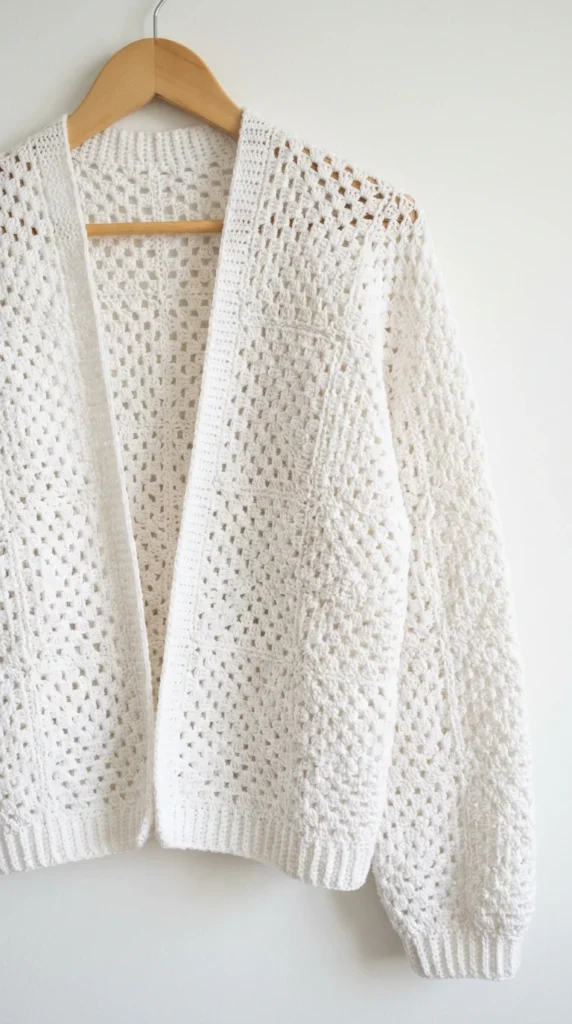
If drape isn’t your priority and you’d rather have a cardigan with sharp, well-defined stitches, a mercerized cotton yarn is worth choosing over a softer wool or acrylic mix. Cotton holds its shape and shows off the granny square texture with more clarity, which matters if the stitch pattern itself is the main visual feature you want to highlight.
This structure comes with a stiffer hand-feel, so a cotton cardigan sits away from the body a bit more than a wool or bamboo version would. That’s an advantage for warmer climates, since the extra air space between the garment and your skin helps it feel less heavy even with long sleeves.
Block cotton pieces firmly, using pins and a spray of water rather than steam, since cotton doesn’t relax back into shape as easily as animal fibers if it’s overblocked. A crisp cotton cardigan photographs especially well for anyone documenting their crochet projects, since the stitch definition reads clearly even in a simple flat-lay photo.
19. The Budget-Friendly Acrylic Cardigan
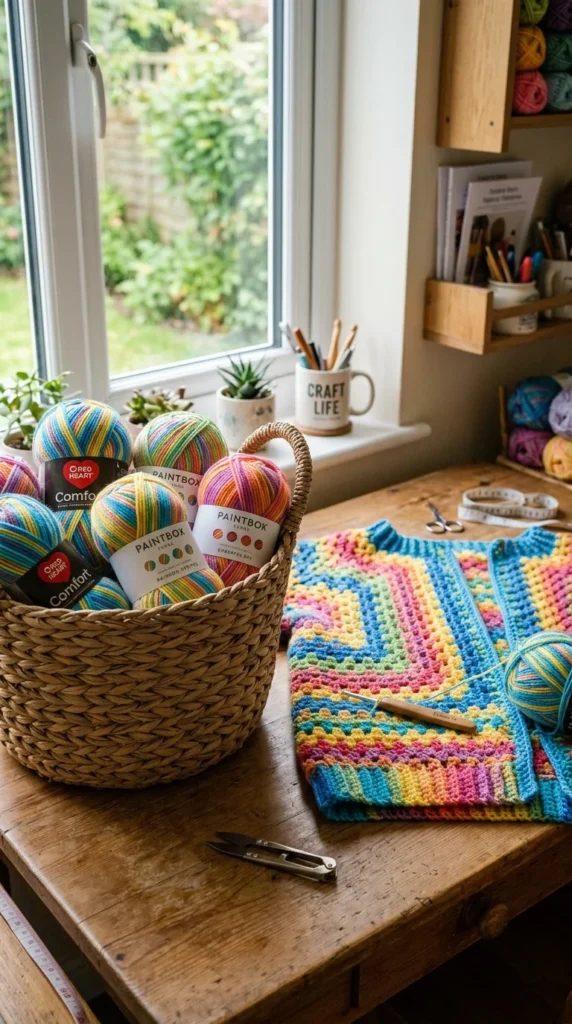
Acrylic yarn doesn’t get the same attention as wool or cotton in crochet circles, but it remains one of the most practical choices for a first oversized cardigan. It’s inexpensive, widely available in every craft store, machine washable, and holds color well across a long multi-square project without fading unevenly between dye lots.
Because acrylic doesn’t have the same natural stretch and give as wool, pay closer attention to your gauge swatch before committing to a full-size garment. A cardigan worked too tightly in acrylic can feel stiffer and less comfortable than the same pattern worked in a natural fiber, so err toward a slightly larger hook if your fabric feels dense.
This is the version to make first if you’re testing whether the oversized granny square silhouette actually suits your wardrobe before investing in a more expensive fiber for a second piece. A budget-friendly acrylic cardigan also makes practical sense for a child’s garment or anything that will see frequent washing, since it holds up to regular laundering better than a delicate wool mix would over time.
20. The Longline Duster Cardigan for Maximum Drama
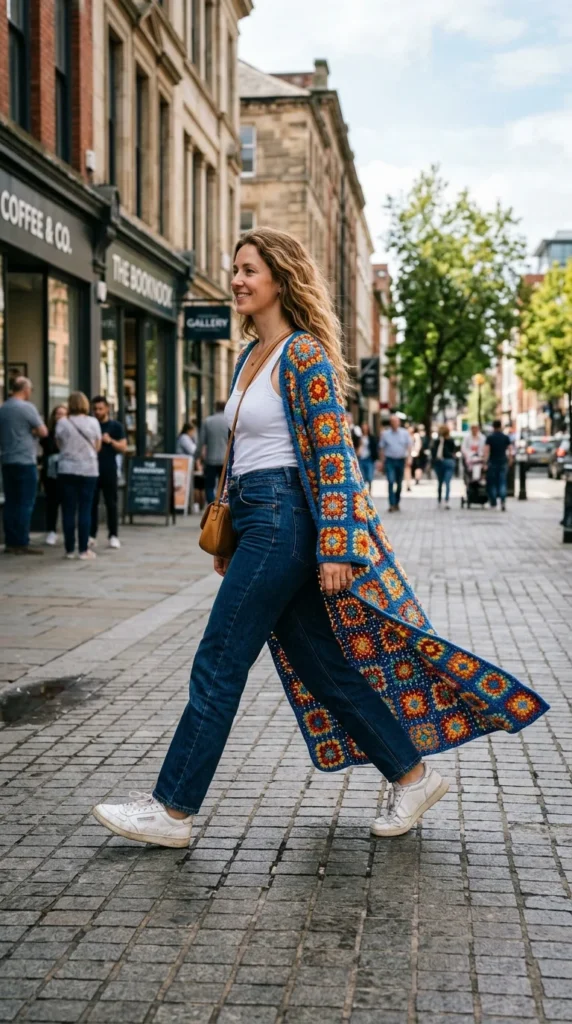
Taking the oversized silhouette even further, a longline duster version extends the hem well past the hip, sometimes close to the ankle. This works less as a practical everyday layer and more as a statement piece meant to be worn open over an outfit rather than closed.
Because of the extra length, this version calls for considerably more yarn and squares than a standard hip-length cardigan, so budget more time and materials before starting. The payoff is a dramatic silhouette that moves with you when you walk, which a shorter cardigan simply can’t replicate.
Keep the sleeves at a standard length rather than extending them to match the duster-length body, since overly long sleeves paired with an already long body can overwhelm a smaller frame. A single closure point at the collarbone, rather than buttons down the full front, keeps the piece easy to wear open while still offering the option to close it at the top on a colder day.
21. The Sleeveless Vest-Cardigan Hybrid
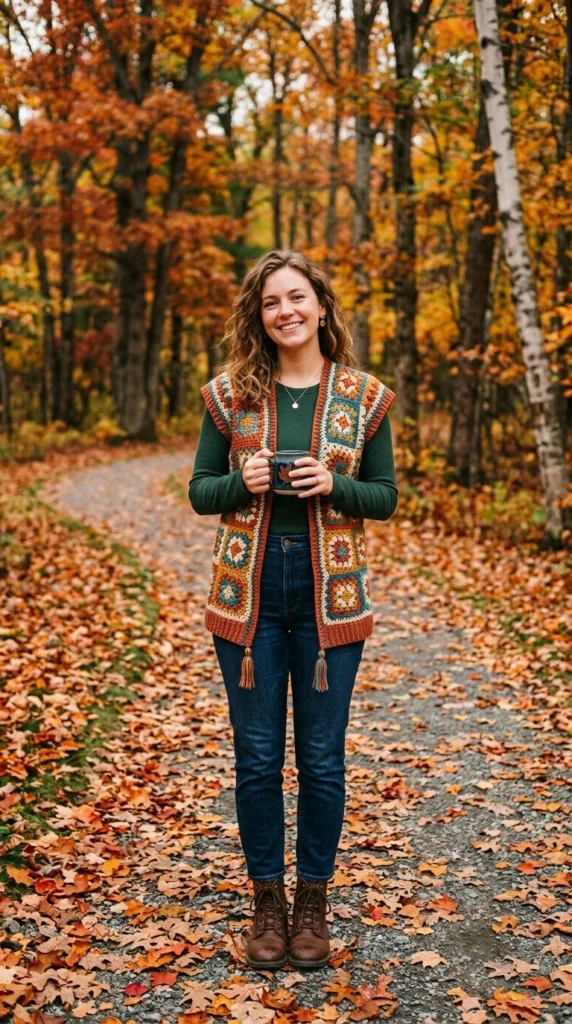
For crocheters who want the granny square texture without the time investment of full sleeves, a sleeveless vest-cardigan hybrid is a practical middle ground. You get the same oversized, textured body panel, but skip two full sleeves’ worth of squares, cutting your total project time by a wide margin.
This style layers naturally over a long-sleeve shirt or a fitted turtleneck, which means the finished piece works across a wider temperature range than a full-sleeve cardigan would on its own. It also solves a common fit complaint with oversized cardigans — sleeves that run too long or bunch awkwardly at the wrist — by removing the issue entirely.
A vest-cardigan hybrid is also a smart choice for anyone still building confidence with joining and blocking multiple squares, since the armhole shaping is simpler without a set-in sleeve to match up. Finish the armholes with a round or two of single crochet for a clean edge, and add side ties or a single button at the chest if you want more shape than a fully open vest provides.
22. The Precision-Blocked Cardigan for a Polished Finish
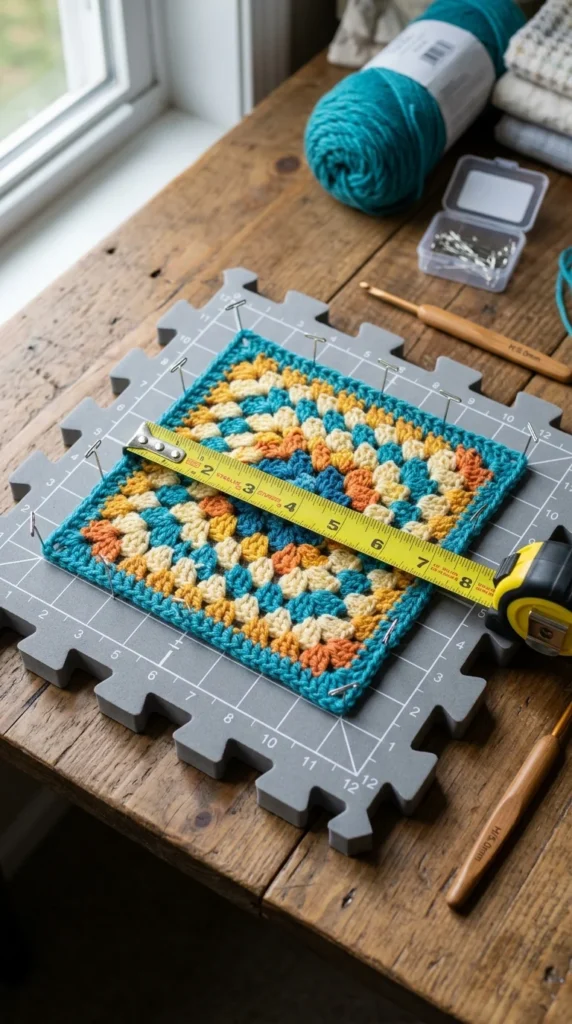
A lot of what separates a homemade-looking granny square cardigan from a store-quality one comes down to blocking, not stitching skill. Pinning every square to the exact same measurement before joining — typically around four to four and a half inches per square for garment-weight yarn — keeps the whole panel even instead of wavy or uneven at the seams.
Skipping this step is the most common reason a finished cardigan doesn’t lie flat or drapes unevenly on one side. Set aside blocking time as its own project step rather than rushing straight from finishing a square to joining it, since squares blocked under time pressure tend to shrink back slightly once unpinned too early.
Use a foam mat and rust-proof T-pins, and let each batch of squares dry completely before unpinning. If you’re working with wool, a light steam pass after pinning relaxes the fibers into place faster than air drying alone. This small extra effort at the square stage is what makes the difference between a cardigan that looks handmade in the best way and one that just looks unfinished.
23. The Planned-Ahead Cardigan Using a Layout Tool
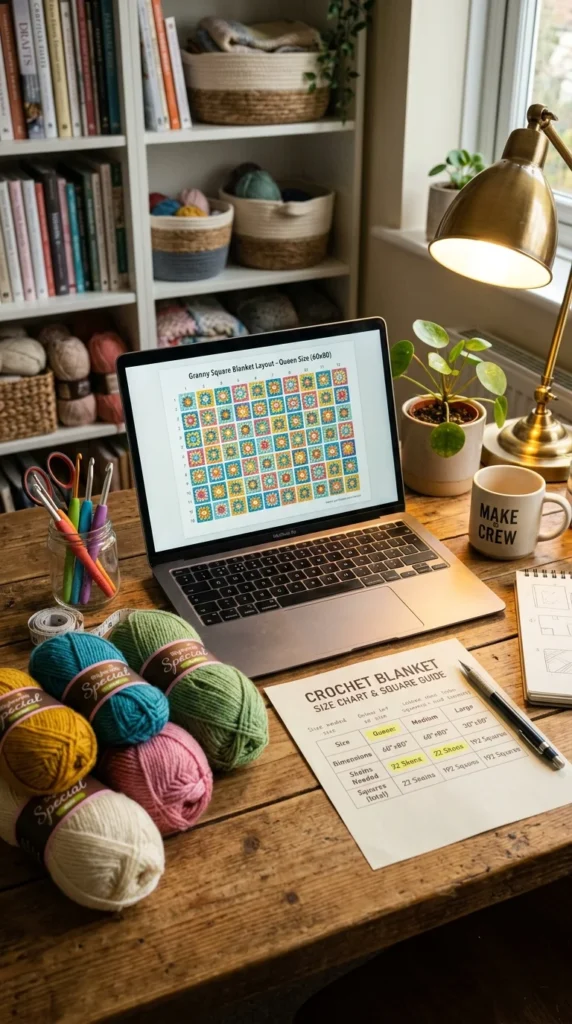
Before starting a multi-square cardigan, some crocheters now use a digital square-layout tool to map out colors and count total squares needed by size, rather than guessing and running short on yarn halfway through. Plugging in your target size and color sequence ahead of time takes a lot of the mid-project guesswork out of a large garment.
This kind of planning matters most on cardigans with more than twenty squares, where running out of one particular color partway through is a real risk if you haven’t calculated yardage in advance. A simple chest-measurement-to-square-width chart, matched against your gauge swatch, tells you roughly how many squares per panel you’ll need before you commit to a full skein order.
If a pattern doesn’t include its own sizing chart, measure a cardigan you already own and like the fit of, then work backward to figure out your target panel width. Planning this way, rather than adjusting size after the fact, saves you from reworking finished squares or running an unplanned second yarn order mid-project.
Conclusion
The granny square cardigan earns its staying power because it flexes so easily to fit different skill levels, wardrobes, and timelines. A beginner can fold and seam one oversized square into a wearable piece in a weekend, while a more experienced crocheter can spend months building a themed, multi-motif version worth showing off. What matters most is matching the construction method, yarn weight, and color story to how you’ll actually wear the finished piece, rather than copying a pattern exactly and hoping it works out.
Start with whichever version on this list matches the time and materials you already have on hand. Block carefully, join with a flat seam for the cleanest finish, and don’t be afraid to modify a pattern’s length or sleeve width to suit your own body rather than the sample size shown in the photos. Once you’ve made one granny square cardigan, you’ll likely find yourself planning the next one before the first is even off the hook.