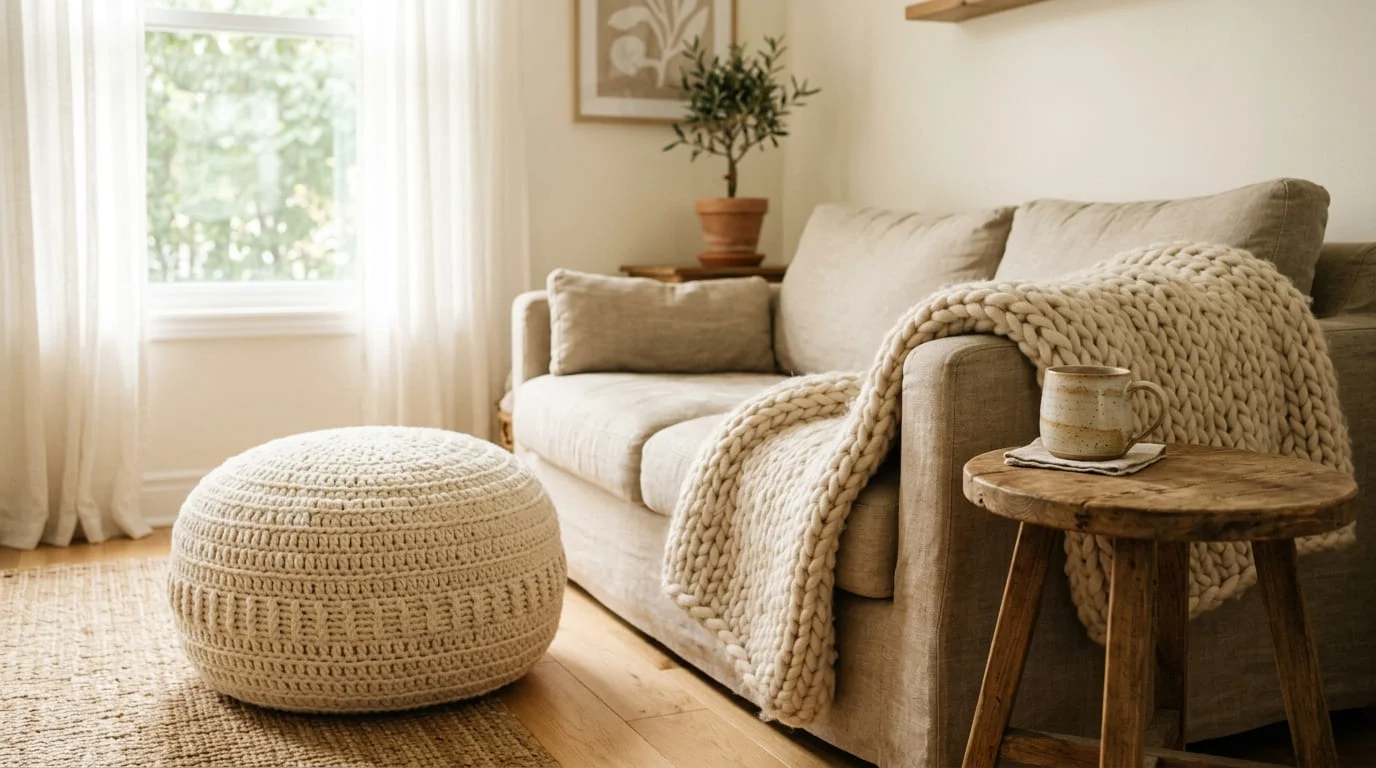
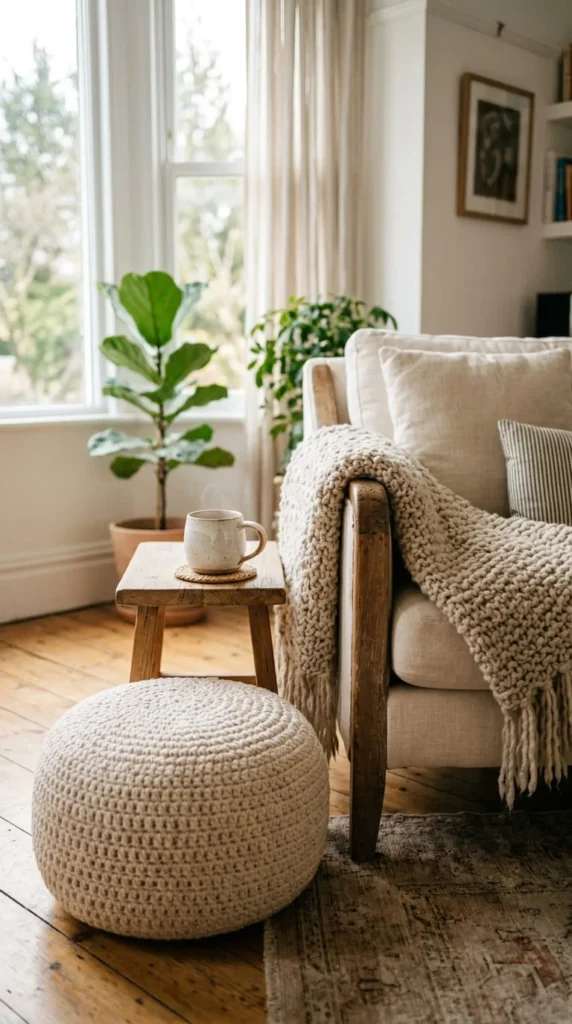
Crochet has quietly moved out of the craft closet and into the design world, and it’s earning its place there. Modern crochet home decor swaps grandma’s ruffled doilies for clean silhouettes, structured stitches, and natural fibers that sit comfortably next to mid-century furniture, minimalist shelving, or a boho-leaning living room. Whether you’re a hook-and-yarn beginner or someone who already has a stash of cotton yarn waiting for a project, this list walks through practical, doable ideas for bringing handmade texture into your space without it looking dated. You’ll find storage solutions, wall art, tabletop pieces, and a few unexpected mixed-media projects, each with notes on why the look works and how to make it feel intentional rather than crafty.
1. Firm-Base Storage Baskets That Actually Hold Their Shape
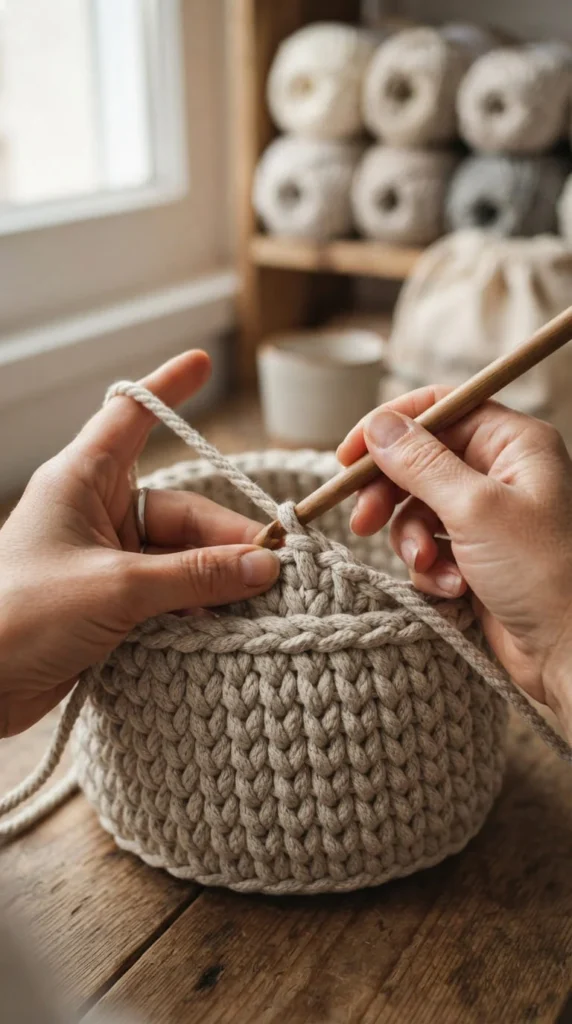
One of the biggest complaints about crochet baskets is that they sag the moment you put something heavier than a magazine inside. The fix is choosing the right materials and construction from the start. T-shirt yarn or bulky cotton worked with a smaller hook than usual creates a dense, sturdy fabric that resists stretching.
Start with a flat, reinforced base — some makers crochet through both loops with a double strand for the first few rounds, others insert a circle of stiff plastic canvas or cardboard between two crocheted base layers. Either method gives you a basket that stands on its own.
For a modern look, keep the shape simple: a straight-sided cylinder or a gently tapered bucket in one or two neutral tones. Skip the fringe and embellishments. A single contrasting stripe near the rim is usually enough visual interest.
Use these for:
- Blankets and pillows near the sofa
- Toilet paper or towels in the bathroom
- Toy storage that doesn’t look like a toy bin
- Plant pot covers for oversized floor plants
A firm base basket is genuinely one of the most useful beginner projects, and it solves a real clutter problem instead of just sitting there looking nice.
2. Two-Tone Round Placemats for a Warmer Table Setting
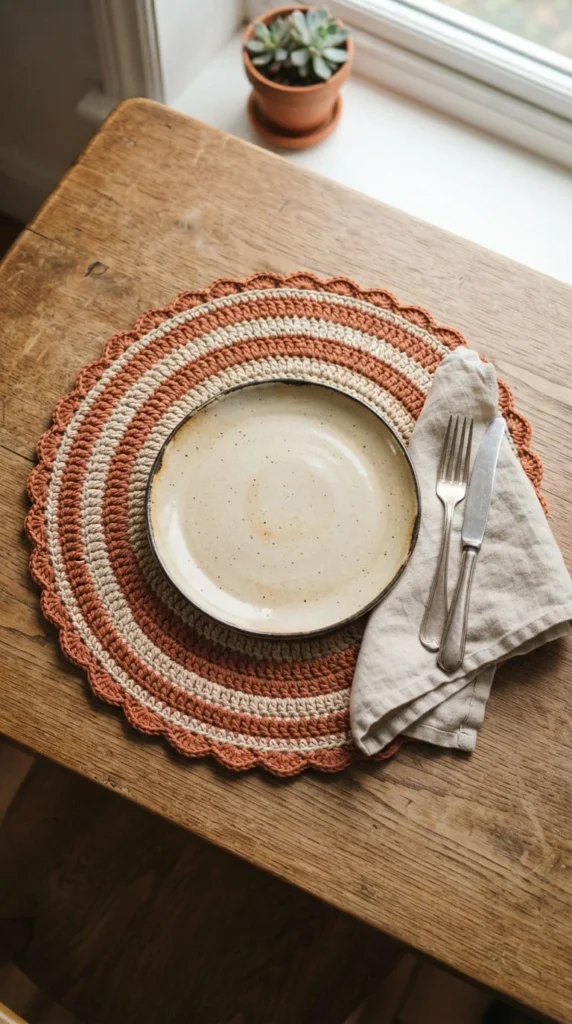
Placemats are an underrated entry point into modern crochet because they’re small, fast, and forgiving if your tension isn’t perfectly even. A round placemat worked in two complementary colors — think rust and oatmeal, or sage and cream — reads as intentional and current rather than fussy.
The key to a modern finish is structure over softness. Use a cotton yarn with some body, work in single or half-double crochet for a flatter, denser fabric, and block the finished piece so it lies completely flat. A wobbly, curling placemat undercuts the whole effect.
Color-block the design rather than striping every round. A solid center with a contrasting outer band, or the reverse, gives a cleaner geometric look than alternating rows.
Make a set of four or six so your table has a cohesive, gallery-like feel. If you want to stretch the yardage further, pair crocheted placemats with plain linen napkins so the handmade element stands out instead of competing with more texture.
These work particularly well for anyone who wants a quick weekend project with an immediate, visible payoff at the next meal.
3. Geometric Wall Hangings as a Statement Piece
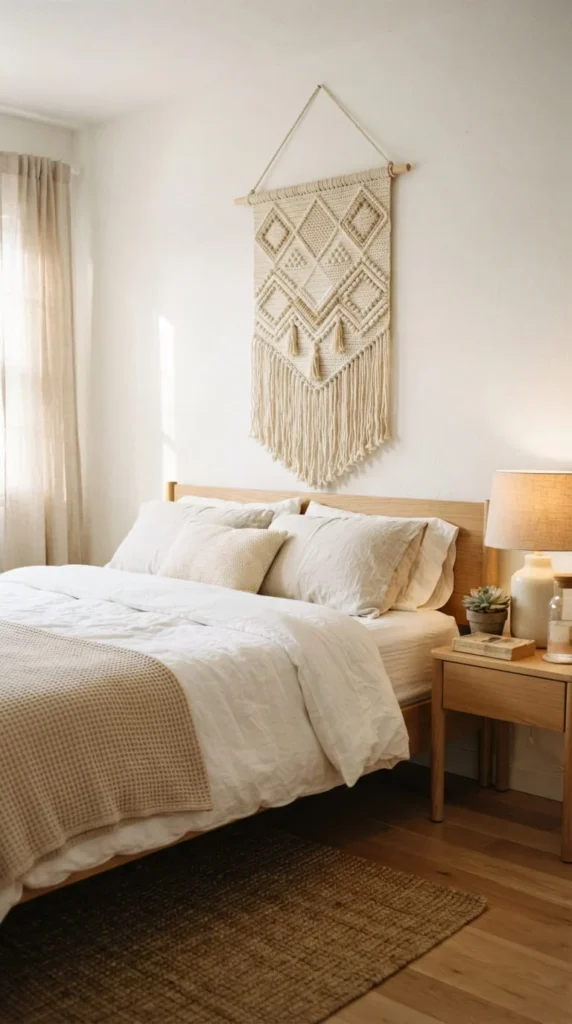
Skip the traditional mandala look if you want something that reads as modern. A geometric wall hanging — diamonds, chevrons, or a simple ombré gradient — built on a wooden dowel gives you the same handmade warmth without looking like a craft fair souvenir.
Work the piece in rows of single or double crochet, changing color at planned intervals to build the shape, then finish the bottom edge with clean, even fringe trimmed to one length. Avoid mixing more than two or three colors; a tight, restrained palette is what keeps this feeling contemporary.
Size matters here. A hanging that’s too small for the wall looks like an afterthought. Measure the space first — for a queen bed, aim for something at least two-thirds the width of the headboard.
Good spots for this kind of piece:
- Above a bed as a headboard alternative
- In an entryway to fill a tall, narrow wall
- Behind a reading chair as a backdrop
Because it’s flat against the wall, this project also avoids the bulk and cost of a full blanket while still making a strong visual impact in the room.
4. Plant Hangers Built for Actual Plant Weight
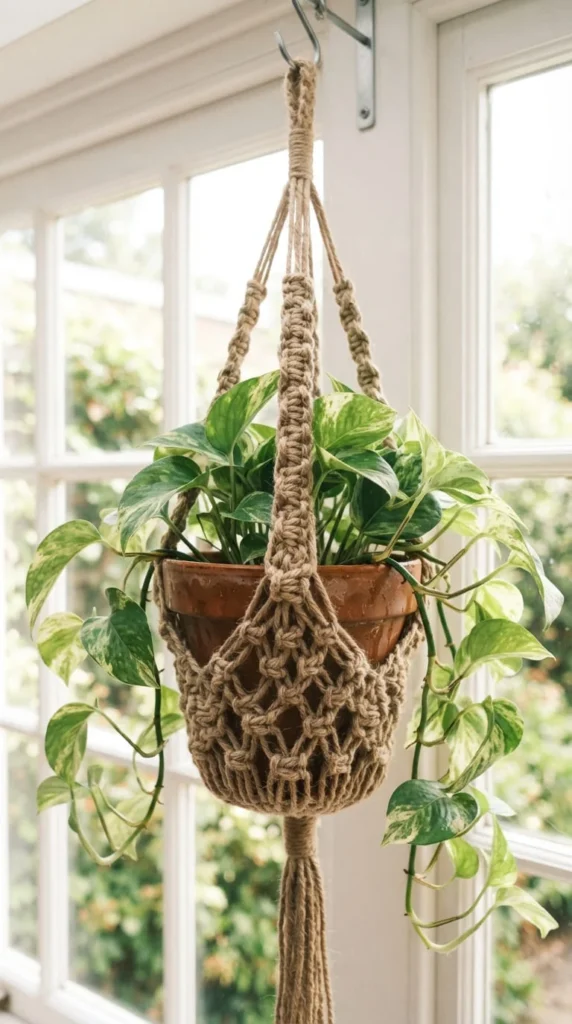
Crochet plant hangers look great in photos, but a lot of patterns online aren’t built to hold real soil and water weight over time. If you’re hanging anything larger than a small succulent, the construction needs to account for load, not just looks.
Use a sturdy cotton cord or doubled yarn strand rather than a single thin strand, and work the netting in a denser pattern with smaller gaps near the top where the weight concentrates. Test the finished hanger with an empty pot filled with rice or sand before committing your actual plant.
For a modern aesthetic, keep the color palette to one or two natural tones and favor open, geometric netting over dense floral-style patterns. A simple diamond lattice looks far more current than tightly packed granny-square style hangers.
A few practical notes:
- Always check the ceiling hook or bracket is rated for the combined weight of pot, soil, and plant
- Terracotta pots are heavier than plastic — factor that into your yarn choice
- Leave the cord long enough to adjust hanging height as the plant grows
This is one of those projects where safety and style genuinely go hand in hand.
5. Bobble-Stitch Pillow Covers for Texture Without Color
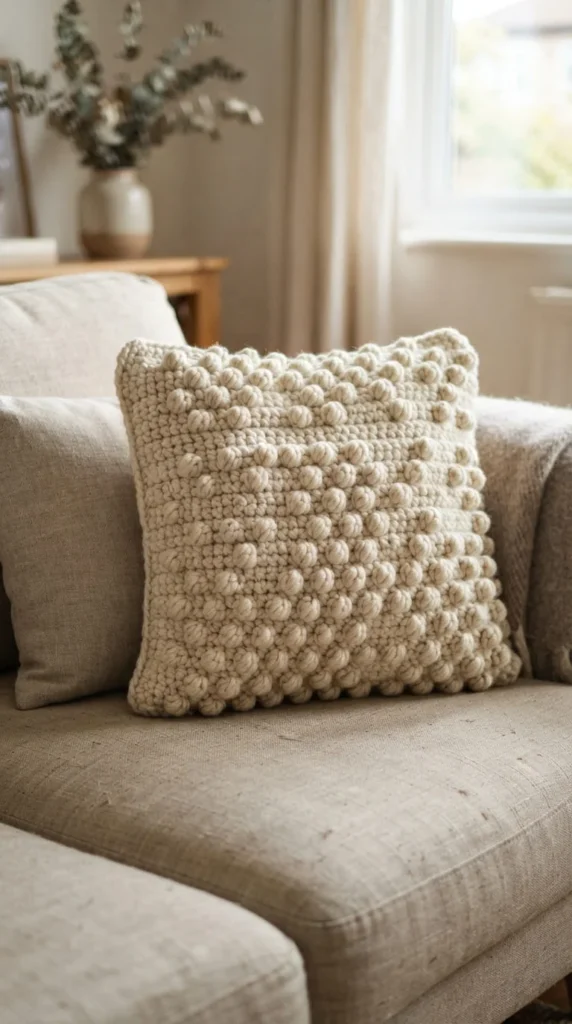
If your living room is already full of pattern or color, a textured neutral pillow cover adds interest without adding visual noise. The bobble stitch — sometimes called the popcorn stitch — creates a raised, tactile surface that photographs beautifully and feels substantial in hand.
Work the cover in a single neutral shade so the texture itself becomes the design element. Chunky or bulky-weight cotton keeps the bobbles pronounced without making the fabric too heavy or slow to work up.
A removable cover, rather than a fully crocheted pillow, is worth the slightly extra effort. Crochet the front panel with the textured stitch, then back it with a simple woven fabric and an invisible zipper or button closure. This keeps the piece washable and lets you swap covers seasonally.
Sizing tip: standard 18×18-inch inserts are the easiest to find and give you flexibility to mix with existing pillows. Pair one textured cover with a smooth solid pillow rather than using multiple textured pieces together — that contrast is what makes it look styled instead of matchy.
This is a strong four-to-eight-hour project for anyone ready to move past basic single crochet.
6. Crochet-Wrapped Mirror Frames
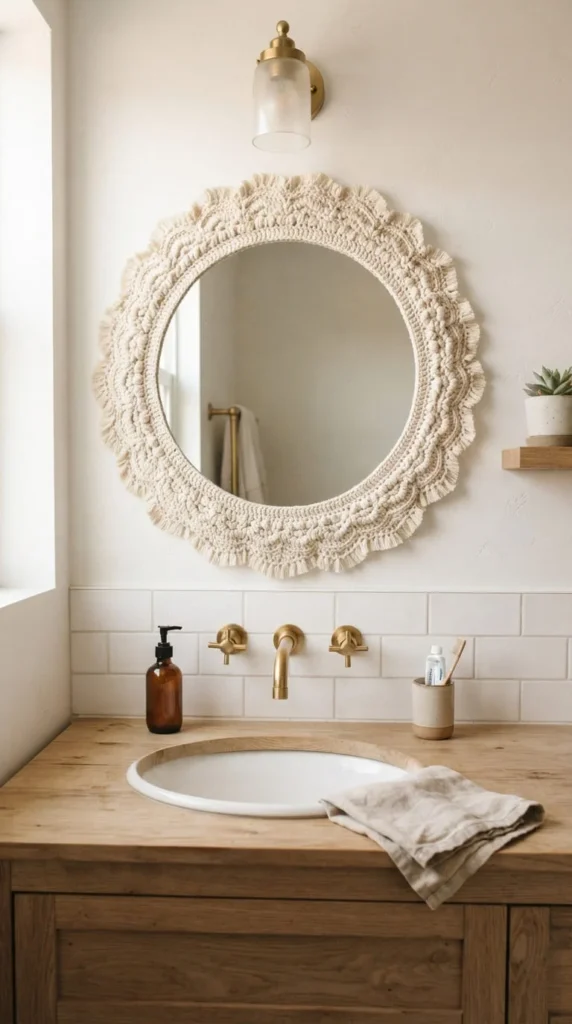
This is one of the more unusual entries on this list, and it’s a great example of how crochet can be combined with another material rather than standing alone. Take a plain round or oval mirror — thrifted frames work well here — and crochet a fitted cover that wraps around the existing frame edge.
The technique involves crocheting a flat ring to match the mirror’s outer diameter, then working single crochet stitches directly around the frame’s rim, securing as you go. Cotton or linen-blend yarn in a natural tone gives the cleanest, most modern result; avoid anything too fuzzy, which can look unfinished rather than intentional.
This works especially well in:
- A bathroom, where the softness offsets hard tile and metal fixtures
- An entryway, as a warmer alternative to a plain frame
- A bedroom vanity area
Because you’re wrapping an existing frame rather than building structural support from scratch, this project is more approachable than it looks and makes a great use for smaller amounts of leftover yarn. It’s also a good option if you want a handmade accent that doesn’t require committing to a large piece.
7. Muted-Palette Table Runners for Everyday Styling
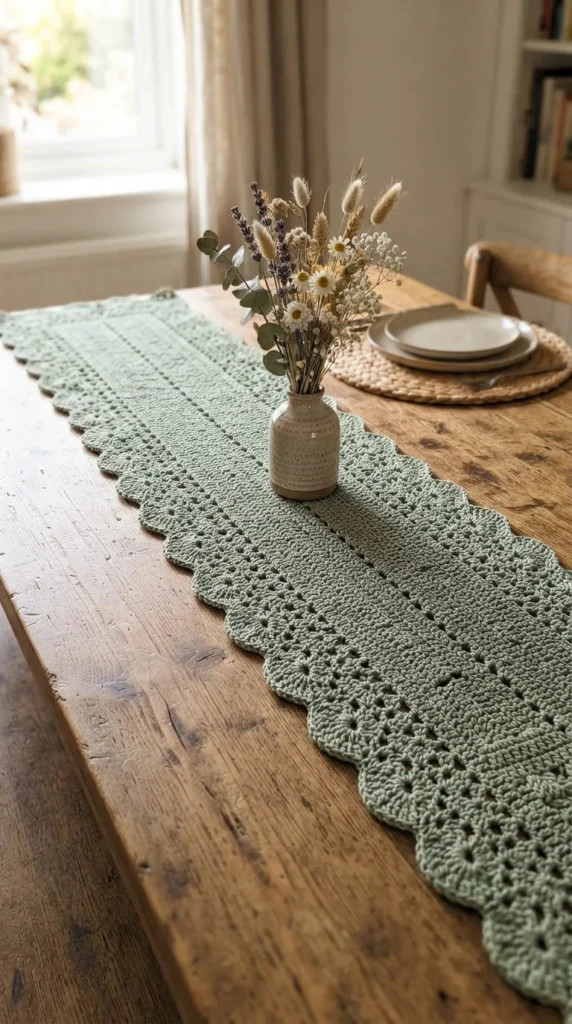
A table runner is a low-commitment way to bring crochet into a dining space without covering the whole surface. For a current look, stay away from bright, saturated colors and lean into muted, earthy tones — sage, terracotta, dusty blue, oatmeal — that read as calm rather than crafty.
Work the runner in a simple mesh or filet pattern rather than a dense solid fabric. This lets the wood grain of the table show through, which keeps the overall look layered instead of heavy. A length that overhangs each end of the table by six to eight inches looks proportional on most standard dining tables.
Because runners see regular wear from dishes and spills, choose a machine-washable cotton and avoid delicate embellishments like beads or sequins that won’t hold up in the wash.
Style it with:
- A low centerpiece so sightlines across the table stay clear
- Mismatched neutral dinnerware for texture contrast
- A single seasonal accent, like a small bowl of citrus or a candle, changed out through the year
This is a genuinely practical project — useful for everyday meals, not just special occasions.
8. Crochet Lampshade Covers for Softer Ambient Light
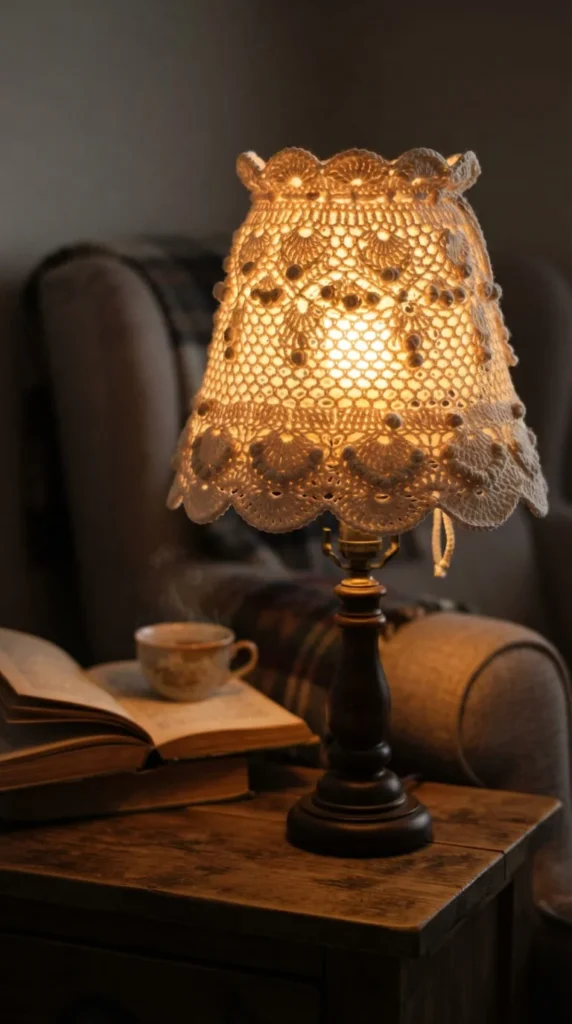
A crocheted lampshade cover changes how a lamp lights a room. Instead of a flat, even glow, the open stitch pattern lets light filter through in a dappled, warm way that’s especially nice in a reading corner or bedroom.
Safety comes first here. Only use this technique with LED bulbs, which run cool, and keep the crocheted layer a few inches away from the bulb itself rather than pressed directly against it. Never use this method with incandescent or halogen bulbs, which generate real heat and pose a fire risk with any fabric this close.
Construction-wise, you have two options: crochet a fitted sleeve that slips over an existing plain shade, or build a freestanding shade using a wire frame as your foundation. The sleeve method is far more approachable for a first attempt.
Choose an open, lacy stitch pattern rather than a dense one — the goal is diffused light, not a fully blocked shade. Cream, warm white, or soft beige yarn gives the most flattering, even glow.
This project sits at the intersection of function and decor, and it’s a genuinely distinctive way to add handmade texture to a room that most people overlook.
9. Tissue Box Covers That Don’t Look Like an Afterthought
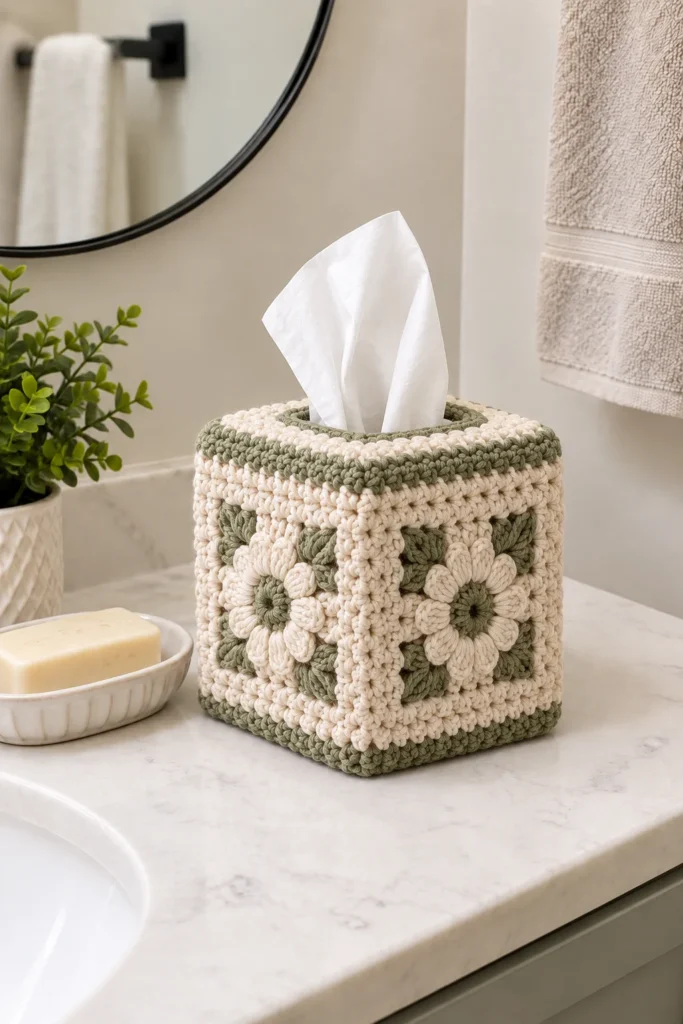
Tissue boxes are one of those objects that quietly clutter a counter or shelf, and a fitted crochet cover is a small project that makes a real visual difference. The trick to keeping it modern is restraint — a plain neutral cover with a single decorative detail, like a scalloped top edge or a small button closure, looks far more current than an all-over patterned design.
Measure your actual tissue box before starting, since dimensions vary between brands and box shapes. Work a rectangular tube to match the box’s height and width, then add a top panel with a slit sized to the box’s opening.
Use a firmer cotton yarn so the cover holds its shape and doesn’t slouch around the box. This is a genuinely fast project — most makers finish one in under two hours, which makes it a good confidence-building piece for beginners or a quick handmade gift.
Good places for this:
- Bathroom counters
- Bedside tables
- A home office desk
It’s a small detail, but it’s the kind of small detail that makes a room feel considered rather than default.
10. Geometric Floor Rugs for a High-Impact Project
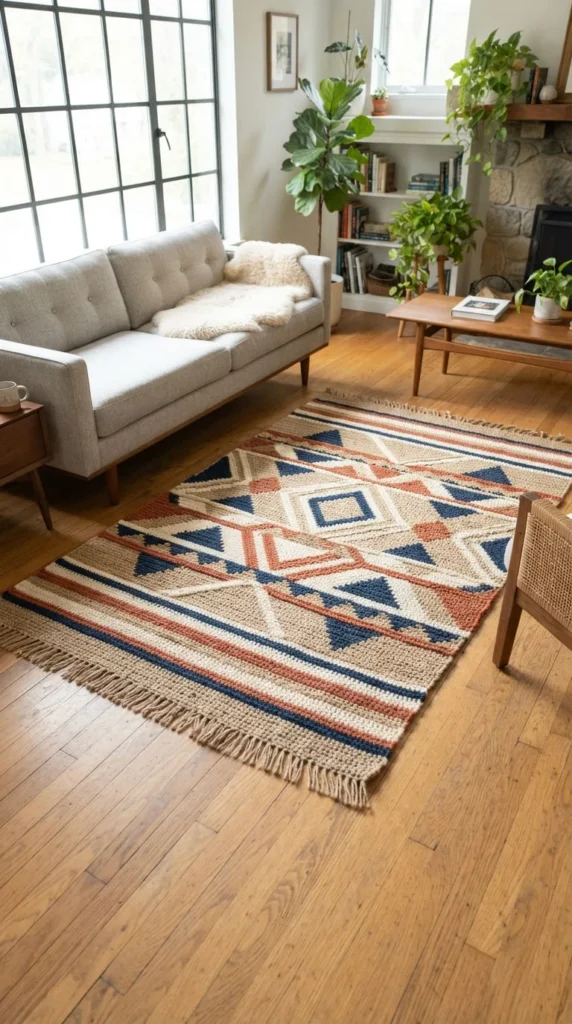
A crochet rug is a serious undertaking compared to most items on this list, but it delivers the most visual payoff per square foot. Before starting, budget realistically: a rug large enough to anchor a seating area can take anywhere from six to twelve hours or more, plus a noticeable amount of yarn.
For a modern look, work in jute or a jute-cotton blend, which gives a firmer, more substantial fabric than pure cotton and holds a geometric shape better underfoot. Stick to a limited color palette — two or three tones in a bold, repeating geometric pattern reads as far more current than a multicolor scrap-yarn design.
A few things to check before you commit to a full rug:
- Confirm your gauge stays consistent across a large piece, since tension often loosens over long projects
- Choose a non-slip rug pad if the rug will sit on hardwood or tile
- Consider working the rug in sections and joining them, which makes the project more portable and less overwhelming
Because of the time and yarn investment, this is a good project to plan around a specific room rather than starting without a clear destination in mind.
11. Pocketed Wall Organizers for Entryway Clutter
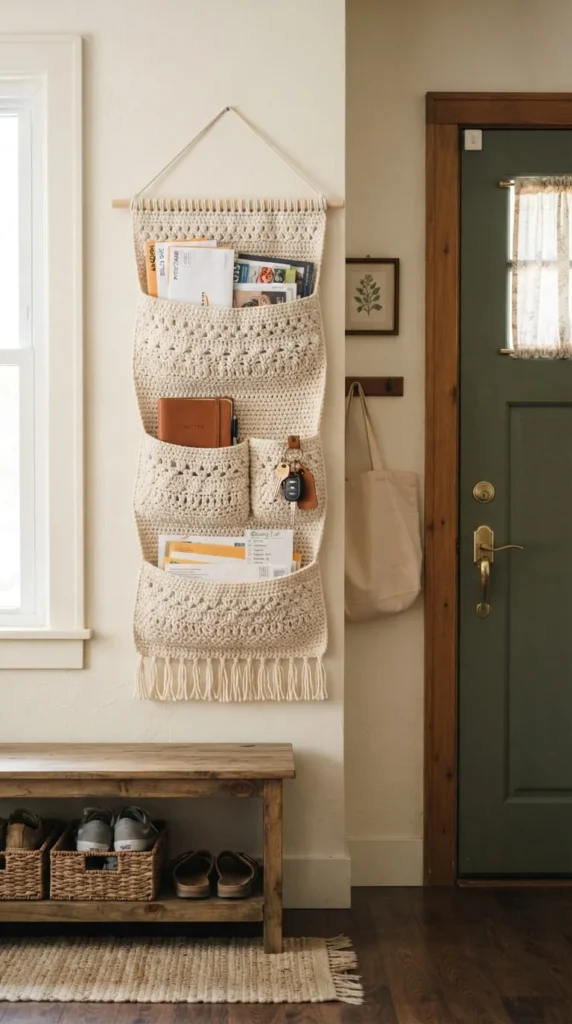
An entryway often becomes the default landing spot for mail, keys, and loose items, and a crocheted pocket organizer gives that clutter an actual home. Unlike a basket, a wall-mounted organizer keeps counter space clear entirely.
Build the piece as a solid rectangular backing panel with individual pocket sections crocheted separately and stitched on, sized for the items you actually need to store. A mix of pocket sizes — one wider one for mail, a smaller one for keys — is more functional than uniform pockets.
For durability, use a firm cotton yarn and reinforce the top mounting edge, since this piece will bear repeated daily use pulling items in and out. A wooden dowel or slim rod threaded through the top gives you a clean hanging method without visible nails or grommets.
Keep the color palette simple — one or two neutral tones — so the organizer reads as a design piece rather than a craft project pinned to the wall.
This is a genuinely practical addition for small entryways or apartments where a console table isn’t an option, and it solves a daily friction point rather than just adding decoration.
12. Mosaic-Pattern Coasters and Trivets
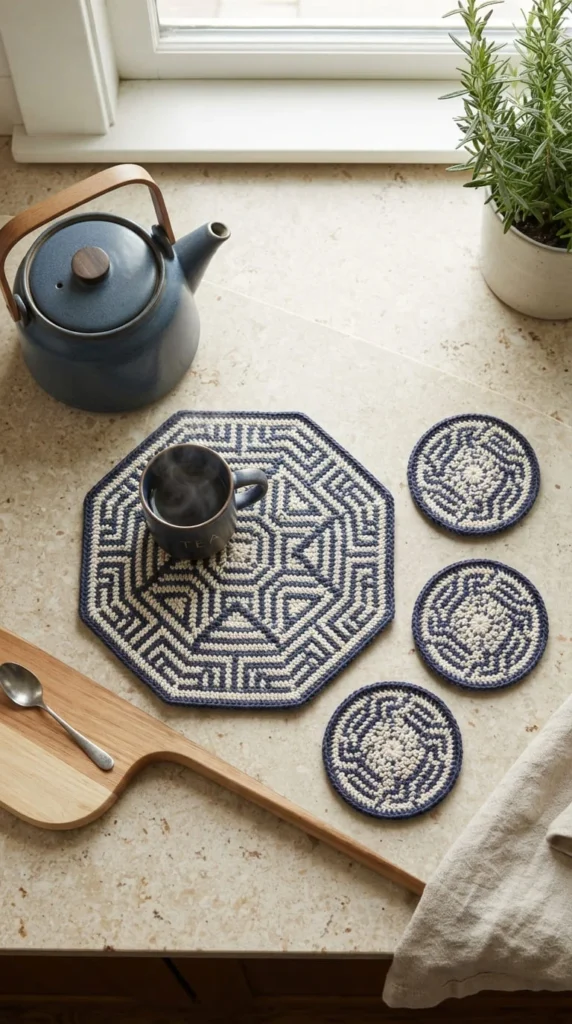
Mosaic crochet — a technique that creates the illusion of intricate color work using only one color per row — is having a real moment, and coasters are the perfect small-scale project to try it. The technique produces sharp, geometric designs that look far more complex than the actual stitch pattern requires.
Use two contrasting colors with a clear value difference (a dark and a light, rather than two similar mid-tones) so the pattern reads clearly. Cotton yarn is essential here, both for heat resistance and because it holds crisp stitch definition better than acrylic.
For trivets, work the design at a slightly larger scale and use a doubled strand or add a layer of heat-resistant batting between two crocheted panels, since a single thin layer won’t fully protect a table surface from a hot pan.
Make a set of four to six coasters in the same pattern for a cohesive look, or vary the color combinations while keeping the same geometric motif for a curated, mixed set that still feels intentional.
This is an excellent stash-buster project, since each piece uses a small amount of yarn and comes together quickly.
13. Oversized Totes as Functional Floor Storage
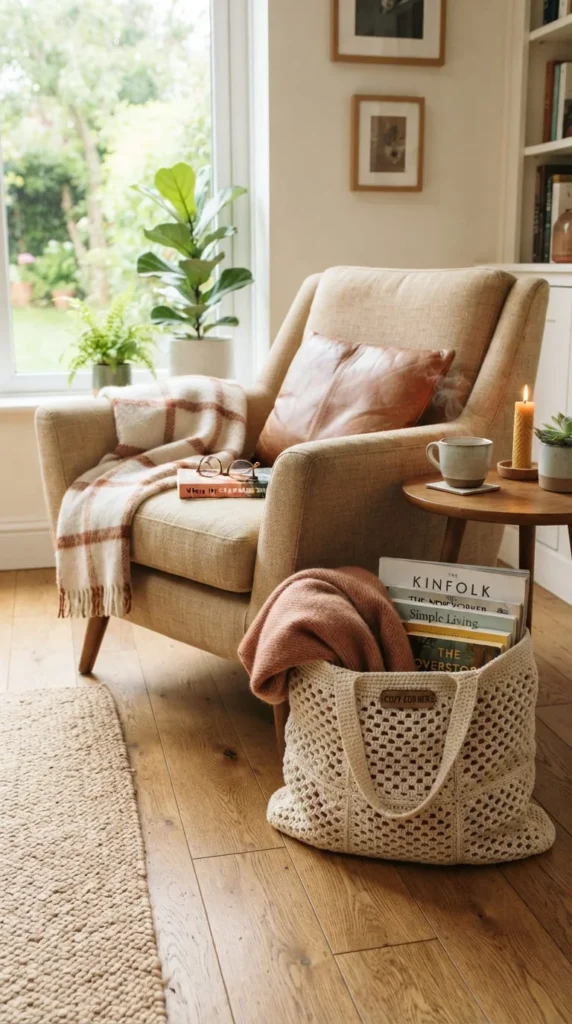
A large, sturdy crochet tote isn’t just a bag — repurposed at home, it becomes flexible floor storage for blankets, magazines, or kids’ toys, and it moves easily from room to room when you need to tidy up quickly.
Work the bag with a firm base construction similar to a basket, then build straight sides with sturdy handles reinforced by working over a cord or doubled strand for extra strength. Bulky cotton or a cotton-jute blend gives you the structure needed to hold weight without the bag collapsing in on itself.
Keep the design simple: a solid color body with contrasting handles, or a subtle textured stitch pattern rather than an all-over motif. This keeps the piece looking like an intentional accessory rather than an oversized beach bag left in the living room.
Practical uses:
- Beside a reading chair for current books and a throw blanket
- In a nursery for extra diapers or soft toys
- By the front door for shoes waiting to be put away
Because it’s portable, this piece offers more flexibility than a fixed basket, and it’s a good project if you want something functional that can move with you between apartments or rearranged rooms.
14. Crochet Candle Holder Wraps
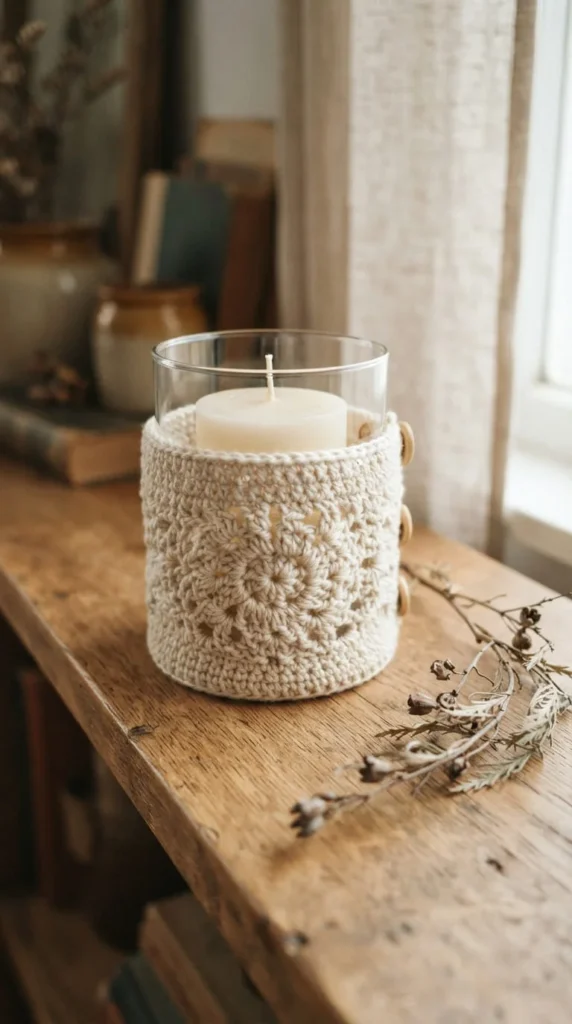
A simple crocheted sleeve around a glass candle holder adds warmth and texture to a shelf or mantel without much yarn or time. This is a project you can realistically finish in under an hour, making it a good option when you want a quick, visible result.
Safety is the priority with this one. Crochet the wrap so it sits around the lower portion of the glass holder only, well below the rim and nowhere near the flame itself. Never let the yarn extend above the candle holder’s rim, and always burn the candle so the flame stays well below the top of the glass.
Use a plain cotton yarn in a neutral shade, and keep the stitch pattern simple — a basic single or half-double crochet band is enough texture without adding bulk. A drawstring or elastic band at the top and bottom keeps the wrap snug against the glass.
Group three holders of varying heights, each wrapped in the same yarn, for a cohesive shelf display. This is a low-cost way to soften hard glass and metal surfaces elsewhere in the room, and it’s a great project for using up small amounts of leftover yarn.
15. Open-Lace Window Valances for Soft Privacy
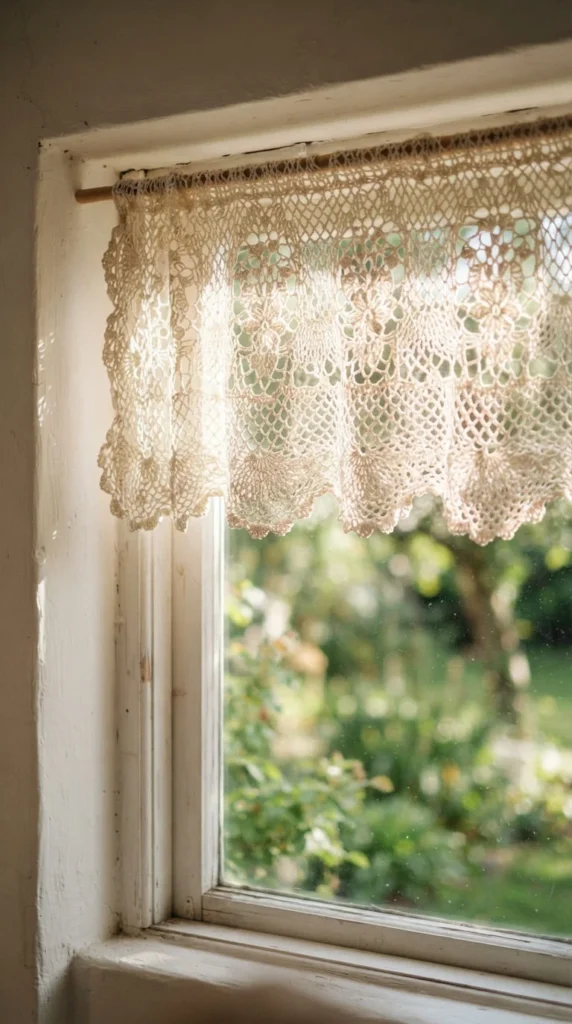
A crocheted valance across the top portion of a window adds privacy and softness without blocking the full view or natural light the way heavy curtains do. This works particularly well in a kitchen, bathroom, or any window where you want light but not a direct sightline in.
Choose an open, lacy stitch pattern — a simple mesh or shell stitch repeat — rather than a dense fabric, since the goal is filtered light rather than a solid barrier. Cotton yarn in white or a soft neutral keeps the look airy and current rather than heavy or old-fashioned.
Mount the piece on a slim tension rod at the very top of the window frame, sized to cover roughly the top third to top half of the window. This proportion keeps the room bright while still softening the hard edges of the window frame.
A few styling notes:
- Pair with simple café curtains below for full coverage options
- Keep the pattern consistent across multiple windows in the same room for a cohesive look
- Avoid heavy fringe, which can look dated on a valance specifically
This is a project that changes how light enters a room, which is a different kind of impact than most decor pieces offer.
16. Chunky Ribbed Bath Mats
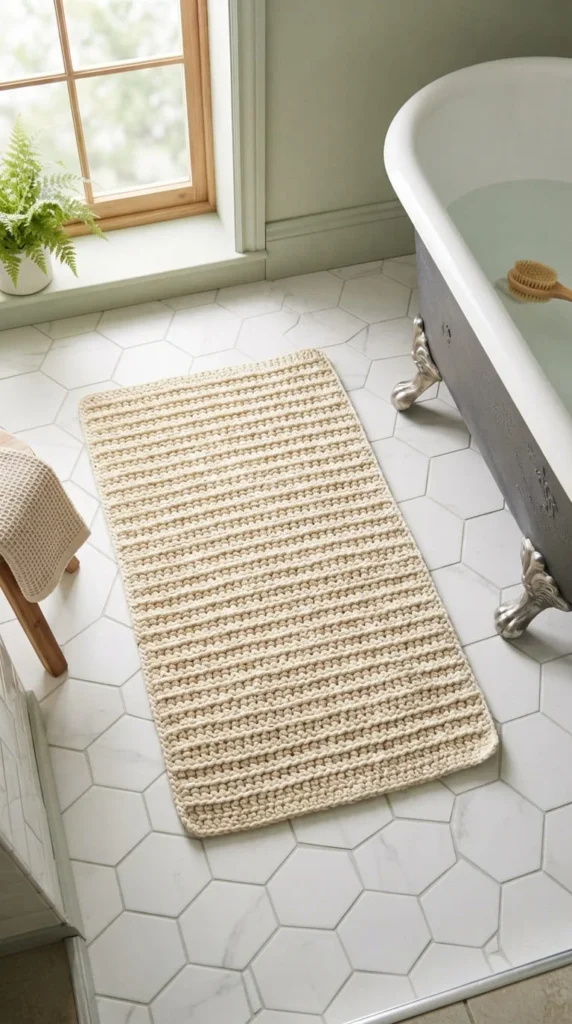
A crocheted bath mat brings warmth to a cold tile floor, and a ribbed or textured stitch pattern gives it enough grip and structure to hold up in a high-moisture environment better than a flat, loose weave.
Cotton is non-negotiable here for absorbency and washability. Work in a chunky or super bulky weight so the finished mat has real thickness underfoot, and use a ribbed stitch pattern — worked in the back loop only across rows — for texture that also helps with slip resistance.
Because this piece will get wet regularly, test wash a swatch before committing to the full project so you know exactly how much the finished piece will shrink and how it holds its shape after drying.
Practical notes:
- Add a thin non-slip rug backing or grip dots on the underside for safety on tile
- Keep the mat a manageable size for regular washing — oversized mats are harder to launder and dry fully
- A single neutral tone is easiest to keep looking clean between washes
This is one of the more functional entries on this list. It’s not just decorative — a well-made version genuinely improves the daily experience of stepping out of a shower or bath.
17. Fabric-Stiffened Crochet Bookends
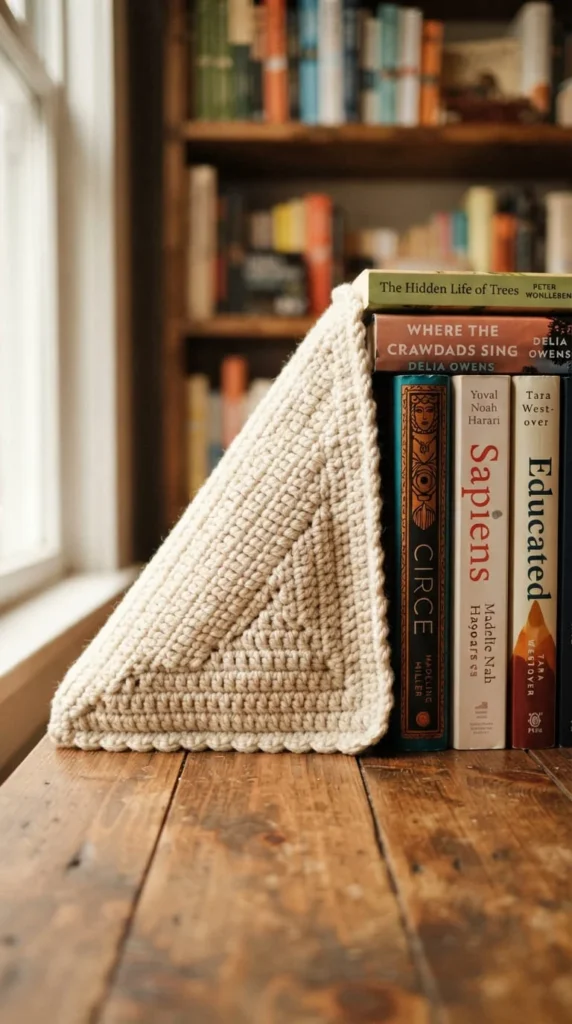
This is a less common project, and it’s a good one for makers looking for something slightly different. Rather than crocheting a functional bookend from scratch, you crochet a fitted fabric cover for an existing simple bookend shape — a plain geometric wedge or L-shaped support works best.
The crocheted cover is worked flat, then stiffened using a fabric stiffener or a diluted glue-water solution brushed on and shaped over the bookend base while damp. Once fully dry, it holds its form and adds texture and softness to what’s usually a plain metal or wood object.
Keep the shape geometric — a triangle or simple rectangle — rather than trying anything sculptural for your first attempt. Neutral cotton yarn in a single color keeps the focus on shape and texture rather than pattern.
This works well on:
- A bookshelf mixing books, plants, and small objects
- A desk holding a small stack of notebooks or reference books
- A styled console table vignette
It’s a project that requires a bit more patience than most on this list, but it results in something genuinely distinct from typical crochet home decor, and it’s a good way to combine crochet with another material for a mixed-media finish.
18. Hybrid Macramé-and-Crochet Hanging Storage
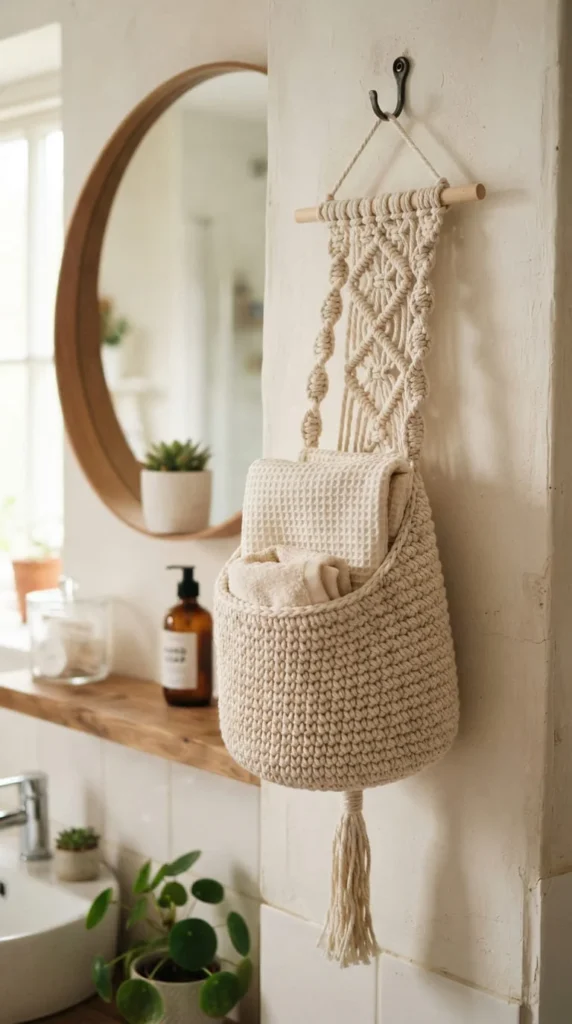
Combining macramé knotting techniques with a crocheted basket body gives you a piece that leans into the boho-modern crossover trend without fully committing to either style alone. The crocheted portion forms the actual storage vessel, while a knotted macramé hanger holds it against the wall or from the ceiling.
Crochet the basket body using a firm construction method, similar to a standard storage basket, then attach several lengths of cotton cord to the rim and work simple square knots to build the hanging structure. Keep the knotwork restrained — a few clean rows of knots rather than elaborate patterning keeps the overall piece feeling current.
This hybrid approach solves a real limitation of crochet-only hanging storage, since crochet alone can stretch under weight over time, while the macramé cord element adds structural support that holds its shape better under load.
Good uses:
- Rolled towels in a bathroom
- Extra blankets in a bedroom corner
- Small plants that need drainage room below the pot
If you already know basic macramé knots, this is a natural next project. If you don’t, the square knot is genuinely easy to pick up and opens up a lot of hybrid project possibilities beyond this one.
19. Chair Seat Cushion Covers for Dining Spaces
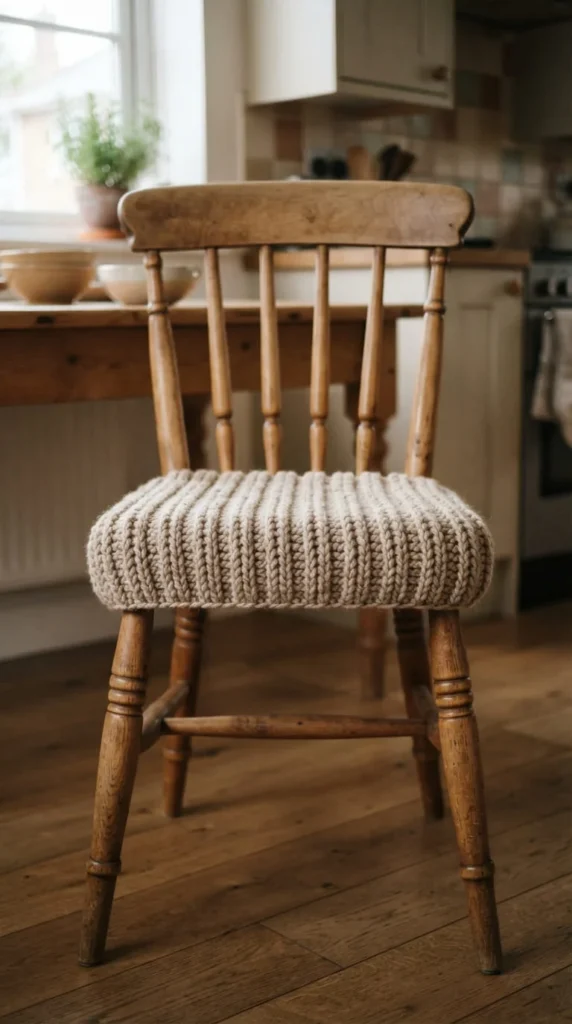
Wooden dining chairs look great but aren’t always comfortable for long meals, and a crocheted seat cushion cover solves that while adding a layer of texture to the space. This works especially well with mismatched or vintage chairs, since a matching set of cushion covers ties them together visually.
Measure the actual seat shape first, since dining chair seats are often not perfect squares. Crochet a flat panel matching that shape, then either sew it directly onto a foam cushion insert or add ties at the corners so the cover can be removed and washed separately.
A ribbed or textured stitch in a single neutral tone works better here than a busy pattern, since the cushion needs to complement the table setting rather than compete with it. If your dining space already has a lot of visual interest, keep this piece as plain as possible.
Practical tip: choose a yarn blend with some durability and washability in mind, since dining chairs see regular use and occasional spills. A cotton-acrylic blend can hold up slightly better to frequent washing than pure cotton in this specific application.
This is a project that adds genuine daily comfort, not just visual interest.
20. Geometric Crochet Door Wreaths
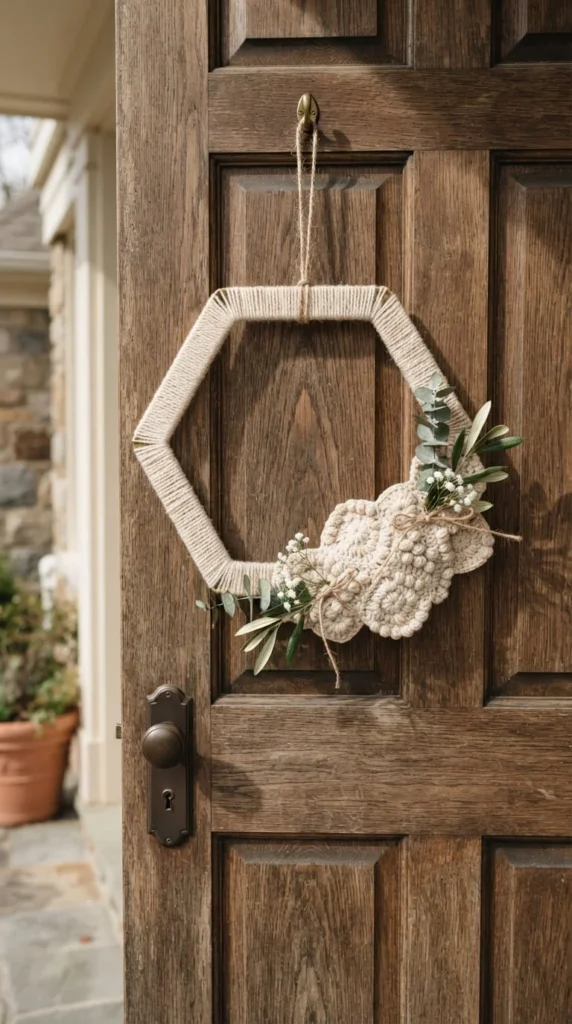
A crocheted wreath swaps the traditional dried-floral look for something more architectural, and it holds up better outdoors than fresh or dried materials that fade quickly in sun and weather. A geometric ring — a simple circle with a woven or textured interior pattern — reads as modern in a way that a fuller, traditional wreath shape doesn’t.
Work the base as a crocheted-over foam or wire ring, then build interior texture using open stitches, occasional fringe accents, or a small woven panel across the center. Keep embellishments minimal — one or two small dried branches or a single ribbon accent is enough.
Weather resistance matters if this will hang outdoors. Choose an acrylic or weather-resistant yarn blend rather than pure cotton, which can hold moisture and fade or mildew faster in direct sun and rain.
Seasonal styling ideas:
- A plain neutral ring for everyday use
- Add a few dried stems or pampas grass for autumn
- Swap in small ornaments or a ribbon for the holidays without remaking the whole wreath
This project gives you a durable base piece you can restyle through the year rather than crocheting a brand-new wreath for every season.
21. Compact Charging Station Trays
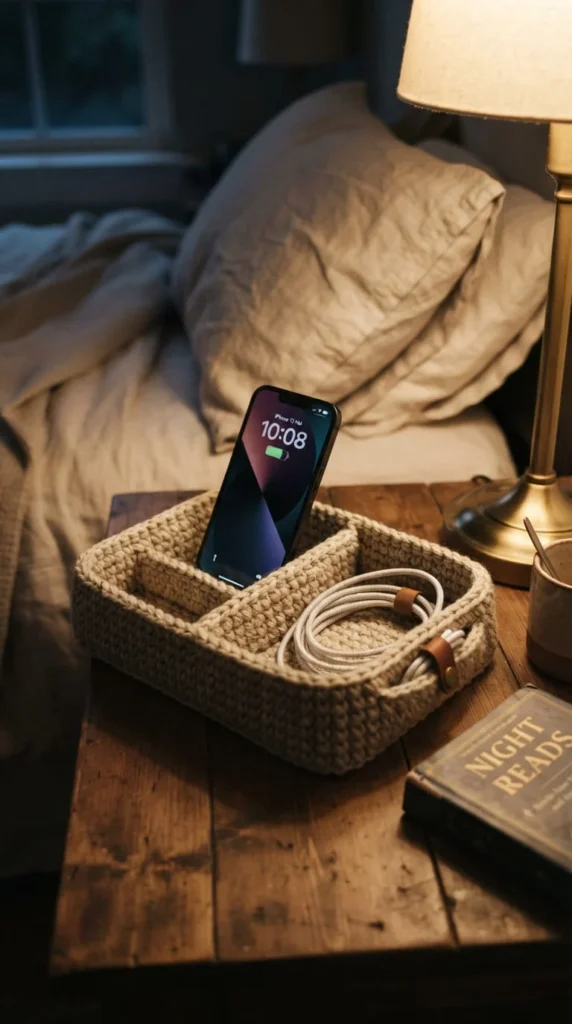
Tangled cables and loose chargers are a common source of nightstand or desk clutter, and a small crocheted tray with divided sections gives them an actual place to live. This is a practical, modern take on crochet that most decor lists skip entirely.
Build the tray with a firm flat base, similar to a shallow basket, then add one or two interior dividers by crocheting a strip and stitching it across the base to separate sections — one side for a phone, the other for loose cables or small items.
Use a firm cotton yarn worked at a tighter gauge than usual so the base doesn’t sag under the weight of a phone or charging brick. A shallow depth, around two to three inches, keeps the tray functional without hiding items too deep to find easily.
Good spots for this:
- A bedside table, replacing a loose tangle of cords
- A home office desk for small stationery
- An entryway console for keys and a phone
This is a fast project, usually finished in an hour or two, and it’s a genuinely useful entry point for anyone who wants to try functional crochet decor without a big yarn or time investment.
Conclusion
Modern crochet home decor works best when you treat it as a design tool rather than a nostalgia piece — restrained color palettes, structured stitches, and natural fibers are what separate a current-feeling project from something that looks stuck in the past. Start with whichever idea solves an actual problem in your space, whether that’s a firm-base basket for real storage or a wall hanging that fills an awkward blank wall, and let your skills build from there. Keep a small stash of neutral cotton yarn on hand so you’re ready to start a coaster set or a pillow cover on a free afternoon, and don’t be afraid to combine crochet with other materials like wood, wire, or glass for a mixed-media result. Pick up a hook, choose one project from this list that matches the time you actually have this weekend, and give it a try.