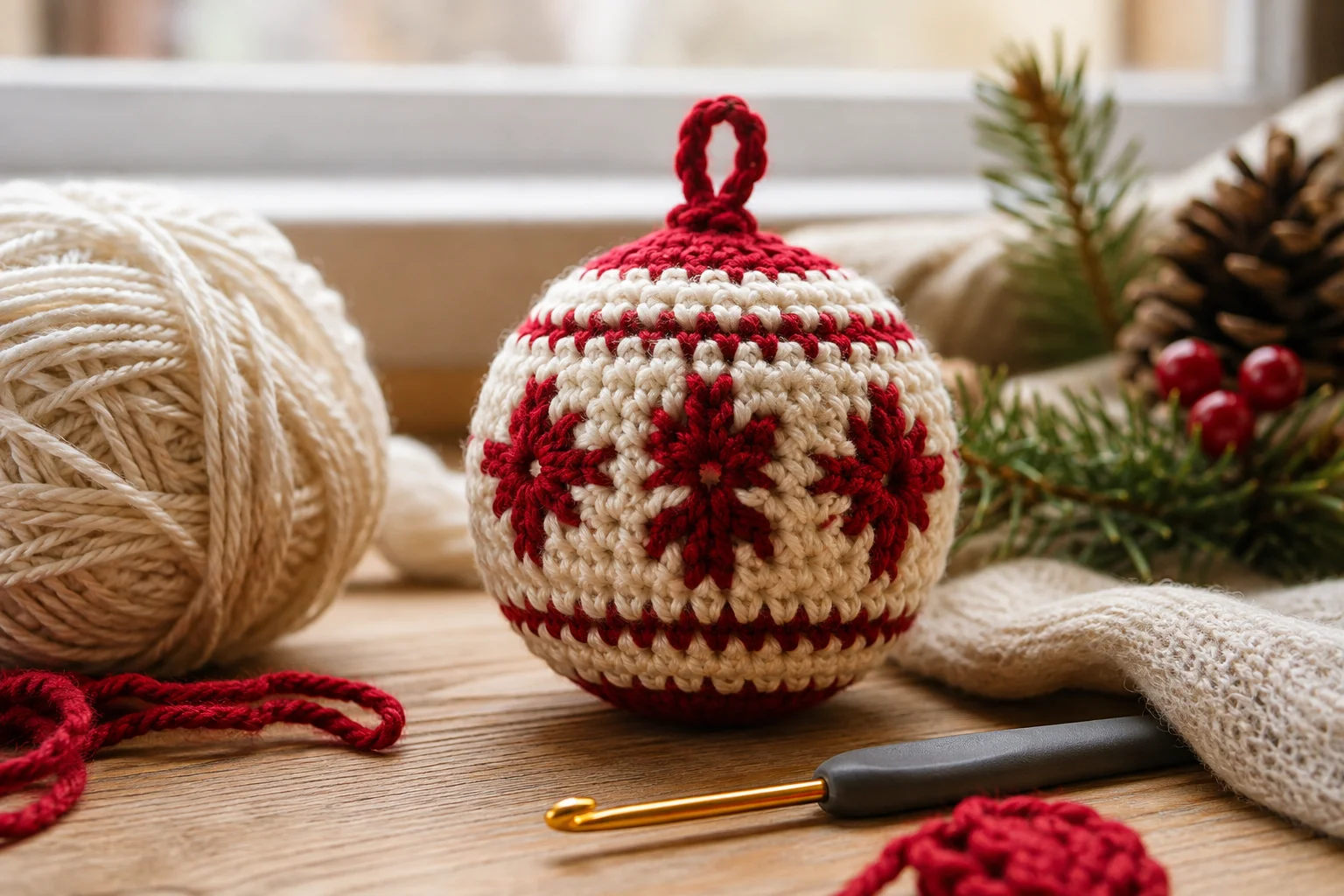
There’s something special about hanging a decoration you made yourself. It doesn’t have the plastic shine of a store-bought bauble, but it has character — a slightly wobbly stitch here, a color choice that’s uniquely yours there. If you’ve ever wanted to learn how to crochet Christmas ornaments, this is the year to start, and you don’t need years of experience to make something that looks genuinely good on your tree.
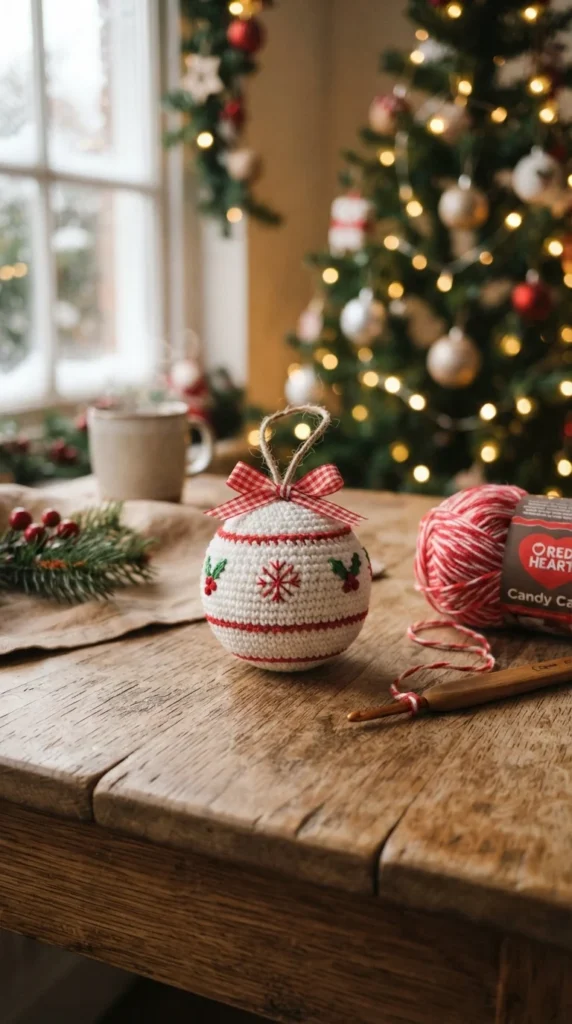
This guide walks through the basics — the skills you actually need, the easiest projects to start with, and a few tricks that make the difference between an ornament that looks homemade and one that looks handmade in the best sense.
What You Need Before You Start
You don’t need a big supply list for your first ornament. A few basics will get you through most beginner patterns:
- A crochet hook sized for your yarn (check the yarn label for a suggested size)
- Worsted weight yarn in your chosen colors, or size 10 cotton thread if you want to try lacy snowflakes later
- A yarn needle for weaving in ends
- Stuffing (fiberfill) if you’re making a rounded ornament
- Small plastic fillable ornaments, if you want to try covered baubles
If you’re brand new to crochet, start with worsted weight yarn and a standard hook. Thread work is beautiful, but it’s fiddly, and it’s easier to enjoy once your stitches feel more automatic.
Learn the Magic Ring First
Almost every rounded ornament — baubles, mini Santas, tiny snowmen — starts with a magic ring. It’s the technique that lets you begin a circle without a hole in the center.
If you’ve never done one before, it’s worth practicing on scrap yarn a few times before diving into a pattern. Once it clicks, it becomes second nature, and it opens the door to dozens of ornament shapes.
A couple of quick tips:
- Pull the tail gently after your first round to close the ring completely
- Don’t panic if it feels loose at first — tension improves with repetition
Try a Covered Bauble Ornament
One of the easiest and most satisfying places to start is a covered bauble. You crochet a stretchy shell that slips over a small plastic ornament, giving it a full textured, cozy look.
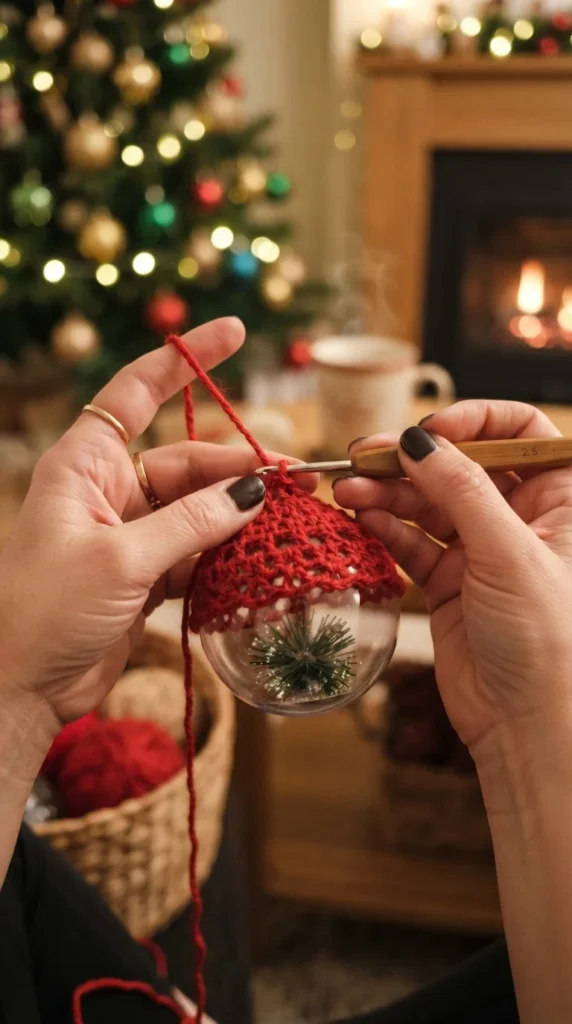
Here’s what makes this project beginner-friendly:
- The shape is just a simple sphere built from single crochet increases and decreases
- Mistakes are hidden once the plastic ball is inside
- It only takes one skein of yarn to make several
A small trick that makes a big difference: go down one or two hook sizes smaller than you’d normally use for that yarn. A tighter gauge keeps the cover snug against the ball instead of gaping or sagging.
Crochet a Cotton Thread Snowflake
Once you’re comfortable with basic stitches, a cotton thread snowflake is a lovely next project. These use fine cotton thread and a small hook, and the finished piece has an elegant, lacy look that plastic ornaments just can’t match.
The one thing you can’t skip here is blocking and stiffening. Straight off the hook, a thread snowflake looks limp and curled. To fix that:
- Mix a little PVA glue with water (or use liquid starch)
- Dip the snowflake and gently squeeze out the excess
- Pin it flat on a corkboard in the exact shape you want
- Let it dry completely — usually overnight
For extra sparkle, add a touch of fine glitter to the stiffening mixture before dipping. It catches the light beautifully once it’s hanging on the tree.
Add a Few Amigurumi Minis
If you enjoy the idea of tiny characters more than geometric shapes, amigurumi ornaments are worth trying. Little Santas, snowmen, and trees are simple to make once you know a few basic increases and decreases, and stuffing is entirely optional — flat versions work just as well if you prefer a slimmer ornament.
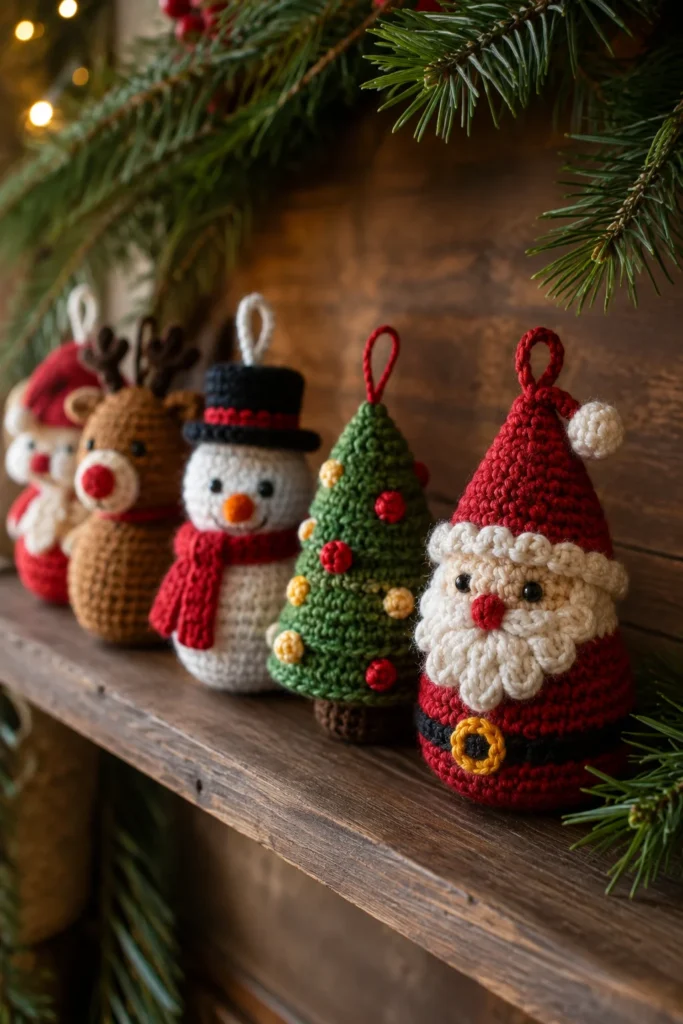
A few things that help these look their best:
- Use a hook slightly smaller than recommended for firmer, neater stitches
- Weave in ends carefully and crochet over the tail where possible so it doesn’t work loose
- Add a hanging loop as you finish the last round, rather than sewing one on afterward
Finishing Touches That Matter
However you build your ornament, a couple of small habits will make it last for years, not just one season:
- Secure your ends well. A loose tail can unravel after repeated handling.
- Choose the right hanging loop. A short chain works fine, but a small metal ornament hook or ribbon loop often holds up better over time.
- Store flat and dry. Snowflakes especially should be stored flat in a box, not squashed into a bin with other decorations.
Wrapping Up
Learning how to crochet Christmas ornaments doesn’t require advanced skills — just a little patience and a willingness to practice a few basic stitches. Start with something simple like a covered bauble, work your way up to a snowflake or amigurumi character, and before long you’ll have a tree full of decorations nobody else has.
Save this guide for later and try these ideas when you’re ready!